
Reviewed · WALKING TOURS IN BOSTON
Public Authentic Revolutionary Boston Walking Tour
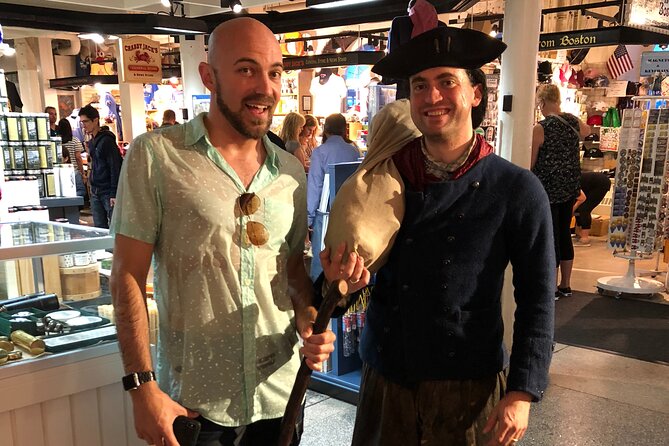
Boston’s Revolution looks different when you stop treating it as a string of famous names and dates. This walking tour connects Boston Common, Granary Burying Ground, the Boston Massacre site, and the Tea Party story to questions of power, freedom, slavery, and citizenship. Guide Adam brings a warm, funny manner and can adjust the conversation to your interests.
I like the small maximum of 16 people, which gives you room to ask questions without losing the group. I also like that the tour makes space for lesser-known details and modern questions instead of repeating a polished schoolbook version. The main drawback is practical: at $45, you are paying for the guided walk, while admission to King’s Chapel, Old South Meeting House, and the Old State House costs extra.
In This Review
- Key points to know before booking
- Why this Boston history walk feels different
- Boston Common: beginning with public space
- Granary Burying Ground: famous names and overlooked details
- King’s Chapel: an international Revolution
- Old South Meeting House: beyond the Boston Tea Party
- Old State House and the Boston Massacre site
- Revolutionary meeting rooms, markets, and military power
- A lantern signal and the hard meaning of freedom
- The route, pace, and group size
- Is $45 a fair price?
- Who should book this walk?
- Should you book the Public Authentic Revolutionary Boston Walking Tour?
- FAQ
- How long does the Public Authentic Revolutionary Boston Walking Tour last?
- Where does the tour begin?
- Where does the tour end?
- How much does the tour cost?
- Are museum admissions included?
- How many people can join the tour?
- Is the tour available with a mobile ticket?
- Can I cancel for a refund?
Key points to know before booking

- Boston Common to Haymarket: The route crosses several major Revolutionary-era sites in central Boston.
- A modern reading of the Revolution: Expect discussion of inclusion, bondage, citizenship, and how old events still shape public life.
- Adam is a popular guide: His humor, costume, patience, and clear delivery add personality to the walk.
- Small group size: The maximum is 16 people, a good fit for questions and conversation.
- Museum entry is separate: The tour pauses outside King’s Chapel, Old South Meeting House, and the Old State House.
- Allow up to two hours: The stated duration is about 90 minutes to two hours, depending partly on walking speed and available time.
Why this Boston history walk feels different
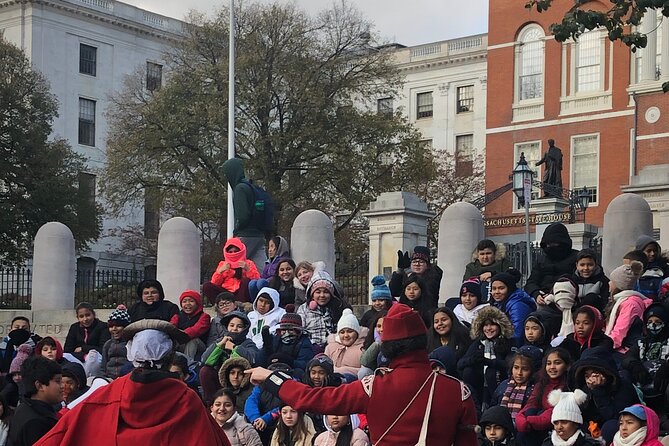
The central idea here is not simply that Boston helped start the American Revolution. You already know that from almost any guidebook. The more useful question is who had power, who was left out, and how the language of liberty worked in real life.
That gives the walk a sharper purpose. You hear about famous events, but you also get the wider setting around them. A church can be a place of worship, a political meeting point, and a reminder of the contradictions built into the era. A cemetery can honor famous patriots while also raising questions about whose stories receive public attention.
I like this approach because it gives you something to think about after the tour ends. The experience aims to build critical thinking and active citizenship, rather than asking you to admire a neat parade of heroic figures.
The tone also matters. Adam is described as articulate, patient, funny, and easy to talk with. He dresses in period style, which adds a touch of theater without making the walk feel like a costume show. If you enjoy asking questions, this format should suit you well.
The company says guides can customize the experience to your needs. That does not mean every subject will receive equal time, since the route lasts only 90 minutes to two hours. Still, a small group and a conversational guide give you a better chance to follow up on subjects that catch your attention.
More Walking Tours in Boston
- Boston: Freedom Trail History Small Group Walking Tour
★ 5.0 · 6,450 reviews - Harvard University Campus Guided Walking Tour
★ 4.5 · 3,632 reviews - Boston Freedom Trail Walking Tour with Costumed Guide
★ 4.5 · 2,531 reviews
Boston Common: beginning with public space
The tour begins at the Boston Common Visitors Center on Tremont Street. Boston Common is the oldest public park in the United States, but the important point here is not just its age. This was public ground at a time when public space helped shape the culture and politics of the growing city.
You spend about 15 minutes here. That is enough time to establish the setting without using up the whole walk at the first stop. The guide frames the Common as part of America’s cultural founding, giving you a starting point that feels larger than a list of dates.
I find this a smart opening. A park lets you think about who could gather, speak, protest, worship, or simply be seen. Revolutionary politics did not happen only inside grand halls. It grew out of shared spaces where people heard news, exchanged views, and watched authority at work.
The Common is also a useful place to get your bearings. You are starting in central Boston, near public transportation and the main historic district. Wear comfortable shoes from the outset, since the route continues through busy streets and older sections of downtown.
Granary Burying Ground: famous names and overlooked details
The next major stop is Granary Burying Ground, one of Boston’s oldest cemeteries. The visit lasts about 10 minutes and focuses on details that are easy to miss if you walk through on your own.
Cemeteries often tempt guides into reciting names from plaques. This tour promises something more specific: a look at the lesser-known details behind the site. That can help you see the burial ground as a working part of the city’s past, not just a collection of famous graves.
Granary Burying Ground is linked to the public memory of the Revolution. Yet a cemetery also shows how memory gets organized. Some people become central symbols, while others fade from the story. That fits the tour’s larger aim of widening the usual account.
You will not receive a separate admission charge here. The stop is part of the walking program, so you can focus on the guide’s interpretation rather than rushing through an indoor attraction.
King’s Chapel: an international Revolution
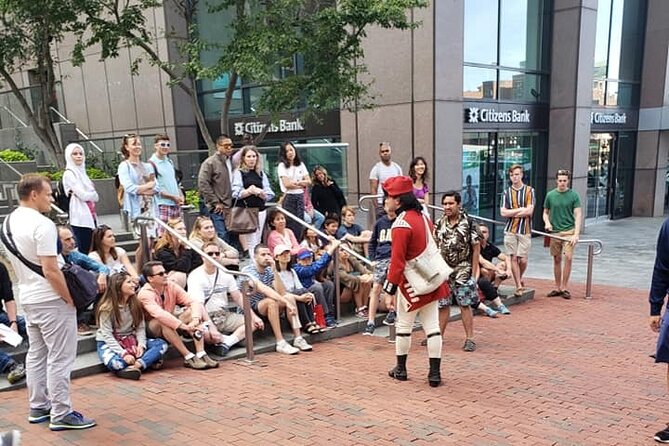
Outside King’s Chapel, the guide discusses more than architecture. The church helps place Boston’s Revolution in an international setting.
You pause outside for about eight minutes. Entrance to the chapel is not included, and you need a separate private ticket if you want to go inside. That arrangement keeps the walking tour price lower than a package that includes every museum, but it also means you should budget extra if interior visits are important to you.
The value of this stop is the shift in scale. The Revolution was not an isolated Boston quarrel. Events in the city connected to wider political and religious forces, along with the influence of Britain and the larger Atlantic world.
An exterior explanation can be enough for a quick historical walk, especially when the guide uses the building to explain people and ideas. If you want to study the interior, plan on returning later rather than expecting this tour to provide a full museum visit.
Same city, a very different afternoon:
- History and Hauntings of Salem Guided Walking Tour
★ 5.0 · 14,564 reviews - Boston Duck Boat Sightseeing City Tour with Cruise Along Charles River
★ 4.5 · 9,378 reviews - Boston Hop-On Hop-Off Trolley Tour with 13 Stops
★ 4.5 · 5,576 reviews - Boston: City Cruises Whale Watching Cruise
★ 4.5 · 4,710 reviews
Old South Meeting House: beyond the Boston Tea Party
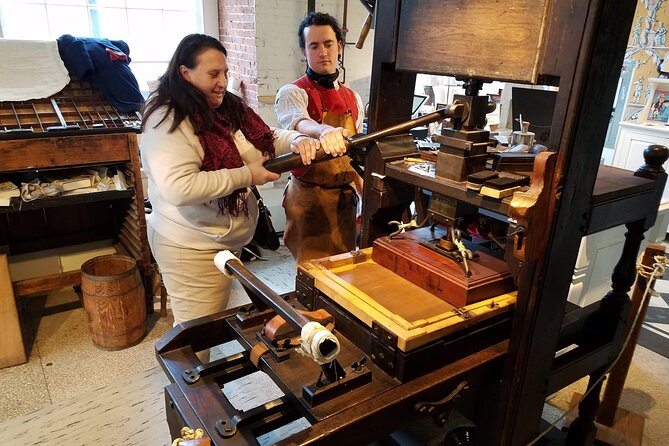
Old South Meeting House is often reduced to one famous role: the place associated with the gathering that helped lead to the Boston Tea Party. This tour places that moment inside a broader story.
The stop lasts about eight minutes, again from outside. A separate ticket is needed to enter. That is a limitation for anyone hoping to spend time inside several historic buildings during one booking, but the outdoor format keeps the pace moving.
The building matters because meetings were not passive events. People gathered to argue, organize, hear competing views, and decide what action might follow. The Boston Tea Party did not emerge from nowhere, and the meeting house helps explain the public pressure behind it.
I appreciate the promise to give the site broader significance. The familiar version of the Tea Party can sound like a simple protest over taxes. A stronger explanation shows how local debate, imperial authority, commerce, and public action came together.
Old State House and the Boston Massacre site
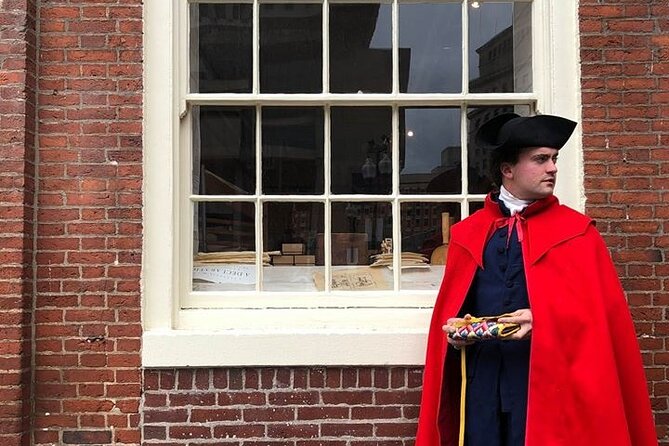
The walk continues to the Old State House, with about six minutes devoted to the building and its connection to the Boston Massacre. The guide discusses the city’s diverse story and the event’s long legacy.
You then walk over the spot associated with the Boston Massacre. The stop is intentionally brief because the site sits in the middle of active city traffic. That is sensible. You get the location and the historical meaning without lingering in a place where street movement can make a long discussion awkward.
The Boston Massacre is a good example of why interpretation matters. The name itself helped shape public feeling, turning a street confrontation into a powerful political symbol. The event was used in arguments about British rule, military presence, justice, and the rights of local people.
The Old State House gives that discussion a larger civic setting. It was not simply an old building to photograph. It represented government and authority in a city where different groups had competing ideas about who should control public life.
Because the stop is short, you should not expect a full museum tour or a detailed courtroom reconstruction. You get a focused explanation of the place and its role in the larger story.
Revolutionary meeting rooms, markets, and military power
One later part of the route takes you through a site that served as a Revolutionary meeting space, a marketplace, and a British armory. The itinerary does not assign a name to this stop, but its mix of roles shows how closely trade, public debate, and military power overlapped in Boston.
This is one of the most useful kinds of stop on the walk. It helps you picture the city as a working place rather than a museum district. People bought and sold goods, heard political arguments, and encountered the presence of the British military in the same urban spaces.
That combination also explains why Boston’s story could become tense so quickly. A dispute about money or policy was never only an abstract debate. It affected merchants, workers, soldiers, officials, and families living close together.
The guide’s ability to answer questions should be especially helpful here. This is the sort of location where you may want to ask how daily life connected to the political crisis. Adam’s patient and easygoing style, as described by past participants, suits that kind of conversation.
A lantern signal and the hard meaning of freedom
Another stop focuses on a church famous for the lanterns that signaled the coming Revolution. The site also opens a harder discussion about the contradiction between freedom and bondage.
That contrast is central to the tour’s purpose. The Revolution used powerful language about liberty, yet freedom was not shared equally. Bringing slavery and bondage into the story is not an optional modern footnote. It changes how you understand the words used by the people who shaped the period.
The stop is valuable because it links a dramatic piece of popular memory with a serious moral question. You get the lantern story, but you are also asked to consider who benefited from the political changes that followed and who remained excluded.
The route does not promise entry into this church or any other unnamed private site. Treat the outdoor discussion as the included experience. If the interior matters to you, check separately for admission and opening details before adding it to your day.
The route, pace, and group size
The walk ends at Haymarket, at 100 Hanover Street. The route may go a little farther depending on walking speed and how much time the guide spends answering questions.
The stated length is about one hour and 30 minutes to two hours. That range is useful to know when planning lunch, a museum visit, or a train connection. I would avoid scheduling another fixed activity immediately afterward, especially if you enjoy stopping to ask questions.
A maximum of 16 people is a real advantage in downtown Boston. The group is large enough to create a social feel but small enough for the guide to address the people in front of him. You are less likely to be stranded at the back of a large crowd or lose the thread of the explanation at a street crossing.
The tour uses a mobile ticket, and confirmation arrives when you book. The starting point is easy to identify at the Boston Common Visitors Center, and the end near Haymarket gives you access to more central Boston connections.
Most people can take part, and service animals are allowed. Since this is a city walking tour, comfortable footwear remains the practical choice. The route includes busy streets, and the Boston Massacre site is not designed for a long stop.
Is $45 a fair price?
At $45 per person, this is not the cheapest way to walk through Boston. You can see many exterior landmarks on your own for free. The price makes more sense if you want a guide who can connect the locations, explain the less familiar parts, and respond to questions as you go.
The fee includes a professional guide but not separate admission to King’s Chapel, Old South Meeting House, or the Old State House. If you want to enter all three, your total day cost will rise. On the other hand, you are not paying for museums you may not have time to visit.
I see the value in the interpretation rather than the number of stops. The walk covers a lot of ground, but its purpose is to explain how the sites fit together. It suits someone who prefers a focused conversation over a rapid checklist of photo stops.
The advance booking pattern is also worth noting. This experience is booked about 47 days ahead on average, so I would reserve early if your Boston dates are fixed. The cancellation policy allows a full refund when you cancel at least 24 hours before the start time. A minimum group size applies, and if the operator cancels for that reason, you are offered another date or a full refund.
Who should book this walk?
I would choose this tour if you want Boston’s Revolutionary story presented with more attention to inclusion, public debate, and the limits of liberty. It is a good match for adults, older children who enjoy discussion, history students, and anyone tired of a simple hero story.
It also suits you if you like a guide with personality. Adam’s humor, period outfit, patience, and clear delivery are repeatedly praised in the supplied feedback, and those qualities can make a serious subject easier to follow.
I would think twice if you want extended indoor visits. Three named buildings require separate tickets, and several stops are brief outdoor talks. A self-guided museum day may suit you better if your main goal is to study interiors, objects, and exhibits at your own pace.
Should you book the Public Authentic Revolutionary Boston Walking Tour?
Book it if you want a small-group walk that treats the Revolution as a living civic question, not just an old military story. The route covers major sites, but the best reason to go is the guide’s effort to connect famous events with overlooked people, international forces, and the gap between liberty and bondage.
Skip it if you only want free landmark viewing or a quick photo tour. At $45, the experience earns its price through interpretation, conversation, and the chance to ask questions. For a more thoughtful first look at Revolutionary Boston, that is a fair exchange.
FAQ
How long does the Public Authentic Revolutionary Boston Walking Tour last?
The tour lasts approximately one hour and 30 minutes to two hours. The final length can depend on walking speed and the time available for discussion.
Where does the tour begin?
It begins at the Boston Common Visitors Center, 139 Tremont Street, Boston, Massachusetts 02111.
Where does the tour end?
The scheduled end point is Haymarket, 100 Hanover Street, Boston, Massachusetts 02108. The route may continue farther depending on pace and available time.
How much does the tour cost?
The price is $45 per person.
Are museum admissions included?
No. The tour price does not include separate admission to private museums and sites along the route. Entry to King’s Chapel, Old South Meeting House, and the Old State House requires separate tickets.
How many people can join the tour?
The maximum group size is 16 people.
Is the tour available with a mobile ticket?
Yes. The experience uses a mobile ticket, and confirmation is provided at the time of booking.
Can I cancel for a refund?
Yes. You can cancel at least 24 hours before the experience start time for a full refund. Cancellations or changes made less than 24 hours before the start time are not refunded or accepted.
Just added around Boston
- Day Trip from Boston: Explore Hammond Castle Museum★ 3.7 · 3 reviews
- Boston: WNDR Museum Entry Ticket★ 3.7 · 3 reviews
- The Boston Bash Scavenger Hunt★ 4.5 · 3 reviews
- Self-Guided Audio Tour of Boston North End★ 4.5 · 3 reviews
- Boston: Official Freedom Trail® Lantern Tour★ 4.7 · 3 reviews
- Boston: North End Walking Tour with Private Harbor Cruise★ 5.0 · 3 reviews
- Self Guided “The North End Pizza, Cannoli and Picnic” Solo Walking Tour★ 5.0 · 3 reviews
- Cambridge: Haunted Charles River Cruise★ 4.3 · 3 reviews
Walking Tours in Boston, compared.
Freedom Trail History Small Group Walking Tour
Read our review →
Harvard University Campus Guided Walking Tour
Read our review →
Boston Freedom Trail Walking Tour with Costumed Guide
Read our review →
The Full Revolutionary Story Epic Small Group Boston Walking Tour
Read our review →
Boston’s Freedom Trail: A Revolutionary Walking Tour
Read our review →Freedom Trail History Small Group Walking Tour
Read our review →Boston’s Freedom Trail: A Revolutionary Walking Tour
Read our review →
Boston’s North End Food Tour: Italian Flavors & Heritage Walk
Read our review →Browse the lists this tour appears in