
Reviewed · CRUISES & BOAT TOURS
Boston: City Cruises Whale Watching Cruise
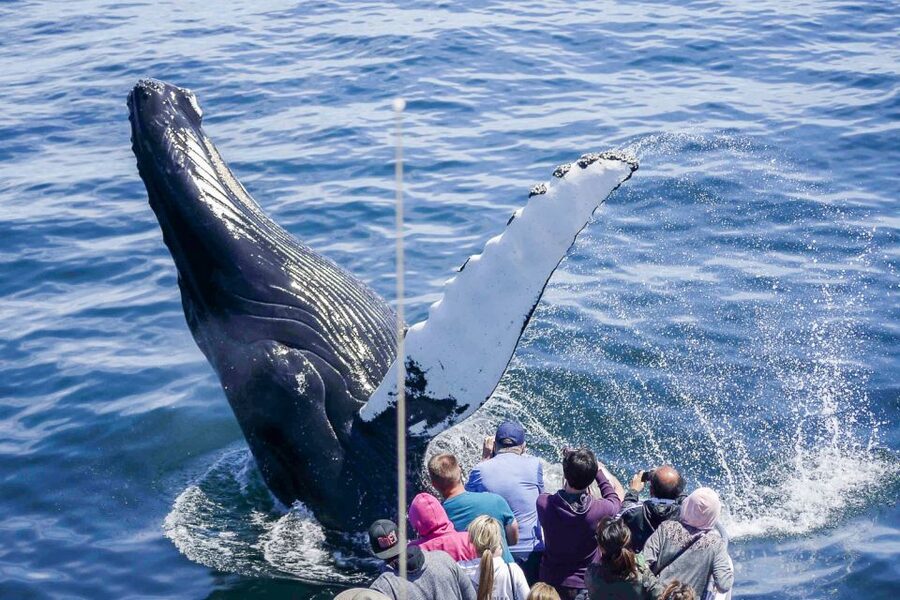
Boston’s whale-watching prize is not a distant fin on the horizon. At Stellwagen Bank, you might watch humpbacks surface, slap their tails, or even breach near the boat. The New England Aquarium naturalists add meaning to each sighting, explaining how to tell a humpback from a fin whale and helping you know where to look.
I like the roomy boat, with outdoor decks for clear views and a warm cabin when the wind picks up. I also like the conservation-minded commentary and the chance to see wildlife in its own habitat, not behind glass. The main catch is the sea itself: rough water can make the ride uncomfortable, and the trip may last longer than three hours if the whales are far offshore.
In This Review
- Key points to know before boarding
- From Long Wharf to the open Atlantic
- What the boat is like for a 210-minute ride
- The long run to Stellwagen Bank
- Meeting humpbacks, fin whales, and minkes
- Why the naturalist makes a difference
- How to get the best view
- Is $85 a fair price?
- Who should book this cruise?
- Should you book the Boston whale watch?
- FAQ
- Where does the Boston whale-watching cruise depart?
- How long does the cruise last?
- Which whales might I see?
- Is the cruise led by a guide?
- What facilities are available on the boat?
- What should I bring?
- Is the cruise suitable for people with motion sickness?
Key points to know before boarding
- Whale time happens at Stellwagen Bank: Plan on roughly 1.5 hours in the main viewing area, after the boat travels offshore.
- Naturalists lead the experience: New England Aquarium staff provide live English commentary, identify species, and answer questions.
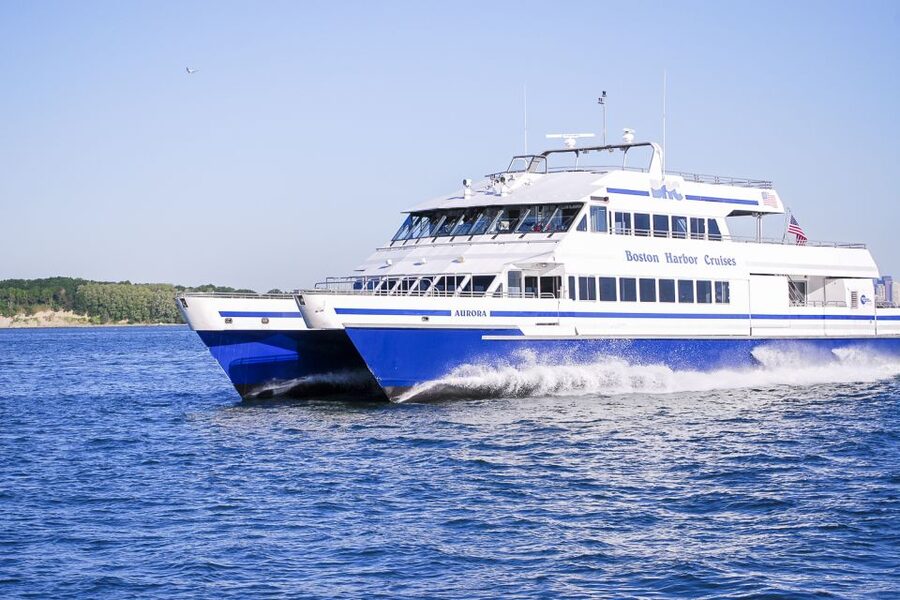
- The catamaran-style boat has choices: Use the open decks for the best air and views, or retreat indoors to cushioned seats, tables, and large windows.
- Sightings can be spectacular: Humpbacks, fin whales, minkes, dolphins, and other marine life may appear, though no wild animal show is guaranteed.
- Pack for wind, not just sunshine: A jacket, layers, sunglasses, sunscreen, and a hat are useful even on a warm Boston day.
- Allow four hours, not three: The advertised duration is 210 minutes, but the average trip runs about 3.5 to 4 hours and can take longer.
From Long Wharf to the open Atlantic
The cruise begins at One Long Wharf, between the Long Wharf Marriott Hotel and the New England Aquarium. You present your voucher for scanning at the boarding point, then settle into a high-speed boat built for a long run offshore.
The location is easy to combine with a day in central Boston. You are right beside the aquarium, within reach of the harbor attractions, and close to the waterfront hotels. Still, do not schedule a tight museum entry, dinner reservation, or airport transfer immediately after the cruise. The whale search depends on where the animals are feeding, and the return can run beyond the stated three hours.
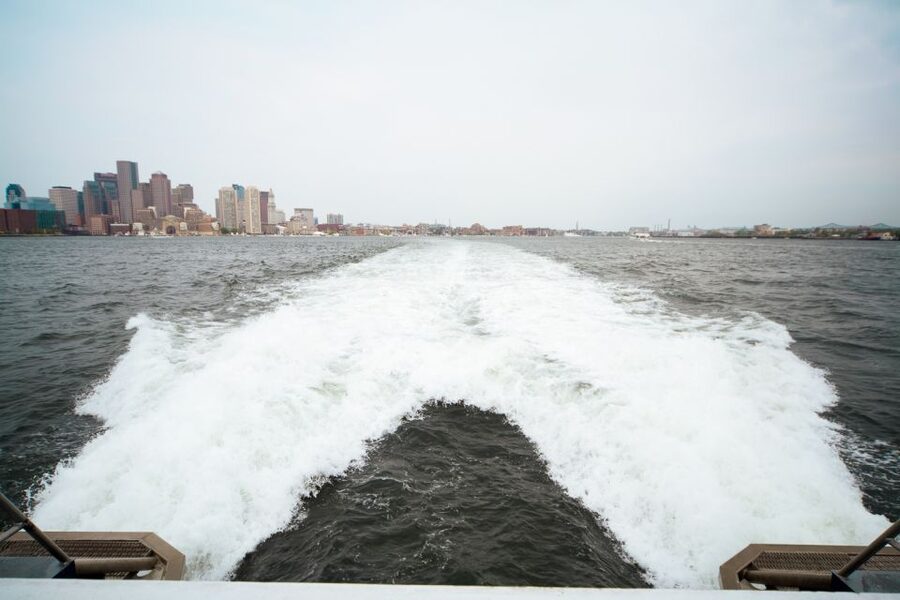
As the boat leaves Boston Harbor, you pass Castle Island and the Boston Harbor Islands National and State Park. These are views rather than stops, so do not expect to get off or explore them on foot. The harbor scenery gives you a pleasant start, but the main event is farther out, where the water opens up and the city fades behind you.
A few more Boston tours and experiences worth weighing up
- City Cruises Boston Whale Watching Cruise by High-Speed Boat
★ 4.5 · 3,115 reviews - Plymouth: Whale Watching Cruise
★ 4.7 · 171 reviews
What the boat is like for a 210-minute ride
This is a practical boat for a half-day outing. You have outside viewing decks, climate-controlled indoor areas, cushioned seating, tables, large windows, and a galley selling food and drinks. A sound and video system carries the naturalist’s presentation around the vessel.
The indoor cabin matters more than it may sound. Offshore wind can be sharp, even in good weather, and a warm place to sit gives you a break without ending your wildlife watching. It also helps families and anyone who does not want to remain outside for the entire trip.
The open decks are where you will usually want to be when a whale is spotted. You can get fresh air and a less obstructed view, but popular rail positions fill quickly. One practical issue is crowding: people may gather along the front and sides, making it harder for shorter passengers to see. If you are not tall, move around when safe and appropriate rather than staying locked into one position.
The boat includes restrooms and a galley with snacks and beverages for purchase. Nothing is included toward the snack counter, so budget separately if you want food or a drink. Bring water if you prefer to avoid onboard prices, but smoking is not allowed.
The long run to Stellwagen Bank
The trip to the Gerry E. Studds/Stellwagen Bank National Marine Sanctuary can take about 1.5 hours. That travel time is part of the experience, but it is also the least predictable part. If the whales are farther away, the captain may need to continue, and the total outing can stretch beyond four hours.
The naturalist commentary helps make the ride offshore useful rather than empty time. You may hear about local species, whale behavior, and the marine environment before the first sighting. Guides may also move through the boat on the way out and back, giving you a chance to ask questions instead of relying only on announcements.
This is where the high-speed boat earns its keep. It is designed to reach the feeding grounds faster than a slower harbor vessel, giving you more time in the area where whales are likely to gather. Even so, fast does not mean perfectly smooth. Several passengers found the ride manageable, while others warned that choppy conditions caused serious motion sickness.
If you are prone to seasickness, take the warning seriously. The cruise is not a good fit if motion sickness usually ruins your time on boats. Ask the crew which part of the vessel has less movement, and consider a preventative remedy if that is appropriate for you. The boat’s size and stability helped some people who normally worry about seasickness, but conditions change from day to day.
Meeting humpbacks, fin whales, and minkes
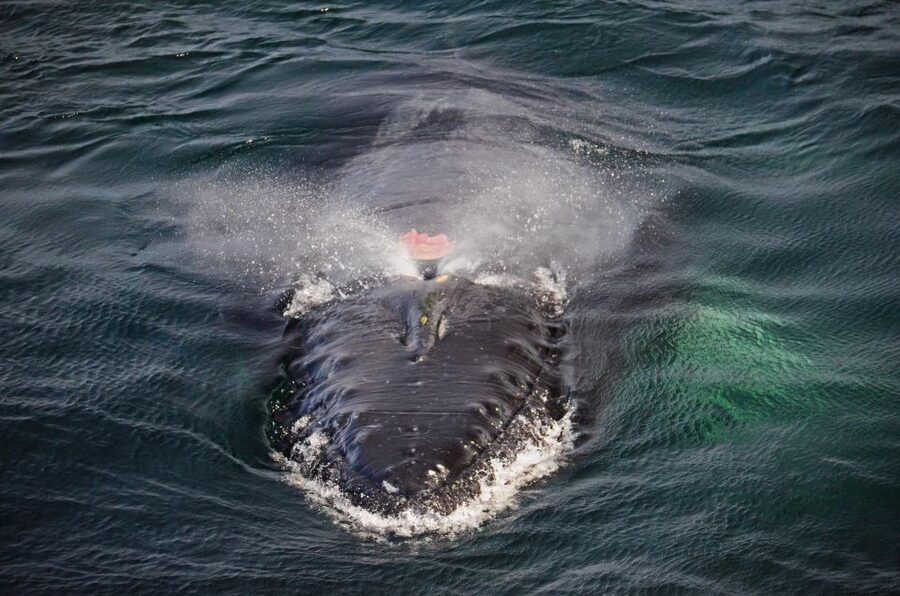
Humpback whales are the main attraction for many people. They are easy to recognize by the rounded back that arches above the water before a deep descent, and by their long pectoral fins. Their scientific name, Megaptera novaeangliae, means big-winged New Englander, a fitting name for a whale that can appear surprisingly graceful despite its size.
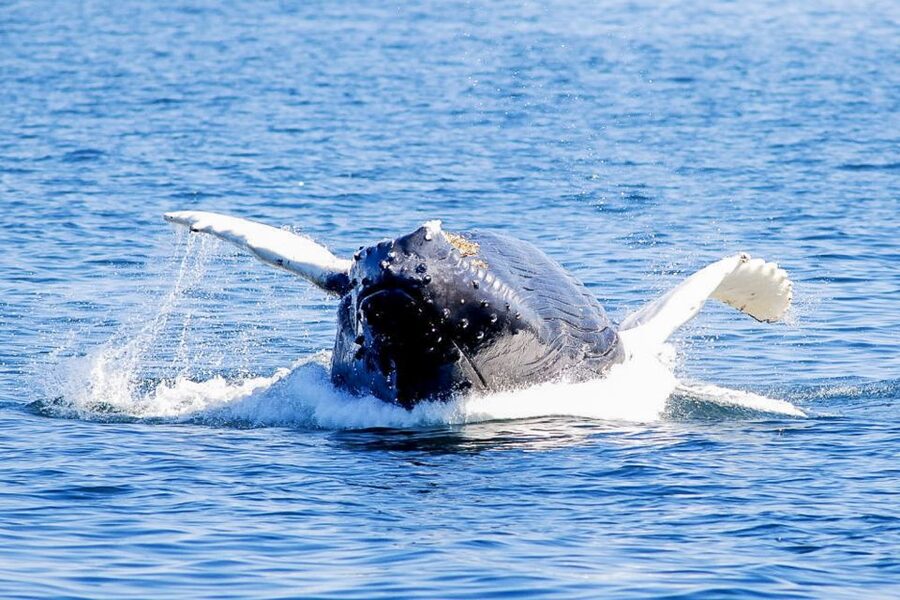
A humpback sighting may be brief, or it may build into a long sequence of surfacings. You might see a blow, a back, a tail, or a more dramatic breach. Several cruises reported groups of humpbacks surfacing together, and one outing included a whale breaching close to the boat. Such moments cannot be ordered up, but they are the reason to keep watching after the first whale disappears.
Fin whales are enormous, second only to blue whales in size. Adults can reach about 45 to 70 feet and weigh around 40 tons. They often look more streamlined than humpbacks, so the naturalist’s help is valuable when the animal surfaces only briefly.
Minke whales are smaller and sleek, with a somewhat dolphin-like appearance. They are the most abundant whale species in the world, yet seeing one is not guaranteed. Some passengers saw two minkes along with humpbacks, which made for a particularly varied outing.
You may also encounter North Atlantic white-sided dolphins. They are social, quick, and playful, and a large pod can provide a memorable bonus while the boat is moving between whale sightings. Basking sharks and other sea life have also appeared on cruises, but the crew cannot promise any particular species.
More ways to see Boston in a day:
- Boston Duck Boat Sightseeing City Tour with Cruise Along Charles River
★ 4.5 · 9,378 reviews - Boston: City Cruises Historical Sightseeing Cruise
★ 4.6 · 1,771 reviews - City Cruises Boston Historic Sightseeing Harbor Cruise
★ 4.5 · 1,388 reviews - City Cruises Salem High Speed Ferry to/from Boston
★ 4.5 · 727 reviews
Why the naturalist makes a difference
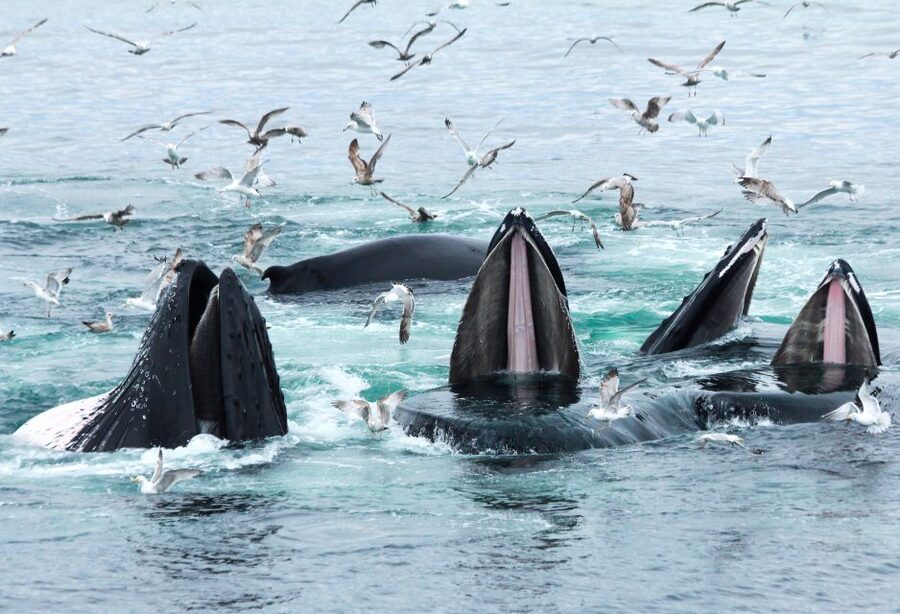
Whale watching is more rewarding when you understand what you are seeing. A naturalist can point out the direction of a blow, explain the difference between a tail slap and a breach, and identify a whale by its markings or behavior.
The guides bring energy without turning the trip into a loud amusement ride. Andrew was singled out for his enthusiasm, while Amanda was praised for her clear explanations and for showing a piece of an original humpback whale tooth. The names may change with the sailing, but the important point is that the commentary comes from people trained to interpret local marine life.
I especially value the conservation message. The cruise operates near a protected marine sanctuary, and the commentary connects sightings with research and care for the region’s whales. You are not simply collecting photographs. You are learning why this stretch of Massachusetts water supports so many large animals.
The sound system generally helps people follow along from different parts of the boat, though one passenger found the speakers difficult to understand. If you have trouble hearing announcements, staying closer to the naturalist or an indoor speaker may help.
How to get the best view
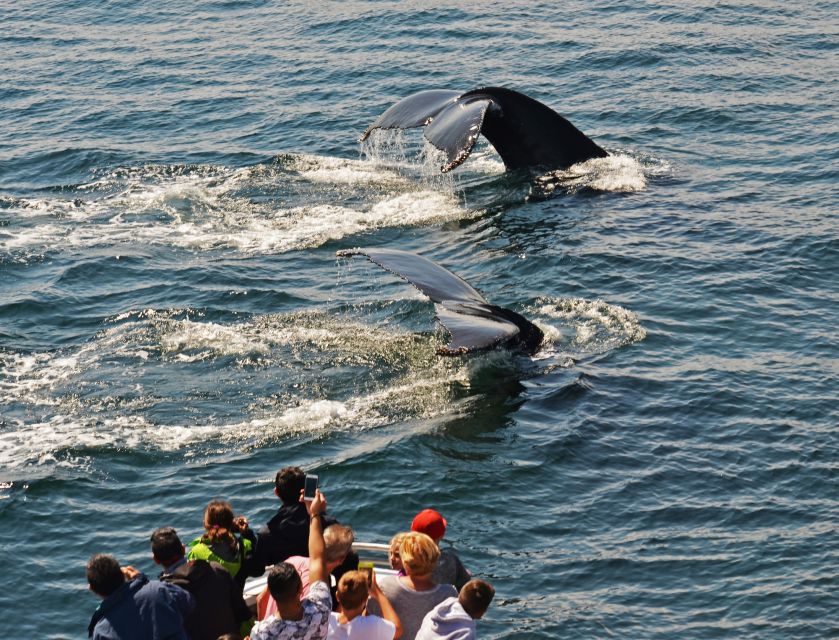
Bring binoculars if you have them, but do not depend on them. Whales can surface close enough for the naked eye, and the crew will direct your attention to the right area. A camera with a zoom lens is useful, though no photograph is worth missing the moment itself.
Dress for the boat, not the temperature on land. Wear comfortable shoes and pack a jacket, hat, sunglasses, sunscreen, and weather-appropriate layers. The upper deck can feel cold in the wind, while the cabin may feel much more comfortable during the long ride offshore.
Arrive ready to move between viewing areas. The front may offer a strong angle, but it can be crowded and windy. The sides can provide good views when whales surface nearby, though people sometimes gather there too. The rear can be calmer for some passengers who feel motion sick, and crew members can advise you on the best place to sit.
Keep your eyes on the water even when the boat is traveling. Dolphins may appear suddenly, and a whale can surface in a different direction from the main group. The naturalist will help, but your own attention matters.
Is $85 a fair price?
At $85 per person, this is not a bargain-basement harbor ride. You are paying for a 3.5 to 4-hour outing, a fast boat capable of reaching offshore feeding grounds, onboard interpretation, outdoor and indoor viewing, and the chance to see large wild animals in protected waters.
The value depends on what you want from a Boston day. If your priority is guaranteed entertainment every minute, the price may feel steep because travel time can be long and sightings are never certain. If you accept that wildlife watching involves patience, the cost is easier to justify, especially when the cruise produces several whales, dolphins, or extended surface activity.
Food and drinks cost extra, so factor that into your budget. The cancellation policy is useful for planning: you can cancel up to 24 hours before departure for a full refund, and a reserve-now, pay-later option keeps your plans flexible. Inclement-weather rules can vary, so check the local operator’s current guidance before you go.
A useful bonus may be offered if the boat finds no whales. One passenger received the option of a free return trip after an unsuccessful sailing. Do not assume this will apply in every situation, but it is worth asking the crew about the current policy.
Who should book this cruise?
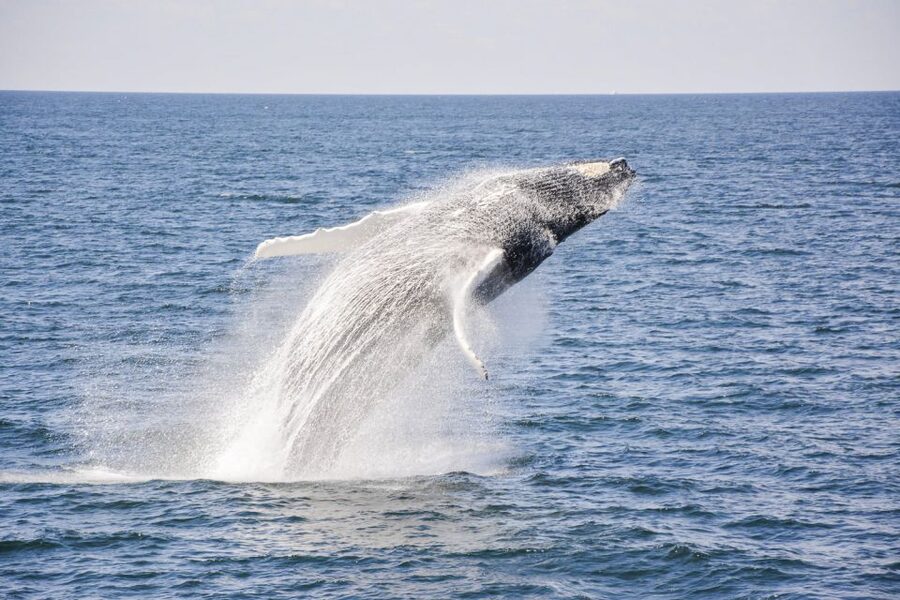
I would choose this cruise for families with older children, couples, solo visitors, and anyone who wants a break from Boston’s streets. It gives you a genuine connection with the coast and can become the most memorable part of a city visit.
It suits people who can handle a long boat ride and changing weather. Children may enjoy the excitement of spotting a blow or dolphin pod, though smaller children should be prepared for wind, waiting, and the possibility that the animals stay hidden.
This is less suitable for anyone with severe motion sickness, limited patience for open-water travel, or a fixed schedule later in the day. It is also not ideal if you need a quiet, uncrowded wildlife experience. The boat can fill up, and the best rail spots may require patience and consideration from everyone onboard.
The cruise is wheelchair accessible, and infant tickets must be purchased for babies to board. The live tour is conducted in English.
Should you book the Boston whale watch?
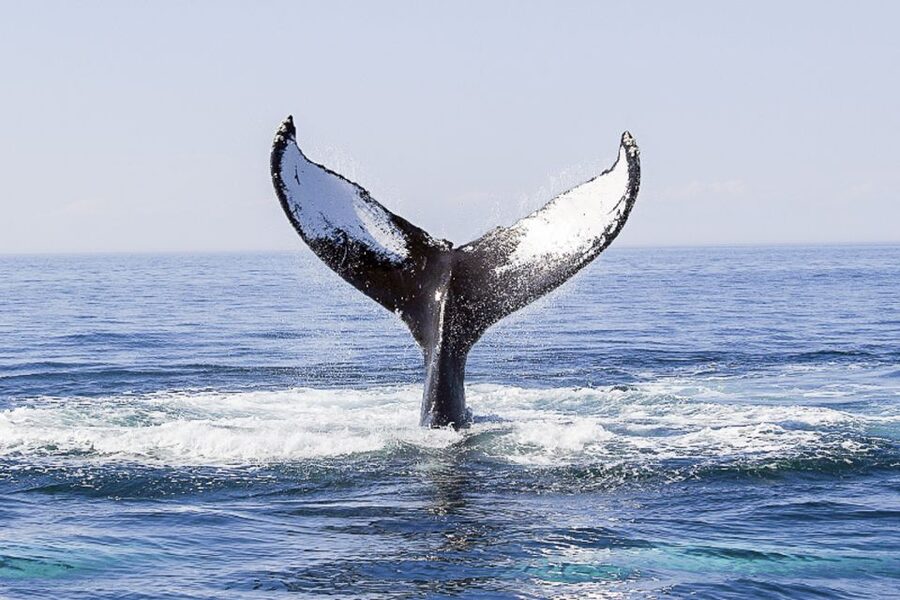
Book it if you can give the cruise a full half-day and accept wildlife on its own terms. The strongest reasons are the access to Stellwagen Bank, the expert New England Aquarium commentary, and the comfortable setup that lets you switch between open-air viewing and a heated cabin.
I would book in a weather window when possible, pack warmer clothing than you think you need, and avoid scheduling anything urgent afterward. The whales may offer only a few backs and blows, or they may put on a remarkable show with breaches, tail slaps, dolphins, and close passes.
At $85, the experience is worth it for a serious whale-watching attempt from Boston, not for a guaranteed performance. If you want to see these animals in the wild and have the time to wait for them, this is a strong choice.
FAQ
Where does the Boston whale-watching cruise depart?
The cruise leaves from One Long Wharf in Boston, between the Long Wharf Marriott Hotel and the New England Aquarium. Proceed to the boarding location and have your voucher ready for scanning.
How long does the cruise last?
The listed duration is 210 minutes. The average trip lasts about 3.5 to 4 hours, and it may run longer if the whales are farther offshore.
Which whales might I see?
You might see humpback, fin, and minke whales. The cruise may also encounter North Atlantic white-sided dolphins and other marine life.
Is the cruise led by a guide?
Yes. New England Aquarium naturalists provide live English commentary about the whales, marine life, and the surrounding waters.
What facilities are available on the boat?
The boat has outdoor viewing decks, climate-controlled indoor seating, cushioned seats, tables, large windows, sound and video systems, and a galley selling snacks and beverages.
What should I bring?
Bring comfortable shoes, sunglasses, a sun hat, sunscreen, a camera, binoculars, a jacket, and clothing suited to the weather. Layers are especially useful because it can be windy outdoors.
Is the cruise suitable for people with motion sickness?
The cruise is not recommended for people with motion sickness. Sea conditions can be choppy, so ask the crew about the part of the boat with the least movement and prepare accordingly.
Just added around Boston
- Day Trip from Boston: Explore Hammond Castle Museum★ 3.7 · 3 reviews
- Boston: WNDR Museum Entry Ticket★ 3.7 · 3 reviews
- The Boston Bash Scavenger Hunt★ 4.5 · 3 reviews
- Self-Guided Audio Tour of Boston North End★ 4.5 · 3 reviews
- Boston: Official Freedom Trail® Lantern Tour★ 4.7 · 3 reviews
- Boston: North End Walking Tour with Private Harbor Cruise★ 5.0 · 3 reviews
- Self Guided “The North End Pizza, Cannoli and Picnic” Solo Walking Tour★ 5.0 · 3 reviews
- Cambridge: Haunted Charles River Cruise★ 4.3 · 3 reviews
Cruises & Boat Tours, compared.
Boston Duck Boat Sightseeing City Tour with Cruise Along Charles River
Read our review →
City Cruises Boston Whale Watching Cruise by High-Speed Boat
Read our review →

City Cruises Boston Historic Sightseeing Harbor Cruise
Read our review →
Browse the lists this tour appears in