
Reviewed · FREEDOM TRAIL TOURS
Boston’s Freedom Trail: A Revolutionary Walking Tour
Boston’s Freedom Trail is best understood on foot, one brick-red stop at a time. This 2.5-hour tour takes you past all 16 official sites, from the golden-domed State House area to the USS Constitution and Bunker Hill Monument. It gives you the city’s revolutionary story in the very places where it unfolded.
I like two things right away. First, the guide does more than recite dates, bringing in women, African Americans, immigrant patriots, rebels, gangs, and Midnight Riders. Second, $31 is a fair price for a long, guided introduction to central Boston, especially if this is your first visit. The tradeoff is simple: you cover a lot of ground quickly, and some sites are viewed from outside rather than entered.
In This Review
- Key points
- Starting at The Embrace on Boston Common
- Park Street Church and Granary Burying Ground
- King’s Chapel and Benjamin Franklin’s Boston
- Old South Meeting House and the Boston Tea Party
- Old State House and the Boston Massacre Site
- Faneuil Hall and the voices of protest
- Paul Revere House and the Old North Church
- Copp’s Hill Burying Ground and the USS Constitution
- Bunker Hill Monument and the full-route challenge
- How much value do you get for $31?
- Who should book this Freedom Trail walk?
- Should you book Boston’s Freedom Trail tour?
- FAQ
- How long is the Boston Freedom Trail walking tour?
- What is the price?
- Where does the tour begin?
- How do I identify the guide?
- Where does the tour end?
- Are admission tickets included?
- Which Freedom Trail sites are included?
- Is the tour wheelchair accessible?
- What should I bring?
Key points
- All 16 official sites in one walk: Cover the major Freedom Trail landmarks in a single 2.5-hour route.
- A story-led tour: Guides including Rob, Kenneth, Alissa, Charlie R, Matthew, and Stewart are praised for humor, energy, and clear storytelling.
- Revolutionary Boston in place: Hear about the Boston Massacre, Boston Tea Party, Paul Revere, the lantern signal, and the people buried along the trail.
- More than famous white men: The tour also addresses abolition, education, immigration, women, African Americans, and lesser-known patriots.
- A useful first-day choice: The route helps you get oriented to Boston while giving you ideas for museums, restaurants, bars, and later visits.
- Plan for city walking: Bring water and comfortable shoes. The route is listed as wheelchair accessible, but it is also marked as unsuitable for people with mobility impairments.
Starting at The Embrace on Boston Common
Meet your guide at The Embrace statue beside the Boston Common Visitor Center, at 139 Tremont Street. The guide will not be dressed in colonial costume. Instead, look for a flag bearing the Boston History Company name.
That practical detail matters. Boston Common has several paths, statues, and entrances, so arriving at the statue rather than simply searching for the Visitor Center should save time. Give yourself a few minutes to locate the exact meeting point.
The tour opens with Boston’s central role in the American Revolution, then moves into the older streets around the Common and downtown. The pace is built for sightseeing, not a slow architectural study. You will pause often for stories, but the group still needs to keep moving to reach all 16 sites.
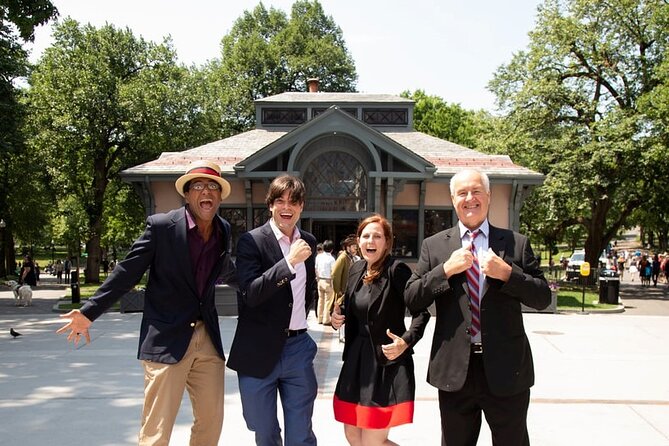
The tone is lively. Guides use humor, including the occasional cheap dad joke, to keep a long history lesson from becoming a list of names and dates. The strongest guides appear to be those who can balance performance with substance. Rob, Kenneth, Alissa, Charlie R, Matthew, Stewart, Noah, and others are praised for warmth, energy, and the ability to answer questions.
More Walking Tours in Boston
- Boston: Freedom Trail History Small Group Walking Tour
★ 5.0 · 6,450 reviews - Harvard University Campus Guided Walking Tour
★ 4.5 · 3,632 reviews - Boston Freedom Trail Walking Tour with Costumed Guide
★ 4.5 · 2,531 reviews
Park Street Church and Granary Burying Ground

Park Street Church is one of the early landmarks on the route. Its tall steeple helps establish Boston’s old skyline, and it provides a useful starting point for understanding how religion, public speech, and civic life overlapped in the city.
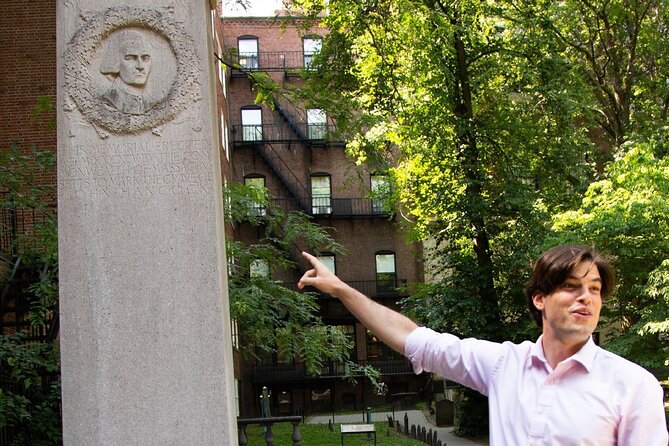
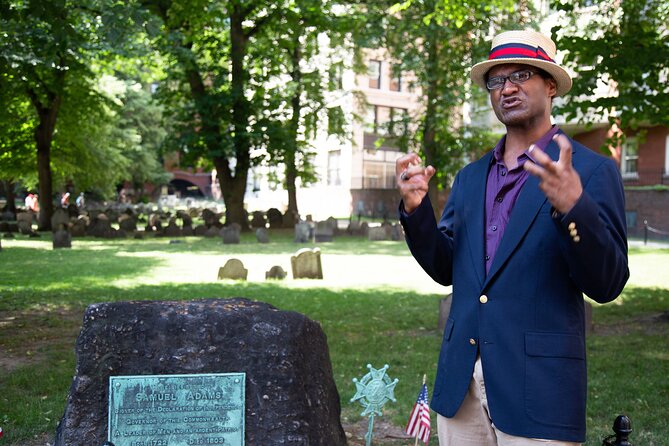
Nearby, Granary Burying Ground brings the revolutionary story down to individual names. This is where you can see the final resting places of John Hancock, Paul Revere, and Samuel Adams. Standing among the gravestones gives the tour a human scale that a statue or museum label cannot quite match.
Your guide can connect these figures to the larger political movement rather than treating them as isolated heroes. Paul Revere becomes more than the rider on a schoolbook page, and Samuel Adams becomes more than a name attached to a modern beer label.
The stop is also a good reminder that the Freedom Trail is not one single attraction. It is a chain of churches, burial grounds, meeting halls, streets, statues, and historic buildings woven into the working center of Boston. You will still see traffic, shops, and office buildings around you.
King’s Chapel and Benjamin Franklin’s Boston
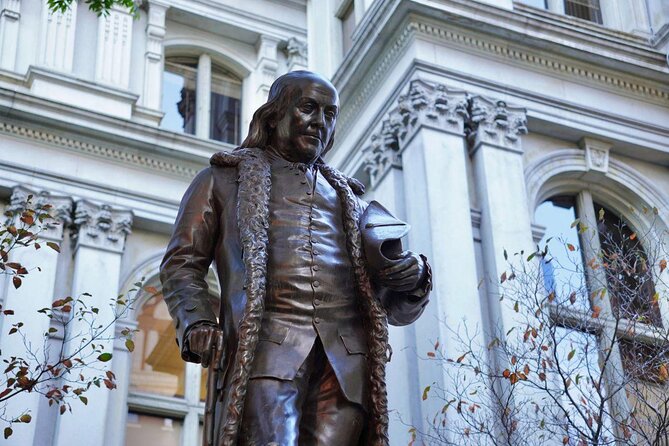
King’s Chapel is another early religious site, followed by the Benjamin Franklin statue. Together, these stops broaden the story beyond battlefields and midnight rides.
Franklin’s Boston connection is especially useful for first-time visitors who know him mainly as a Philadelphia figure. The statue and surrounding area let the guide place his early life within Boston’s colonial world and explain how the city shaped public debate, print culture, and education.
The tour also reaches the Old Corner Bookstore, a small but important literary landmark. Its presence adds another layer to the route. Boston’s importance was not limited to politics and war. The city also became a center for books, public argument, reform, and learning.
I like this stretch because it keeps the walking tour from becoming a parade of military monuments. You get a sense of Boston as a place where religious institutions, printers, merchants, reformers, and political organizers all operated close together.
Old South Meeting House and the Boston Tea Party

At the Old South Meeting House, the guide explains the gathering that helped set the stage for the Boston Tea Party. This is one of the places where a crowd could hear arguments, make decisions, and turn political frustration into public action.
The value of this stop comes from location. You are not just hearing that Boston colonists opposed British taxation. You are standing at a site tied to the meetings that pushed the dispute toward open rebellion.
The tour uses the Boston Tea Party as part of a chain of events rather than presenting it as a disconnected dramatic episode. That approach helps you understand cause and effect: public anger, political organizing, resistance, and the hardening response from British authorities.
Entry tickets to the historic buildings are not included in the $31 price. If you want to go inside the Old South Meeting House or other attractions, plan to pay separately. This tour is mainly a guided outdoor overview, which makes it a good first pass but not a substitute for every interior visit.
More Freedom Trail walks in Boston:
- Boston Food & History: Pizza, North End & Freedom Trail
★ 5.0 · 1,772 reviews - Boston: Freedom Trail History Small Group Walking Tour
★ 4.9 · 1,590 reviews - Boston’s Freedom Trail: A Revolutionary Walking Tour
★ 5.0 · 1,343 reviews - Freedom Trail Walking Tour 250
★ 4.5 · 1,118 reviews
Old State House and the Boston Massacre Site
The Old State House is among the most powerful stops because it brings government and conflict together in one compact area. Here, colonial political life collided with British authority, and the guide can show how public tension became physical violence.
At the Boston Massacre Site, you stand where the deadly confrontation occurred. The word massacre carries enormous emotional weight, but the event itself has a complicated political and legal story. A good guide helps you separate the facts of the shooting from the way colonial activists used the event to build opposition to British rule.
This is where guide quality matters most. The tour depends on clear storytelling, and the strongest guides are praised for making difficult history easy to follow without flattening it into a simple good-versus-bad tale. Charlie R, Kenneth, Julia, Megan, and Alissa are among the guides singled out for strong presentation and a personable style.
The Old State House and Boston Massacre Site also show how close together the key places are. Boston’s revolutionary story was not spread across a distant battlefield. Much of it happened in a compact urban core where people lived, worked, worshipped, argued, and watched one another.
Faneuil Hall and the voices of protest
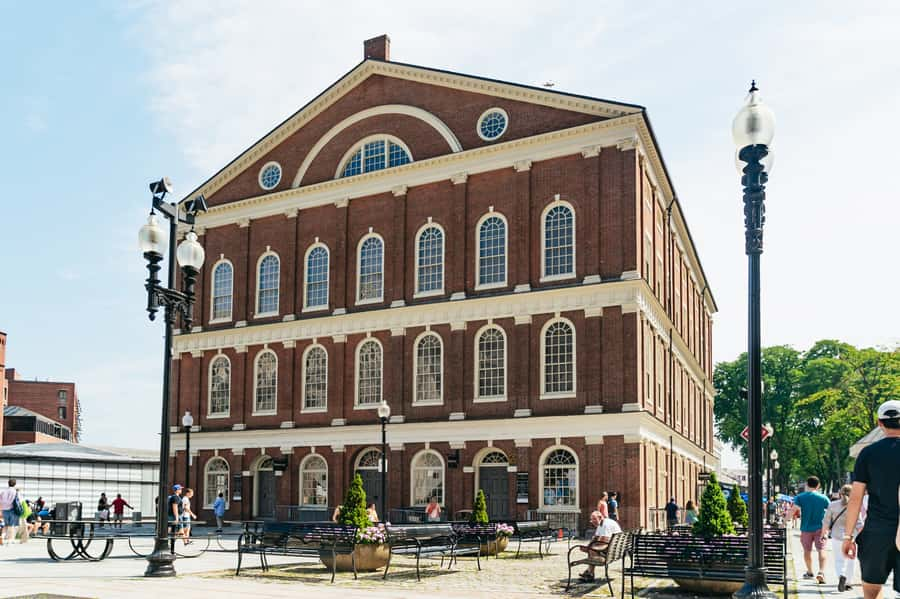
Faneuil Hall adds the language of public protest. It is tied to speeches, meetings, and Boston’s long tradition of civic debate. Your guide will help connect the building to the growing opposition to British rule and to the way public opinion could move through a city.
This is also a useful point for understanding that the Freedom Trail is not only about 1770s independence. The tour touches Boston’s later role in abolition, American education, and immigration. Those subjects make the route feel less like a frozen revolutionary display and more like a continuing story about the city’s public life.
I appreciate that wider frame. You still hear about famous figures such as Hancock and Revere, but you also get the lesser-known people who helped shape Boston. The tour’s emphasis on women, African Americans, and immigrant patriots gives you a fuller picture than a standard roll call of revolutionary leaders.
Faneuil Hall can be crowded and noisy, and the wider downtown route has normal city distractions. Do not expect every explanation to happen in a quiet courtyard. You may need to stand close to the guide and listen carefully.
Paul Revere House and the Old North Church
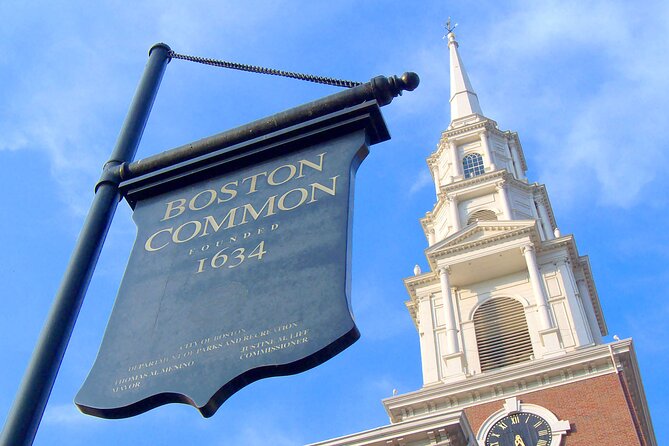
The route then reaches the Paul Revere House and the Old North Church, two of the most recognizable points on the trail.
The Paul Revere House gives the famous midnight ride a real neighborhood setting. Revere was not simply a character who appeared on horseback in the middle of nowhere. His home, family, trade, and community help explain the man behind the legend.
At the Old North Church, the guide discusses the two lanterns hung in the steeple. This is one of the tour’s most memorable visual moments because the signal is tied directly to the building above you. The story becomes easier to remember when you can look up at the steeple itself.
The area around the North End also changes the feel of the walk. You are moving through one of Boston’s best-known historic districts, with narrow streets and a strong connection to immigrant life. The tour does not promise a food tour, but guides may offer suggestions for restaurants, bars, and other places to explore afterward.
Copp’s Hill Burying Ground and the USS Constitution
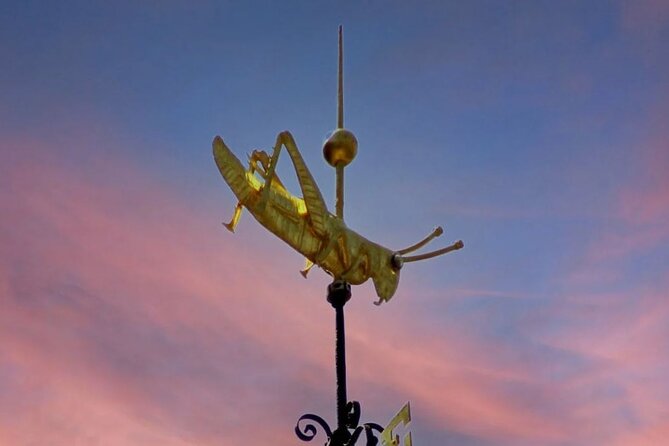
Copp’s Hill Burying Ground continues the burial-ground theme while shifting the story toward Boston’s North End and waterfront. As with Granary, the value is in the names and physical setting. A guide can use the cemetery to show how ordinary residents, religious communities, and political figures fit into the city’s changing story.
The walk eventually reaches the USS Constitution, one of the tour’s major visual highlights. Seeing the ship connects the Revolution and early American nation-building to the sea. Boston’s location and maritime life were central to its growth, and the Constitution gives that part of the story a physical focus.
The route covers a lot of ground before reaching this point. Wear shoes that can handle city sidewalks and bring water, particularly in warm weather. The tour description lists wheelchair access, but it also says the activity is not suitable for people with mobility impairments. If mobility is a concern, contact the operator before booking and ask for current route details.
Bunker Hill Monument and the full-route challenge

Bunker Hill Monument completes the official 16-site list. It gives the tour a strong closing landmark and connects the city’s early protests to open warfare.
Seeing all 16 sites in 2.5 hours is the tour’s main strength and its main limitation. You get a clear map of Boston’s revolutionary story, but individual stops receive limited time. If you want to enter historic buildings, read every marker, or spend time inside the burial grounds, you will need a separate visit.
The advertised end point is back at the meeting location. Since the route reaches the USS Constitution and Bunker Hill area, confirm the day’s exact walking plan with your guide if returning to a car or timed appointment matters. One useful feature of this tour is that guides also offer local suggestions, so you can use the final minutes to ask where to continue your day.
How much value do you get for $31?
At $31 per person, this is a sensible price for a live guide and a full 2.5-hour route. You are paying for interpretation and organization, not admission to the historic interiors.
I see the value in three areas:
- You do not need to plan the order of 16 sites yourself.
- A guide can explain how the Boston Massacre, Tea Party, lantern signal, and revolutionary leaders connect.
- You get local orientation, with possible suggestions for restaurants, bars, and other Boston areas.
The price is less appealing if you already know the Freedom Trail well or prefer to explore at your own pace. Boston’s public trail can be walked independently, and independent visitors can spend longer at selected sites. This guided option earns its cost by making the history easier to follow and by fitting the main landmarks into one efficient outing.
Free cancellation up to 24 hours before the start gives you some flexibility, and you can reserve now and pay later. The tour is conducted in English only, so non-native speakers should consider the pace of the guide. One review specifically notes that Matthew spoke quickly, despite giving an excellent tour.
Who should book this Freedom Trail walk?
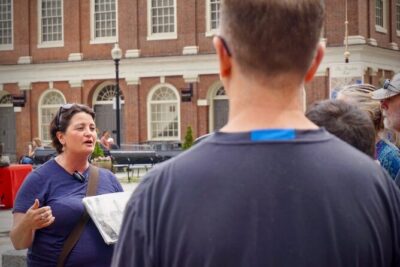
I would choose this tour for a first visit to Boston, a short stay, or a layover long enough for 2.5 hours of walking. It also works well for families and mixed-age groups because the humor and stories keep the route moving.
History fans who want detailed interior access should treat it as an introduction, then return to the sites that interest them most. You will not get a long museum visit at each landmark.
The tour also suits people who want more than the standard revolutionary heroes. Its attention to women, African Americans, immigrants, abolition, education, and lesser-known patriots gives the route greater range.
Should you book Boston’s Freedom Trail tour?
Book it if you want the complete official trail in one guided walk, a lively English-speaking guide, and useful context before exploring Boston on your own. The high rating across 1,748 reviews fits the recurring strengths: guides such as Rob, Kenneth, Alissa, Charlie R, Matthew, and Stewart are praised for humor, passion, clear explanations, and friendly answers.
Skip it if you dislike fixed walking routes, need lots of time indoors, or have mobility limits that make a long city walk difficult. For most first-time visitors, though, $31 is a reasonable way to see the main sites, understand their connections, and get your bearings in historic Boston.
FAQ
How long is the Boston Freedom Trail walking tour?
The tour lasts 2.5 hours. Check availability for the available starting times.
What is the price?
The price is $31 per person.
Where does the tour begin?
Meet at The Embrace statue beside the Boston Common Visitor Center at 139 Tremont Street.
How do I identify the guide?
The guide will carry a flag with the Boston History Company name. The guide will not be wearing a costume.
Where does the tour end?
The activity ends back at the meeting point.
Are admission tickets included?
No. Entry tickets to attractions are not included in the tour price.
Which Freedom Trail sites are included?
The route includes Park Street Church, Granary Burying Ground, King’s Chapel, the Benjamin Franklin statue, Old Corner Bookstore, Old South Meeting House, Old State House, Boston Massacre Site, Faneuil Hall, Paul Revere House, Old North Church, Copp’s Hill Burying Ground, USS Constitution, and Bunker Hill Monument, along with the full 16-site official Freedom Trail route.
Is the tour wheelchair accessible?
The activity is listed as wheelchair accessible, but it is also marked as not suitable for people with mobility impairments. Contact Boston History Company before booking if you need specific route information.
What should I bring?
Bring comfortable shoes, water, and comfortable clothing. Video recording is not allowed.
Just added around Boston
- Day Trip from Boston: Explore Hammond Castle Museum★ 3.7 · 3 reviews
- Boston: WNDR Museum Entry Ticket★ 3.7 · 3 reviews
- The Boston Bash Scavenger Hunt★ 4.5 · 3 reviews
- Self-Guided Audio Tour of Boston North End★ 4.5 · 3 reviews
- Boston: Official Freedom Trail® Lantern Tour★ 4.7 · 3 reviews
- Boston: North End Walking Tour with Private Harbor Cruise★ 5.0 · 3 reviews
- Self Guided “The North End Pizza, Cannoli and Picnic” Solo Walking Tour★ 5.0 · 3 reviews
- Cambridge: Haunted Charles River Cruise★ 4.3 · 3 reviews
Freedom Trail Tours, compared.
Freedom Trail History Small Group Walking Tour
Read our review →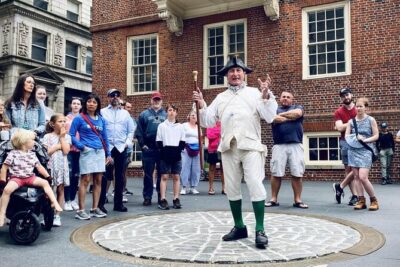
Boston Freedom Trail Walking Tour with Costumed Guide
Read our review →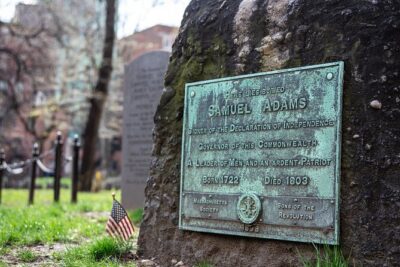
Boston Food & History: Pizza, North End & Freedom Trail
Read our review →Freedom Trail History Small Group Walking Tour
Read our review →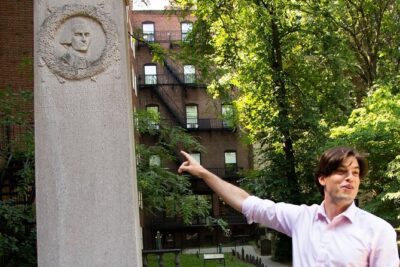
Boston’s Freedom Trail: A Revolutionary Walking Tour
Read our review →

Boston Freedom Trail History Pub Crawl Small-Group Tour
Read our review →
Entire Freedom Trail Walking Tour: Includes Bunker Hill and USS Constitution
Read our review →Browse the lists this tour appears in