
Reviewed · WALKING TOURS IN BOSTON
The Full Revolutionary Story Epic Small Group Boston Walking Tour
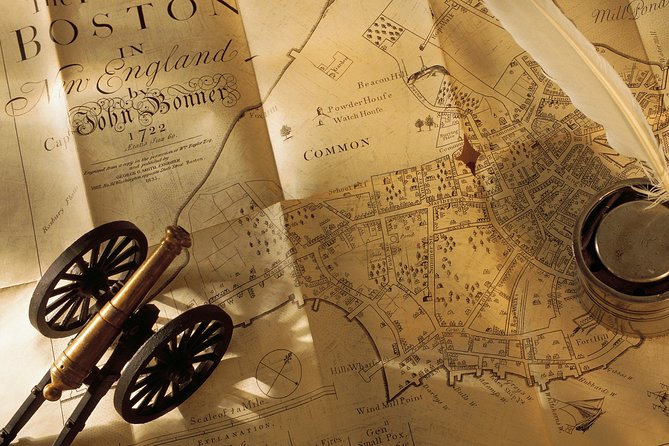
Boston’s Freedom Trail is easy to follow, but this tour takes a smarter route: it tells the story in the order events happened. You begin with Boston’s early settlers, move through rising anger against British rule, and finish with the Revolution spreading beyond the city. The chronological approach makes the people, protests, and battles easier to understand.
I like the small group, capped at 15 people, and the way the walk includes modern Boston instead of treating the city as a museum piece. I also like the teaching tools: maps, character cards, and even Lego soldiers have helped guides such as Tyler make complicated events clear. The main drawback is simple: this is a long outdoor walk, often up to three and a half hours, with no indoor shelter if the weather turns cold or wet.
In This Review
- Key points to know before you book
- Why the chronological route makes Boston easier to understand
- Starting beside City Hall and Boston’s loudest architecture
- King’s Chapel and the people who shaped Massachusetts Bay
- Granary Burying Ground and the real Sons of Liberty
- Old City Hall, Franklin, and the pressure building downtown
- The Tea Party, Faneuil Hall, and the protest that became rebellion
- The Greenway and a change of pace
- Paul Revere and Boston’s oldest residential streets
- Bunker Hill and the Revolution’s larger battlefield
- Finishing along Boston Harbor in the North End
- How much walking and time should you plan?
- Is $55 a fair price?
- Who should book this Boston walk?
- FAQ
- How long does the tour last?
- Where does the tour begin?
- Where does the tour end?
- How large is the group?
- Is transportation included?
- Are museum admissions included?
- Is the tour suitable for children?
- What happens if bad weather cancels the tour?
Key points to know before you book
- The story follows time, not just geography: You do not simply march from one Freedom Trail marker to the next. The route is arranged around the unfolding Revolution.
- You see 14 official landmarks: The walk includes most of the major Freedom Trail sites, plus local squares, gardens, waterfront areas, and modern downtown.
- Guides teach rather than perform: Tyler, Mike, Chris, and Tom are described as trained historians and animated storytellers, with maps and simple props used to explain battles and personalities.
- The walk ends in Boston’s North End: Lewis Wharf puts you close to Italian restaurants, pizza, seafood, cannoli, public transit, and Boston Harbor.
- Expect serious walking: Wear comfortable shoes and be ready to remain outdoors for roughly three to three and a half hours.
- The $55 price buys context: You are paying for a small group and a sustained history lesson, not museum admission or transportation.
Why the chronological route makes Boston easier to understand
Many Boston walks use the Freedom Trail as a ready-made line through the city. This one treats the trail as part of a larger story. That matters because the Revolution did not happen in a neat sequence from one landmark to the next.
You start with the people and beliefs that shaped Massachusetts Bay. Then the tour moves through religious divisions, political arguments, street violence, protest, and armed conflict. By the time you reach the North End and harbor, the famous names have become part of a connected story rather than a list of statues and plaques.
I find this approach especially useful if you know the broad outline of the American Revolution but want to understand how Boston reached that breaking point. The guide links places to decisions and personalities, so Paul Revere, John Hancock, Samuel Adams, Benjamin Franklin, and the Sons of Liberty do not float around as disconnected historical figures.
The tone is educational, but not a kids-only version or a costume show. There is no staged reenactment. Instead, the guides use explanation, questions, humor, visual aids, and occasional props. Tyler’s use of Lego soldiers to show the Battle of Bunker Hill is a good example of a simple device making a complicated battlefield easier to picture.
More Walking Tours in Boston
- Boston: Freedom Trail History Small Group Walking Tour
★ 5.0 · 6,450 reviews - Harvard University Campus Guided Walking Tour
★ 4.5 · 3,632 reviews - Boston Freedom Trail Walking Tour with Costumed Guide
★ 4.5 · 2,531 reviews
Starting beside City Hall and Boston’s loudest architecture
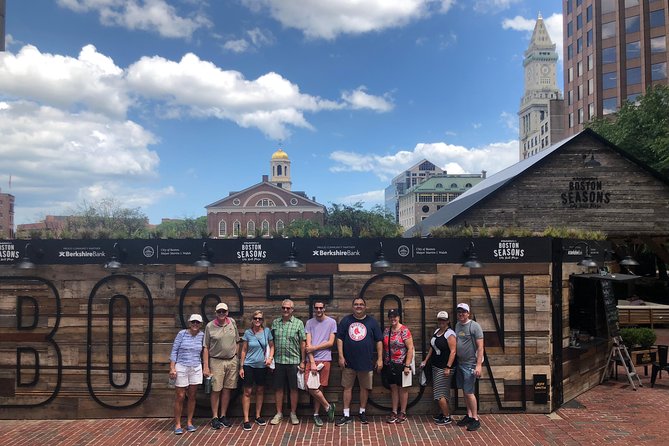
Meet at City Hall Plaza, between Five Iron Golf and City Hall, near the seasonal beer garden and the large BOSTON sign. Faneuil Hall forms the backdrop, so you can get an opening photo before the history begins.
The location is central and pedestrian-only, directly across from Faneuil Hall. It is a practical meeting point for a first day in Boston, though you should arrive with enough time to find the exact meeting area. The first ten minutes are used to gather the group and set the scene.
Boston City Hall comes next. Its striking modern design is famously divisive, and the stop uses that building to introduce questions about democracy, civic life, and the city’s modern identity. This is a small but useful signal that the tour will not stay trapped in colonial Boston.
King’s Chapel and the people who shaped Massachusetts Bay
At King’s Chapel Burying Ground, the guide begins with the first settlers of Massachusetts Bay and the Puritan world they created. This stop gives the Revolution a necessary prelude. Before arguing about taxes and Parliament, you need to understand the religious and political culture of the colony.
The burial ground is an atmospheric place, but the value comes from the explanation. The tour focuses on the unusual beliefs and social rules of the early settlers, showing that the people who later demanded political rights came from a society with its own limits and contradictions.
You also pass Boston’s first Anglican church and stop at Brimstone Corner. The latter is tied to fiery sermons and to William Lloyd Garrison’s first public address against slavery in 1829. That detail broadens the walk beyond the Revolution and shows how Boston’s public arguments continued long after independence.
Granary Burying Ground and the real Sons of Liberty
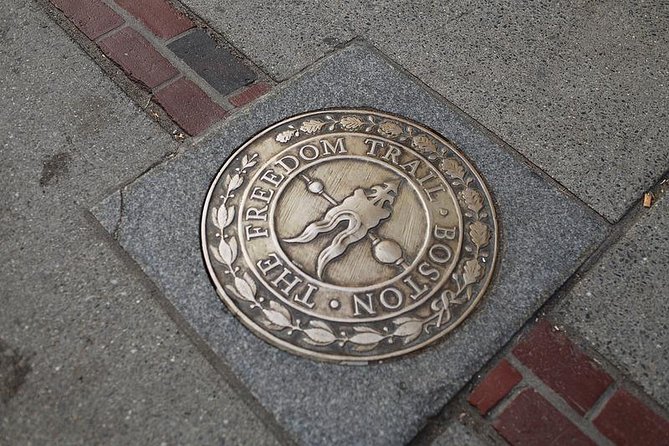
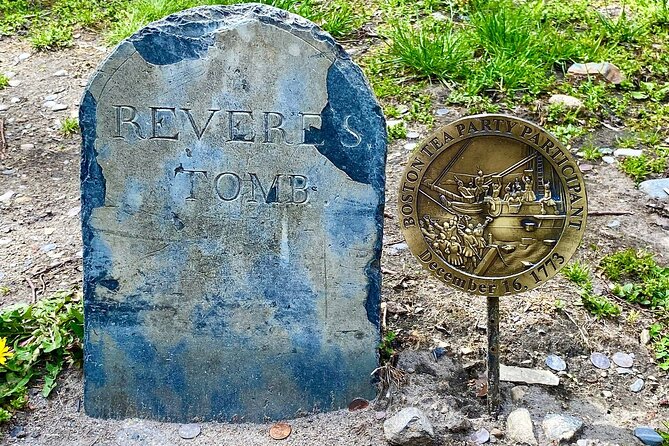
Granary Burying Ground is one of the most familiar stops on the Freedom Trail. Here you see the graves of Paul Revere, John Hancock, and Samuel Adams, while the guide asks who the Sons of Liberty really were and what they actually did.
The stop lasts about 15 minutes, enough time for a focused explanation without turning the cemetery into a roll call. I like this part because it can separate popular legend from political organizing. The Revolution depended on merchants, printers, artisans, politicians, and ordinary people, not only on the famous men whose names appear in schoolbooks.
You will visit several burial grounds during the walk, but not every one is entered. The second-oldest burial ground in Boston is seen from outside, partly because the route already includes other cemeteries. From the terrace across the street, you get views toward Charlestown and Boston Harbor.
Same city, a very different afternoon:
- History and Hauntings of Salem Guided Walking Tour
★ 5.0 · 14,564 reviews - Boston Duck Boat Sightseeing City Tour with Cruise Along Charles River
★ 4.5 · 9,378 reviews - Boston Hop-On Hop-Off Trolley Tour with 13 Stops
★ 4.5 · 5,576 reviews - Boston: City Cruises Whale Watching Cruise
★ 4.5 · 4,710 reviews
Old City Hall, Franklin, and the pressure building downtown
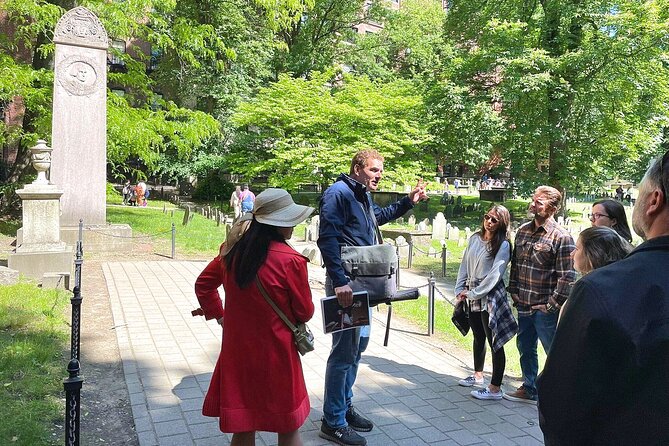
Old City Hall provides a look at some of Boston’s finest architecture and a chance to discuss the barriers and tensions built into democratic government. It is a brief stop, but it helps connect the Revolution to larger questions about who had a voice and who did not.
At the statue of Benjamin Franklin, the guide explains Boston’s first public school and Franklin’s connection to it. This is a good reminder that the Revolution was also an argument about education, public life, printing, and the spread of ideas.
The Old State House then brings the political conflict into sharper focus. As the oldest public building in the country, it was the center of Massachusetts politics and a place where British authority collided with American claims to rights. The building is easy to photograph, but the discussion is what gives it meaning.
At the Boston Massacre site, you hear about the soldiers, citizens, loyalists, and patriot leaders caught in a rapidly worsening crisis. The point is not simply that shots were fired. It is that every side used the event to shape public opinion, turning a tense street encounter into a major political weapon.
The Tea Party, Faneuil Hall, and the protest that became rebellion
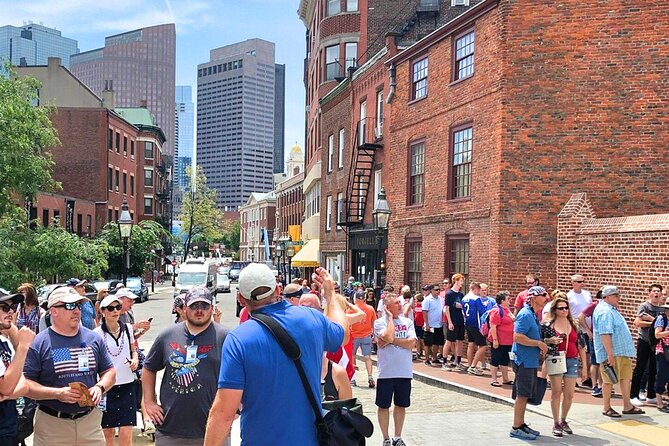
The Old South Meeting House is where the tour’s political story reaches a major turning point. The Boston Tea Party began with a meeting there, and the guide explains why this was more than an angry crowd dumping cargo into the harbor.
After that, the route passes a former publishing house associated with Ralph Waldo Emerson, Henry Wadsworth Longfellow, Nathaniel Hawthorne, and other American literary figures. The stop adds another layer to Boston’s identity as a city of speeches, printing, writing, and public debate.
Post Office Square and the Financial District show how the modern city grew around the old street plan. You see offices, finance, education, and health care occupying the same downtown that once carried revolutionary protests. I appreciate this pause because it prevents the past from becoming a sealed-off attraction.
Faneuil Hall is called the Cradle of Liberty for good reason. It served as a place for public debate and protest, and the tour explains how resistance could shift into revolution. The route includes time for an entrance into Faneuil Hall and Quincy Market, though the experience does not include admission to other museums.
Quincy Market is also where the guide gives a needed warning: tourist traps are common. This is useful advice, especially if you plan to eat nearby. You are close to food and shopping, but the most convenient choice is not always the best one.
The Greenway and a change of pace

The Rose Fitzgerald Kennedy Greenway offers a short garden break from brick sidewalks and dense downtown streets. This long public garden runs through the center of Boston and reflects the city as it is now.
The stop is brief, but it gives your legs a pause and helps reset the pace before the North End. It also makes the tour feel less like a checklist. You are moving through parks, roads, markets, offices, and neighborhoods, with the old story constantly meeting the present city.
Paul Revere and Boston’s oldest residential streets
The Paul Revere House sits in North Square, one of Boston’s most charming historic areas. The house is associated with the midnight rider, but the guide presents Revere as a person with a life and career beyond the famous ride.
That distinction is worth having. Revere was more than a messenger in a dramatic legend, and the tour uses his home, neighborhood, and work to give the man some shape.
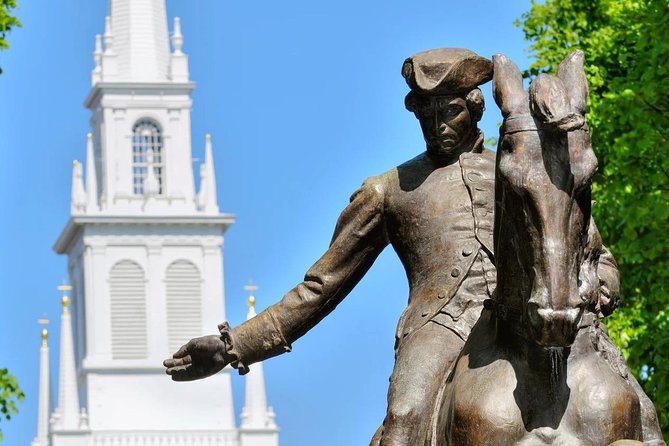
North Square Park is identified as the oldest residential square in America. From there, the walk continues to the Paul Revere statue and the Old North Church. The familiar line about one lantern by land and two by sea leads into the midnight ride, the signal from the church steeple, and the battles at Lexington and Concord.
The Old North Church stop is especially effective for visitors who know the phrase but have never linked it to the city’s streets. You see the setting, hear the sequence of events, and then move toward the military consequences of the warning.
Bunker Hill and the Revolution’s larger battlefield
The tour offers an overview of Bunker Hill and recreates the battle through explanation rather than performance. This is the largest battle of the American Revolution, and it is a place where maps and visual aids can make a real difference.
You do not travel to the Bunker Hill Monument itself on foot as part of a separate Charlestown excursion. Instead, the guide provides the battle story and views across the harbor, including the monument area. You also see Old Ironsides, the USS Constitution, from the other side of Boston Harbor and receive advice on how to visit it separately.
That limitation is worth noting. If your main goal is to climb the monument or tour the ship, you will need extra time and separate admission arrangements. On this walk, those sights function as part of the wider story rather than full visits.
Finishing along Boston Harbor in the North End
The last part of the route moves through the North End, Boston’s oldest residential neighborhood and the city’s Little Italy. This is where history gives way to food, waterfront views, and practical plans for the rest of your day.
You stroll along Boston Harbor and the Harborwalk, with views from piers, wharfs, and waterfront parks. The harbor section is short, but it provides a satisfying finish and a chance to see Boston from open water rather than between old brick buildings.
The tour ends at Lewis Wharf. You are within a short walk of the Aquarium subway stop, public restrooms, parking, bicycles, and the original meeting point. You are also near pizza, clam chowder, seafood, Italian dishes, and cannoli. Restaurant suggestions are included, which is handy because the North End is a better place to plan lunch or dinner than Quincy Market.
How much walking and time should you plan?
The advertised duration is about three to three and a half hours. The actual pace can depend on the guide, group, weather, and questions, and some walks have run slightly over because the guide was still engaged with the group.
Wear walking shoes. You will cover a lot of downtown ground and spend nearly all of the time outside. The tour is suitable for all ages, but it is not simplified for children, and children must be accompanied by an adult.
A moderate level of physical fitness is advised. Mobility issues may make the route difficult, especially in cold, rain, or strong wind. The experience requires good weather, so a cancellation caused by poor conditions comes with a choice of another date or a full refund.
Is $55 a fair price?
At $55 per person, this is not the cheapest way to see the Freedom Trail. You can follow the red brick line yourself for free, and many historic buildings charge separately only if you go inside.
The value comes from the structure and the small group. For three hours or more, you get a sustained explanation of roughly 14 official landmarks, plus places outside the official trail. The guide does the sorting for you: which names matter, how the events connect, and where the standard story leaves out useful context.
I would consider it good value if you want history explained rather than simply pointed out. It is less useful if you prefer to move quickly, spend time inside museums, or explore independently with an audio guide.
The tour is offered in English and uses a mobile ticket. Gratuity is optional, transportation is not included, and museum entry beyond Faneuil Hall and Quincy Market is not included. Cancellation is free up to 24 hours before the start time, subject to the stated weather and minimum-group conditions.
Who should book this Boston walk?
Book it if you like American history, political debate, lively storytelling, and a full morning or afternoon on foot. It suits couples, families with older children, solo visitors, and anyone who wants to understand Boston before exploring its museums and neighborhoods alone.
The guides Tyler, Mike, Chris, and Tom are repeatedly described as animated, passionate teachers. Their use of maps, character badges, visual cards, and battle props is helpful for families and for anyone who learns better by seeing events laid out.
Skip it if you need frequent indoor breaks, have serious mobility limits, or only want a quick photo tour. Also skip it if your priority is entering every historic building. This experience is built around the story told from the streets.
For most first-time visitors with an interest in the Revolution, I would book it early in a Boston stay. The chronological explanation gives you a framework for the rest of the city, and the North End finish leaves you in exactly the right place for lunch, cannoli, or a harbor walk.
FAQ
How long does the tour last?
The tour lasts approximately three to three and a half hours.
Where does the tour begin?
It begins at City Hall Plaza, 1 City Hall Square, Boston. The meeting area is between Five Iron Golf and City Hall, near the seasonal beer garden and the large BOSTON sign.
Where does the tour end?
It ends at Lewis Wharf in Boston’s North End, near Boston Harbor.
How large is the group?
The maximum group size is 15 travelers.
Is transportation included?
No. This is a walking tour, and transportation is not included.
Are museum admissions included?
Faneuil Hall and Quincy Market are included as part of the route. Other museum entry is not included.
Is the tour suitable for children?
The tour is appropriate for all ages, but it is not a children’s version of the events. Children must be accompanied by an adult.
What happens if bad weather cancels the tour?
If poor weather causes a cancellation, you will be offered a different date or a full refund. You can also cancel for a full refund up to 24 hours before the experience start time.
Just added around Boston
- Day Trip from Boston: Explore Hammond Castle Museum★ 3.7 · 3 reviews
- Boston: WNDR Museum Entry Ticket★ 3.7 · 3 reviews
- The Boston Bash Scavenger Hunt★ 4.5 · 3 reviews
- Self-Guided Audio Tour of Boston North End★ 4.5 · 3 reviews
- Boston: Official Freedom Trail® Lantern Tour★ 4.7 · 3 reviews
- Boston: North End Walking Tour with Private Harbor Cruise★ 5.0 · 3 reviews
- Self Guided “The North End Pizza, Cannoli and Picnic” Solo Walking Tour★ 5.0 · 3 reviews
- Cambridge: Haunted Charles River Cruise★ 4.3 · 3 reviews
Walking Tours in Boston, compared.
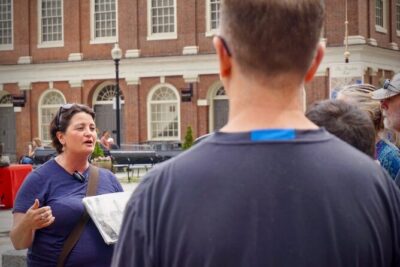
Freedom Trail History Small Group Walking Tour
Read our review →
Harvard University Campus Guided Walking Tour
Read our review →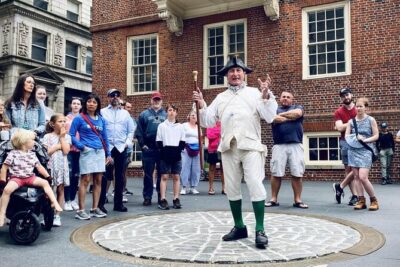
Boston Freedom Trail Walking Tour with Costumed Guide
Read our review →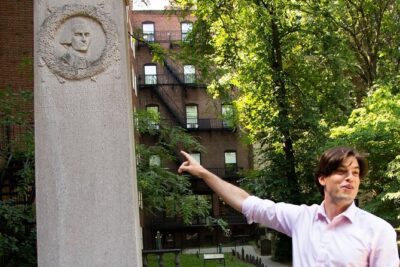
Boston’s Freedom Trail: A Revolutionary Walking Tour
Read our review →Freedom Trail History Small Group Walking Tour
Read our review →Boston’s Freedom Trail: A Revolutionary Walking Tour
Read our review →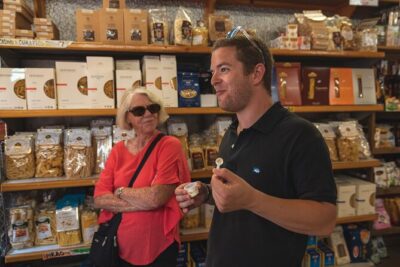
Boston’s North End Food Tour: Italian Flavors & Heritage Walk
Read our review →
Browse the lists this tour appears in