
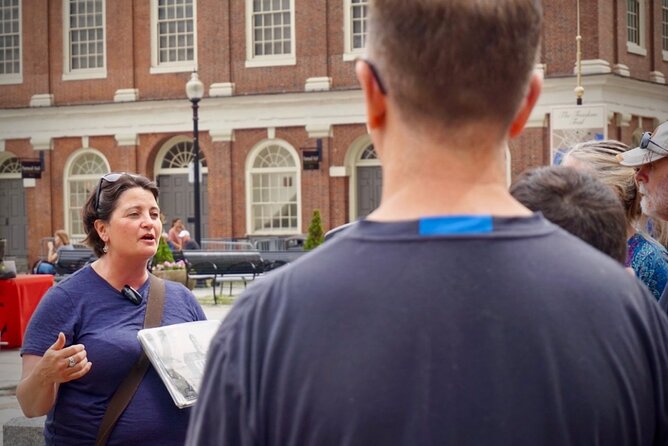
Reviewed · FREEDOM TRAIL TOURS
Boston: Freedom Trail History Small Group Walking Tour
Boston’s Freedom Trail is more than a red line through downtown. It is a compact lesson in how ordinary people, merchants, ministers, soldiers, and political leaders argued their way toward revolution. This 2.5-hour small-group walk gives that story a clear shape, from Boston Common to Copp’s Hill Terrace.
I like the group limit of 15, which makes it easier to hear the guide on crowded sidewalks. I also like the stop at Quincy Market halfway through, giving you a short bathroom and drink break before the North End stretch. The main drawback is simple: you are outside for roughly two miles, so cold, rain, heat, and uneven pavement can affect the experience.
In This Review
- Key points to know before you go
- Why this Freedom Trail walk works
- Starting at Boston Common and the Foundation Monument
- Burial grounds, churches, and Boston’s early voices
- Old South Meeting House and the road to protest
- Old State House and the Boston Massacre Site
- Faneuil Hall, Quincy Market, and a useful pause
- Paul Revere’s North End and Hanover Street
- Old North Church and the final viewpoint
- How much walking and effort to expect
- Is $35 a fair price?
- Who should book this walk?
- Should you book the Boston Freedom Trail tour?
- FAQ
- Where does the Freedom Trail walking tour start?
- Where does the tour finish?
- How long is the walking tour?
- How far do you walk?
- Does the tour visit all 16 Freedom Trail landmarks?
- Are museum and historic-building admission fees included?
- Is the tour suitable for children and people with mobility difficulties?
Key points to know before you go
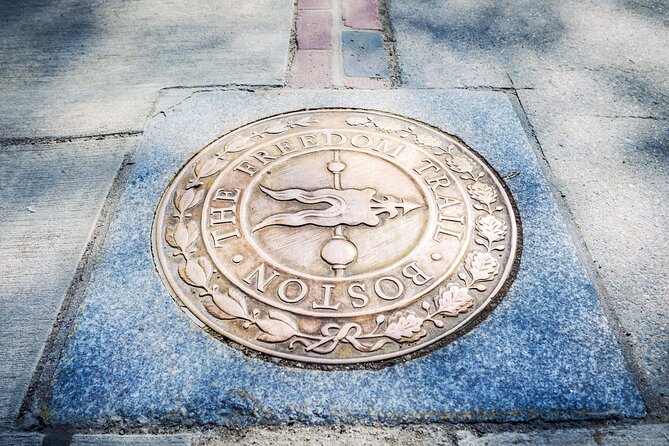
- The route covers all 16 official Freedom Trail landmarks, though several are viewed from outside.
- The group holds no more than 15 people, a useful advantage beside the much larger walking groups on the trail.
- The story focuses on the 15 years before the American Revolution, not just a list of famous dates.
- The tour ends in Boston’s North End, near the Old North Church, Italian restaurants, and Copp’s Hill Terrace.
- A short Quincy Market pause breaks up the walk, with time for a drink or restroom stop.
- Guides such as Maura, Nick, Alejandro, Cyrus, Zoe, and Jon have received especially warm praise for clear storytelling, humor, and fair treatment of disputed events.
Why this Freedom Trail walk works
A self-guided Freedom Trail visit can leave you with a string of old buildings and a phone full of facts. A live guide gives those places a sequence and a human point of view. The central question here is not simply when the Revolution happened. It is why people in Boston had to decide between loyalty to the Crown and rebellion against it.
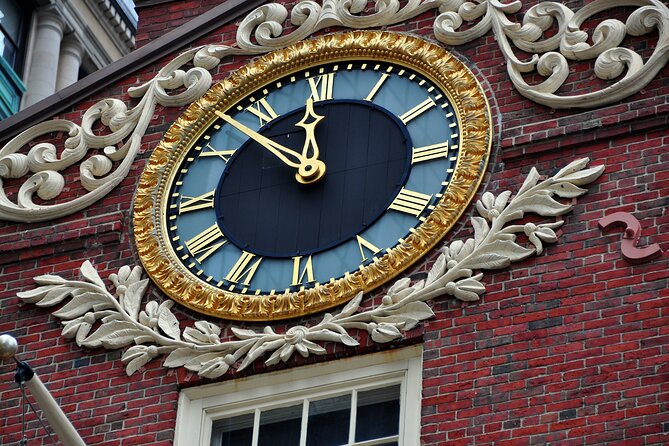
That approach gives the tour more weight. At the Boston Massacre Site, for example, you are not just shown a circular marker in the pavement. You hear how the event was used by competing sides and why its name helped shape public anger. At the Old State House, guides may also sort out popular myths, including the complicated question of what actually happened that night.
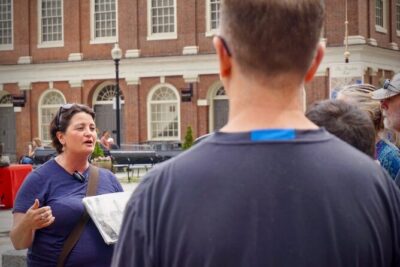
The best guides bring energy without turning the past into a costume show. Maura has been praised for mixing dates, context, and personal stories, while Nick has been singled out for presenting competing interpretations rather than handing out a simple patriotic script. Alejandro, Cyrus, Zoe, Jon, Maz, and others have also been praised for humor, warmth, and strong command of Boston’s story.
You should still expect the quality of any walking tour to depend partly on the person leading your group. The guide names are not guaranteed, but the repeated pattern is clear: this experience relies on lively narration, not indoor exhibits or elaborate production.
More Historic Tours in Boston
- Boston: Freedom Trail History Small Group Walking Tour
★ 5.0 · 6,450 reviews - Tour of Historic Fenway Park, America’s Most Beloved Ballpark
★ 4.5 · 3,013 reviews - Boston Food & History: Pizza, North End & Freedom Trail
★ 5.0 · 1,772 reviews
Starting at Boston Common and the Foundation Monument
Meet inside Boston Common at the Boston Foundation Monument, on the park’s northern boundary across from 50 Beacon Street. The granite memorial has a bronze relief showing two men shaking hands, linked to the Puritan arrival in 1630.
This is a sensible starting point. Boston Common gives the guide room to gather the group before you enter the tighter streets of the historic center. It also places you at the official beginning of the Freedom Trail.
The opening stop at Boston Common lasts about 15 minutes. Expect an introduction to the park and the city’s early development, followed by the first view of the Massachusetts State House. The State House itself is included as a guided exterior stop, along with Park Street Church.
Do not confuse this tour with a full inside visit to Boston’s historic buildings. Admission to museums and interiors is not included. You are paying for the route, the guide’s explanation, and the chance to connect the sites as you walk.
Burial grounds, churches, and Boston’s early voices
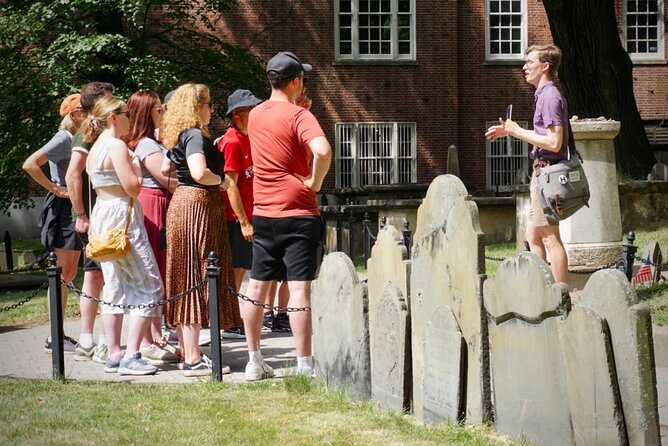
Granary Burying Ground is one of the most affecting stops. The old cemetery holds the final resting places of major Revolutionary-era figures, including Paul Revere and Samuel Adams, along with other people tied to Boston’s early political life.
The tour allows about 25 minutes here, one of the longer pauses. That matters because a cemetery needs a little time. You can look at the crowded markers, hear who is buried there, and consider how close these people lived and worked to one another.
Park Street Church and King’s Chapel add a different side of the story. The Freedom Trail is often sold as a parade of rebellion, but religion, community pressure, and competing loyalties shaped colonial Boston just as much as speeches and protests did. Your guide helps connect those forces rather than treating each building as a separate postcard.
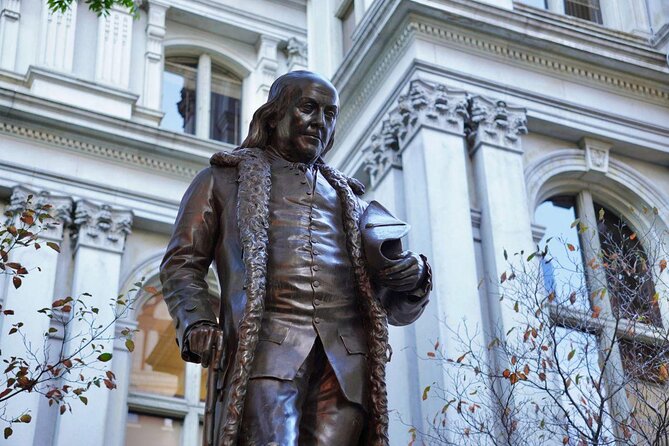
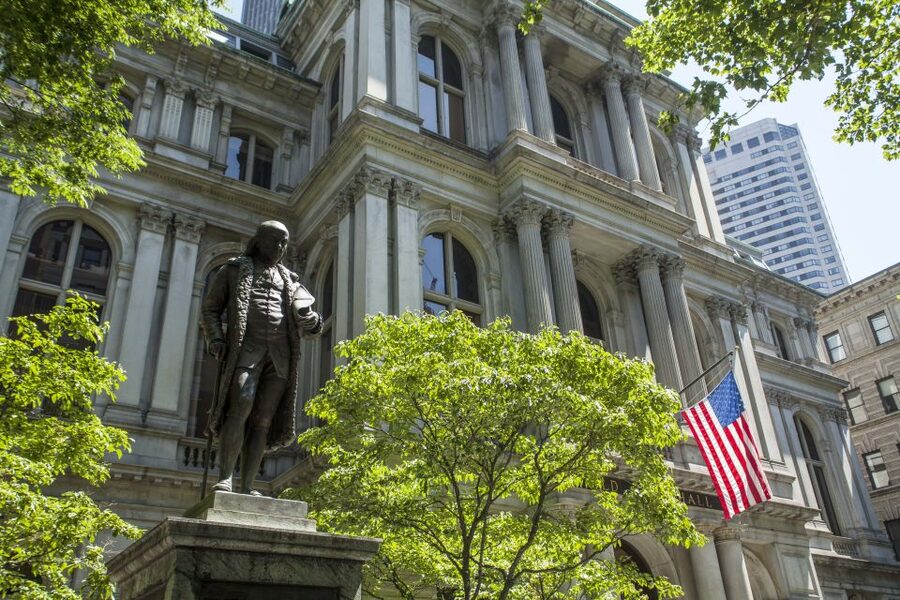
The route then passes Boston Latin School and the Benjamin Franklin statue. The stop takes about 10 minutes and links education, civic life, and one of Boston’s most famous native sons. Nearby Old City Hall and the Old Corner Book Store show how the city changed after the colonial period, even though their importance is not limited to the Revolution.
This is one place where the walk’s broad scope helps. You are not only seeing the most famous battle-related sites. You are also getting a sense of how Boston’s streets developed around government, worship, education, commerce, and publishing.
Old South Meeting House and the road to protest
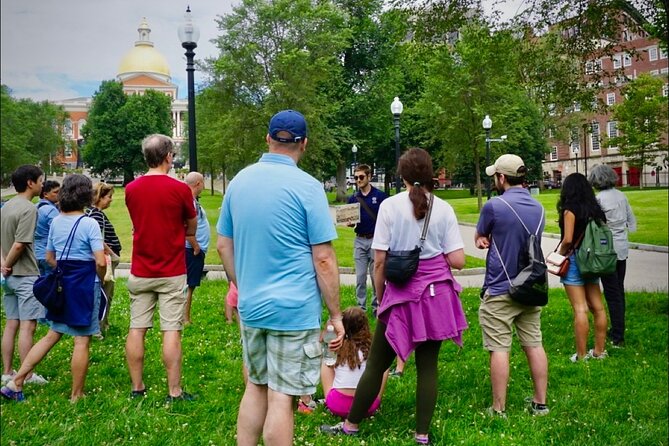
Old South Meeting House is where the story gathers force. The building is tied to the meetings that helped lead to the Boston Tea Party, and the tour gives this stop about 10 minutes.
The value here is context. Political protest did not appear out of thin air. Arguments over taxation, representation, trade, and imperial authority built over years. The experience concentrates on the 15-year period that led to war, so you can follow the pressure building from one stop to the next.
A useful detail from the tour’s historical approach is that it does not treat every familiar schoolbook claim as complete. The tea tax story, for instance, has more detail than the usual version suggests. You may also hear that the tax on tea had been cut in half before the Tea Party, a fact that complicates the simple idea that colonists were protesting only a higher price.
That kind of correction is valuable, especially if you already know the basic American Revolution story. British history teacher Alex praised a guide’s balanced explanation of the period, including the disputed meaning of the Boston Massacre. You should expect questions to be welcomed, especially at places where later legend has smoothed out the messy reality.
More Walking Tours in Boston
- Harvard University Campus Guided Walking Tour
★ 4.5 · 3,632 reviews - Boston Freedom Trail Walking Tour with Costumed Guide
★ 4.5 · 2,531 reviews - The Full Revolutionary Story Epic Small Group Boston Walking Tour
★ 5.0 · 2,356 reviews - Boston’s Freedom Trail: A Revolutionary Walking Tour
★ 4.9 · 1,748 reviews
Old State House and the Boston Massacre Site
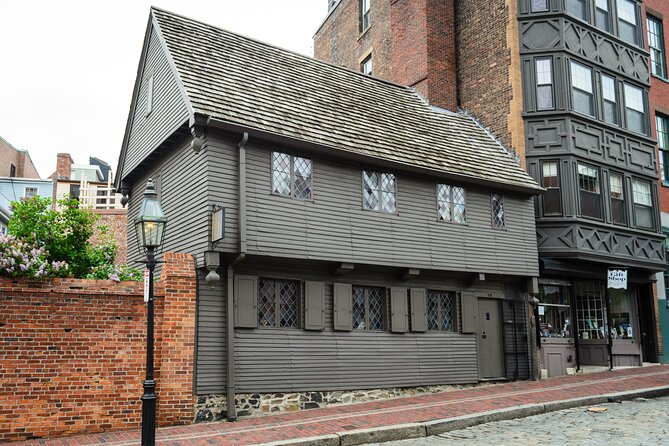
The Old State House is one of the tour’s central moments. It was the seat of colonial government and later became closely associated with the Boston Massacre, which occurred just outside the building.
The nearby marker for the Boston Massacre Site is easy to miss if you walk past on your own. The guide gives it about 15 minutes, enough time to explain the confrontation, the soldiers, the crowd, and the way the event was presented to the public.
This is where a good guide earns the price of the tour. The word massacre carries a strong political charge, and the event has long been used as a symbol of British cruelty. A fair explanation can show why colonists reacted with fury while also making room for the fact that the incident itself was chaotic and contested.
You will stand in a modern downtown setting, surrounded by traffic and office buildings, while hearing about a deadly event from 1770. That contrast is part of the experience. Boston’s Revolutionary sites are not isolated ruins. They sit in the middle of a working city.
Faneuil Hall, Quincy Market, and a useful pause
Faneuil Hall receives a shorter, roughly five-minute explanation. Its importance comes from its role as a meeting place and public forum. The guide’s task is to explain why this building mattered to political debate, not simply point out its facade.
The walk then reaches Quincy Market for a break of about 10 minutes. This is a small feature, but I consider it one of the tour’s practical strengths. Two and a half hours is a long time to stay outdoors without a pause, particularly in winter or when the group includes older family members.
Use this moment for the restroom or a drink. Do not count on it as a full meal stop, since 10 minutes passes quickly. If you want to eat at Quincy Market, save that for after the tour or plan to return later.
The break also divides the walk into two more manageable halves. The first half covers Boston Common and the central historic district. The second moves toward the North End, where the streets become narrower and the story turns more directly toward Paul Revere and the night ride.
Paul Revere’s North End and Hanover Street
Paul Revere House is the oldest surviving building in downtown Boston, and the tour spends about 15 minutes at the stop. The focus is on Revere as a real person, not only the hero of a famous midnight ride.
One useful correction is that Revere did not complete the entire ride by himself. His warning mission involved other riders and a larger network of people. Details like this make the story more interesting because they replace the lone-hero version with a picture of cooperation and local risk.
Hanover Street provides the setting for the North End portion of the walk. Today it is known for Italian restaurants and bakeries, but the guide keeps the focus on the older city around you. This is also a good place to ask for food suggestions. Guides have offered specific North End recommendations at the end of tours, including pizza and restaurant tips.
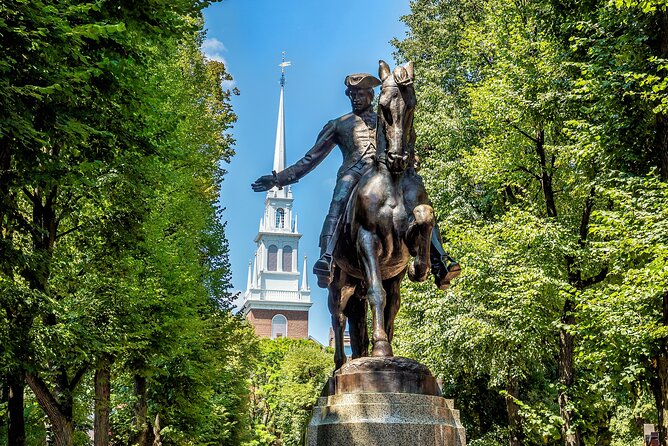
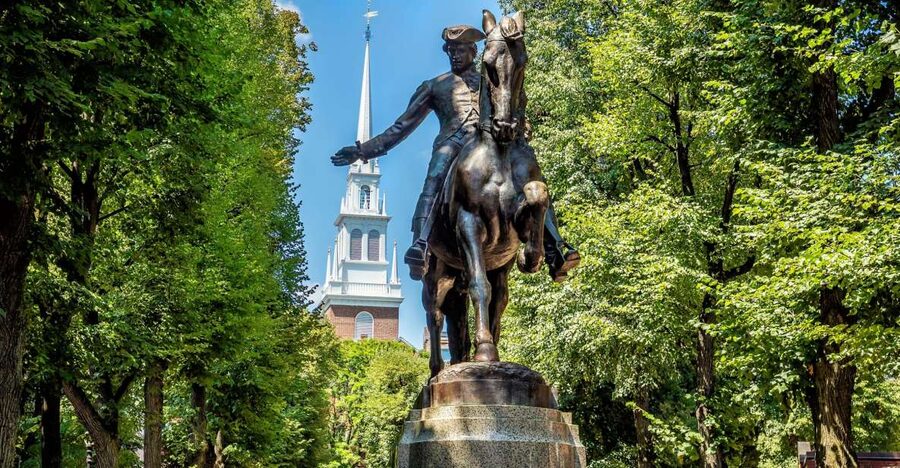
The Paul Revere Statue follows, with about 10 minutes of guided attention. It is a familiar image, but the guide can connect the monument to the person, his work, his family, and the larger community that supported the resistance.
Old North Church and the final viewpoint
Old North Church receives about 10 minutes. Its role in the warning system before the battles of Lexington and Concord is one of the most memorable episodes on the Freedom Trail, and the church gives the story a strong visual anchor.
The route then passes Copp’s Hill Burying Ground. Like Granary, it offers a look at the people behind the political headlines. Burial grounds can feel rushed on a tight schedule, but here they help return the story to individual lives, deaths, and families.
You do not continue into Charlestown as part of this tour. Instead, the walk includes scenic views toward the USS Constitution and the Bunker Hill Monument. From Copp’s Hill Terrace, you can look across the water toward both landmarks.
That finish is well chosen. You see the final two official Freedom Trail landmarks from a distance without adding the extra time needed to cross into Charlestown. It lets the tour cover all 16 official sites while keeping the route near downtown and the North End.
The tour ends at Copp’s Hill Terrace, steps from the Old North Church and North End dining. That makes it easy to continue with dinner, return to a favorite site, or use the location as a starting point for more exploring.
How much walking and effort to expect
The accessible route covers about 2.0 miles, or 3.2 kilometers, and the full experience can last up to three hours, although the stated duration is 150 minutes. You will be on your feet for most of that time.
Comfortable shoes are essential. The route uses city sidewalks, busy crossings, and historic areas where surfaces may not feel as smooth as a modern path. Weather matters just as much. One tour continued through heavy snow and freezing temperatures, while another went ahead during a downpour. That shows that poor weather may not cancel the walk, so dress for the forecast rather than hoping for ideal conditions.
The information describes the route as wheelchair accessible, but it also says the experience is not suitable for people with mobility impairments or low fitness. Take both notes seriously. Ask the provider about your particular needs before booking, especially if hills, standing, uneven pavement, or long periods outdoors are difficult.
Children under six are not suitable for this tour. Older children who enjoy stories may do well, but the pace and subject matter are still those of a serious history walk. A family group praised Maura for keeping children engaged while also satisfying grandparents, though that does not guarantee every guide will use the same style.
Large bags and luggage are not allowed. Video recording is also prohibited. Bring only what you need for the walk, and plan to store suitcases elsewhere before meeting the guide.
Is $35 a fair price?
At $35 per person, this tour sits in a reasonable range for a 150-minute guided walk in central Boston. You are not paying for museum admission, transportation, food, or a visit inside the Charlestown neighborhood. You are paying for an organized route through 16 official landmarks and a guide who can explain how the pieces fit together.
The small group is the main value. With a maximum of 15 people, you have a better chance of hearing the story and asking a question than you would in a large group spread across a sidewalk. Several groups nearby may be much bigger, making the smaller format noticeable.
I would especially consider the fee worthwhile if this is your first visit to Boston or if American Revolutionary history is unfamiliar to you. Visitors from outside the United States can follow the political story without needing to arrive with a large amount of background knowledge. The guides use stories, corrections, and local details to make the period easier to grasp.
If you mainly want to enter historic buildings, this is less attractive. Interior admission is extra, and several stops are exterior explanations. You might prefer a self-guided route if you want to spend an hour inside the Old State House, Old South Meeting House, or Paul Revere House.
Gratuity is optional and not included. If your guide gives you a clear, lively account and handles questions well, budget for a tip, but it is not a required part of the booking price.
Who should book this walk?
I would choose this tour for a first morning or afternoon in Boston. It gives you a useful map of downtown and the North End, then leaves you near restaurants and further historic sights.
It suits you best if you:
- Like history explained through people and stories rather than dates alone.
- Want to see the full Freedom Trail route without joining a very large group.
- Can walk about two miles and remain outside for up to three hours.
- Appreciate guides who explain myths and disputed events with some balance.
- Want North End restaurant ideas after the tour.
- Prefer a structured introduction before exploring museums on your own.
I would think twice if you have limited stamina, need frequent seating, dislike bad-weather walking, or want extensive indoor visits. The Quincy Market pause helps, but it does not turn the tour into an easy stroll.
Book at least 24 hours ahead if your schedule is tight, since cancellation is free up to that point and the small group can fill. The reserve-now, pay-later option also gives you some flexibility when Boston weather or a changing itinerary is a concern.
Should you book the Boston Freedom Trail tour?
Yes, if you want the Freedom Trail to make sense as one story rather than 16 disconnected stops. The strongest part is the guide-led interpretation, especially when the guide explains that Paul Revere’s ride was a group effort or places the Boston Massacre in its political setting.
The small group, mid-tour break, and North End finish add real practical value. Just bring good shoes, warm or waterproof clothing as needed, and realistic expectations about outdoor walking and exterior visits. At $35, this is a solid introduction to Boston’s Revolutionary past, with enough detail to give your later sightseeing more meaning.
FAQ
Where does the Freedom Trail walking tour start?
The meeting point is inside Boston Common at the Boston Foundation Monument, on the park’s northern boundary opposite 50 Beacon Street, Boston, Massachusetts 02108.
Where does the tour finish?
The tour ends at Copp’s Hill Terrace in Boston’s North End, near the Old North Church and Italian restaurants.
How long is the walking tour?
The listed duration is 150 minutes. The walk may vary in length but will not exceed three hours.
How far do you walk?
The accessible route travels approximately 2.0 miles, or 3.2 kilometers.
Does the tour visit all 16 Freedom Trail landmarks?
Yes. The route covers all 16 official landmarks, including scenic views of the USS Constitution and Bunker Hill Monument from the Boston side. Charlestown is not included as a neighborhood visit.
Are museum and historic-building admission fees included?
No. Admission inside museums and historic buildings is not included in the $35 tour price.
Is the tour suitable for children and people with mobility difficulties?
Children under six are not suitable for the tour. The information also says it is not suitable for people with mobility impairments or low fitness, even though the route is described as wheelchair accessible. Ask the provider about your specific requirements before booking.
More Historical Tours in Boston
- History and Hauntings of Salem Guided Walking Tour
★ 5.0 · 14,564 reviews - Boston: City Cruises Historical Sightseeing Cruise
★ 4.6 · 1,771 reviews - City Cruises Boston Historic Sightseeing Harbor Cruise
★ 4.5 · 1,388 reviews - Boston’s North End Food Tour: Italian Flavors & Heritage Walk
★ 5.0 · 1,322 reviews
More Freedom Trail Walks in Boston
- Boston’s Freedom Trail: A Revolutionary Walking Tour
★ 5.0 · 1,343 reviews - Freedom Trail Walking Tour 250
★ 4.5 · 1,118 reviews - Boston Freedom Trail History Pub Crawl Small-Group Tour
★ 5.0 · 996 reviews - Entire Freedom Trail Walking Tour: Includes Bunker Hill and USS Constitution
★ 5.0 · 732 reviews
Just added around Boston
- Day Trip from Boston: Explore Hammond Castle Museum★ 3.7 · 3 reviews
- Boston: WNDR Museum Entry Ticket★ 3.7 · 3 reviews
- The Boston Bash Scavenger Hunt★ 4.5 · 3 reviews
- Self-Guided Audio Tour of Boston North End★ 4.5 · 3 reviews
- Boston: Official Freedom Trail® Lantern Tour★ 4.7 · 3 reviews
- Boston: North End Walking Tour with Private Harbor Cruise★ 5.0 · 3 reviews
- Self Guided “The North End Pizza, Cannoli and Picnic” Solo Walking Tour★ 5.0 · 3 reviews
- Cambridge: Haunted Charles River Cruise★ 4.3 · 3 reviews
Freedom Trail Tours, compared.
Freedom Trail History Small Group Walking Tour
Read our review →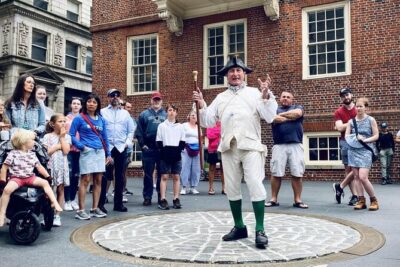
Boston Freedom Trail Walking Tour with Costumed Guide
Read our review →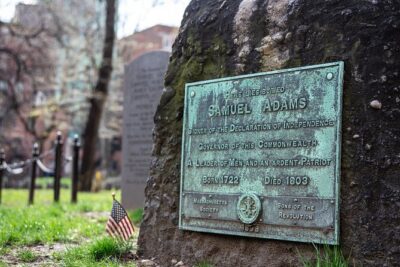
Boston Food & History: Pizza, North End & Freedom Trail
Read our review →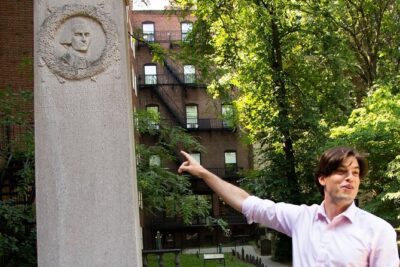
Boston’s Freedom Trail: A Revolutionary Walking Tour
Read our review →Boston’s Freedom Trail: A Revolutionary Walking Tour
Read our review →

Boston Freedom Trail History Pub Crawl Small-Group Tour
Read our review →
Entire Freedom Trail Walking Tour: Includes Bunker Hill and USS Constitution
Read our review →Browse the lists this tour appears in