
Reviewed · FREEDOM TRAIL TOURS
Freedom Trail: Boston Common, Old State House, Faneuil Hall
Boston’s Freedom Trail is easy to follow on your own, but its brick path does not explain itself. This two-hour walking tour gives the buildings, graves, and meeting halls a human voice, linking Boston Common to Faneuil Hall through the people and arguments that shaped the Revolution.
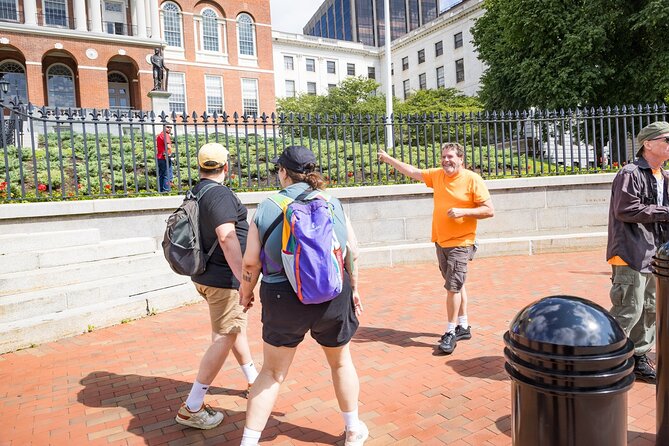
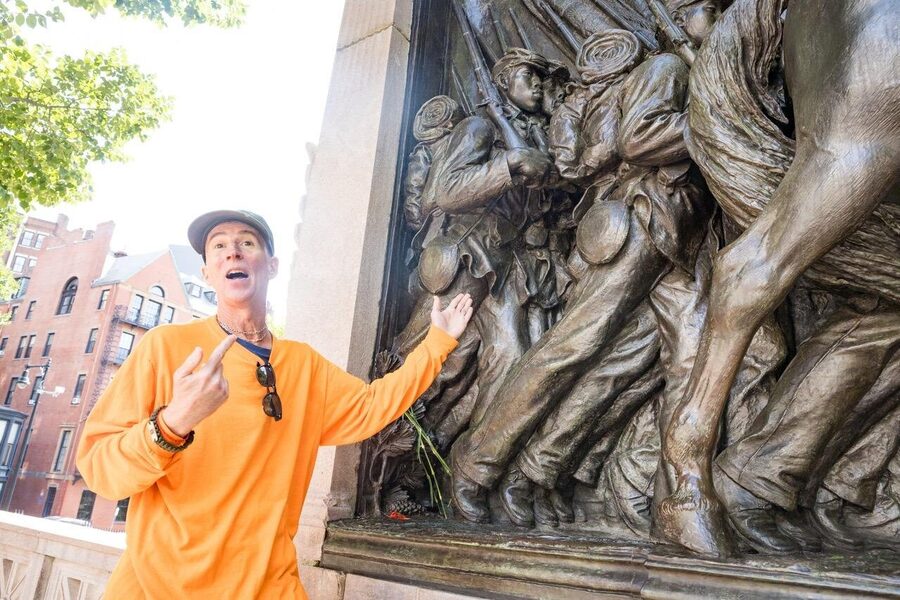
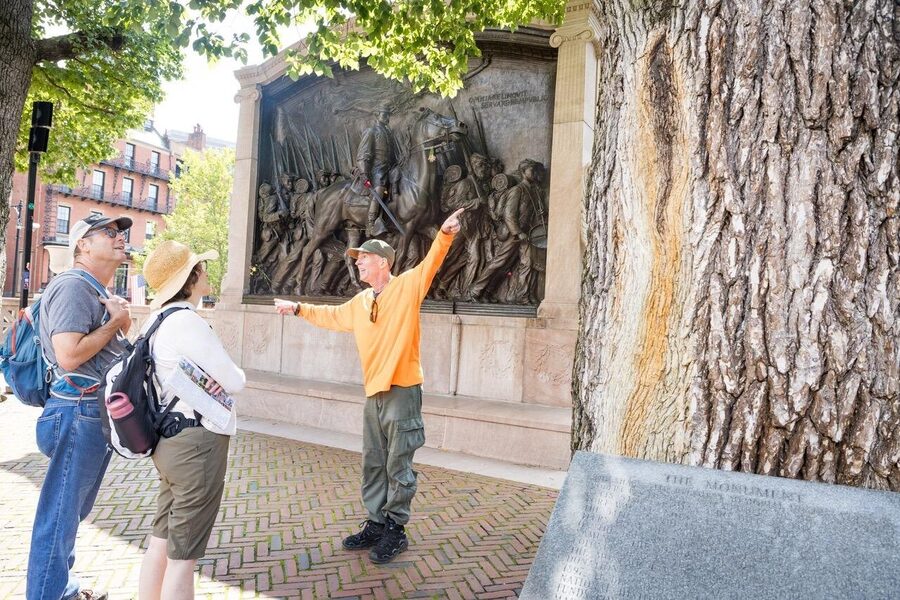
I like the small group of up to 15 because you can ask questions without shouting across a crowd. I also like the local storytelling, especially when guide Brian leads the walk and adds off-trail details such as the 54th Regiment Memorial and the story behind the Franklin memorial marker at Granary Burying Ground. The main drawback is the sheer amount of information: Brian’s energy and fast-moving commentary can be hard to follow, and younger children may lose interest during long stretches of looking at buildings.
In This Review
- Key points before you book
- Why this short Freedom Trail walk works
- Boston Common: beginning with public space
- The golden dome and Boston’s political center
- Park Street Church and an overlooked reform story
- Granary Burying Ground: names carved in stone
- King’s Chapel and Boston’s divided loyalties
- Old South Meeting House and the Tea Party decision
- The Old State House and the balcony that made news
- Faneuil Hall: finishing at the Cradle of Liberty
- Brian’s storytelling style and the pace of the walk
- Who will get the most from the $39 price
- Should you book this Boston walking tour?
- FAQ
- How long does the Freedom Trail tour last?
- Where does the tour start?
- Where does the tour finish?
- What time does the tour begin?
- How large is the tour group?
- Is cancellation available?
Key points before you book
- Eight major Freedom Trail stops: Follow a compact route from Boston Common and the State House to Faneuil Hall.
- Small, personal format: The group limit of 15 makes questions and conversation much easier than on a large bus tour.
- Strong guide personality: Brian is praised for lively storytelling, local details, and keeping children involved when he leads.
- History beyond the red brick path: The walk can include nearby points such as the 54th Regiment Memorial.
- Mostly exterior sightseeing: Several sites are viewed from outside, so expect interpretation more than extended indoor visits.
- Good first-day orientation: The route helps you understand central Boston before exploring the city on your own.
Why this short Freedom Trail walk works
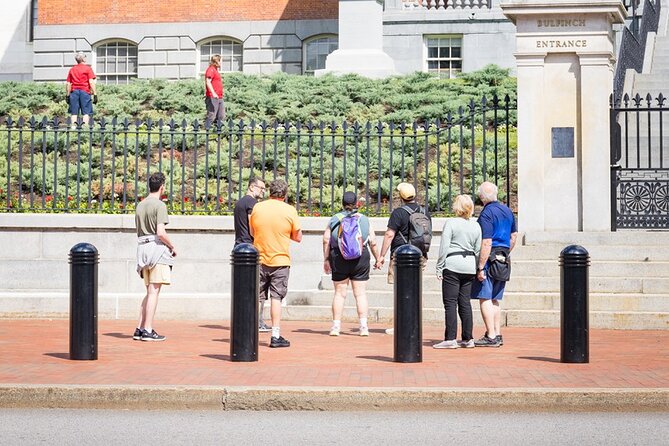
The best thing about this tour is its scale. In roughly two hours, you cover a string of places that can feel disconnected when seen one by one. Boston Common becomes the starting point for colonial and modern public life. Granary Burying Ground turns names from a history book into actual graves. The Old State House and Faneuil Hall show where political ideas were argued in public.
I would use this as an introduction, not as a full museum visit. The tour focuses on stories, setting, and connections. You are moving from place to place, listening to a guide, and pausing at the important landmarks. You are not spending an hour inside each building.
The $39 price is fair if you want more than a marked walking route but do not need admission to a long list of attractions. The fee covers live commentary from a local Boston guide, the route through eight or more stops, and the convenience of having someone explain what you are seeing. It is less compelling if you already know colonial Boston well or prefer to explore at your own pace.
The group size matters here. A guide discussing a cemetery, church facade, or balcony needs to be heard clearly. A maximum of 15 people is small enough for questions and a more relaxed exchange. It also avoids the megaphone effect that can make a city walk feel like a lecture delivered to a crowd.
The tour starts at 10:30 a.m. near Tremont Street, Park Street, and Winter Street, then finishes at Faneuil Hall Marketplace. That ending is useful. You can continue into the market area for food and browsing, or use the nearby transport connections to reach another part of Boston.
More Freedom Trail walks in Boston:
- Boston: Freedom Trail History Small Group Walking Tour
★ 5.0 · 6,450 reviews - Boston Freedom Trail Walking Tour with Costumed Guide
★ 4.5 · 2,531 reviews - Boston Food & History: Pizza, North End & Freedom Trail
★ 5.0 · 1,772 reviews
Boston Common: beginning with public space
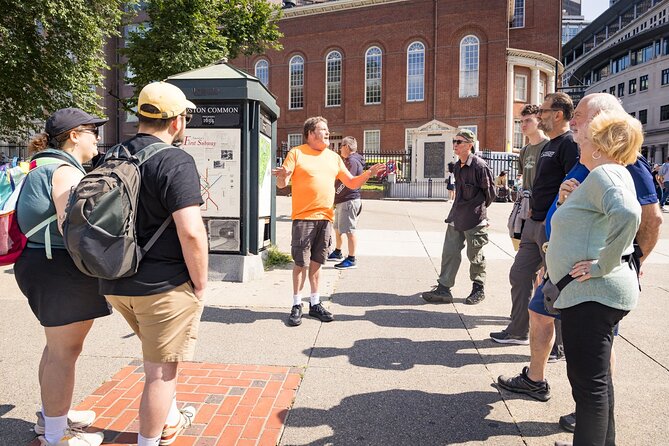
Boston Common is a smart place to begin. Founded in 1634, it is the oldest public park in the United States, and its open lawns give you room to get your bearings before the denser streets of the Freedom Trail.
The guide uses the Common to frame Boston’s past as more than a sequence of famous men and battles. British troops camped here during the Revolutionary War, and the park later hosted civil rights rallies. That broad time span helps you see the Common as a continuing public stage, not just a green patch beside the State House.
The stop lasts about 15 minutes and is free. Wear comfortable shoes, since the walk quickly moves from open ground to paved streets and historic sites. If you arrive early, the Common is a practical meeting area, but confirm the precise meeting spot at the intersection rather than simply waiting somewhere inside the park.
The golden dome and Boston’s political center
The Massachusetts State House comes next. Completed in 1798, it is instantly recognizable by its golden dome and remains the seat of Massachusetts government.
From the outside, the building gives the group a chance to discuss how the new state organized itself after independence. The value of this stop is not only architectural. It connects the revolutionary arguments you hear later with the institutions that followed.
The visit is listed as free and lasts around 15 minutes. You should expect an exterior-focused explanation unless your guide says otherwise. This is a useful distinction when planning your day: the price of the walking tour does not mean that every historic building becomes an included indoor visit.
Park Street Church and an overlooked reform story
Park Street Church dates to 1809 and is one of the most noticeable landmarks around the Common. Its tall steeple gives the area a strong visual anchor, but the more interesting point is its connection to reform movements.
The church hosted the first public anti-slavery address in the United States. That detail adds a needed layer to a route often dominated by the Revolution. Boston’s story includes independence, religion, abolition, and later civic causes, and this stop helps widen the picture.
The guide pauses for about 15 minutes. This is another point where a strong storyteller makes a difference, since the building itself may not tell you why it matters. If you are listening closely, note how the tour shifts from colonial resistance to the moral debates of the early United States.
More Boston Common walks:
- Tour of the Freedom Trail: Faneuil Hall to Boston Common
★ 4.5 · 43 reviews - Haunted Boston Common & Beacon Hill Ghost Tour
★ 5.0 · 25 reviews - Freedom Trail: Boston Common, Old State House, Faneuil Hall
★ 5.0 · 8 reviews
Granary Burying Ground: names carved in stone
Granary Burying Ground is likely to be one of the most meaningful stops. This old cemetery contains the graves of Paul Revere, Samuel Adams, and John Hancock, along with Crispus Attucks, who was killed in the Boston Massacre and is remembered as the first casualty of that event.
The cemetery gives physical weight to names that can otherwise blur together. You can see where important figures were buried, but you also encounter a memorial landscape shaped by later memory. A particularly useful detail concerns the Franklin memorial marker. Benjamin Franklin is honored there, but he is not buried in Granary Burying Ground.
Plan on about 15 minutes, with admission included. The stop is somber, crowded at times, and full of small inscriptions. A guide can point out details you would probably miss while trying to read every stone yourself.
This is also where you should stay close to the group. The cemetery has narrow paths and plenty to look at, and one parent reported that a guide did not stop to check on a child who had fallen behind. That is a practical warning for families: keep younger children beside you rather than assuming the group will pause automatically.
King’s Chapel and Boston’s divided loyalties
King’s Chapel, built in 1754, gives the tour a look at Georgian architecture and Boston’s religious life. Its story also reaches into the political tensions of the Revolution, since loyalist congregants had ties to the church.
That perspective matters. The city was not divided into simple heroes and villains. People had different loyalties, religious commitments, and ideas about the British Crown. A brief stop at King’s Chapel can make the Revolution feel less like a clean, inevitable march toward independence.
The tour allows around 15 minutes here, with no separate admission fee listed. The emphasis is on the building and its story, so you should not book this walk expecting an extended interior examination of the chapel.
Old South Meeting House and the Tea Party decision
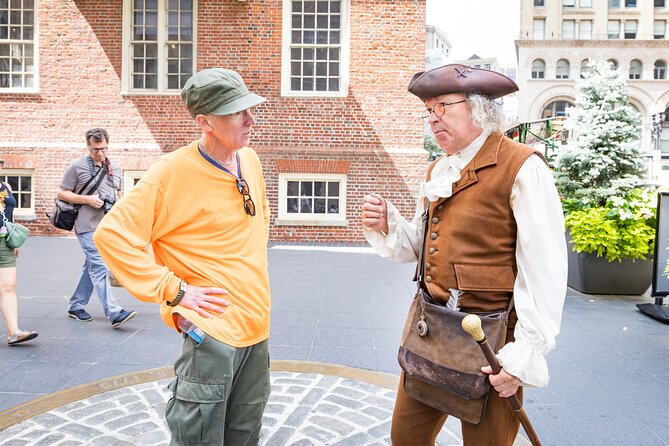
The Old South Meeting House, built in 1729, is one of the route’s strongest political stops. Colonists gathered here, and plans for the Boston Tea Party were set in motion in this meeting place.
The important idea is the power of public assembly. Before the Tea Party became a famous act of protest, people had to gather, argue, persuade one another, and decide what to do next. A guide can turn the meeting house from an old facade into a place where choices were made under pressure.
The stop lasts approximately 15 minutes and is listed as free within the tour. Again, check your expectations. You are receiving the historical explanation as part of the walk, but the supplied tour details do not promise a full indoor visit or a separate museum program.
The Old State House and the balcony that made news
The Old State House dates to 1713 and once housed colonial government. It is one of the most powerful visual reminders that Boston’s revolutionary story unfolded in places already used for law, administration, and public authority.
The balcony is especially important. The Declaration of Independence was read from it, turning the building into a stage for a public announcement of a new political order. The guide’s job here is to connect the physical balcony to the people gathered below and to the larger argument over who had the right to govern.
This is one of the points where the tour’s pace can feel fast. There is a lot to absorb, and the guide may add details beyond the standard trail markers. If you prefer a slower approach, take notes or return later for a closer look.
Faneuil Hall: finishing at the Cradle of Liberty
Faneuil Hall is the final stop and a practical place to end. Since 1742, it has served as both a marketplace and a meeting hall. It became known as the Cradle of Liberty because speeches and debates about independence took place here.
The stop brings together many of the tour’s main themes: commerce, protest, public speech, and the growth of American political identity. You finish in an active market area rather than an isolated monument, which makes it easy to continue your day.
Faneuil Hall Marketplace is also useful for planning. After two hours on foot, you can pause for food or walk onward through central Boston. The tour’s endpoint is more convenient than ending back at the starting point, especially if you want to keep exploring instead of retracing your steps.
Brian’s storytelling style and the pace of the walk
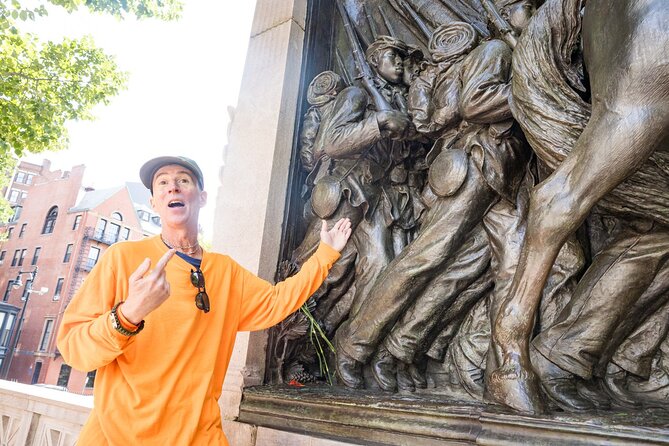
Guide Brian receives the strongest praise for making the past entertaining without turning the walk into a dry lecture. His style is lively, highly energetic, and packed with stories. His off-route additions can add real value, including the 54th Regiment Memorial and unusual details that prompt you to look more closely at Boston’s public monuments.
He also appears comfortable speaking with children when he leads. That can make a difference on a history walk, where younger participants may need humor, visual details, or direct questions to stay involved.
The same energy can be a weakness. Brian may present so much information that you lose the main thread. I suggest focusing on the big idea at each stop, then treating the extra facts as bonuses. If you try to remember every name and date, the tour may become a blur.
The small group helps. You can ask the guide to repeat a point, and the quieter format feels more like a conversation than a performance for a crowd. Still, keep an eye on the time and your place in the group, particularly if you are walking with children.
Who will get the most from the $39 price
I think the tour suits first-time Boston visitors, history fans, and anyone who wants context before exploring alone. It is also a good choice if you like meeting other people with similar interests and prefer a live guide to an audio app.
Families should consider the age and patience of their children. The route includes famous names and memorable events, but much of the activity involves looking at buildings, graves, and street-level details while listening. It may work well for older children who enjoy stories. Younger children may find the pace and subject matter demanding.
The tour is offered in English and accepts mobile tickets. Service animals are allowed, and most people can participate. Since this is a walking tour through historic streets and a cemetery, comfortable shoes are more important than dressing formally.
The tour is recommended by 96 percent of its booking audience and has a 4.8 rating from 24 reviews. Those numbers suggest a strong experience, but the smaller review count means I would pay close attention to the style rather than rely on the rating alone. You should book for an animated, information-heavy walk, not for a quiet or highly flexible stroll.
Free cancellation is available when you cancel at least 24 hours before the 10:30 a.m. start. Changes or cancellations inside that window are not accepted for a refund.
Should you book this Boston walking tour?
Book it if you want the Freedom Trail explained by a lively local guide, especially if Brian is leading and you enjoy extra stories beyond the main route. The small group, central start, and Faneuil Hall finish make it easy to fit into a first day in Boston.
Skip it if you want long indoor visits, a slow photographic walk, or a tightly edited history lesson. The amount of commentary can be intense, and families with very young children should be ready to keep them close and engaged.
For most first-time visitors, $39 is a reasonable price for two hours of orientation and storytelling. You will leave with a clearer sense of how Boston Common, Granary Burying Ground, the Old State House, and Faneuil Hall fit into one larger story. Just listen for the main thread, ask questions when you need to, and let the extra facts come along at their own pace.
FAQ
How long does the Freedom Trail tour last?
The tour lasts approximately two hours.
Where does the tour start?
It starts at Tremont Street, Park Street, and Winter Street in Boston, Massachusetts.
Where does the tour finish?
The tour ends at Faneuil Hall Marketplace in Boston.
What time does the tour begin?
The listed start time is 10:30 a.m.
How large is the tour group?
The tour has a maximum of 15 participants.
Is cancellation available?
Yes. You can cancel at least 24 hours before the start time for a full refund. Cancellations or changes made less than 24 hours before the tour are not refunded or accepted.
Just added around Boston
- Day Trip from Boston: Explore Hammond Castle Museum★ 3.7 · 3 reviews
- Self-Guided Audio Tour of Boston North End★ 4.5 · 3 reviews
- Boston: WNDR Museum Entry Ticket★ 3.7 · 3 reviews
- The Boston Bash Scavenger Hunt★ 4.5 · 3 reviews
- Boston: Official Freedom Trail® Lantern Tour★ 4.7 · 3 reviews
- Boston: North End Walking Tour with Private Harbor Cruise★ 5.0 · 3 reviews
- Self Guided “The North End Pizza, Cannoli and Picnic” Solo Walking Tour★ 5.0 · 3 reviews
- Cambridge: Haunted Charles River Cruise★ 4.3 · 3 reviews
Freedom Trail Tours, compared.
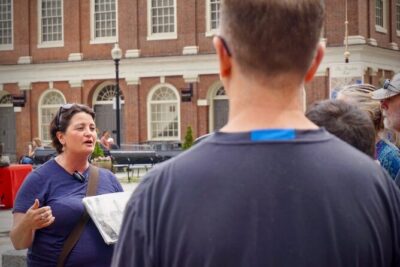
Freedom Trail History Small Group Walking Tour
Read our review →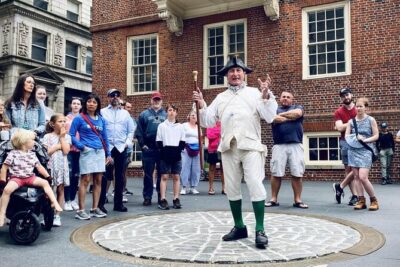
Boston Freedom Trail Walking Tour with Costumed Guide
Read our review →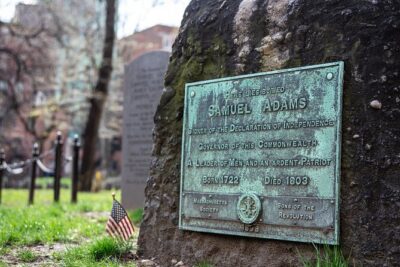
Boston Food & History: Pizza, North End & Freedom Trail
Read our review →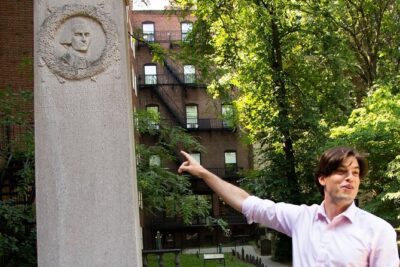
Boston’s Freedom Trail: A Revolutionary Walking Tour
Read our review →Freedom Trail History Small Group Walking Tour
Read our review →Boston’s Freedom Trail: A Revolutionary Walking Tour
Read our review →

Boston Freedom Trail History Pub Crawl Small-Group Tour
Read our review →Browse the lists this tour appears in