

Reviewed · WALKING TOURS IN BOSTON
Boston: In Cold Blood True Crime Guided Walking Tour
Boston’s pleasant streets hide a grim catalog of murders, duels, executions, and scams. This two-hour walk turns familiar places into crime scenes, linking 13 stories from the 17th century to the present.
I like the sharp range of subjects, especially the story of Jane Toppan and the Boston roots of the Ponzi scheme. I also like the strong local focus: guides such as Andrew and Freddie bring the details, answer questions, and help you notice places you could easily pass without a second thought. The catch is simple: you need to walk more than a mile, often outdoors in changing weather, and the subject matter is not light.
In This Review
- Key details before you book
- Boston Public Garden and the first killer
- Thirteen stops across four centuries
- The Benjamin Woodbridge duel
- The Karina Holmer mystery
- Charles Ponzi, Clark Rockefeller, and the art of deception
- Old Granary Burial Ground and body snatching
- What the guides add to the walk
- Pace, distance, and city conditions
- Is $35 a fair price?
- Who should book this tour?
- My final booking advice
- FAQ
- Where does the Boston true crime walking tour meet?
- How long does the tour last?
- How many crime stories are included?
- Which famous criminals and schemers are discussed?
- Does the tour include the Charles Ponzi story?
- Does the route visit Old Granary Burial Ground?
- Is the tour wheelchair accessible?
- What should I bring?
- Can I cancel the booking?
Key details before you book

- Jane Toppan begins the story: The tour opens in Boston Public Garden with the case of one of America’s earliest serial killers.
- Thirteen crime stories fill two hours: You move through several centuries rather than hearing one long case from start to finish.
- Charles Ponzi gets a Boston connection: The tour explains the origin story behind the scheme that made his name famous.
- Old Granary Burial Ground adds a macabre turn: You hear about body snatching and the uneasy business surrounding early burials.
- Andrew and Freddie are names to look for: Both guides have been praised for clear storytelling, preparation, and friendly answers.
- Expect a serious walk: Comfortable shoes are essential, and the tour runs rain or shine.
Boston Public Garden and the first killer

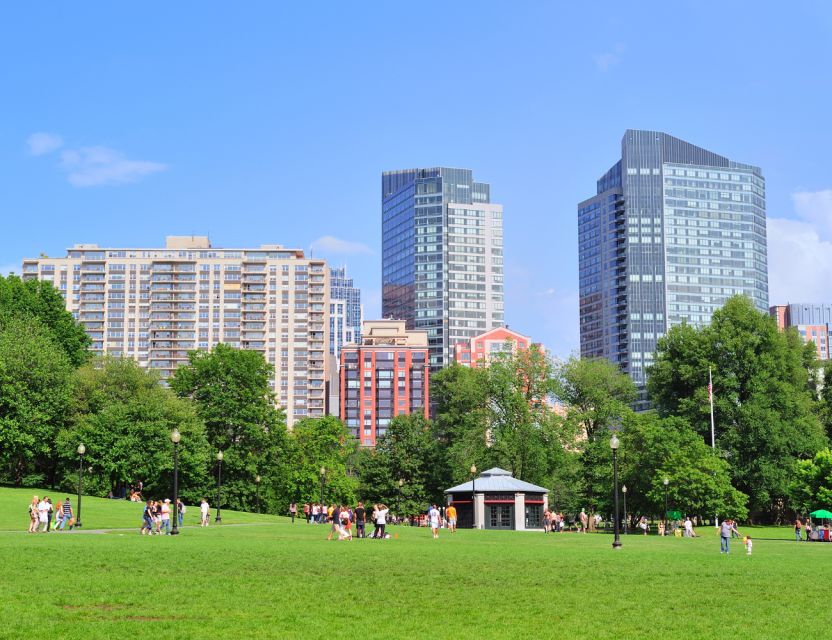
Your meeting point is the George Washington Statue in Boston Public Garden. Look for a guide wearing a white Junket T-shirt and carrying a flag. That detail matters in a city where several tour groups may gather nearby, especially during a busy afternoon.
The first case concerns Jane Toppan, one of the earliest serial killers in the United States. Starting here gives the tour an immediate jolt. The Public Garden is leafy and calm, which makes the subject matter feel even more unsettling. You are not entering a museum or a dark theater. You are hearing about violence in an ordinary public place, surrounded by people going about their day.
The guide sets the tone at this opening stop. This is a history walk with crime at its center, not a staged scare show. The appeal comes from the contrast between Boston’s polished streets and the difficult events connected to them.
If you enjoy true crime, this first story should hold your attention. If you prefer lighter sightseeing, the tour may feel intense from the start. The material includes murder and death, so this is not the best choice for young children or anyone who wants a gentle introduction to Boston.
More Walking Tours in Boston
- Boston: Freedom Trail History Small Group Walking Tour
★ 5.0 · 6,450 reviews - Harvard University Campus Guided Walking Tour
★ 4.5 · 3,632 reviews - Boston Freedom Trail Walking Tour with Costumed Guide
★ 4.5 · 2,531 reviews
Thirteen stops across four centuries
The route moves through 13 locations, with each stop adding a different kind of wrongdoing. That variety is one of the tour’s best features. You are not asked to follow one complicated case for two hours. Instead, the guide builds a broad picture of Boston through crimes committed by killers, fraudsters, thieves, political figures, and people caught in violent disputes.
The stories stretch from the 17th century to today. This long time span lets you compare how Boston dealt with crime in different periods. Legal systems changed, policing changed, and public attitudes changed, but murder, greed, and deception remained familiar forces.
The walking format also gives the tour a practical advantage. You see the city while listening, rather than spending two hours in a dark room or on a bus. The connection between place and story is the point. A street, burial ground, or public square becomes more memorable once you know what happened there.
There is a tradeoff. Thirteen stories in two hours means some cases receive more detail than others. You should expect a brisk set of focused accounts, not a full investigation of every incident. The guide has to keep the group moving, and the route includes several stops where you listen from the street rather than enter a site.
The Benjamin Woodbridge duel

One stop takes you to the place where Benjamin Woodbridge fell bleeding after an 18th-century duel. This case brings a different kind of violence into view. Unlike a modern murder investigation, a duel sits in the murky space between social custom, personal honor, and criminal responsibility.
The story helps show how public behavior and legal judgment could differ in earlier Boston. A confrontation that might now be treated as a clear act of violence could once be wrapped in ideas about reputation and honor. You get a sense of how dangerous those customs could become.
This is also a good example of why the tour works best for people who like history as much as crime. The point is not only who hurt whom. It is also about the rules people followed, the rules they broke, and the way officials tried to make sense of both.
The Karina Holmer mystery

The Karina Holmer murder introduces a more recent and more puzzling case. Here, the focus is on chaotic and contradictory testimony that left investigators stumped.
That uncertainty gives the route a different mood. Some stories offer a clear culprit or a known scheme. This one asks you to consider the gaps in the evidence and the problems created when accounts do not line up.
I appreciate that the tour includes unsolved or disputed mysteries rather than presenting every case as neatly wrapped up. True crime can become too tidy when a guide forces every detail into a simple good-versus-evil story. Contradictions are part of real investigations, and this stop appears designed to show that.
You should listen closely here. The case involves testimony and competing accounts, so it may be harder to follow than a short tale about a famous criminal. A good guide makes the key facts clear, and Andrew has been praised for explaining details in an easy-to-follow way and answering questions without losing the group’s pace.
Same city, a very different afternoon:
- History and Hauntings of Salem Guided Walking Tour
★ 5.0 · 14,564 reviews - Boston Duck Boat Sightseeing City Tour with Cruise Along Charles River
★ 4.5 · 9,378 reviews - Boston Hop-On Hop-Off Trolley Tour with 13 Stops
★ 4.5 · 5,576 reviews - Boston: City Cruises Whale Watching Cruise
★ 4.5 · 4,710 reviews
Charles Ponzi, Clark Rockefeller, and the art of deception
The tour also turns from physical violence to elaborate fraud. You hear about Charles Ponzi and the origin story behind the Ponzi scheme, a term now used around the world.
This is a valuable part of the walk because it broadens the idea of crime. Boston’s darker past is not only about bloodshed. It also includes people who manipulated trust, identity, money, and social status. The Ponzi story helps explain how a financial deception can spread, while the Clark Rockefeller case adds another look at a famous schemer.
These accounts should appeal to anyone who likes the psychology of crime. You get to consider why people believed a convincing story, how a false identity can gain power, and how ambition can turn into fraud.
The wording around the Ponzi story is best understood as an origin story connected with Boston, not a promise that every location linked to Charles Ponzi will receive a long, separate treatment. With 13 stops on a two-hour route, this is a sampler of the city’s crime history. It gives you useful context, then moves on.
Old Granary Burial Ground and body snatching
Old Granary Burial Ground brings the tour into one of Boston’s best-known historic spaces. Here, the subject is body snatching, a grim practice that reveals the tensions surrounding burial, medicine, and respect for the dead.
This stop works because the location already carries historical weight. The guide adds a less comfortable layer, showing that old burial grounds were not only places of remembrance. They could also become targets for people seeking bodies.
The subject may be disturbing, but it adds depth to the walk. You learn that crime is shaped by more than personal cruelty. Social needs, money, science, and weak safeguards can all create opportunities for wrongdoing.
You should remain respectful at this stop. Old Granary Burial Ground is an active historic burial place, not a theatrical prop. Listen to the guide, keep your voice low, and treat the setting with care.
What the guides add to the walk

A local guide matters on a tour like this because the subject depends on detail. The basic headlines are easy to find. The value comes from connecting the case to the street, explaining confusing evidence, and answering questions without turning the walk into a lecture.
Andrew has earned especially strong praise for being prepared, calm, easy to listen to, and able to answer questions. He is also described as passionate about Boston history. Freddie has been singled out for his command of the material and for giving close attention when the group was very small.
Those comments point to an important feature of the experience: the guide can make the difference between a list of grim facts and a useful city walk. You may have a larger group, or you may find yourself in a very small one. The experience can vary with group size, but the available feedback includes occasions when the guide gave nearly one-on-one attention.
The tone also seems friendly rather than theatrical. That suits the material. You want a guide who can tell a disturbing story without making light of victims or treating violence as a joke.
Pace, distance, and city conditions

The walk lasts two hours and usually takes place in the afternoon. Transportation is not included because you travel between stops on foot.
The route covers more than a mile, so wear shoes you can walk in comfortably. You will likely spend time standing while the guide speaks. The operator lists the activity as wheelchair accessible, but it also says the tour is not suitable for people with mobility impairments and is not recommended for anyone unable to walk more than a mile. If you have mobility concerns, ask for a clear route assessment before booking rather than relying on the general accessibility label.
The tour runs rain or shine. Boston weather can change quickly, and the activity does not include indoor shelter as a general feature. Bring weather-appropriate clothing, and consider a rain layer even when the forecast looks harmless.
Smoking, alcohol, and drugs are not allowed. Video recording is also prohibited. You can take the tour as a listening and walking experience, but you should not plan to film the guide’s presentation.
Is $35 a fair price?
At $35 per person, this is reasonably priced for a two-hour guided walk if you value interpretation rather than simple sightseeing. You are paying for a planned route, a live English-speaking guide, and researched stories that connect separate places across Boston.
The value is strongest for a first-time visitor who wants something beyond the standard Freedom Trail narrative. It is also good for a Boston resident who knows the main historic landmarks but has never heard the darker stories attached to them. One local in a tour group was surprised by how much new information the guide provided, which is a useful sign for anyone who thinks they already know the city well.
The price is less attractive if you want a long, detailed examination of one crime. Thirteen stories in two hours require a quick rhythm. You are buying range and local context, not access to an exhibit, transportation, food, or a private investigation.
Tips are not included, but tipping the guide is optional. Free cancellation is available up to 24 hours before the start time, and you can reserve now and pay later, which helps if your Boston schedule is still shifting.
Who should book this tour?
I would choose this walk for adults and older teens who enjoy true crime, social history, and walking tours with a darker edge. It suits couples, solo visitors, and small groups looking for a change from monuments and museums.
It is especially useful if you have already seen Boston’s familiar sights. The route can make the city feel less predictable, showing you how much history sits behind ordinary corners.
I would skip it if you dislike stories about murder, executions, body snatching, or unsolved cases. I would also choose another activity if you cannot comfortably walk more than a mile, stand for portions of two hours, or stay outdoors in poor weather.
My final booking advice
Book the Boston In Cold Blood tour if you want a compact, story-led walk that mixes famous frauds, old crimes, unsolved murder, and Boston history. The strongest reasons to go are the unusual range of cases, the Jane Toppan opening, the Charles Ponzi connection, and guides such as Andrew and Freddie who can turn dense material into a clear presentation.
Do not book it expecting jump scares or a polished stage performance. Its appeal is more grounded: you walk through real places, hear carefully researched accounts, and see how crime has shaped the city over 400 years. At $35, that is a fair deal for an afternoon of unusual sightseeing, provided you are ready for a serious subject and a steady walk.
FAQ
Where does the Boston true crime walking tour meet?
Meet at the George Washington Statue in Boston Public Garden. The guide wears a white Junket T-shirt and carries a flag for identification.
How long does the tour last?
The guided walking tour lasts two hours.
How many crime stories are included?
The tour covers 13 crime stories, ranging from the 17th century to the present day.
Which famous criminals and schemers are discussed?
The tour includes Jane Toppan, Charles Ponzi, and Clark Rockefeller. It also covers other cases involving murders, duels, executions, strikes, and schemes.
Does the tour include the Charles Ponzi story?
Yes. The tour explains the origin story behind the Ponzi scheme.
Does the route visit Old Granary Burial Ground?
Yes. One stop covers the history of body snatching at Old Granary Burial Ground.
Is the tour wheelchair accessible?
The activity is listed as wheelchair accessible, but it is also not recommended for people who cannot walk more than a mile and is listed as unsuitable for people with mobility impairments. Confirm your needs before booking.
What should I bring?
Bring comfortable shoes and clothing suited to the weather. The tour takes place outdoors and runs rain or shine.
Can I cancel the booking?
Yes. You can cancel up to 24 hours in advance for a full refund. You can also reserve now and pay later.
Just added around Boston
- Day Trip from Boston: Explore Hammond Castle Museum★ 3.7 · 3 reviews
- Boston: WNDR Museum Entry Ticket★ 3.7 · 3 reviews
- The Boston Bash Scavenger Hunt★ 4.5 · 3 reviews
- Self-Guided Audio Tour of Boston North End★ 4.5 · 3 reviews
- Boston: Official Freedom Trail® Lantern Tour★ 4.7 · 3 reviews
- Boston: North End Walking Tour with Private Harbor Cruise★ 5.0 · 3 reviews
- Self Guided “The North End Pizza, Cannoli and Picnic” Solo Walking Tour★ 5.0 · 3 reviews
- Cambridge: Haunted Charles River Cruise★ 4.3 · 3 reviews
Walking Tours in Boston, compared.
Freedom Trail History Small Group Walking Tour
Read our review →
Harvard University Campus Guided Walking Tour
Read our review →
Boston Freedom Trail Walking Tour with Costumed Guide
Read our review →
The Full Revolutionary Story Epic Small Group Boston Walking Tour
Read our review →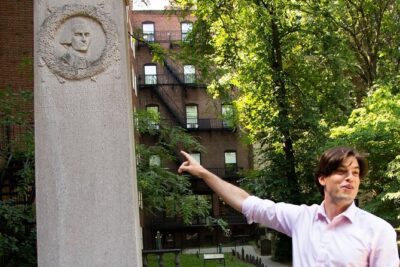
Boston’s Freedom Trail: A Revolutionary Walking Tour
Read our review →Freedom Trail History Small Group Walking Tour
Read our review →Boston’s Freedom Trail: A Revolutionary Walking Tour
Read our review →
Boston’s North End Food Tour: Italian Flavors & Heritage Walk
Read our review →Browse the lists this tour appears in