
Reviewed · FREEDOM TRAIL TOURS
Downtown Freedom Trail Walking Tour – History & Architecture
Boston’s Freedom Trail is easy to follow on your own, but the brick path does not explain why each building matters. This 70-minute walking tour connects Faneuil Hall, the Boston Massacre Site, King’s Chapel, Old Granary Cemetery, and Boston Common into one clear story of rebellion, government, religion, and city life.
I like the way the tour joins architecture with history, rather than treating the landmarks as isolated photo stops. I also like the short format and small maximum group of 20, which works well when you want an introduction before exploring Boston on your own. The main caution is that some guides are easier to hear than others, and the quick pace means the history may feel broad rather than exhaustive.
In This Review
- Key points to know before you book
- Why this short Freedom Trail walk works
- Faneuil Hall and the start of rebellion
- The Old State House and the Boston Massacre Site
- Old South Meeting House, Old Corner Bookstore, and the city of ideas
- School Street’s architecture and public life
- King’s Chapel and Tremont Temple
- Old Granary Cemetery and Park Street Church
- Boston Common and the new State House
- Guides, storytelling, and the main weakness
- Weather, timing, and value at $45
- Who should book this Boston walking tour?
- Should you book it?
- FAQ
- Where does the Downtown Freedom Trail Walking Tour begin?
- Where does the tour end?
- How long does the tour last?
- What landmarks are included?
- Is admission to the attractions included?
- Is the tour offered in English?
- Can children join the tour?
- What happens if I need to cancel?
Key points to know before you book
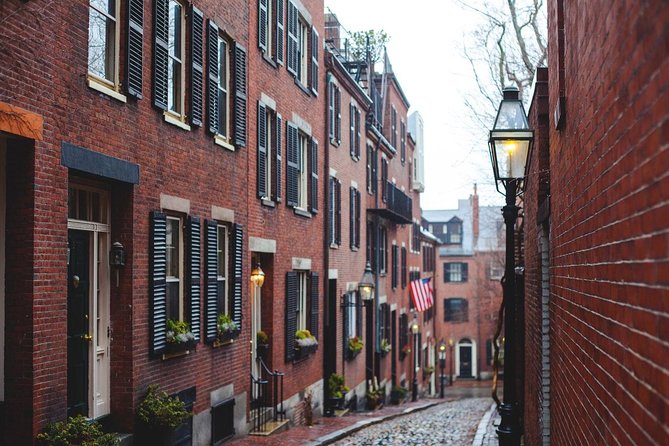
- From Faneuil Hall to Boston Common: The route covers the central Freedom Trail, ending at Brewer Fountain near Boston Common.
- Architecture is part of the story: Expect discussion of colonial buildings, French Second Empire design, churches, cemeteries, and Boston’s changing civic life.
- A compact first-day tour: The 70-minute length gives you a useful orientation without taking up half your day.
- Guides vary in style: Alan and Andrew have received especially warm praise for humor, clear explanations, and involving children.
- Plan for outdoor conditions: The tour operates in all weather, and the route includes cobblestones, sidewalks, and open public spaces.
- Good value at $45: You are paying for interpretation and a focused route, not admission to a series of interiors.
Why this short Freedom Trail walk works
The best reason to book this tour is simple: Boston’s historic center is crowded with landmarks, but the connections between them are not always obvious. A guide can explain how a meeting hall, a church, a cemetery, and a government building fit into the same chain of events.
You meet at State Street and Congress Street at 10:00 a.m. The route then moves through the heart of downtown toward Boston Common, covering the stretch between Faneuil Hall and the newer State House. The walk is public-space focused, so the listed admission cost is free. You are paying for the guide’s time, storytelling, and ability to put the sites in order.
That distinction matters. This is not an attraction-heavy tour with reserved entries or long indoor visits. You pass landmarks and have opportunities to look at places such as the Old South Meeting House, Old Granary Cemetery, Old City Hall, and the First Schoolhouse site. If you want a guided introduction to Boston’s streets and landmarks, the price is reasonable. If you want extensive interior access, it may not meet your needs.
The tour is offered in English and uses a mobile ticket. It is generally suitable for most people, but children must be accompanied by an adult. The group limit of 20 is helpful in a busy downtown setting. Smaller groups also make it easier to ask a question or keep up with the guide.
More Historic Tours in Boston
- Boston: Freedom Trail History Small Group Walking Tour
★ 5.0 · 6,450 reviews - Tour of Historic Fenway Park, America’s Most Beloved Ballpark
★ 4.5 · 3,013 reviews - Boston Food & History: Pizza, North End & Freedom Trail
★ 5.0 · 1,772 reviews
Faneuil Hall and the start of rebellion
Faneuil Hall is one of the strongest opening stops because it brings together commerce, politics, and protest. Often called the Cradle of Liberty, the building hosted public meetings and arguments that helped push Boston toward revolution.
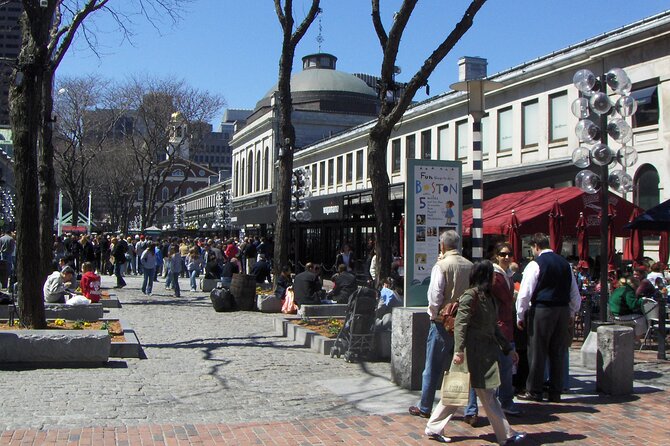
Look up for the grasshopper weathervane, a small detail that adds character to the stop. The nearby Quincy Market gives you a sense of how this part of town still functions as a public gathering place, even though the modern setting is more commercial than colonial.
A guide can help you separate the popular image of Faneuil Hall from its actual role. It was not simply a pretty old building. It was a place where people gathered, argued, organized, and tested the limits of British authority.
The first stop can take a good share of the tour. That is useful if you want context, but it also means the rest of the route moves at a firmer pace. If you arrive late, you could miss some of the opening explanation, so give yourself time to find State Street and Congress Street.
The Old State House and the Boston Massacre Site
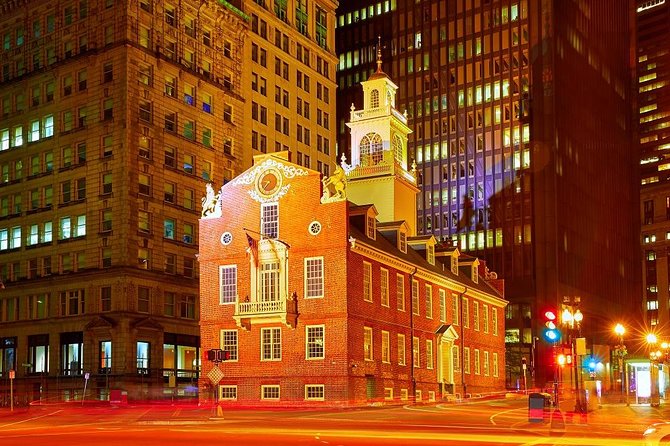
The Old State House, built in 1713, is one of the most important buildings on this section of the trail. It served as the seat of British colonial government, and the Declaration of Independence was first read to Boston residents from its balcony.
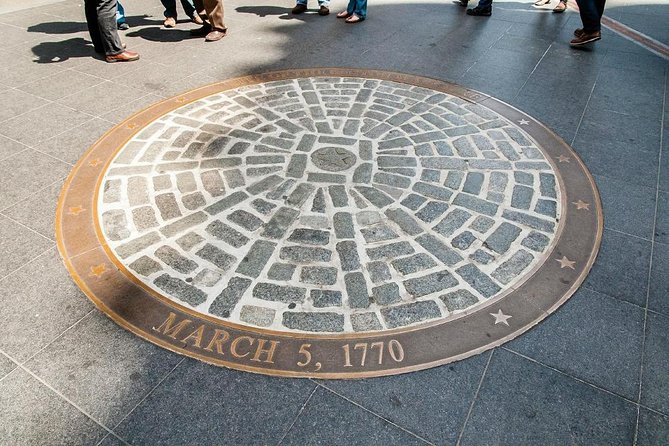
The building’s value is not only its age. It represents the authority that colonial Bostonians increasingly challenged. From here, the tour moves to the Boston Massacre Site, marked by a cobblestone ring in the pavement.
That simple marker can be easy to miss without a guide. In 1770, a confrontation between British soldiers and colonists turned deadly, and the event became powerful political fuel for the patriot cause. The stop works best when you pay attention to the physical setting. Modern traffic and office buildings surround it, yet the marker preserves the exact spot.
This is also where a good guide earns the fee. The basic facts are easy to find online, but a clear explanation can show how news, fear, and political messaging turned a street incident into a symbol of oppression. The experience is more about interpretation than spectacle.
Old South Meeting House, Old Corner Bookstore, and the city of ideas
The Old South Meeting House is a massive brick church with a major place in the story of the Boston Tea Party. Signals connected with the protest were given here in 1773, making the church more than a religious building. It was also a political meeting place.
The tour gives you time to explore or appreciate several nearby sites, including the Old South Meeting House and the Old Corner Bookstore. The bookstore building dates to 1718, when it served as a residence and apothecary shop. It became a bookstore in 1828 and later became associated with writers such as Ralph Waldo Emerson and Charles Dickens.
This part of the walk adds a welcome change of pace. The Freedom Trail is often presented as a string of revolutionary sites, but Boston’s story also involves books, education, religion, immigration, and business. The Old Corner Bookstore helps you see the city as a place where ideas circulated through shops and meeting rooms, not only through government halls.
The Boston Irish Famine Memorial adds another layer. Its two groups of statues contrast an Irish family suffering during the Great Famine of 1845 to 1852 with a prosperous family that immigrated to America. It is a brief stop, but it widens the tour beyond the Revolution and reminds you that Boston’s identity was shaped by later waves of migration too.
More Walking Tours in Boston
- Harvard University Campus Guided Walking Tour
★ 4.5 · 3,632 reviews - Boston Freedom Trail Walking Tour with Costumed Guide
★ 4.5 · 2,531 reviews - The Full Revolutionary Story Epic Small Group Boston Walking Tour
★ 5.0 · 2,356 reviews - Boston’s Freedom Trail: A Revolutionary Walking Tour
★ 4.9 · 1,748 reviews
School Street’s architecture and public life
School Street packs several interesting stops into a short stretch. Old City Hall, at 45 School Street, served Boston’s city government from 1865 to 1969. Its French Second Empire design was among the earliest examples of that style in the United States.
This is where the tour’s architecture theme becomes especially useful. You can look at the building as a handsome landmark, or you can read its scale and ornament as a statement about civic ambition in the nineteenth century. A guide can point out how Boston’s buildings changed as the city grew beyond its colonial beginnings.
Nearby, a statue of Benjamin Franklin and a sidewalk mosaic mark the original site of the Boston Latin School. Founded in 1635, it was the first public school in America and offered free classical education to boys. The stop is small, but it opens a window onto Puritan Boston and the value early leaders placed on education.
You also pass the Omni Parker House, founded in 1855. The hotel is the oldest continuously operating hotel in the United States and is associated with the Boston Cream Pie, Parker House Rolls, and the word scrod. Its connection to presidents and public figures gives the walk a more personal, social side.
These stops are easy to rush past on an independent walk. I appreciate having them included because they show how Boston’s past continued long after the Revolution. The tradeoff is that a 70-minute tour cannot spend equal time on every building.
King’s Chapel and Tremont Temple
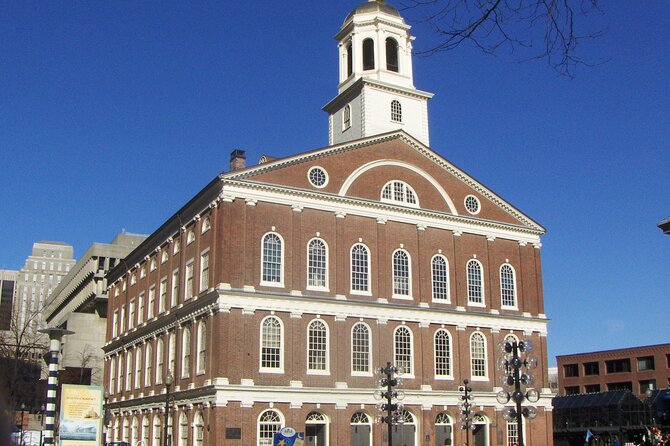
King’s Chapel has more than 330 years of history, beginning with its founding in 1686. It remained part of Boston’s story through the colonial period, the American Revolution, the creation of the United States, and the changes of the modern city.
The church is important as one of the Freedom Trail’s historic landmarks, but it also has its own story. Its long life makes it a useful place to consider how religious institutions adapted as Boston moved from a British colony to an American city.
Tremont Temple brings a different subject into the walk. It began in 1839 as the Free Baptist Church after Timothy Gilbert objected to the treatment of a Black family at another congregation. In 1843, he purchased the Tremont Theater, where the church still meets.
The church became known as the first integrated church in America because it offered open attendance without charge. Its halls also hosted public events, including an Egyptian mummy display in 1850 and anti-slavery speeches by figures such as Frederick Douglass and Sam Houston.
This is one reason guides may differ in emphasis. Some people come expecting a narrow account of the Revolution. Others value a wider look at race, religion, immigration, and civic life. The tour includes that broader context, so you should expect more than military and political history.
Old Granary Cemetery and Park Street Church
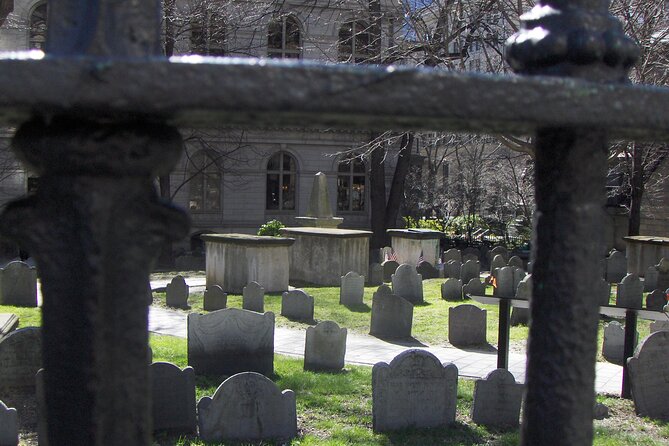
Old Granary Cemetery is the final resting place of Paul Revere, Samuel Adams, and John Hancock. It is one of the most visited cemeteries in the country, and the names alone make it an important stop.
A cemetery can also correct the tidy version of history found in textbooks. The people associated with independence were politicians, printers, merchants, artisans, and organizers with different interests. A guide can help connect the names on the stones to the events you have already heard about.
Park Street Church sits near the end of the route. The church is known as the place where signals were given to start the Boston Tea Party in 1773. Its position near the cemetery and Boston Common makes it a natural transition from the dense historic core to the city’s largest open public space.
The route includes sidewalks and historic surfaces, so comfortable shoes are a good idea. The walk is not described as requiring special fitness, and most people can participate, but you should be ready to remain outdoors and on your feet for about 70 minutes.
Boston Common and the new State House
Boston Common is the tour’s broadest setting. Covering 50 acres, it is the oldest city park in the United States and is bordered by Tremont, Park, Beacon, Charles, and Boylston streets.
The Common gives you a chance to see Boston’s historic center as a living city rather than a museum. Public demonstrations, events, and ordinary city traffic can all shape the atmosphere. One tour group encountered a protest in the Common, and poor weather also affected the experience. Those conditions are outside the guide’s control, so it is wise to keep your expectations flexible.
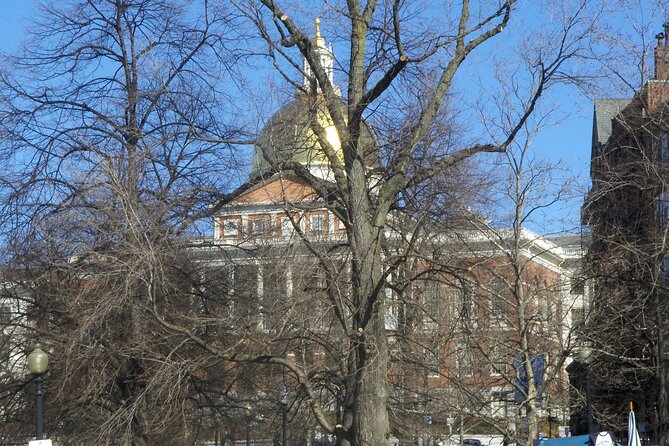
The final landmark is the Massachusetts State House, often called the new State House to distinguish it from the Old State House. Built in 1798, it has an iconic 23-karat gold dome and remains the modern seat of state government. Its position overlooking Boston Common gives the tour a fitting ending, linking revolutionary government with the institutions that followed.
The listed end point is Brewer Fountain on the Freedom Trail near Boston Common. That location is useful for continuing your sightseeing, but do not assume this booking includes the longer extension toward Back Bay and Beacon Hill. An additional walk has sometimes been offered for $15, so confirm exactly what you have booked before paying anything extra.
Guides, storytelling, and the main weakness
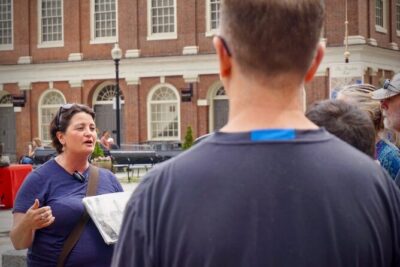
The strongest praise for this experience centers on the guides. Alan is repeatedly associated with clear explanations, humor, architecture, and a talent for making complicated history understandable. Andrew is also singled out for combining education with jokes and for involving an 11-year-old in the conversation.
That family focus can be a real advantage. Guides may ask children questions and bring younger participants into the story instead of speaking only to adults. If your child is shy, you may want to mention that before the walk begins.
The style is not costumed or theatrical. The guides generally dress in modern clothing and present the history from a current perspective. That will suit you if you prefer a conversational docent. If you want dramatic acting, period costumes, or a performance built around characters, another Freedom Trail option may be a better fit.
The main practical weakness is volume. At least one experience was affected by a guide who was difficult to hear, and another comment specifically wished for a microphone. A group of 20 is manageable, but downtown traffic, wind, and nearby tours can make listening harder. Stay close to the guide and ask for repetition if needed.
The content can also feel uneven depending on the guide and your expectations. Some people want more building history, while others want more about the people and political events. This tour tries to combine both. That is a strength for a first visit, but it may feel too general if you already know Boston well.
Weather, timing, and value at $45
The tour lasts about 70 minutes and begins at 10:00 a.m. That timing is useful on a first day because it leaves much of the afternoon for museums, historic interiors, lunch, or neighborhoods beyond downtown.
The tour operates in all weather, so dress for the forecast. Guides have looked for shelter during heavy rain, but this remains an outdoor walking experience. If poor weather forces a cancellation, you are offered another date or a full refund. The operator may also cancel if the minimum number of participants is not reached.
At $45 per person, the tour is not the cheapest way to trace the Freedom Trail. The path itself is free, and you can read signs or use a guidebook. The better question is what you value. If you want someone to organize the route, explain the links between sites, answer questions, and keep the walk moving, the price is fair.
The 70-minute format is particularly good value for first-time visitors who want a quick orientation. It is less suitable if you want to enter every building or spend ten minutes at each grave, church, and meeting house. You can return to your favorite sites afterward with a clearer sense of what you are seeing.
Free cancellation is available up to 24 hours before the start time. Cancellations or changes within 24 hours are not refunded, so watch the local cut-off time when making plans.
Who should book this Boston walking tour?
I would choose this tour for a first visit, a family that wants history in manageable portions, or anyone who likes architecture as much as famous events. The route gives you a useful framework for Boston’s colonial past, Revolutionary politics, education, immigration, religion, and government.
It is also a good choice if you prefer a small group and a guide who can answer questions. Alan and Andrew have received particularly strong praise, but you cannot count on a specific guide unless the operator confirms one in advance.
I would think twice if you need a microphone, dislike outdoor walking in uncertain weather, or want a theatrical presentation. I would also choose a longer tour if the Freedom Trail is your main reason for visiting Boston and you want detailed coverage of every landmark.
Should you book it?
Book this Downtown Freedom Trail Walking Tour if you want a short, well-organized introduction to central Boston, with architecture and social history included alongside the Revolution. At $45, the value comes from the explanations, not admission tickets.
Go in expecting a brisk outdoor overview, not a full museum tour. Wear comfortable shoes, arrive early at State Street and Congress Street, stay close enough to hear, and confirm any proposed extension beyond Boston Common. For many first-time visitors, this is a sensible way to get the city’s story in place before exploring on your own.
FAQ
Where does the Downtown Freedom Trail Walking Tour begin?
The meeting point is at State Street and Congress Street in Boston, Massachusetts. The scheduled start time is 10:00 a.m.
Where does the tour end?
The tour ends at Brewer Fountain on the Freedom Trail near Boston Common.
How long does the tour last?
The walking tour lasts approximately 1 hour and 10 minutes, or 70 minutes.
What landmarks are included?
The route includes Faneuil Hall, Quincy Market, the Old State House, the Boston Massacre Site, Old South Meeting House, Old Corner Bookstore, Old City Hall, the Boston Latin School site, King’s Chapel, Tremont Temple, Old Granary Cemetery, Park Street Church, the new State House, and Boston Common.
Is admission to the attractions included?
The tour includes a professional guide and passage by the listed landmarks. The itinerary identifies the admission ticket as free, but it does not describe reserved entry into every building.
Is the tour offered in English?
Yes. The tour is offered in English and uses a mobile ticket.
Can children join the tour?
Yes. Most people can participate, and children may attend when accompanied by an adult. The group size can be as large as 20 people.
What happens if I need to cancel?
You can receive a full refund if you cancel at least 24 hours before the start time. Cancellations or changes made within 24 hours are not refunded. If the tour is canceled because of poor weather or insufficient participation, you will be offered another date, another experience, or a full refund.
More Historical Tours in Boston
- History and Hauntings of Salem Guided Walking Tour
★ 5.0 · 14,564 reviews - Boston: City Cruises Historical Sightseeing Cruise
★ 4.6 · 1,771 reviews - City Cruises Boston Historic Sightseeing Harbor Cruise
★ 4.5 · 1,388 reviews - Boston’s North End Food Tour: Italian Flavors & Heritage Walk
★ 5.0 · 1,322 reviews
More Freedom Trail Walks in Boston
- Boston: Freedom Trail History Small Group Walking Tour
★ 4.9 · 1,590 reviews - Boston’s Freedom Trail: A Revolutionary Walking Tour
★ 5.0 · 1,343 reviews - Freedom Trail Walking Tour 250
★ 4.5 · 1,118 reviews - Boston Freedom Trail History Pub Crawl Small-Group Tour
★ 5.0 · 996 reviews
Just added around Boston
- Day Trip from Boston: Explore Hammond Castle Museum★ 3.7 · 3 reviews
- Boston: WNDR Museum Entry Ticket★ 3.7 · 3 reviews
- The Boston Bash Scavenger Hunt★ 4.5 · 3 reviews
- Self-Guided Audio Tour of Boston North End★ 4.5 · 3 reviews
- Boston: Official Freedom Trail® Lantern Tour★ 4.7 · 3 reviews
- Boston: North End Walking Tour with Private Harbor Cruise★ 5.0 · 3 reviews
- Self Guided “The North End Pizza, Cannoli and Picnic” Solo Walking Tour★ 5.0 · 3 reviews
- Cambridge: Haunted Charles River Cruise★ 4.3 · 3 reviews
Freedom Trail Tours, compared.
Freedom Trail History Small Group Walking Tour
Read our review →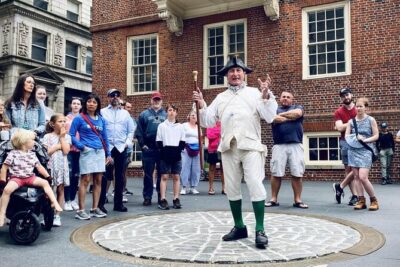
Boston Freedom Trail Walking Tour with Costumed Guide
Read our review →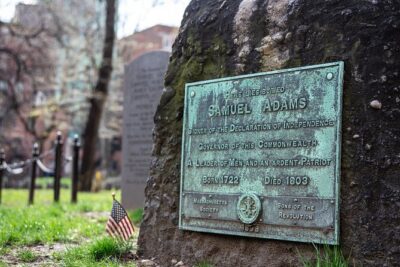
Boston Food & History: Pizza, North End & Freedom Trail
Read our review →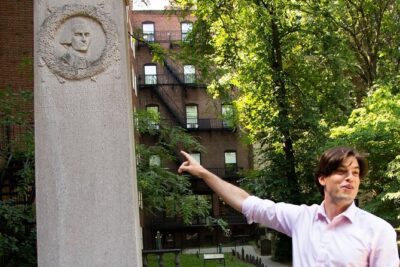
Boston’s Freedom Trail: A Revolutionary Walking Tour
Read our review →Freedom Trail History Small Group Walking Tour
Read our review →Boston’s Freedom Trail: A Revolutionary Walking Tour
Read our review →

Boston Freedom Trail History Pub Crawl Small-Group Tour
Read our review →Browse the lists this tour appears in