
Reviewed · FREEDOM TRAIL TOURS
Boston’s Revolutionary Path The Freedom Trail Tour
Boston’s Revolutionary Path begins with a modern symbol of justice, then moves into Boston’s colonial core. Starting at The Embrace, the tour connects Dr. Martin Luther King Jr. and Coretta Scott King with the older struggles for liberty found along the Freedom Trail.
I like the small group size, capped at 10 people, and the way the route mixes famous landmarks with quieter corners such as King’s Chapel Burying Ground. I also like the focus on stories behind the buildings. The strongest praise centers on a guide who added behind-the-scenes details and made the walk appealing to a first-time Boston visitor.
The main drawback is simple: $45 for about two hours is not a bargain if you only want to follow the red-brick trail on your own. Much of the value rests on the guide’s storytelling, and the tour does not appear to include admission inside every building.
In This Review
- Key points to know before booking
- Starting with The Embrace and Boston Common
- Beacon Hill’s brick streets and gas lamps
- The golden dome of the Massachusetts State House
- Park Street Church and two old burying grounds
- Old State House and the road to revolution
- Faneuil Hall and Quincy Market finish the walk
- What the $45 price really buys you
- Timing, walking, and practical planning
- Who will get the most from this Freedom Trail walk
- Should you book Boston’s Revolutionary Path?
- FAQ
- How long does Boston’s Revolutionary Path last?
- Where does the tour begin?
- Where does the tour end?
- What language is the tour offered in?
- How large is the group?
- Is the tour ticket delivered to a phone?
- Are service animals allowed?
- Can I cancel for a full refund?
Key points to know before booking
- The Embrace begins the walk: This 2023 bronze sculpture gives the tour a modern civil-rights opening before the colonial sites begin.
- Ten people maximum: A small group should make it easier to hear the guide and ask questions while walking through busy central Boston.
- Mostly outdoor sightseeing: You visit churches, cemeteries, parks, streets, and historic buildings, but interior access is not promised at every stop.
- The route covers old Boston well: Beacon Hill, Boston Common, the State House, Granary Burying Ground, the Old State House, and Faneuil Hall all fit into one compact outing.
- The walk ends near food and shopping: Quincy Market gives you an easy place to continue sightseeing, eat, or pause after the tour.
- Best for a first Boston visit: The guide’s background details can help you make sense of the city before exploring on your own.
Starting with The Embrace and Boston Common
Meet at The Embrace, at 139 Tremont Street, near Boston Common. This is a useful starting point because you begin in a central area with several major sights close at hand.
The sculpture honors Dr. Martin Luther King Jr. and Coretta Scott King. Its design focuses on their intertwined arms, based on a 1964 photograph taken after Dr. King received the Nobel Peace Prize. The meaning is clear without being heavy-handed: partnership, affection, and shared work for justice.
You spend about five minutes here. That is enough time for an introduction and a close look, but not a long art lecture. The stop also gives the tour a wider frame. Boston is not only a city of colonial protest and revolutionary slogans. Its public story continues into the modern fight for civil rights.
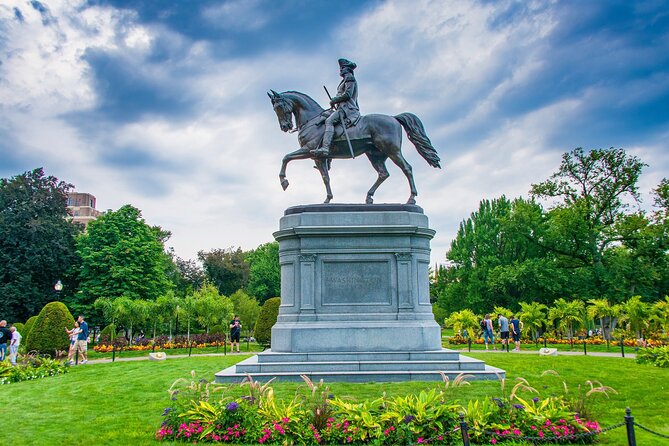
From there, the route moves toward Beacon Hill. Boston Common receives about 15 minutes, though walking time is part of the experience. The park is the oldest public park in the United States, and it remains an open, calm patch in the middle of the city.
You can expect paths, lawns, ponds, and views toward some of Boston’s best-known buildings. The Common is not a single dramatic sight in the way the Old State House is. Its value comes from understanding how public space has shaped city life over time.
This stop also helps set the pace. You are walking rather than rushing from one indoor attraction to another. Wear shoes that can handle pavement and uneven historic surfaces, especially if you plan to continue around Boston after the tour.
More Freedom Trail walks in Boston:
- Boston: Freedom Trail History Small Group Walking Tour
★ 5.0 · 6,450 reviews - Boston Freedom Trail Walking Tour with Costumed Guide
★ 4.5 · 2,531 reviews - Boston Food & History: Pizza, North End & Freedom Trail
★ 5.0 · 1,772 reviews
Beacon Hill’s brick streets and gas lamps
Beacon Hill gets about 15 minutes, which is enough for a short look at its character but not a full neighborhood walk. This is one of the prettiest sections of the route, with Federal-style brick homes, narrow streets, gas lamps, and old paving.
Acorn Street is the sort of place you may want to photograph. Still, keep your expectations in check. A short guided stop lets you see the style of the neighborhood and hear why it matters, but it does not give you time to explore every lane, shop, café, and park.
I like this part because it brings the city’s past down to street level. Grand political events can feel remote. A row of brick homes, a steep lane, and old lamps make Boston’s earlier centuries easier to picture.
The route’s timing means you should treat Beacon Hill as an introduction, not a detailed architectural tour. If you love old neighborhoods, return later with time to wander at your own pace.
The golden dome of the Massachusetts State House
The Massachusetts State House sits on Beacon Hill and is recognized by its golden dome. The tour allows about 15 minutes here, giving the guide room to explain the building’s role in state government and its place in Massachusetts political life.
The stop is especially useful for understanding that the Freedom Trail is not just a chain of battle sites. It is also a route through institutions, public decisions, and arguments about who should govern.
The information provided for this experience mentions guided tours of the State House, but this walking tour does not promise an interior visit or a separate admission. Plan to view the building and grounds unless your guide tells you otherwise.
That distinction matters. If you want to see the inside, confirm the arrangement before booking or make a separate plan. The exterior alone is worthwhile, but you should not pay expecting a full building tour unless it is clearly included.
Park Street Church and two old burying grounds
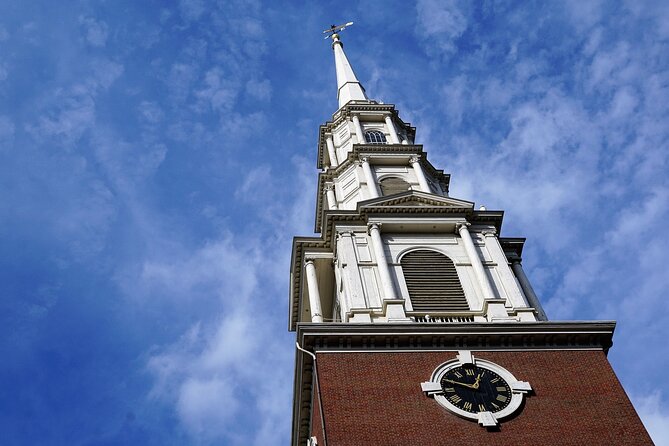
Park Street Church is a brief five-minute stop. Built in 1809, it is known for its tall white steeple and classical design. The church has played a part in Boston’s religious and social life, and the guide can place it within the city’s changing public story.
Five minutes is enough to admire the outside and get the basic context. It is not enough for a long interior visit or a service. The church still hosts services and community events, but none of those are listed as part of this tour.
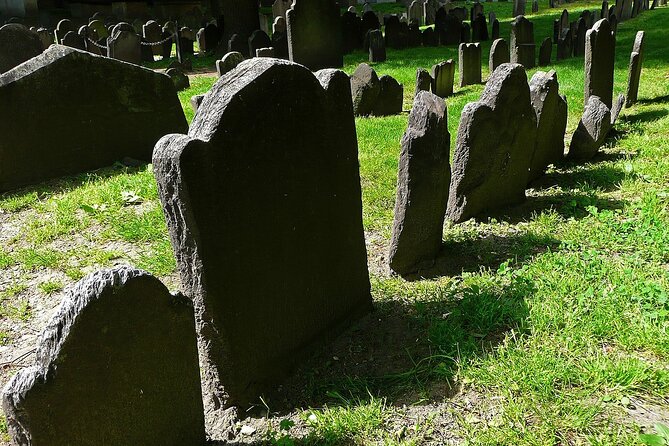
The route then reaches King’s Chapel Burying Ground, Boston’s oldest cemetery, dating to 1630. You spend about 15 minutes among the grave markers, next to King’s Chapel.
This is a quiet change of mood. The stones and inscriptions bring attention to ordinary mortality, early settlement, and the people who shaped colonial Boston. John Winthrop, an important early Massachusetts figure, is buried here.
The cemetery is compact, and the guide’s comments matter more than the amount of ground covered. Look closely at the worn stones and varied markings. This is not a polished museum display. It is an old burial place in the center of a modern city, and that contrast is part of its appeal.
Granary Burying Ground follows, with another 15-minute stop. It dates to 1660 and contains the graves of Paul Revere, Samuel Adams, and John Hancock. For many people, this is one of the tour’s most recognizable stops.
The names are familiar from schoolbooks, but the setting can make them feel less abstract. You are standing among actual burial markers in the city where these men lived and worked. The guide’s behind-the-scenes details are likely most useful here, since a list of famous names alone would not fill the stop with meaning.
Both cemeteries deserve respect. They are active historical places, not simply photo stops. Keep your voice low, watch your footing, and allow yourself a moment to read rather than rushing from one famous grave to the next.
Same city, a very different afternoon:
- History and Hauntings of Salem Guided Walking Tour
★ 5.0 · 14,564 reviews - Boston Duck Boat Sightseeing City Tour with Cruise Along Charles River
★ 4.5 · 9,378 reviews - Boston Hop-On Hop-Off Trolley Tour with 13 Stops
★ 4.5 · 5,576 reviews - Boston: City Cruises Whale Watching Cruise
★ 4.5 · 4,710 reviews
Old State House and the road to revolution
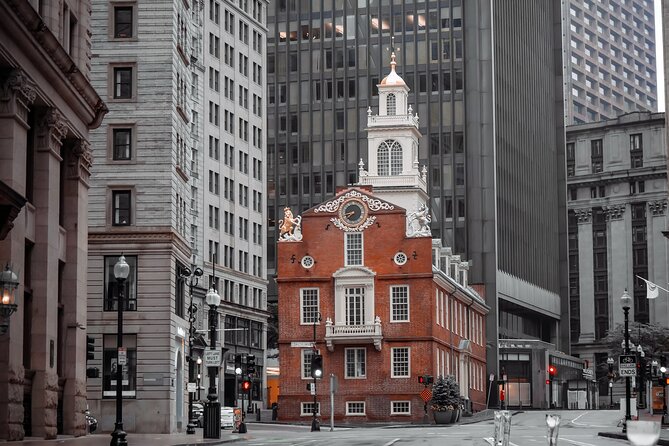
The Old State House receives a short five-minute visit. Built in 1713, it is one of Boston’s key colonial landmarks and was tied to major events before and during the American Revolution.
The building is especially important because it was the site of the reading of the Declaration of Independence. That gives the stop a direct link to the political break with Britain, rather than only a general connection to colonial Boston.
The Old State House also has exhibits about early American history. The walking tour includes a visit, but the supplied details do not promise admission or time inside the museum. If exhibits are a priority, you may need to return separately.
Five minutes goes quickly. Expect an exterior explanation and a concise account of the building’s role. That works well for a first orientation, but history fans who want to read displays in detail will need another visit.
By this point, the tour has moved through public space, private homes, government, religion, burial grounds, and political protest. That range is one reason the walk can be more useful than simply following a line on a map.
Faneuil Hall and Quincy Market finish the walk
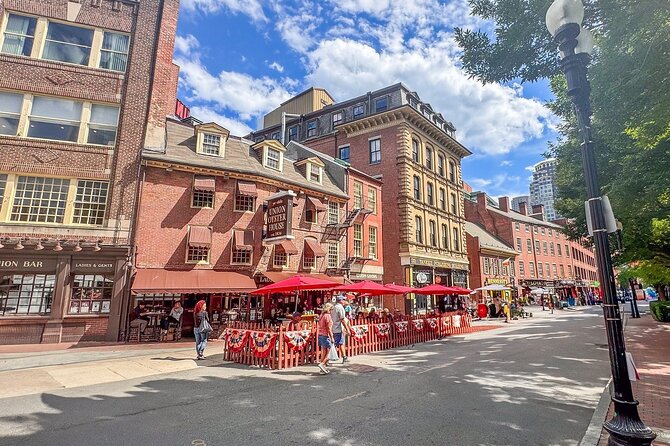
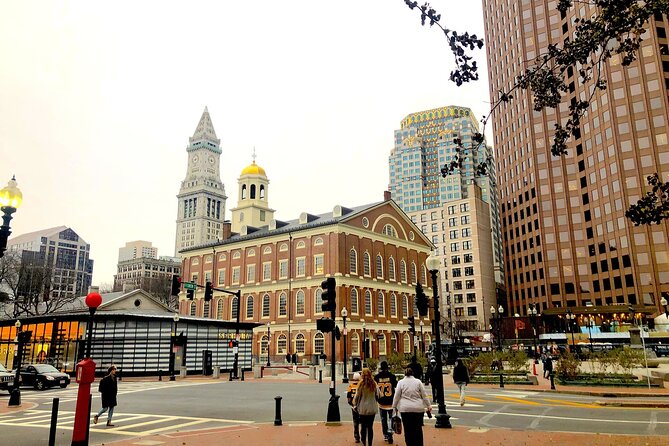
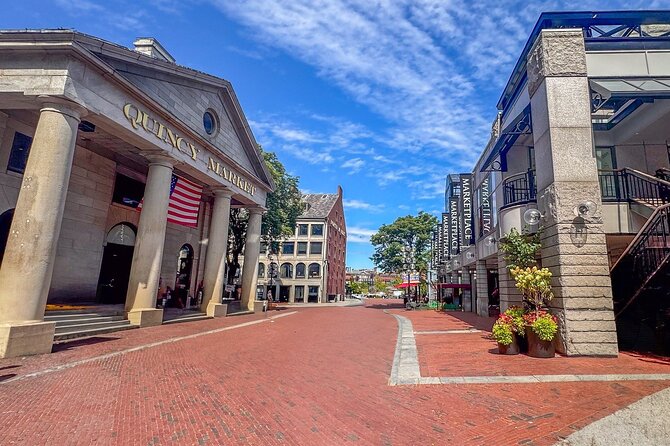
The tour ends at Faneuil Hall Marketplace, near Quincy Market. Faneuil Hall is often called the Cradle of Liberty because early protests against British rule took place there. Built in 1742, it now contains a marketplace and museum.
The stop ties the earlier sites together. Boston’s revolutionary story was not created only by famous leaders. It grew through public meetings, arguments, protests, printed ideas, and ordinary people gathering in shared spaces.
The exact time assigned to Faneuil Hall and Quincy Market is not provided, so expect the final section to vary with the guide and group. Faneuil Hall has more historical value, while Quincy Market is the practical ending point.
Quincy Market offers food vendors, shops, treats, and street performances in the surrounding area. It is a convenient place to stop for lunch or a snack, though prices and quality can vary by vendor. Think of it as a useful city-center finish rather than a carefully selected food tasting.
I like ending here because you do not have to solve your next meal or transport decision immediately. You can browse, eat, or continue toward more downtown sights. The endpoint is Faneuil Hall Marketplace in Boston, Massachusetts, near the market area.
What the $45 price really buys you
At $45 per person, this is a paid interpretation of a largely public route. Admission to the listed outdoor stops is free, and the tour does not clearly include entry inside every church, government building, or museum.
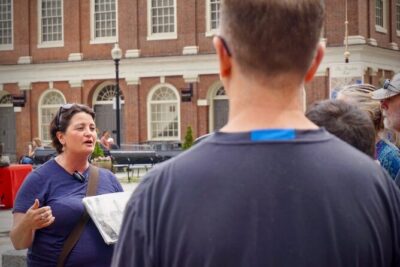
So the price is not paying for rare access. It is paying for a local English-speaking guide, a small group, route planning, and the chance to hear the city explained as you walk.
That can be good value if you are new to Boston and want the main story in one sitting. One strong account of the experience praised the guide for sharing details that went beyond the basic facts and for making the walk interesting for a first visit. That is exactly the kind of value you should seek from this tour.
The value is weaker if you already know Boston well or enjoy reading signs and guidebooks on your own. You can walk much of this route independently, and you can return to the cemeteries and public spaces without paying an entrance fee.
The maximum group size of 10 helps the price feel more reasonable. A guide speaking to 10 people can usually offer a more personal experience than a large crowd, though the actual quality still depends on the individual guide assigned that day. No guide name is provided, so you cannot choose a particular person when booking.
Timing, walking, and practical planning
The stated duration is about two hours. The listed stop times add up to roughly 90 minutes before counting the walking between locations, transitions, and the final Faneuil Hall and Quincy Market section.
Expect a steady urban walk with frequent stops. The route is near public transportation, and most people can take part, but the tour data does not give a precise distance, grade, or accessibility description for every historic surface.
A mobile ticket keeps the meeting process simple. Confirmation arrives when you book, and service animals are allowed. The tour is offered in English only.
Book ahead if your schedule is fixed. It is booked an average of 58 days in advance, which suggests that popular dates may fill early, particularly during busy periods. You can cancel for a full refund up to 24 hours before the start time. Changes or cancellations made inside that window are not accepted for a refund.
Because the tour ends at a market, you can make this your morning orientation and then eat afterward. You can also use it as a first activity before returning to the Old State House, the State House, or Beacon Hill for a closer look.
Who will get the most from this Freedom Trail walk
I would choose this tour for a first-time Boston visitor who wants the main colonial story without spending a full day in museums. The route covers enough famous names and places to give you a useful framework for later independent exploring.
It also suits anyone who prefers history delivered in short stories while walking. The best moments are likely to come from explanations at the cemeteries and revolutionary buildings, especially if the guide supplies the kind of lesser-known details praised in the strongest account of the tour.
Families and mixed-age groups may appreciate the short stops. You are rarely asked to focus on one building for a long period, and Quincy Market gives you an easy finish with food nearby.
I would be more cautious if you need wheelchair-specific route information, a full interior tour, or a long visit at each landmark. The tour page says most people can participate, but it does not spell out the condition of every street, cemetery path, or entrance.
Should you book Boston’s Revolutionary Path?
Book it if you want a compact, small-group introduction to Boston and value a guide who can turn familiar names into useful stories. The route is well chosen, the start is central, and the finish at Quincy Market is practical.
Skip it if you are mainly looking for included admissions or a slow, detailed museum tour. At $45, the experience depends on the guide’s ability to add context to free public sights.
For a first visit, I think the strongest reason to book is the storytelling. You get The Embrace, Beacon Hill, Boston Common, the State House, two historic cemeteries, the Old State House, Faneuil Hall, and Quincy Market in about two hours. That is a lot of Boston in a short time, with enough structure to help you explore the city on your own afterward.
FAQ
How long does Boston’s Revolutionary Path last?
The tour lasts approximately two hours.
Where does the tour begin?
It begins at The Embrace, located at 139 Tremont Street, Boston, Massachusetts 02108.
Where does the tour end?
It ends at Faneuil Hall Marketplace, near Quincy Market in Boston.
What language is the tour offered in?
The tour is offered in English.
How large is the group?
The tour has a maximum of 10 participants.
Is the tour ticket delivered to a phone?
Yes. A mobile ticket is provided, and booking confirmation is received at the time of booking.
Are service animals allowed?
Yes, service animals are allowed.
Can I cancel for a full refund?
Yes. You can cancel at least 24 hours before the experience start time for a full refund. Cancellations or changes made less than 24 hours before the start time are not refunded or accepted.
Just added around Boston
- Day Trip from Boston: Explore Hammond Castle Museum★ 3.7 · 3 reviews
- Boston: WNDR Museum Entry Ticket★ 3.7 · 3 reviews
- The Boston Bash Scavenger Hunt★ 4.5 · 3 reviews
- Self-Guided Audio Tour of Boston North End★ 4.5 · 3 reviews
- Boston: Official Freedom Trail® Lantern Tour★ 4.7 · 3 reviews
- Boston: North End Walking Tour with Private Harbor Cruise★ 5.0 · 3 reviews
- Self Guided “The North End Pizza, Cannoli and Picnic” Solo Walking Tour★ 5.0 · 3 reviews
- Cambridge: Haunted Charles River Cruise★ 4.3 · 3 reviews
Freedom Trail Tours, compared.
Freedom Trail History Small Group Walking Tour
Read our review →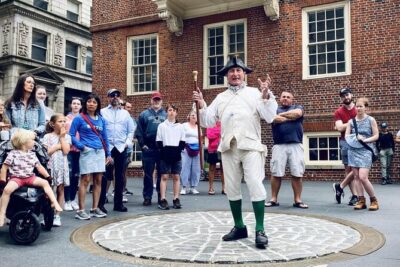
Boston Freedom Trail Walking Tour with Costumed Guide
Read our review →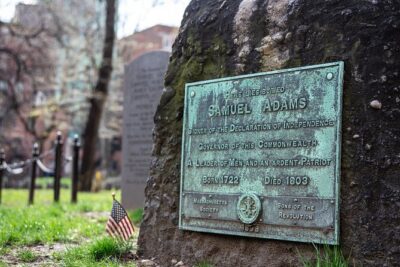
Boston Food & History: Pizza, North End & Freedom Trail
Read our review →
Boston’s Freedom Trail: A Revolutionary Walking Tour
Read our review →Freedom Trail History Small Group Walking Tour
Read our review →Boston’s Freedom Trail: A Revolutionary Walking Tour
Read our review →

Boston Freedom Trail History Pub Crawl Small-Group Tour
Read our review →Browse the lists this tour appears in