
Reviewed · FREEDOM TRAIL TOURS
Boston History and Freedom Trail Private Walking Tour
Boston’s past comes alive best on foot, and this private Freedom Trail tour gives you a useful thread through the city’s colonial streets, Revolutionary sites, churchyards, markets, and grand civic buildings. You’ll begin near Faneuil Hall and finish around Boston Public Garden, with stops such as Granary Burying Ground, the North End, Old North Church, and the Old State House along the way.
I like the private group format, which lets you ask questions and adjust the pace instead of trailing behind a large crowd. I also like the route’s range: you get famous Revolutionary landmarks, local streets, architecture, and food districts in one outing. The main caution is that the tour lasts about two to four hours, and not every listed location is guaranteed as a formal stop. A meeting-point mix-up has also caused trouble for at least one booking, so confirm the start address before setting out.
In This Review
- Key points at a glance
- Why a private Freedom Trail walk works well
- Starting at Faneuil Hall and the city’s market district
- Granary Burying Ground and Boston’s Revolutionary names
- Through the North End to Paul Revere and Old North Church
- The Boston Tea Party connection
- The Old State House and the Boston Massacre site
- The Massachusetts State House and modern Boston views
- Beacon Hill, Boston Common, and the route’s changing character
- Books, writers, and the Midnight Ride
- Finishing near Boston Public Garden and the Seaport question
- Price, timing, and walking comfort
- Who should book this Boston history tour?
- Should you book it?
- FAQ
- How much does the Boston History and Freedom Trail Private Walking Tour cost?
- How long does the walking tour last?
- What time does the tour begin?
- Where does the tour start?
- Where does the tour end?
- Is this a private tour?
- Are food and drinks included?
- Can I cancel for a full refund?
Key points at a glance

- A private tour for up to 12 people: The $245 group price can be good value for families and friend groups, especially when shared among several people.
- A practical first look at Boston: The route connects Faneuil Hall, the North End, downtown, Beacon Hill area sights, and Boston Public Garden.
- Strong guide-led storytelling: Guides including Molly Mitchell, Michael, Alex, Allison, Trey Petrella, Lexie, and Dillon have been praised for clear, lively explanations.
- A two-hour option is possible: One group found the compact two-hour format comfortable, while the full experience may run closer to four hours.
- Several major Revolutionary sites: Expect the Boston Massacre site, Boston Tea Party connections, Paul Revere’s home area, Old North Church, and Granary Burying Ground.
- Wear proper walking shoes: Boston’s historic center is compact but involves steady walking on streets and sidewalks.
Why a private Freedom Trail walk works well
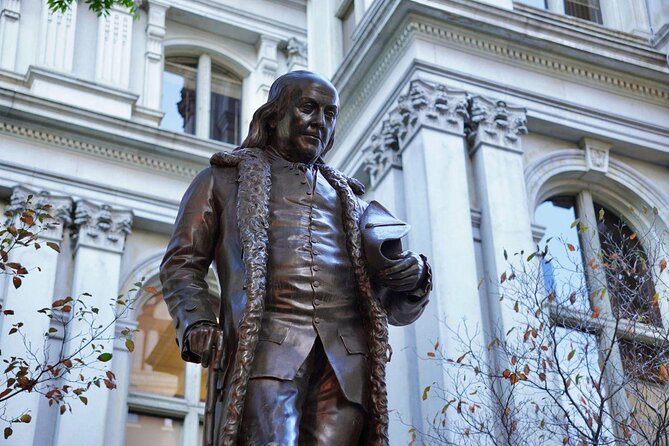
Boston’s Freedom Trail is easy to recognize once you know the red-brick path, but the route makes more sense when someone explains how the pieces fit together. A cemetery is not just a cemetery here. A church is not simply a church. A market hall, government building, and narrow North End street each played a part in the city’s rise from colonial settlement to major American city.
This tour is designed for your group alone, with a maximum of 12 people. That matters. You can stop to ask why the Boston Massacre became such a powerful political story, hear more about Paul Revere, or ask for a restaurant suggestion without trying to get the attention of a guide speaking to dozens of people.
The guides have different styles, but the best feedback points to the same strengths: clear delivery, humor, strong command of Boston’s past, and an ability to adjust the pace. Molly Mitchell is especially praised for lively explanations and clear speech. Alex kept the information manageable during a comfortable two-hour walk, while Dillon added humor and plenty of small stories. Michael was praised for fitting many sights into two hours without making the group feel rushed.
More Historic Tours in Boston
- Boston: Freedom Trail History Small Group Walking Tour
★ 5.0 · 6,450 reviews - Tour of Historic Fenway Park, America’s Most Beloved Ballpark
★ 4.5 · 3,013 reviews - Boston Food & History: Pizza, North End & Freedom Trail
★ 5.0 · 1,772 reviews
Starting at Faneuil Hall and the city’s market district
The tour begins at 191 Atlantic Avenue at 1 p.m., close to Faneuil Hall Marketplace and the waterfront. This is a useful starting point because you are already in one of Boston’s most visited central areas, with food stalls, shops, historic buildings, and easy access to public transportation.
Faneuil Hall began as a public market house and meeting place. Its importance goes beyond the shops you see today. Speeches made here helped shape public debate during the colonial period and later American political life. Your guide uses the building as an entry point into the city’s civic story, not just as a photo stop.
The area can be crowded, especially around the market buildings, so a private guide is useful at the start. You will not need to spend time guessing which brick building matters or where to look. Just be sure to check your confirmation for the exact meeting address. One booking problem involved an old location on Boylston Street being shown instead of 191 Atlantic Avenue, which led to a missed tour and refund.
Granary Burying Ground and Boston’s Revolutionary names
Granary Burying Ground dates to 1660 and was once part of Boston Common. It is a brief stop, listed at about 10 minutes, but it carries a great deal of weight. The cemetery contains the graves of major figures connected with the American Revolution, including John Hancock, Paul Revere, and Samuel Adams.
This is where a guide adds real value. You can walk past old stones on your own, but the names become more meaningful when placed into the political tensions of colonial Boston. Look closely at the age and style of the markers, then compare the quiet churchyard with the traffic and office buildings just outside its walls.
Do not expect a long cemetery visit. The stop is short, and the focus is on orientation and storytelling rather than a detailed tour of every grave. That is a fair trade on a walking route that aims to cover several neighborhoods.
Through the North End to Paul Revere and Old North Church
The North End brings a different mood. Its historic buildings include Paul Revere’s home and Old North Church, while its cafés and Italian restaurants give the neighborhood a strong local identity. The tour connects the famous Revolutionary sites with the food traditions that define the area today.
Paul Revere’s home is one of the clearest reminders that the Revolution involved ordinary streets and houses, not only grand halls and battlefields. Old North Church, built in 1723, is the oldest standing church building in Boston. Its role before the American Revolution made it one of the most important stops on this section of the Freedom Trail.
The tour information lists Paul Revere’s home and Old North Church as highlights, but it does not promise admission inside every attraction. Plan on seeing the sites from the route unless your guide confirms an interior visit. This distinction matters if you want museum time rather than an outdoor walking overview.
You may also get useful local suggestions here. Beantown coffee, Italian cafés, and North End eateries are part of the experience, though food and drinks are not included. One guide-led walk included an unexpected pub stop, but you should treat that as a possible extra rather than a guaranteed feature.
More Walking Tours in Boston
- Harvard University Campus Guided Walking Tour
★ 4.5 · 3,632 reviews - Boston Freedom Trail Walking Tour with Costumed Guide
★ 4.5 · 2,531 reviews - The Full Revolutionary Story Epic Small Group Boston Walking Tour
★ 5.0 · 2,356 reviews - Boston’s Freedom Trail: A Revolutionary Walking Tour
★ 4.9 · 1,748 reviews
The Boston Tea Party connection
The tour includes a stop tied to the Boston Tea Party, described as a church that was the city’s largest building in 1773. This is a chance to move past the familiar schoolbook version of the event.
The guide can explain how protest, taxation, shipping, public meetings, and political messaging came together on that December night. The important point is not only the tea dumped into the harbor. It is the way Boston’s meeting places helped turn a local dispute into a crisis across the colonies.
Because the exact stop may depend on the route and guide, ask how much time will be spent here. Some groups will want the political background, while others may prefer to keep moving through the historic center.
The Old State House and the Boston Massacre site
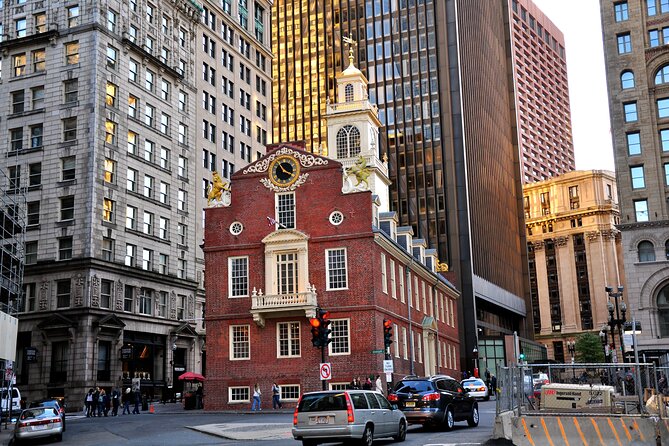
Downtown brings you to the Old State House and the site of the Boston Massacre. The Old State House is one of Boston’s most recognizable buildings and one of the country’s oldest public buildings. Its position among modern streets and high-rises makes the contrast especially striking.
The Boston Massacre site is a good example of why guided context matters. The event became a powerful piece of colonial propaganda, and the location itself has changed in relation to modern traffic and city design. One particularly interesting detail is that the marker was moved to keep it out of the flow of traffic. Your guide can help you separate the physical spot from the political meaning attached to it.
The Old State House is listed as an outside sight, so do not assume the tour includes museum admission. If you want to explore the interior, reserve separate time. The walking tour’s job is to connect the building to Boston’s wider story and point out what you might otherwise miss.
The Massachusetts State House and modern Boston views
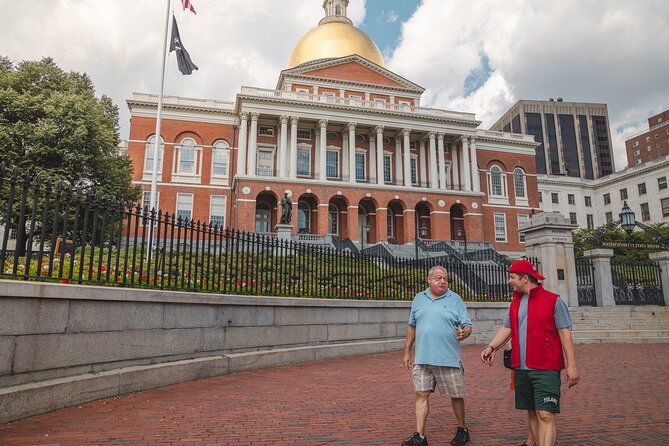
The gold-colored dome of the Massachusetts State House gives the route a change of scale. Designed by federalist architect Charles Bulfinch and completed in 1798, the building reflects the confidence of the young American republic.
From outside, you can look toward modern downtown, the Financial District, and the John Hancock Tower, identified here as the tallest building in New England. That view helps show how Boston developed without erasing its older civic center. Colonial streets, nineteenth-century buildings, and modern towers share the same compact area.
This part of the route is especially useful for first-time visitors who want more than Revolutionary War facts. You begin to see Boston as a working city with layers of government, commerce, education, and architecture.
Beacon Hill, Boston Common, and the route’s changing character
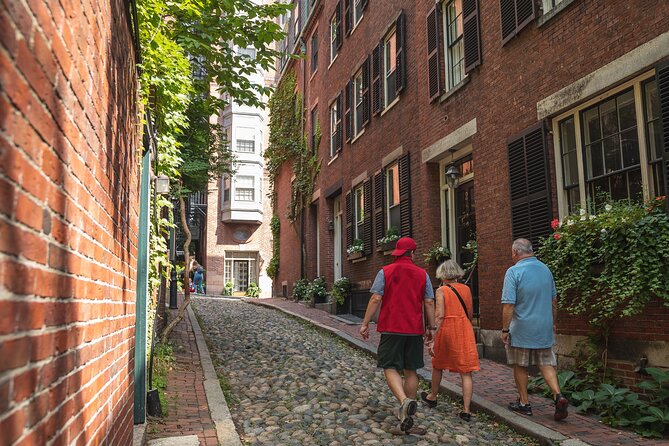
The tour description highlights Boston Common, Beacon Hill, and some of the city’s most attractive streets. The exact path can vary, but these areas offer a quieter look at Boston after the noise of the market district and downtown traffic.
Boston Common began as common land and remains one of the city’s defining open spaces. Beacon Hill adds brick sidewalks, historic homes, and a more residential feel. One booking described Long Wharf and Beacon Hill as especially memorable, while another group enjoyed the architecture around Boston Common.
The phrase beautiful street is not just marketing fluff here. The pleasure comes from slowing down enough to notice brickwork, iron railings, narrow lanes, old façades, and the way the street grid changes from one district to the next. Your guide can point out local details while still keeping the walk connected to the major events.
Books, writers, and the Midnight Ride
Another stop passes the site of Boston’s first bookstore and publishers linked with writers such as Henry David Thoreau, Nathaniel Hawthorne, and Henry Wadsworth Longfellow. This adds a literary thread to a tour otherwise focused heavily on politics and revolution.
Longfellow’s connection to Paul Revere’s famous Midnight Ride also gives the guide a chance to explain how historical memory is shaped by poems, stories, and public imagination. The episode became more than a military warning. It became part of the national story through literature.
This stop may appeal most if you like the way buildings collect several layers of meaning. It is not simply a bookstore site or a literary footnote. It helps show Boston as a place where politics, publishing, education, and storytelling have long overlapped.
Finishing near Boston Public Garden and the Seaport question
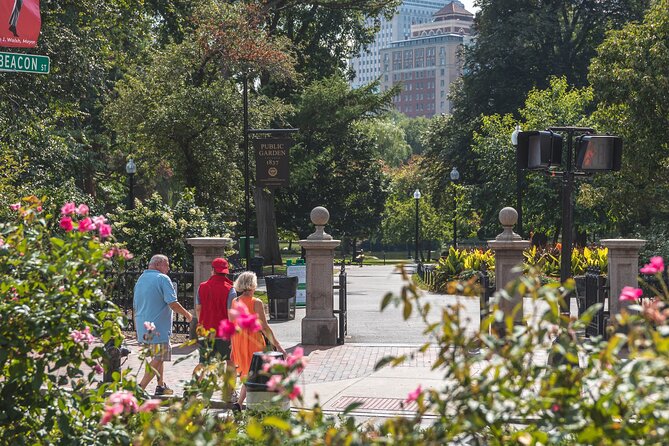
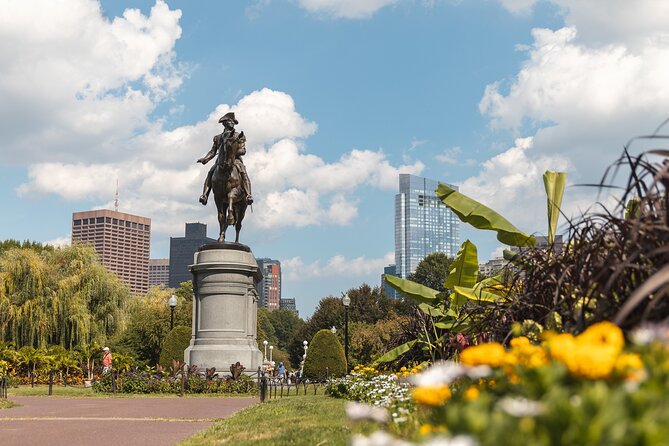
The advertised endpoint is Boston Public Garden, a convenient central finish near more sightseeing, restaurants, and public transportation. Ending there gives you a pleasant place to continue your afternoon, and it puts you within reach of the Common, Beacon Hill, Newbury Street, and Back Bay.
The included highlights also mention city views and the art and food scene of the Seaport District, as well as the Battle of Bunker Hill. These do not fit neatly into the stated Faneuil Hall to Public Garden walking route. Since the tour notes that not all listed locations are guaranteed stops, ask your guide at the beginning what route your group will take and which sites will be covered in detail.
That is not necessarily a flaw. A private tour often works better when it focuses on a coherent central route instead of racing across town to check off every name. But if Seaport or Bunker Hill is a priority, you should confirm before booking or arrange separate time.
Price, timing, and walking comfort
The price is $245 per group of up to 12 people, not per person. For one or two people, that is a significant expense compared with a standard group walk. For a family or group of friends, the math improves quickly. A group of six pays about $41 per person, while 12 people would pay about $20 each.
The tour lasts approximately two to four hours. That range is wide, so ask about the expected length if your afternoon schedule is tight. A two-hour version worked well for one group and still covered many sights. A longer outing gives you more time for questions, neighborhood details, and possible pauses.
Wear comfortable walking shoes. You will move through busy central streets, historic areas, cemeteries, and open public spaces. The route is accessible to most participants, service animals are allowed, and public transportation is nearby. Food and drinks cost extra.
The tour is often booked about 29 days ahead, so popular dates may fill early. You receive confirmation at booking, and free cancellation is available until 24 hours before the start time. Changes or cancellations inside that window are not refundable.
Who should book this Boston history tour?
I would choose this tour if you want a first look at Boston’s historic center and prefer conversation over a scripted group walk. It suits families, couples, and small groups who want to ask questions, adjust the pace, and avoid being lost in a large crowd.
It is also a good choice if you have only one day in Boston. The route brings together the North End, downtown, civic buildings, cemeteries, Boston Common, and Public Garden in a single walk. Guides such as Molly, Alex, Michael, Allison, Lexie, Trey, and Dillon have been praised for making the material clear and entertaining rather than overwhelming.
I would hesitate if you need guaranteed interior admission, a fixed four-hour route, or a complete visit to every Freedom Trail site. This is a guided overview with selected stops, not a museum pass. Also, verify the meeting point carefully, since outdated location information has caused at least one missed departure.
Should you book it?
Book this private Boston Freedom Trail tour if personal attention and good storytelling matter more to you than checking every landmark off a list. The strongest parts are the small-group setting, the compact central route, and the chance to hear Boston’s political and literary stories from a guide who can respond to your interests.
For the best value, bring a group of several people, wear good shoes, and confirm the 191 Atlantic Avenue start point. Ask what will be covered in your chosen time window, especially if you want Bunker Hill or the Seaport. If that plan suits you, this is a strong way to get your bearings and understand why Boston’s streets remain central to the American story.
FAQ
How much does the Boston History and Freedom Trail Private Walking Tour cost?
The tour costs $245 per group, with up to 12 people permitted in the private group.
How long does the walking tour last?
The experience lasts approximately two to four hours. A two-hour version has been used successfully, but the exact duration may vary.
What time does the tour begin?
The scheduled start time is 1 p.m.
Where does the tour start?
The meeting point is 191 Atlantic Avenue, Boston, Massachusetts 02111, near Faneuil Hall Marketplace. Confirm this address before leaving, since an outdated meeting point has caused confusion.
Where does the tour end?
The tour ends in central Boston, with Boston Public Garden given as the stated endpoint.
Is this a private tour?
Yes. Only your group participates, with a maximum group size of 12 people.
Are food and drinks included?
No. Additional food and drinks are not included. The route passes areas with cafés, Italian restaurants, food stands, and pubs.
Can I cancel for a full refund?
Yes, if you cancel at least 24 hours before the scheduled start time. Cancellations or changes made less than 24 hours before the start are not refundable.
More Historical Tours in Boston
- History and Hauntings of Salem Guided Walking Tour
★ 5.0 · 14,564 reviews - Boston: City Cruises Historical Sightseeing Cruise
★ 4.6 · 1,771 reviews - City Cruises Boston Historic Sightseeing Harbor Cruise
★ 4.5 · 1,388 reviews - Boston’s North End Food Tour: Italian Flavors & Heritage Walk
★ 5.0 · 1,322 reviews
More Freedom Trail Walks in Boston
- Boston: Freedom Trail History Small Group Walking Tour
★ 4.9 · 1,590 reviews - Boston’s Freedom Trail: A Revolutionary Walking Tour
★ 5.0 · 1,343 reviews - Freedom Trail Walking Tour 250
★ 4.5 · 1,118 reviews - Boston Freedom Trail History Pub Crawl Small-Group Tour
★ 5.0 · 996 reviews
Just added around Boston
- Day Trip from Boston: Explore Hammond Castle Museum★ 3.7 · 3 reviews
- Boston: WNDR Museum Entry Ticket★ 3.7 · 3 reviews
- The Boston Bash Scavenger Hunt★ 4.5 · 3 reviews
- Self-Guided Audio Tour of Boston North End★ 4.5 · 3 reviews
- Boston: Official Freedom Trail® Lantern Tour★ 4.7 · 3 reviews
- Boston: North End Walking Tour with Private Harbor Cruise★ 5.0 · 3 reviews
- Self Guided “The North End Pizza, Cannoli and Picnic” Solo Walking Tour★ 5.0 · 3 reviews
- Cambridge: Haunted Charles River Cruise★ 4.3 · 3 reviews
Freedom Trail Tours, compared.
Freedom Trail History Small Group Walking Tour
Read our review →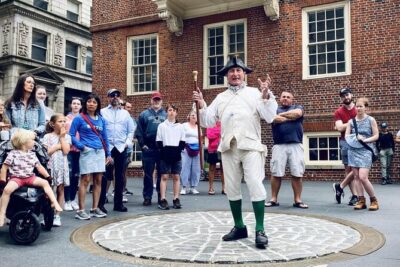
Boston Freedom Trail Walking Tour with Costumed Guide
Read our review →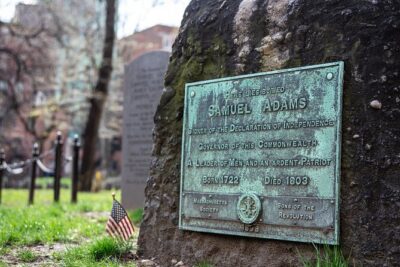
Boston Food & History: Pizza, North End & Freedom Trail
Read our review →
Boston’s Freedom Trail: A Revolutionary Walking Tour
Read our review →Freedom Trail History Small Group Walking Tour
Read our review →Boston’s Freedom Trail: A Revolutionary Walking Tour
Read our review →

Boston Freedom Trail History Pub Crawl Small-Group Tour
Read our review →Browse the lists this tour appears in