
Reviewed · FREEDOM TRAIL TOURS
Boston: Freedom Trail, Bunker Hill, & USS Constitution Tour
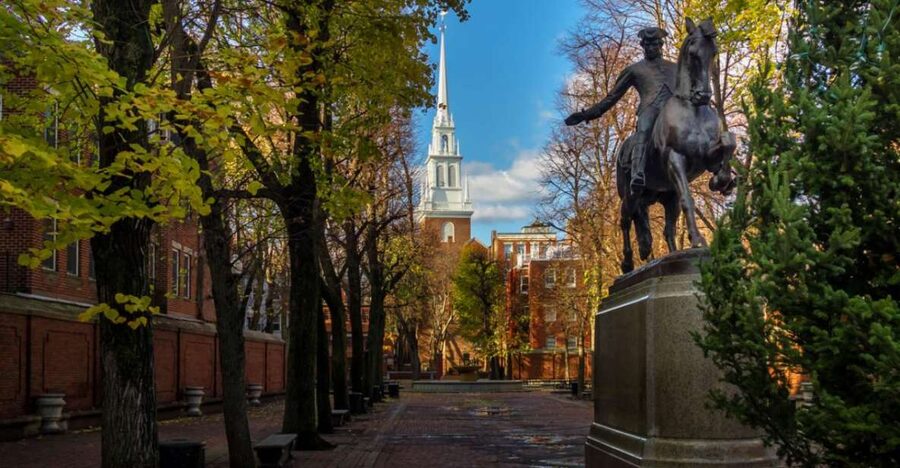
Boston’s Freedom Trail is more than a line of red bricks. It is a four-hour story about how ordinary citizens, lawyers, soldiers, merchants, and political firebrands pushed Boston toward revolution. This tour follows the full route, then continues to Bunker Hill and USS Constitution, two major stops that many shorter walks leave out.
I like the way guide Mark links people and events instead of tossing out dates. I also like the small groups, usually capped around 16, which make it easier to hear, ask questions, and keep a sensible pace. The catch is simple: you walk about three miles, finish well away from the starting point, and need to be comfortable on your feet for four hours.
In This Review
- Key points at a glance
- Why this Freedom Trail tour takes four hours
- Starting at the Massachusetts State House
- Boston Common and Park Street Church
- Two burying grounds and Boston’s early power structure
- Old South Meeting House and the road to the Tea Party
- The Boston Massacre site and Faneuil Hall
- Paul Revere House and the North End
- Copp’s Hill and the approach to Charlestown
- Bunker Hill, where the story turns military
- Finishing at USS Constitution
- Mark’s storytelling and the small-group advantage
- Is $79 a fair price?
- Who should book this four-hour walk?
- Should you book the Freedom Trail, Bunker Hill, and USS Constitution tour?
- FAQ
- How long is the Boston Freedom Trail tour?
- Where does the tour begin?
- How do I identify the guide?
- Does the tour visit every Freedom Trail location?
- Does the tour include Bunker Hill and USS Constitution?
- Is the tour suitable for wheelchair users?
- Can I cancel the booking?
Key points at a glance
- The entire official Freedom Trail: Visit all 16 historic locations, from Boston Common to Copp’s Hill.
- Bunker Hill and USS Constitution included: The walk goes beyond the central trail to Charlestown.
- A people-first telling of the Revolution: Meet figures such as Margaret Kemble Gage, Dr. Joseph Warren, James Otis, Samuel Adams, Paul Revere, John Hancock, and George Washington.
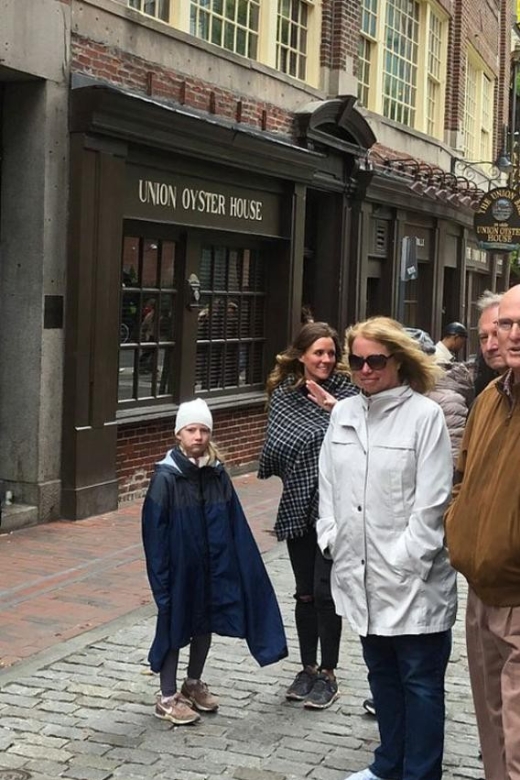
- Small-group format: Groups are limited to about 16 people, helping you hear the guide in busy parts of Boston.
- Thoughtful pacing: Mark builds in pauses, seating, shade when possible, and bathroom breaks.
- Good value for serious history fans: At $79, the tour covers four hours, all trail stops, extra sites, and a guide tip.
Why this Freedom Trail tour takes four hours
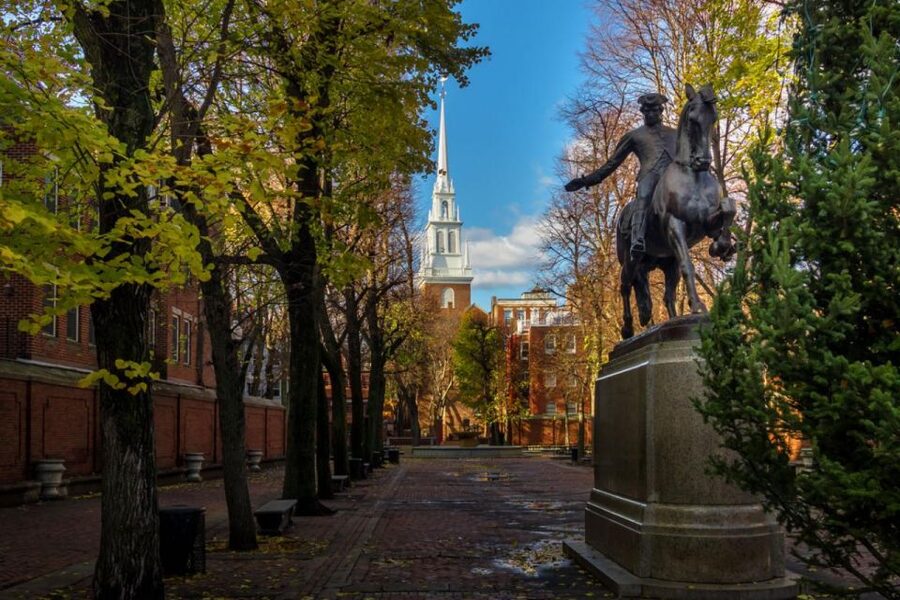
Many Boston walks treat the Freedom Trail as a greatest-hits route. You see a church, a graveyard, Faneuil Hall, and Paul Revere’s house, then the tour ends. This experience takes a slower, more connected approach.
You begin at the Massachusetts State House and finish at USS Constitution in Charlestown. Along the way, you visit every official Freedom Trail stop named in the route, plus four or five additional places that help explain how Boston moved from protest to armed conflict.
That fuller route matters because the Revolution did not begin with one dramatic act. The Boston Massacre, the Boston Tea Party, the battles of Lexington and Concord, and Bunker Hill grew out of years of tension, arguments, taxes, military occupation, and personal rivalries.
Mark’s role is especially important here. He presents the story as a chain of cause and effect, introducing the main characters early and returning to them as the walk continues. You get more than a collection of old buildings. You get a sense of who had influence, who took risks, who made mistakes, and how events changed the choices available to everyone.
More Freedom Trail walks in Boston:
- Boston: Freedom Trail History Small Group Walking Tour
★ 5.0 · 6,450 reviews - Boston Freedom Trail Walking Tour with Costumed Guide
★ 4.5 · 2,531 reviews - Boston Food & History: Pizza, North End & Freedom Trail
★ 5.0 · 1,772 reviews
Starting at the Massachusetts State House
Meet your guide about ten minutes before departure at the Robert Gould Shaw Memorial, across Beacon Street from the main steps of the Massachusetts State House. Look for the white baseball cap with the Walk & Talk Boston logo and a green sign.
The meeting point is easy to misunderstand. You should remain across the street from the State House, near the memorial, rather than walking down the State House steps. Mark has also contacted participants by text on the day of some tours, which is useful if you are arriving in an unfamiliar part of Boston.
The State House gives the tour a fitting start. Boston’s political story did not spring from nowhere, and the opening discussion sets up the people and power struggles that will appear again and again. This is also a good moment to listen closely, since early names and relationships become useful later.
Boston Common and Park Street Church

From the State House, the group crosses through Boston Common. The park provides a change of pace from the city streets and a chance to see the setting where public gatherings, military activity, and everyday Boston life overlapped.
The walk continues to Park Street Church. The stop is not only about the building itself. It helps place religion, public speech, and civic life into the wider story of colonial Boston.
You will be standing outdoors for much of the tour, so this early stretch is a good time to adjust your shoes, water, and clothing. The walk is not a race, but there is plenty of ground to cover.
Two burying grounds and Boston’s early power structure
Granary Burying Ground and King’s Chapel Burying Ground bring the Revolution’s names and arguments back to real people. These are not quick photo stops. Your guide explains who is buried there and why the cemetery matters to Boston’s political story.
Graveyards can be easy to skim past, especially when a tour has a long route ahead. Here, they help show that the men behind the Revolution were not distant symbols. They were merchants, ministers, lawyers, soldiers, and public figures whose decisions affected their families and neighbors.
The cemeteries also add useful perspective. The revolutionary cause was not a clean contest between heroes and villains. Boston contained competing loyalties, political disagreements, and people who had to decide how much danger they were willing to accept.
Same city, a very different afternoon:
- History and Hauntings of Salem Guided Walking Tour
★ 5.0 · 14,564 reviews - Boston Duck Boat Sightseeing City Tour with Cruise Along Charles River
★ 4.5 · 9,378 reviews - Boston Hop-On Hop-Off Trolley Tour with 13 Stops
★ 4.5 · 5,576 reviews - Boston: City Cruises Whale Watching Cruise
★ 4.5 · 4,710 reviews
Old South Meeting House and the road to the Tea Party
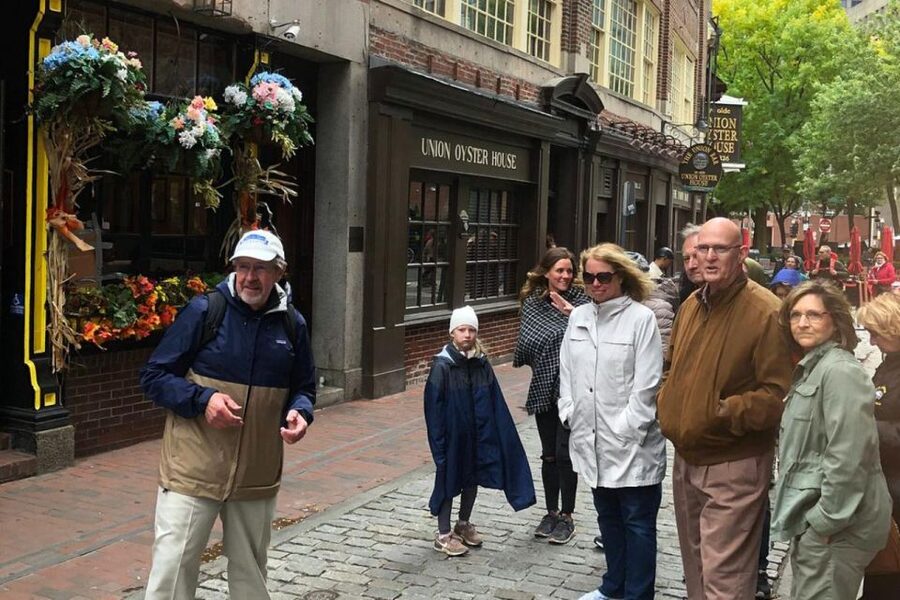
Old South Meeting House is one of the tour’s key interior and political stops. It connects directly to the events surrounding the Boston Tea Party and shows how public meetings could become engines of protest.
The important question is not just what happened to the tea. It is how thousands of people gathered, argued, waited, and made a decision with serious consequences. Mark focuses on the choices made by individuals and groups, rather than reducing the event to a familiar schoolbook scene.
This is also where the tour’s character-based method pays off. Names such as Samuel Adams and John Hancock become part of a larger network of organizers, merchants, speakers, and opponents. You hear why certain people could move a crowd, while others worked behind the scenes.
The Boston Massacre site and Faneuil Hall

At the Boston Massacre site, the tour turns to the collision between British troops and Boston residents. The location is compact and sits in a busy part of the city, so a strong guide matters. Mark uses the physical setting to explain how tension built between civilians and soldiers before the shooting.
The stop is valuable because it makes you consider competing viewpoints. The event became a powerful political tool, but the people involved faced confusion, fear, and legal consequences in real time. The tour explores what happened, who shaped the public response, and what followed.
Nearby Faneuil Hall adds another public forum to the story. Its nickname as a place of civic debate fits the tour’s focus on speeches, persuasion, and public pressure. You learn how Boston’s political movement depended not only on famous leaders but also on people willing to listen, argue, organize, and act.
Paul Revere House and the North End
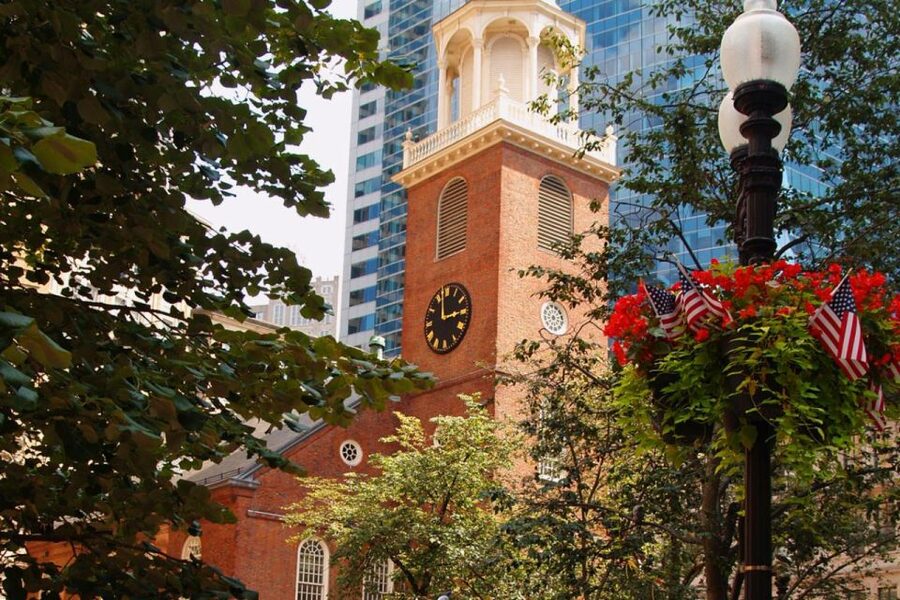
Paul Revere House shifts the story from public protest to personal life. Revere is best known for his midnight ride, but the house helps you see him as a working Boston resident with family, business, and political connections.
The North End also gives the walk a stronger sense of place. You are moving through a neighborhood where the Revolution’s famous names lived and worked, not simply from one isolated monument to another.
Old North Church follows, bringing the story to the signal lanterns and the warning that British troops were moving toward the countryside. The stop works best when connected to Lexington and Concord, since the signal was part of a wider system of communication and preparation.
This section includes plenty of familiar names, but Mark also brings in lesser-known figures. Margaret Kemble Gage, the wife of British General Thomas Gage, adds a more complicated view of loyalty and information. Dr. Joseph Warren shows how a person could combine medicine, politics, and military leadership. James Otis, a fiery lawyer, helps explain how legal arguments and colonial rights became part of the conflict.
Copp’s Hill and the approach to Charlestown
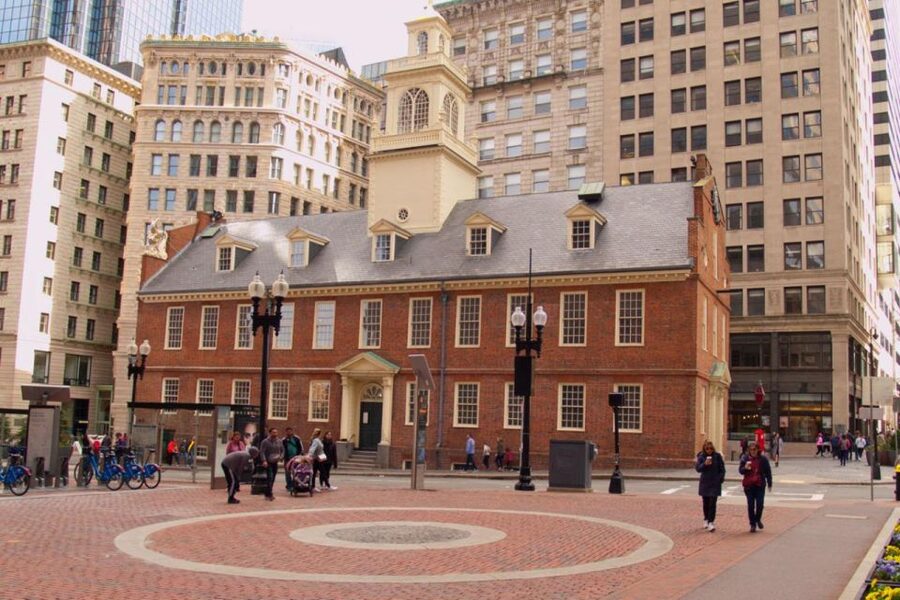
Copp’s Hill Burying Ground is the last official Freedom Trail stop in Boston proper before the route reaches Charlestown. It offers another chance to connect the city’s residents with the approaching military crisis.
By this point, the walk has moved from arguments over government and taxation to the possibility of open war. The changing tone is one reason the full route works better than a short overview. You feel the story tighten as the group moves toward Bunker Hill.
The route now requires stamina. You have already walked through central Boston, stopped repeatedly, and listened to extended explanations. Comfortable shoes are essential. Bring water and, especially in warm weather, sun protection. Mark has carried extra water and ponchos on some tours, but you should not depend on that.
Bunker Hill, where the story turns military
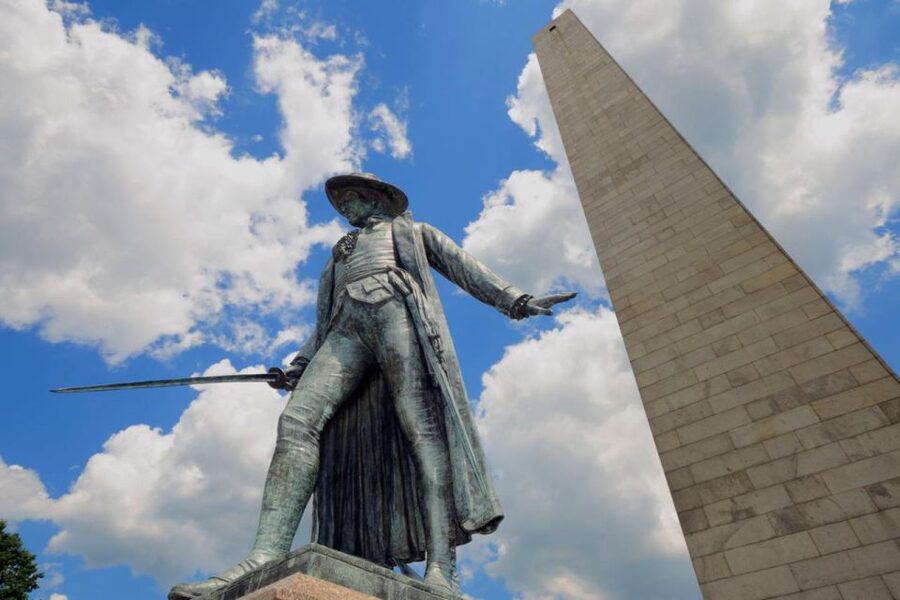
The Bunker Hill Monument is a major advantage of this tour. Many Freedom Trail walks point you toward Charlestown but do not actually make the trip. Here, Bunker Hill receives proper attention.
The battle is often remembered for the line about conserving ammunition, but the larger story is more revealing. The colonial forces lost the field, yet inflicted heavy casualties and showed that British regulars could not simply brush aside local resistance. The battle changed how both sides viewed the conflict.
You visit the monument and the Bunker Hill area itself, giving the discussion a physical setting. The ground makes the military problems easier to picture, including the importance of position, preparation, and movement.
This is one of the tour’s strongest sections for anyone who wants more than patriotic legend. Mark explains the people involved, including Dr. Joseph Warren, and places the battle in the sequence of events that led to the eventual British departure from Boston.
The practical drawback is the distance and the amount of standing. The tour includes breaks and the guide pays attention to slower walkers, but the Charlestown section comes after several hours on foot. If you have limited mobility, this is not the right outing.
Finishing at USS Constitution
The tour ends at USS Constitution, the historic naval ship in Charlestown. This gives the day a useful final chapter rather than stopping after the battle.
The ship connects the revolutionary period to the new nation’s effort to defend itself. It also broadens the story beyond the streets and meeting halls of Boston. You finish with a clearer sense of how political resistance became military independence and then required a functioning government and armed forces.
Do not assume you will return to the Massachusetts State House automatically. The tour ends at the USS Constitution, and the return trip can be a lengthy walk. Mark provides directions for getting back, and one person noted that a ferry costing under $3 per person can bring you closer to Boston’s transit connections, including South Station. Treat the end point as part of your planning, not an afterthought.
Mark’s storytelling and the small-group advantage
The guide makes or breaks a four-hour history walk. Mark’s style is energetic, clear, and conversational. He uses maps to explain why events unfolded as they did, keeps the main story moving, and welcomes questions without losing the thread.
His voice is also clear enough for a group in busy areas, an underrated feature on the Freedom Trail. Groups are generally limited to about 16, though exact size may vary. That is small enough for questions and personal attention, while still giving the tour a social feel.
I especially appreciate the practical care built into the pacing. Mark looks for shade when possible, finds places to sit, includes bathroom pauses, and watches for people falling behind. Those details matter in Boston’s summer heat or after several hours of walking.
The tour is also suitable for mixed ages and interests. A history enthusiast can ask detailed questions, while a teenager or first-time visitor can follow the larger story. Mark’s humor and storytelling keep the presentation from becoming a string of dates.
Is $79 a fair price?
At $79 per person, this is not the cheapest way to trace the Freedom Trail. You can follow the red line on your own for little or no cost, then pay separately for selected buildings or museums.
The value comes from the time, coverage, and interpretation. You are paying for four hours with a live English-speaking guide, every official trail stop, extra revolutionary sites, Bunker Hill, and the USS Constitution endpoint. The guide tip is included, which also removes a common uncertainty in the United States.
For a short visit to Boston, the price is easier to justify. You cover the major revolutionary locations in one organized outing and leave with a connected story instead of a list of addresses. If you prefer wandering alone, reading plaques, and choosing only a few interiors, the tour may feel too long and structured.
Free cancellation up to 24 hours ahead and the option to reserve now and pay later make it easier to fit into a changing itinerary.
Who should book this four-hour walk?
Book it if you want the full Freedom Trail in one go, care about the people behind the events, or have already seen basic summaries and want more context. It suits adults, older children, history fans, and first-time Boston visitors who want a strong orientation to the city’s revolutionary core.
You should also book it if Bunker Hill and USS Constitution are priorities. Their inclusion is the clearest difference from shorter Freedom Trail walks.
Think twice if three miles of city walking sounds tiring, if you need wheelchair access, or if you want a relaxed evening stroll. The tour is listed as unsuitable for wheelchair users, and the four-hour duration is real even though the frequent stops help.
Plan for comfortable shoes, water, snacks, and sun protection. Wear layers if the forecast is changeable. The tour runs in English, and the starting and finishing points are different, so leave room in your day for the trip back.
Should you book the Freedom Trail, Bunker Hill, and USS Constitution tour?
I would book this tour when you want Boston’s revolutionary story told as one long chain rather than as scattered landmarks. Mark’s focus on lesser-known figures, maps, courtroom arguments, military choices, and personal stories gives the famous sites more meaning.
The best reason to choose it is coverage. You see the entire trail, then continue to Bunker Hill and USS Constitution, with enough time for the guide to explain why each stop matters. The main cost is your energy, not just your money.
If you can comfortably walk three miles and spare four hours, this is a strong choice at $79. If you want a brief introduction or have mobility limits, choose a shorter and more focused option instead.
FAQ
How long is the Boston Freedom Trail tour?
The tour lasts four hours and requires you to walk about three miles.
Where does the tour begin?
Meet at the Massachusetts State House, 24 Beacon Street, across the street from the main steps at the Robert Gould Shaw Memorial.
How do I identify the guide?
The guide wears a white baseball cap with the Walk & Talk Boston logo and carries a green sign. You should arrive about ten minutes before departure.
Does the tour visit every Freedom Trail location?
Yes. The route includes all 16 official Freedom Trail locations, along with four or five extra stops connected to the Revolutionary story.
Does the tour include Bunker Hill and USS Constitution?
Yes. You visit Bunker Hill Monument and Bunker Hill, and the tour finishes at USS Constitution.
Is the tour suitable for wheelchair users?
No. The activity is listed as unsuitable for wheelchair users.
Can I cancel the booking?
Yes. You can cancel up to 24 hours before the tour for a full refund. You can also reserve your place and pay later.
Just added around Boston
- Day Trip from Boston: Explore Hammond Castle Museum★ 3.7 · 3 reviews
- Boston: WNDR Museum Entry Ticket★ 3.7 · 3 reviews
- The Boston Bash Scavenger Hunt★ 4.5 · 3 reviews
- Self-Guided Audio Tour of Boston North End★ 4.5 · 3 reviews
- Boston: Official Freedom Trail® Lantern Tour★ 4.7 · 3 reviews
- Boston: North End Walking Tour with Private Harbor Cruise★ 5.0 · 3 reviews
- Self Guided “The North End Pizza, Cannoli and Picnic” Solo Walking Tour★ 5.0 · 3 reviews
- Cambridge: Haunted Charles River Cruise★ 4.3 · 3 reviews
Freedom Trail Tours, compared.
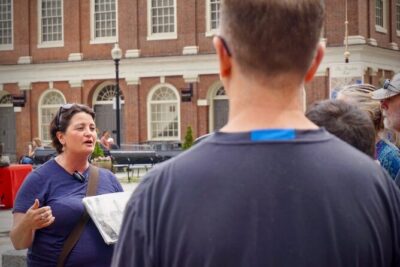
Freedom Trail History Small Group Walking Tour
Read our review →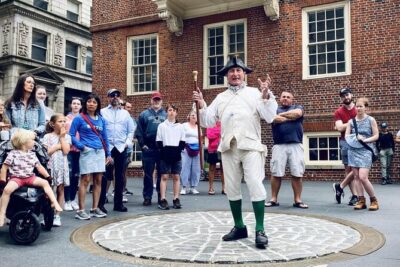
Boston Freedom Trail Walking Tour with Costumed Guide
Read our review →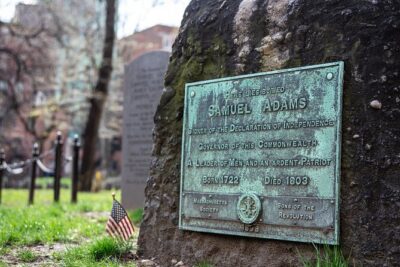
Boston Food & History: Pizza, North End & Freedom Trail
Read our review →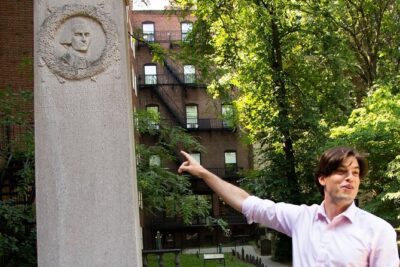
Boston’s Freedom Trail: A Revolutionary Walking Tour
Read our review →Freedom Trail History Small Group Walking Tour
Read our review →Boston’s Freedom Trail: A Revolutionary Walking Tour
Read our review →

Boston Freedom Trail History Pub Crawl Small-Group Tour
Read our review →Browse the lists this tour appears in