
Reviewed · HISTORIC TOURS IN BOSTON
Boston: City History and Highlights Audio App Walking Tour
Boston’s story unfolds best on foot, and this route takes you from a graveyard tied to the Salem Witch Trials to the George Washington Statue in the Public Garden. Along the way, Paul Revere’s North End meets Italian bakeries, Irish memorials, Revolutionary landmarks, and the curious tale of Boston’s molasses flood.
I like the low $7 price and the freedom to pause whenever you want for coffee, photos, or a look inside a landmark. I also like the GPS directions, which let you keep your phone in your pocket while the next audio track starts at the right place. The main catch is that the narration is English only, and the app may not work perfectly for every phone.
In This Review
- Key points to know before you go
- Boston history with your own pause button
- Starting among graves on Copp’s Hill
- Old North Church and Paul Revere’s neighborhood
- Little Italy, the Greenway, and the Big Dig
- Quincy Market, Faneuil Hall, and Samuel Adams
- The Old State House and the Boston Massacre
- The Irish Famine Memorial and changing Boston
- Granary Burying Ground and Boston’s famous names
- The molasses flood and Boston Common
- What $7 buys you
- Who should choose this walk?
- Should you book the Boston audio walk?
- FAQ
- Where does the Boston audio walking tour begin?
- Where does the tour end?
- How long does the tour take?
- Is there a live guide?
- What language is the audio tour in?
- What do I need to bring?
- Does the Old North Church open every day on the route?
- Can I cancel or pay later?
Key points to know before you go
- Start at Copp’s Hill Burying Ground: The route opens in Boston’s North End, among old graves and Colonial-era stories.
- Follow a two-hour historic route: You walk to the Boston Public Garden, passing major Revolutionary and immigration landmarks.
- Hear the voice of Big Al: The audio is designed to be entertaining as well as informative.
- Use GPS turn-by-turn directions: Tracks begin automatically at the proper locations, reducing the need to watch your screen.
- Plan around Mondays: The Old North Church is closed on Mondays, so you can see only its exterior then.
- Bring two essentials: You need a charged smartphone and headphones, since there is no live guide.
Boston history with your own pause button
This self-guided walk covers a lot of Boston in about two hours, but the clock is not a hard limit. You can pause the audio to enter a site, browse Quincy Market, stop for food in the North End, or simply sit in the Public Garden.
That flexibility is the heart of the experience. You are not trying to keep up with a group, and there is no guide waiting while you take a photo. If your family wants to move slowly, expect the route to take longer than two hours. That can be a good thing, but plan your day accordingly.
The tour is delivered through the VoiceMap app. Once you reach the starting point and open the app, the first audio begins automatically. GPS then helps place the narration along the route. In theory, this means you can listen rather than stare at your phone, though you should still check the screen if you lose your position or the app has trouble.
The narrator is Big Al, whose style is lively and conversational. That matters on a route filled with names, dates, graves, battles, laws, and political arguments. A dry reading would make Boston’s past feel like homework. This walk aims for something more relaxed, with stories and small facts mixed into the larger account of the Revolution.
More Historic Tours in Boston
- Boston: Freedom Trail History Small Group Walking Tour
★ 5.0 · 6,450 reviews - Tour of Historic Fenway Park, America’s Most Beloved Ballpark
★ 4.5 · 3,013 reviews - Boston Food & History: Pizza, North End & Freedom Trail
★ 5.0 · 1,772 reviews
Starting among graves on Copp’s Hill
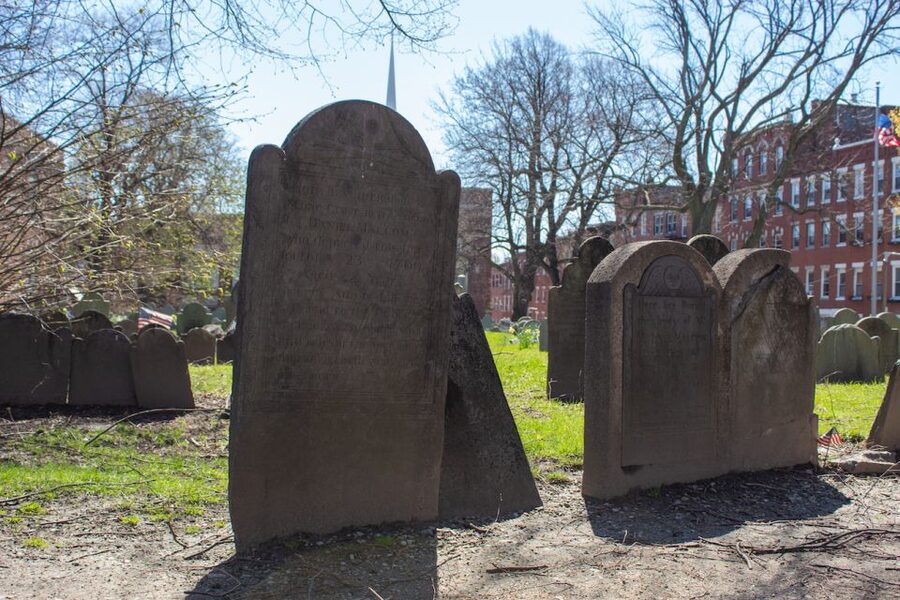
The tour begins at the entrance to Copp’s Hill Burying Ground, one of Boston’s oldest burial grounds. This is a fitting starting point because Boston’s past is not tucked away in a distant museum. It sits under your feet, along church walls, beside shops, and in the middle of busy streets.
You hear about Colonial and Revolutionary Boston while moving through the North End. One especially striking stop is the grave of Cotton Mather, the minister linked to the Salem Witch Trials of 1692. The visit gives the tour an early look at the fear and religious tensions that shaped Massachusetts before the Revolution.
Copp’s Hill is also a practical place to begin. You start with a clear historical focus before the route shifts into the food, streets, and monuments of the North End. Wear comfortable shoes, since the walk includes old streets, uneven surfaces, and plenty of standing.
Old North Church and Paul Revere’s neighborhood
From Copp’s Hill, the route leads toward the Old North Church. The church is one of Boston’s clearest symbols of the events before the Revolution, thanks to the lantern signal connected with Paul Revere’s midnight ride.
The audio explains who sent the signal from the church steeple and how Revere organized the riders who warned the Minutemen that British troops were approaching. This is more useful than simply taking a picture of the building, since the story depends on people, timing, and the tense political climate of the period.
Pay attention to the day you visit. The Old North Church is closed on Mondays, so the tour can cover only the exterior then. The route still works on Monday, but you should not expect an indoor visit.
The North End adds another layer. This is Boston’s Little Italy, with restaurants and bakeries sending food smells into the streets. The contrast is part of the pleasure: you are walking through a modern neighborhood while listening to stories from the 1600s and 1700s.
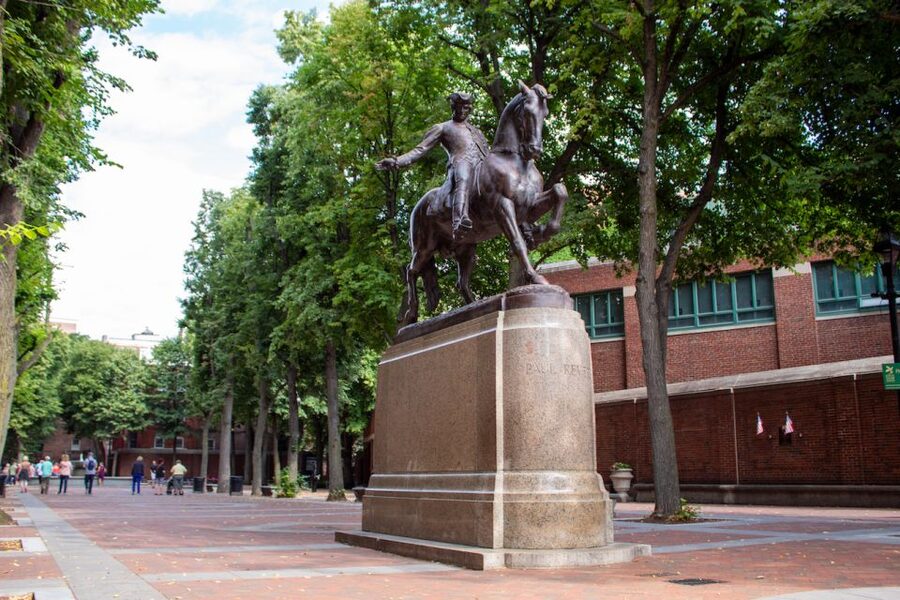
The route continues to the Paul Revere House. Here, the audio connects the famous midnight ride with Revere’s life before and after the Revolution. That wider view is worthwhile. Paul Revere was not simply a mounted messenger frozen in one famous night. The tour asks what he did once the fighting ended and places his best-known act within a longer life.
Little Italy, the Greenway, and the Big Dig
The walk then shifts from the North End’s narrow streets toward the Rose Kennedy Greenway. This change gives you a useful break from the tightly packed historic district and brings modern Boston into the story.
The Greenway also sets up the section on the Big Dig, Boston’s enormous highway project. You learn how the city changed its roads and public spaces, turning an area once dominated by elevated highways into a more open corridor.
This part is valuable because it keeps the tour from becoming a string of Colonial monuments. Boston is not only a city of old brick buildings and Revolutionary heroes. It is also a place that has repeatedly rebuilt itself, sometimes at great cost and with plenty of controversy.
The GPS format is particularly useful here. The Greenway can feel like a series of crossings and paths rather than a single obvious street. Automatic audio cues help you keep moving without constantly checking a map.
Still, technology is the weak link. One purchaser was unable to get the tour working and had to walk through the city without the audio. Before leaving your hotel, charge your phone, install or open the app, and make sure you understand how the route starts. A portable battery would be sensible, though one is not specifically included.
More Walking Tours in Boston
- Harvard University Campus Guided Walking Tour
★ 4.5 · 3,632 reviews - Boston Freedom Trail Walking Tour with Costumed Guide
★ 4.5 · 2,531 reviews - The Full Revolutionary Story Epic Small Group Boston Walking Tour
★ 5.0 · 2,356 reviews - Boston’s Freedom Trail: A Revolutionary Walking Tour
★ 4.9 · 1,748 reviews
Quincy Market, Faneuil Hall, and Samuel Adams
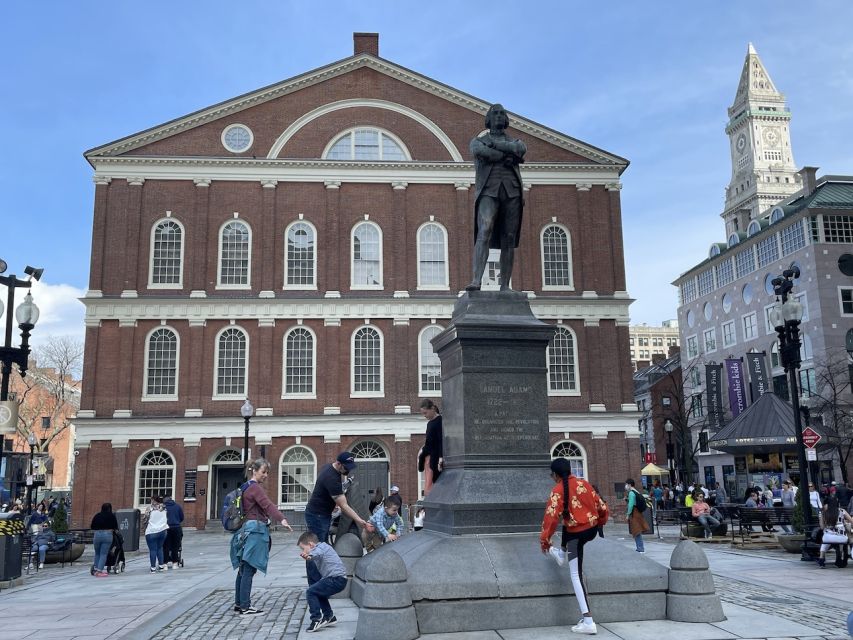
Quincy Market is one of the route’s liveliest stops. You can browse food stalls, shop in the surrounding area, or pause for street performances while listening to the story of Faneuil Hall.
Faneuil Hall is closely tied to public debate and the American independence movement. The tour focuses on Samuel Adams, one of the strongest voices for liberty in the years before the Revolution. It also tackles a popular question: did Samuel Adams really brew beer?
That question is a good example of the tour’s approach. Small factoids can make a familiar figure easier to remember, but they should not replace the bigger story. Here, Samuel Adams is presented as a political organizer and advocate, not merely as a name on a beer label.
This is also one of the easiest places to pause. If you are hungry, take your time. The listed duration is an estimate, not a command. A family that stops for food, shops, and photos may need much longer than two hours, and that is one reason a self-guided format can work better than a fixed group walk.
The Old State House and the Boston Massacre
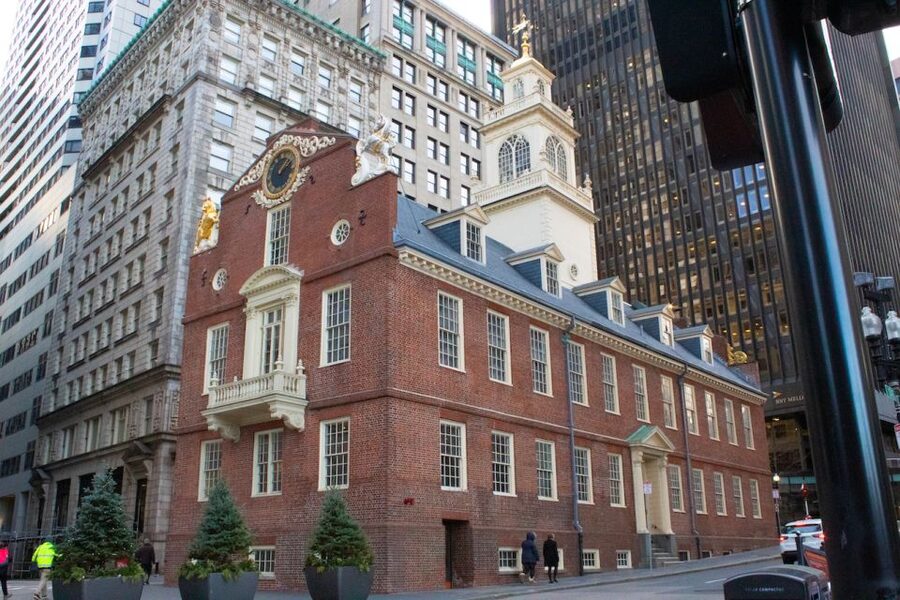
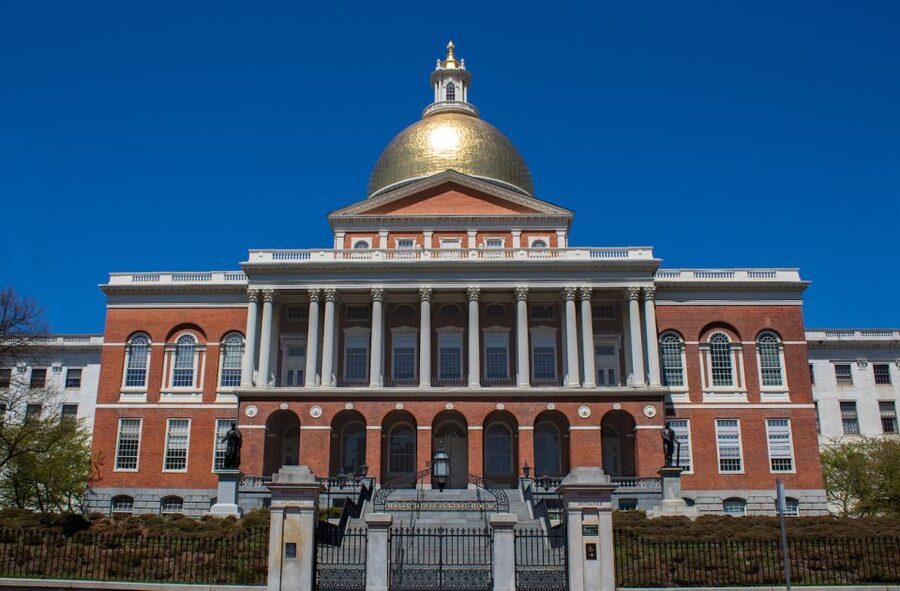
The next major stop is the Old State House, where the tour explains the Boston Massacre and John Adams’s role in defending the soldiers accused of killing colonists.
The important point is not just that John Adams later became president. He also defended the accused British soldiers, even though the case was politically dangerous and public feeling was running high. That choice gives you a sharper picture of legal principle in the tense years before independence.
The Old State House helps connect Boston’s physical setting with the arguments that led to war. You are not simply hearing that people were unhappy with British rule. You are hearing about specific confrontations, public anger, and the difficult choices made by people who did not yet know how the story would end.
The audio also makes room for local detail, including stories about Paul Revere and the signal from the Old North Church. These repeated connections can help you fit the route together, though listeners who already know Boston’s Revolutionary story may find some material familiar.
The Irish Famine Memorial and changing Boston
The Boston Irish Famine Memorial introduces the city’s 19th-century immigration story. The audio asks you to consider the two harsh choices facing Irish families during the famine years: leave Ireland or face starvation at home.
This stop broadens the tour beyond the Founding Fathers. Boston’s identity was shaped by several waves of immigration, and the city’s neighborhoods changed as new families arrived, worked, worshiped, and built communities.
For you, the main value is context. The North End’s Italian character and the Irish memorial are not random points on a map. They show how Boston grew after the Revolutionary period and how different immigrant communities became part of the city’s daily life.
The route does not provide multilingual audio. English is the only listed language. If you are not comfortable following spoken English for a long stretch, this is a serious limitation. One French-speaking purchaser tried to follow the written material through translation and found the experience too difficult after many audio sections. Do not book this as a language-neutral walk.
Granary Burying Ground and Boston’s famous names

Granary Burying Ground is one of the route’s most concentrated historic stops. John Adams, John Hancock, and Paul Revere are buried there, making the cemetery a natural place to gather several strands of the tour.
The audio helps you understand why these names mattered and how their roles differed. John Hancock was a major political figure and signer of the Declaration of Independence. John Adams became president and had already played a role in the Boston Massacre trial. Paul Revere became famous for his ride, but his life included much more than that one event.
A cemetery stop also changes your pace. After streets, markets, traffic, and public buildings, you get a quieter place to think about the people behind the dates. You can pause the narration and look around, but be respectful. This is an active burial ground, not just a photo stop.
The route also asks who sent the lantern signal from Old North Church and what Revere did after the Revolution. These questions give the cemetery section a sense of continuation rather than ending the story at 1775.
The molasses flood and Boston Common
One of the tour’s most memorable local stories concerns the 1919 molasses disaster. Two million gallons of molasses congealed in the North End, an event that sounds almost comic until you consider its destructive scale.
This kind of story is useful on a city walk. It gives you an image you will remember, and it shows that Boston’s past includes industrial accidents and neighborhood disasters as well as famous speeches and battles.
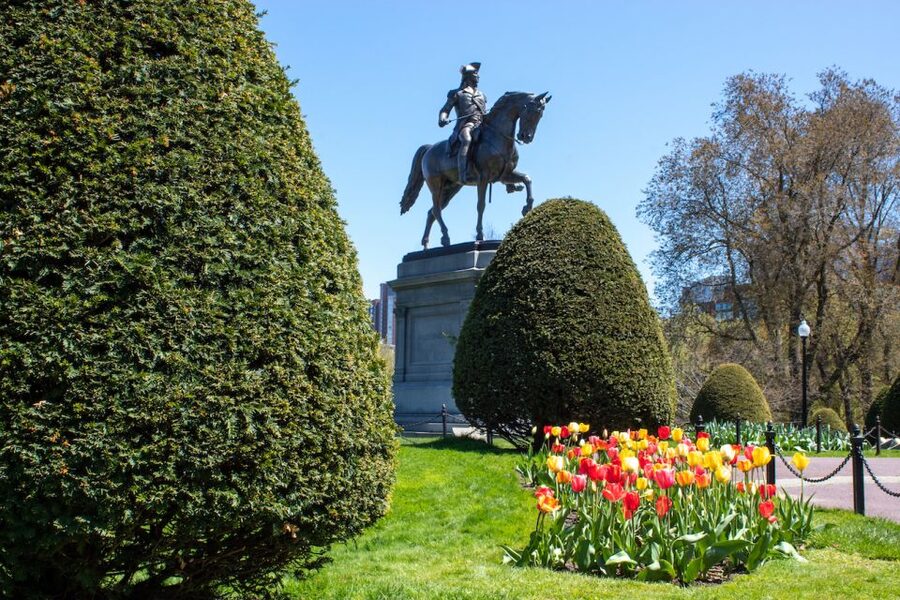
The final stretch leads toward the Boston Public Garden and the George Washington Statue. Along the way, the audio explains how Boston Common became America’s first public park. The story gives the city’s central green space a deeper meaning. It was not simply left open by accident. Its creation reflected changing ideas about public land and city life.
Ending at the Washington statue gives the route a clear finish. You begin among early Colonial graves and end with a national hero in one of Boston’s best-known public spaces. The path covers religious conflict, resistance to Britain, immigration, urban construction, disaster, and civic space.
What $7 buys you
At $7 per person, this is inexpensive for a two-hour city walk. You are paying for the audio route and GPS guidance, not transportation, entrance tickets, or a live guide.
That price makes the tour a good supplement to a Boston visit. You can use it on your arrival day to get oriented, or pair it with separate visits to the Old North Church and other sites. It is not a substitute for every museum or indoor attraction, but it gives you a useful framework before you explore on your own.
The value also comes from control. A live walking tour may offer conversation and questions, but this app lets you stop for lunch, split the route across part of a day, or repeat a section. You can reserve now and pay later, and cancellation is free up to 24 hours before the selected date.
The low price does not remove the need for preparation. There is no transportation and no person waiting at Copp’s Hill. Bring headphones and a charged smartphone. The stated times are reference points, so you can book a date that suits you rather than treating the listed start time as a strict appointment.
Who should choose this walk?
I would recommend it most strongly to independent visitors who like history but do not want to join a group. It also suits families who need the option to pause, though younger children may lose interest during the cemetery and political sections.
It is a good fit if you want a first look at the North End, Faneuil Hall, the Old State House, Granary Burying Ground, and the Public Garden in one connected route. The food stops and public spaces give you natural breaks.
You should think twice if you want a live guide, a question-and-answer format, or narration in a language other than English. You should also avoid it if mobility is a concern, since the activity is not suitable for people with mobility impairments.
Should you book the Boston audio walk?
Book this tour if you want an inexpensive, flexible introduction to Boston’s Colonial, Revolutionary, and immigration stories. The route has strong variety, the GPS format can make city walking easier, and Big Al’s lively narration keeps the information from becoming a list of dates.
Skip it if you need guaranteed technical reliability, non-English audio, or a live person to guide you. Test the app before setting out, visit the Old North Church on a day other than Monday if you want to see more than the exterior, and allow extra time for food and sightseeing. For $7, it is a useful Boston primer, provided you are comfortable managing the technology yourself.
FAQ
Where does the Boston audio walking tour begin?
The tour begins at the entrance to Copp’s Hill Burying Ground in Boston’s North End.
Where does the tour end?
The route ends at the George Washington Statue in the Boston Public Garden.
How long does the tour take?
The stated duration is two hours, though your walk may take longer if you stop for food, shopping, photos, or visits along the way.
Is there a live guide?
No. This is a self-guided audio tour through a smartphone app, and no live guide meets you at the starting point.
What language is the audio tour in?
The audio guide is available in English only.
What do I need to bring?
Bring headphones and a charged smartphone.
Does the Old North Church open every day on the route?
No. The Old North Church is closed on Mondays, so only its exterior is available on that day.
Can I cancel or pay later?
You can cancel up to 24 hours in advance for a full refund. The reserve now and pay later option lets you book without paying immediately.
More Self-Guided Routes in Boston
- Self-Guided Smartphone Ghost Walking Tour in Salem
★ 4.5 · 225 reviews - Ultimate Historic Salem and Witch Trials Self-Guided Walking Tour
★ 4.5 · 67 reviews - Plymouth Pilgrims Self-Guided Walking Audio Tour
★ 4.0 · 28 reviews - Self Guided “Historic Boston Downtown Freedom Trail” Audio/GPS Walking Tour
★ 4.0 · 22 reviews
More Audio Tours of Boston
- Self Guided Classic Freedom Trail Location Aware (GPS) Walking Audio Tour
★ 4.5 · 258 reviews - Boston Freedom Trail Self-Guided Tour with Audio Narration & Map
★ 4.5 · 98 reviews - Lexington & Concord Self-Guided Driving & Walking Audio Tour
★ 4.0 · 62 reviews - Self-Guided Boston’s Beacon Hill Underground Railroad Audio Tour Walking Tour
★ 4.5 · 29 reviews
Just added around Boston
- Day Trip from Boston: Explore Hammond Castle Museum★ 3.7 · 3 reviews
- Boston: WNDR Museum Entry Ticket★ 3.7 · 3 reviews
- The Boston Bash Scavenger Hunt★ 4.5 · 3 reviews
- Self-Guided Audio Tour of Boston North End★ 4.5 · 3 reviews
- Boston: Official Freedom Trail® Lantern Tour★ 4.7 · 3 reviews
- Boston: North End Walking Tour with Private Harbor Cruise★ 5.0 · 3 reviews
- Self Guided “The North End Pizza, Cannoli and Picnic” Solo Walking Tour★ 5.0 · 3 reviews
- Self-Guided Boston Christmas Tour★ 5.0 · 3 reviews
Historic Tours in Boston, compared.
Freedom Trail History Small Group Walking Tour
Read our review →
Tour of Historic Fenway Park, America’s Most Beloved Ballpark
Read our review →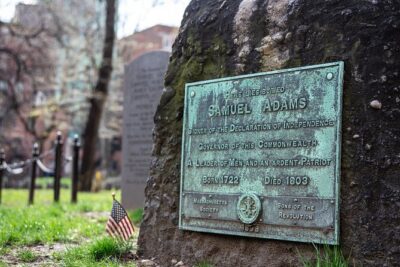
Boston Food & History: Pizza, North End & Freedom Trail
Read our review →
Freedom Trail History Small Group Walking Tour
Read our review →
City Cruises Boston Historic Sightseeing Harbor Cruise
Read our review →
Boston’s North End Food Tour: Italian Flavors & Heritage Walk
Read our review →
Boston Pizza Lovers Food and History Walking Food Tour
Read our review →Browse the lists this tour appears in