
Reviewed · HISTORIC TOURS IN BOSTON
Beacon Hill Boston History + Photo Walking Tour (SMALL Group)
Beacon Hill’s greatest pleasure is in the details: a flower box, a brass door knocker, an old gas lamp, or a narrow street that you might otherwise pass without a second look. This 90-minute small-group walk with Saba Alhadi turns those details into the main event, adding local stories and simple advice on framing and composition.
I like the relaxed pace and the chance to see Beacon Hill beyond the postcard view of Acorn Street. I also like that Saba can help with either a phone or a camera, and may take group photos using your own phone. The main consideration is scope: this is a history walk with photo guidance, not a photography workshop, and the route has no restroom stop.
In This Review
- Key points to know before you book
- Why Beacon Hill works so well for a photo walk
- Starting at 34 Beacon Street
- Brick sidewalks, old doors, and overlooked details
- Acorn Street, Boston’s famous five-minute photo stop
- Louisburg Square and Beacon Hill’s grander side
- The Massachusetts State House and John Hancock’s connection
- Boston Common and the first public garden in America
- The stories that give the neighborhood more depth
- What the small-group format changes
- Price, timing, and physical comfort
- Who will enjoy this PhotoWalks experience
- Should you book the Beacon Hill photo walk?
- FAQ
- How long is the Beacon Hill photo walking tour?
- Where does the tour start and finish?
- Is the tour a photography class?
- How many people can join the tour?
- Are restroom stops provided?
- What happens if bad weather cancels the tour?
Key points to know before you book
- Acorn Street is only one part of the walk: You also explore Louisburg Square, Beacon Street, historic homes, the State House area, and less showy residential lanes.
- Saba Alhadi leads the experience: Her commentary covers architecture, past residents, local customs, and stories that are easy to miss on a self-guided stroll.
- Photo help stays practical: Expect suggestions about angles, positioning, framing, and how to make stronger pictures with a phone or camera.
- The group is capped at 15 people: That keeps questions and photo stops manageable, though the experience can feel more personal if the group is smaller.
- The walk covers brick and uneven surfaces: Wear comfortable shoes and pay attention underfoot, especially around older streets and sidewalks.
- Weather matters: The tour requires good weather and can be moved to another date or refunded if poor conditions cause cancellation.
Why Beacon Hill works so well for a photo walk
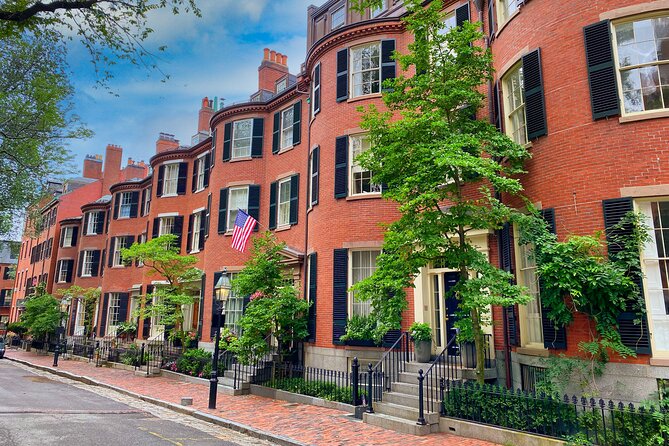
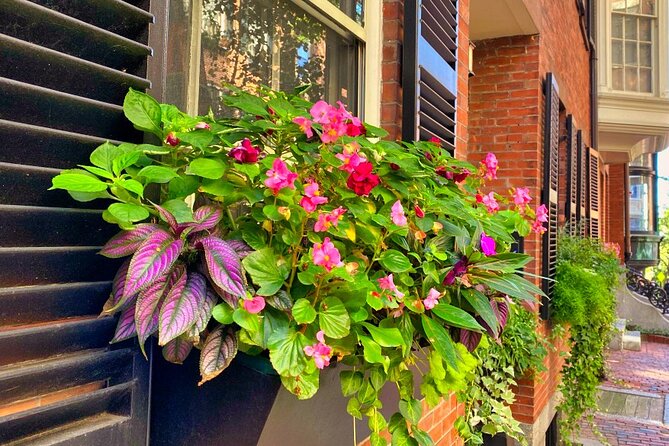
Beacon Hill is one of those Boston neighborhoods where the setting does much of the work. Its narrow streets, brick homes, antique-style gas lamps, colorful window boxes, and carefully maintained doors give you plenty to photograph without racing from one major sight to the next.
The value of a guide here is not simply pointing out famous buildings. It is helping you notice how the neighborhood fits together. You may stop for a doorway, look closely at ironwork, compare different townhouse styles, or hear how a street changed over time. That slower approach suits anyone who likes to walk with a camera in hand.
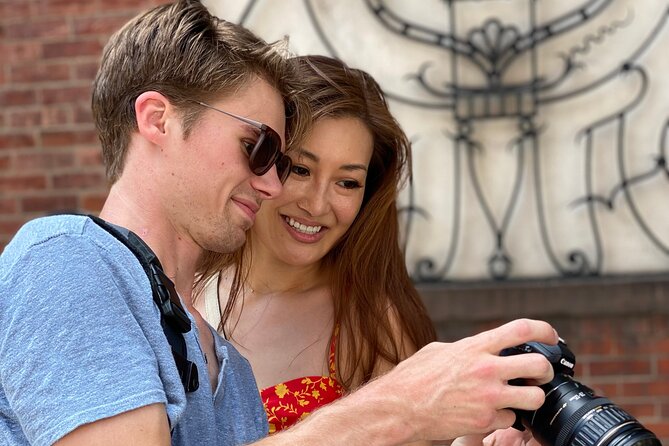
I also appreciate that the tour does not require serious photographic equipment. The advice is aimed at people using phones and ordinary cameras. You might learn to shift your position, wait for a cleaner background, use the lines of a street, or frame a doorway more carefully. Those are small changes, but they can make your pictures feel far more intentional.
At the same time, set your expectations correctly. If you want a lesson in aperture, shutter speed, lenses, or manual camera controls, this is probably too light. The photography side is casual and creative, built into a neighborhood walk rather than taught as a formal class.
More Historic Tours in Boston
- Boston: Freedom Trail History Small Group Walking Tour
★ 5.0 · 6,450 reviews - Tour of Historic Fenway Park, America’s Most Beloved Ballpark
★ 4.5 · 3,013 reviews - Boston Food & History: Pizza, North End & Freedom Trail
★ 5.0 · 1,772 reviews
Starting at 34 Beacon Street
The meeting point is at 34 Beacon Street, a convenient place to begin because you are already near some of Beacon Hill’s most recognizable architecture. Arrive about 10 minutes early. The operator asks you to reconfirm by email or text at least 48 hours before the scheduled start, so do not ignore that practical step.
From the start, the walk places you in a neighborhood shaped by both appearance and social history. Beacon Hill developed from open pastureland into one of Boston’s most sought-after residential areas. Its polished brick facades and grand entrances can make it look uniform, but the stories behind the buildings are not.
Saba’s approach includes both architecture and the people connected to the neighborhood. Historical subjects can include John Hancock, Louisa May Alcott’s childhood home, and Nathaniel Hawthorne’s former residence. You may also hear about the area’s Black residents, working families, schools, and the ways Beacon Hill changed as property values rose.
That range matters. A short walk focused only on elegant homes can leave you with a pretty set of pictures and little sense of the place. The better parts of this route connect the homes to Boston’s wider story, including the first resident of Beacon Hill, the oldest house in the neighborhood, and the site of the first kindergarten in America.
Brick sidewalks, old doors, and overlooked details
The early part of the walk is built around observation. Beacon Hill’s brick sidewalks and old townhouses create strong visual patterns, but the most satisfying pictures may be smaller ones.
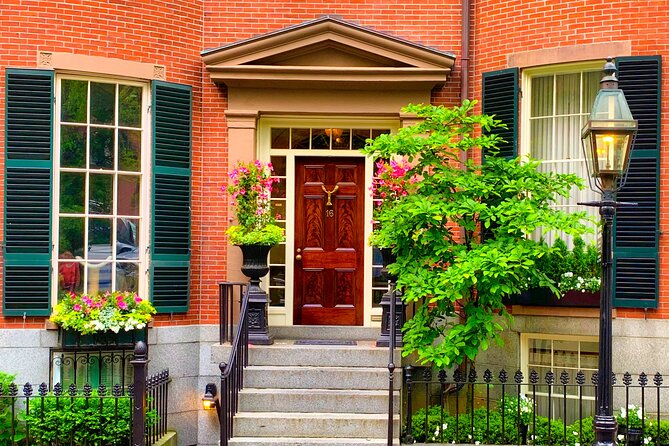
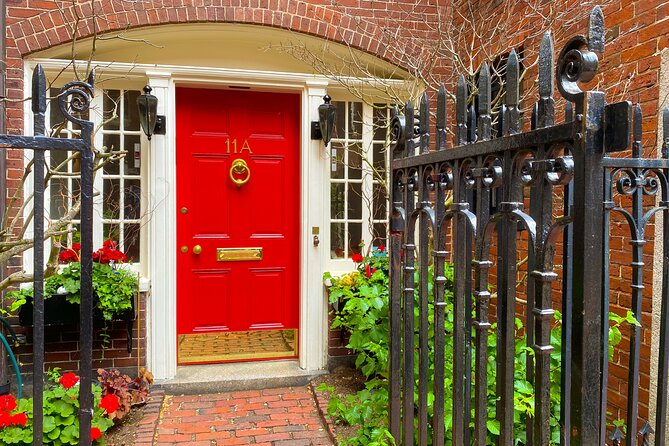
Look for door knockers, painted doors, iron railings, gas lamps, and flowers spilling from window boxes. Saba encourages you to stop and look instead of simply checking off streets. That is especially useful if you have already walked along Beacon Street on your own and seen only the grand facades.
The neighborhood also has a strong contrast between public beauty and private life. Elegant houses line streets that once served people with very different incomes and jobs. The route can touch on how ordinary homes became highly prized addresses, giving the scenery a little more meaning than a collection of expensive real estate.
One point of balance is privacy. Beacon Hill is a lived-in residential neighborhood, not an open-air museum. The tour may draw attention to unusual architectural features and interiors shown in photographs, but you should still be respectful around windows, doorways, and residents. The appeal is seeing how the area works as a community, not treating every home as a display.
Acorn Street, Boston’s famous five-minute photo stop
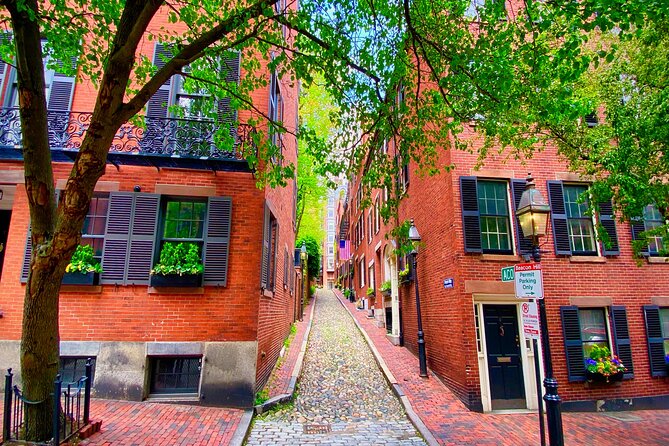
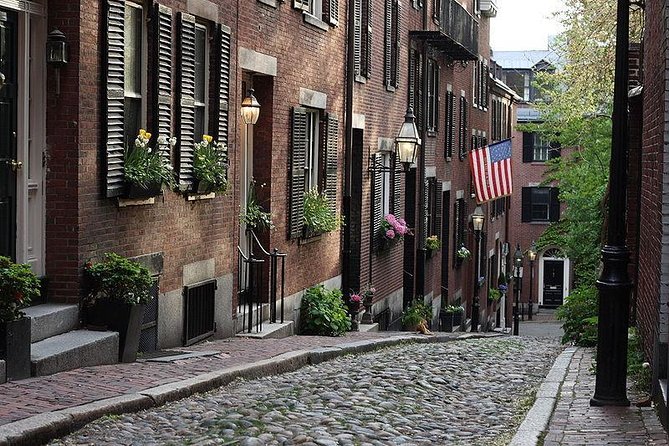
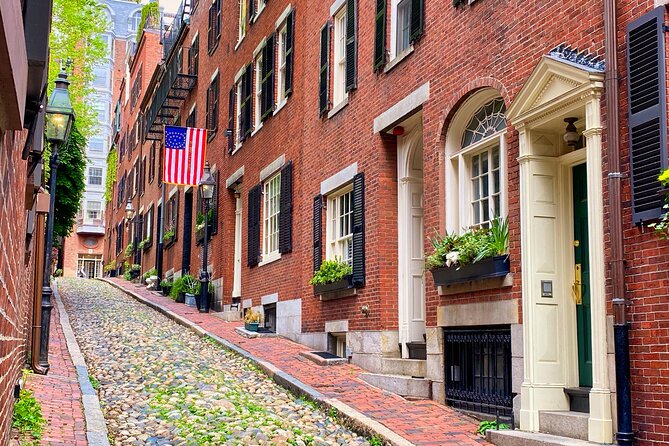
Acorn Street is the obvious picture stop. Its narrow brick-and-cobblestone setting, gas-lit lanterns, flower boxes, and Federal-style row houses create the classic Beacon Hill image you have probably seen in Boston photographs.
The stop itself is listed as about five minutes, which is enough for a focused look but not a long photo session. That short timing is useful because Acorn Street can become crowded, and lingering too long in one spot would reduce time for the rest of the neighborhood.
You will get more from the stop if you think about composition rather than simply pointing your phone down the street. Try a low angle to emphasize the pavement, use the row houses as converging lines, or include a lantern or doorway in the foreground. Saba’s suggestions focus on this sort of positioning and framing.
The street is also a good example of why context helps. Acorn Street was once associated with working-class homes and is now one of the city’s most coveted residential lanes. Seeing an old image of the street from around 1890, as part of the commentary, helps you understand that its current appearance is the result of change, preservation, and rising property values.
More Walking Tours in Boston
- Harvard University Campus Guided Walking Tour
★ 4.5 · 3,632 reviews - Boston Freedom Trail Walking Tour with Costumed Guide
★ 4.5 · 2,531 reviews - The Full Revolutionary Story Epic Small Group Boston Walking Tour
★ 5.0 · 2,356 reviews - Boston’s Freedom Trail: A Revolutionary Walking Tour
★ 4.9 · 1,748 reviews
Louisburg Square and Beacon Hill’s grander side
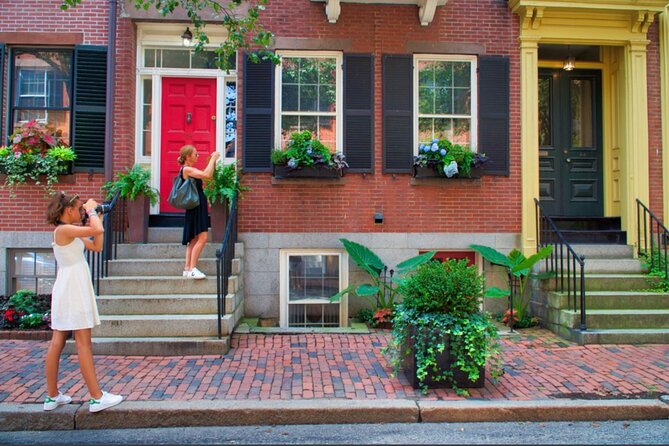
The route continues to Louisburg Square, an elegant residential space lined with 19th-century townhouses. Expect brick fronts, decorative ironwork, large entrances, and examples of Greek Revival and Federal-style design.
This stop gives you a useful comparison with Acorn Street. Acorn is narrow and intimate. Louisburg Square feels more formal and spacious. The contrast helps you see that Beacon Hill is not one single architectural style, despite its consistent brick-and-lamp appearance.
Louisburg Square is private residential space, so the experience is about viewing and photographing the streetscape from public areas. You should not expect interior access as a standard part of the tour. Any unusual opportunity to see inside a home would be dependent on circumstances and should not be treated as a guaranteed feature.
For photography, this is a good place to work with symmetry, repeated windows, iron details, and the relationship between townhouse fronts and the square. If you are using a phone, the composition advice is likely to be more useful than device-specific instructions, particularly if you have an Android phone rather than an iPhone.
The Massachusetts State House and John Hancock’s connection
The walk includes a brief stop at the Massachusetts State House, built in 1795 on land once owned by John Hancock. The building adds a civic dimension to a route otherwise centered on residential streets and private homes.
Do not expect a State House tour or an extended architectural inspection. The stop is about five minutes, so think of it as a chance to place Beacon Hill in Boston’s political story and take a few photographs before returning to the neighborhood streets.
The John Hancock connection also fits the tour’s habit of linking buildings to people. Seeing a picture of his former home can help make the history easier to follow, especially if you prefer a guide who brings visual material rather than relying only on spoken commentary.
Boston Common and the first public garden in America
The route also reaches Boston’s oldest public park, founded in 1630, and the public garden founded in 1837 as the first public botanical garden in America. These spaces add breathing room after the tight lanes and closely packed townhouses of Beacon Hill.
The older park helps connect the neighborhood to Boston’s earliest civic development. The later garden adds a different mood, with formal planting and open views that can give you more varied photographs than brick streets alone.
The precise timing for these park references is not given, so do not assume you will have a long stop in each place. The published route gives the overall walk about 90 minutes, with several short points of interest. If photographing flowers, paths, and wider views is important to you, ask Saba how much time the group will spend in these areas.
These stops also make the route feel broader than a quick Acorn Street outing. You are not only photographing private homes. You are seeing how Beacon Hill connects with Boston’s public parks, government buildings, and older civic spaces.
The stories that give the neighborhood more depth
The strongest part of the experience is likely the human side of the commentary. Beacon Hill’s polished appearance can hide stories about race, class, education, and social change.
The area was home to the first racially integrated elementary school in America. The walk can also cover the story of a formerly enslaved couple who fled north in disguise, along with the role of Black residents in the neighborhood’s early development. Those subjects help correct the usual postcard version of Beacon Hill.
You may also hear about the first house built on the hill, the first kindergarten in America, and the group that worked to preserve the brick sidewalks. A protest in 1947 helped protect the look of those sidewalks, which now seem like a permanent part of the neighborhood.
This is where the tour can offer something a guidebook stroll may not. A guide can show old photographs, explain what has changed, and point out traces of earlier lives. Still, the amount of historical detail can depend on the group’s questions and interests. If famous residents are your main reason for booking, tell Saba that early and ask questions during the walk.
What the small-group format changes
The maximum group size is 15 people, and that is a meaningful limit on a photo walk. You need room to stop without blocking a narrow sidewalk, and you need a fair chance to ask about a building or show Saba a picture on your phone.
A smaller group can also make the pace feel less mechanical. The experience is designed to be leisurely, with time to take pictures and talk. Some departures may be much smaller, but you should book expecting a group tour rather than a guaranteed private walk.
The format suits solo visitors, couples, families with older children, and friends who want a gentle introduction to Boston. Children must be accompanied by an adult. If your family includes a teenager who enjoys history or photography, the mix of old homes, personal stories, and visual tasks can hold attention better than a lecture-heavy city tour.
The route is offered in English. Since there are no restroom stops, use facilities before meeting the group. That detail matters during a 90-minute walk, especially for families or anyone who prefers regular breaks.
Price, timing, and physical comfort
At $45 per person, this is fair value if you want both a guided Beacon Hill orientation and help making better pictures. A self-guided walk costs less, of course, but it will not point out every notable door, resident, school, preservation story, or photographic angle.
The value is strongest for first-time Boston visitors who want a compact neighborhood experience. It is also useful for returning visitors who have already seen the big landmarks and want to look at Beacon Hill with more care. An experienced local photographer even found new places to shoot, which suggests the route is not limited to the standard tourist view.
The physical demand is moderate. You walk for about an hour and a half on brick sidewalks and older street surfaces. Some areas may be uneven, and one section includes cobblestone pavement. Wear supportive shoes and watch your step while taking pictures. Looking through a screen while walking is a poor bargain.
Weather is a serious factor. Beacon Hill has limited shade in places, and a hot, humid day can make brick streets feel much harder than expected. A rainy or brisk day can still be workable, but the tour requires good weather and may be rescheduled or refunded if conditions force cancellation. You can cancel for a full refund up to 24 hours before the start time, but late cancellations and changes are not accepted.
Who will enjoy this PhotoWalks experience
Book this tour if you like neighborhood walks, local stories, architecture, and casual photography. It is particularly well suited to people who use an iPhone, Android phone, or basic camera and want practical advice without taking a formal class.
You should also book if you prefer a guide who talks about present-day residents and ordinary life, not just famous names. The route can show you how Beacon Hill became an exclusive area while still making room for stories about workers, Black Bostonians, schools, and preservation efforts.
Think twice if you want advanced camera instruction, a long stop at every landmark, or a tour devoted mainly to famous authors and politicians. The photography advice centers on angles, framing, and positioning. The history is broad and story-based, not a detailed academic seminar.
Saba’s personal style also matters. She is an enthusiastic guide who has led Boston walks for about 20 years and clearly enjoys the small details of Beacon Hill. That energy can make the walk engaging, but if you prefer a quiet, highly structured tour, the conversational approach may feel less formal.
Should you book the Beacon Hill photo walk?
Yes, if you want a friendly, compact way to see Beacon Hill and come away with better photographs. The best reasons to book are the small group, the relaxed pace, Saba Alhadi’s local perspective, and the mix of architecture with stories about the people who shaped the neighborhood.
I would book it early, since it is often reserved around three weeks ahead, and I would choose a cooler day if possible. Arrive early, reconfirm your reservation, use a restroom beforehand, and bring comfortable shoes.
At $45, the tour earns its price when you want more than a quick snapshot of Acorn Street. If you are happy with basic composition advice and enjoy stopping for the details, it offers a personable introduction to one of Boston’s most photogenic neighborhoods.
FAQ
How long is the Beacon Hill photo walking tour?
The tour lasts approximately 1 hour and 30 minutes.
Where does the tour start and finish?
It starts at 34 Beacon Street in Boston and ends on Charles Street.
Is the tour a photography class?
No. It is a historical walking tour with casual photography tips for people using a phone or camera. Advice focuses on angles, positioning, framing, and finding appealing shots rather than advanced camera settings.
How many people can join the tour?
The group can include a maximum of 15 people.
Are restroom stops provided?
No. There are no restroom stops during the tour, so plan ahead before arriving.
What happens if bad weather cancels the tour?
Because the experience requires good weather, you will be offered another date or a full refund if the operator cancels due to poor conditions. You can also cancel for a full refund up to 24 hours before the scheduled start time.
More Historical Tours in Boston
- History and Hauntings of Salem Guided Walking Tour
★ 5.0 · 14,564 reviews - Boston: City Cruises Historical Sightseeing Cruise
★ 4.6 · 1,771 reviews - Boston: Freedom Trail History Small Group Walking Tour
★ 4.9 · 1,590 reviews - City Cruises Boston Historic Sightseeing Harbor Cruise
★ 4.5 · 1,388 reviews
More Beacon Hill Walks in Boston
- Downtown Freedom Trail, Beacon Hill & Back Bay Walking Tour
★ 4.5 · 473 reviews - 2-Hour Beacon Hill True Crime Expert Guided Tour
★ 5.0 · 182 reviews - Boston: Underground Railroad History Tour of Beacon Hill
★ 5.0 · 141 reviews - Beacon Hill + Back Bay History + Photo Walking Tour(SMALL Group)
★ 5.0 · 60 reviews
Just added around Boston
- Day Trip from Boston: Explore Hammond Castle Museum★ 3.7 · 3 reviews
- Boston: WNDR Museum Entry Ticket★ 3.7 · 3 reviews
- The Boston Bash Scavenger Hunt★ 4.5 · 3 reviews
- Self-Guided Audio Tour of Boston North End★ 4.5 · 3 reviews
- Self Guided “The North End Pizza, Cannoli and Picnic” Solo Walking Tour★ 5.0 · 3 reviews
- Boston: Official Freedom Trail® Lantern Tour★ 4.7 · 3 reviews
- Boston: North End Walking Tour with Private Harbor Cruise★ 5.0 · 3 reviews
- Cambridge: Haunted Charles River Cruise★ 4.3 · 3 reviews
Historic Tours in Boston, compared.
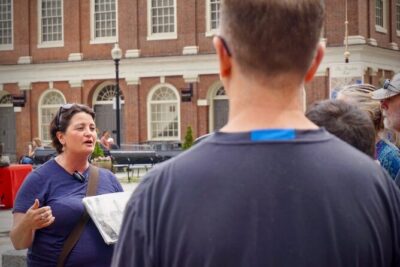
Freedom Trail History Small Group Walking Tour
Read our review →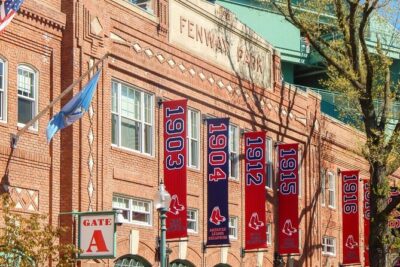
Tour of Historic Fenway Park, America’s Most Beloved Ballpark
Read our review →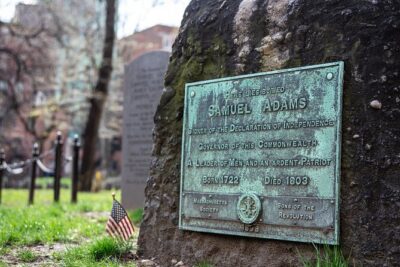
Boston Food & History: Pizza, North End & Freedom Trail
Read our review →
Freedom Trail History Small Group Walking Tour
Read our review →
City Cruises Boston Historic Sightseeing Harbor Cruise
Read our review →
Boston’s North End Food Tour: Italian Flavors & Heritage Walk
Read our review →
Boston Pizza Lovers Food and History Walking Food Tour
Read our review →Browse the lists this tour appears in