
Reviewed · HISTORIC TOURS IN BOSTON
Boston: Underground Railroad History Tour of Beacon Hill
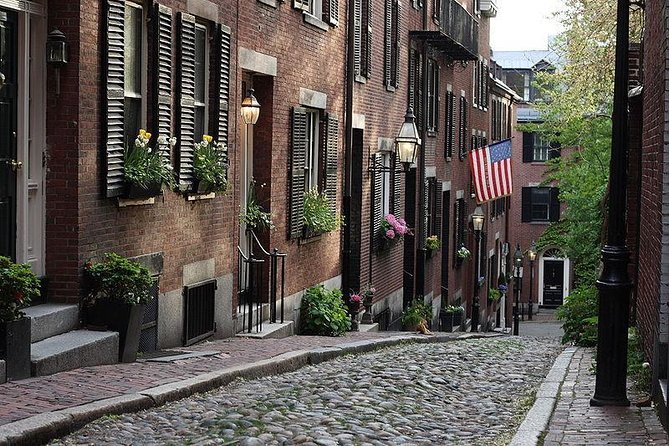
Boston’s Beacon Hill is more than cobbled lanes and handsome brick homes. This walking tour shows you the people and places behind Boston’s fight against slavery, including an Underground Railroad safe house, an early integrated school, the nation’s oldest surviving Black church building, and the memorial to the famed 54th Massachusetts Regiment. Black Boston’s role in the Civil War becomes the main story, not a side note.
I like the focus of this tour. A group of no more than 16 keeps the history personal, and guides such as Dana, Will, Meghan, and Lin bring strong teaching skills and real enthusiasm. I also like that you walk through the actual neighborhood rather than study it from a bus. The drawback is the physical side: Beacon Hill is genuinely hilly, with uneven surfaces and plenty of standing over 2.5 hours.
In This Review
- Key points to know before you go
- Why Beacon Hill tells a bigger Boston story
- Starting at the Soldiers and Sailors Monument in Boston Common
- Acorn Street and the world of Beacon Hill
- Phillips School and the fight over education
- John J. Smith’s home and Beacon Hill’s Black leadership
- Charles Street Meeting House and arguments over integration
- 66 Phillips Street, the Haydens’ safe house
- Otis House and the sharp contrasts of Beacon Hill
- The African Meeting House, the tour’s indoor highlight
- 5 Pinckney Street and the final approach
- Ending at the 54th Regiment Memorial
- Is $35 a fair price for 2.5 hours?
- Which guide might lead your walk?
- Who should book this Beacon Hill walk?
- Should you book the Underground Railroad History Tour?
- FAQ
- Where does the tour begin?
- Where does the tour end?
- How long does the tour last?
- How much does the tour cost?
- How many people can join the tour?
- Is the tour offered in English?
- Is admission to the African Meeting House included?
- Is the tour physically demanding?
- What is the cancellation policy?
Key points to know before you go

- Ten Black Heritage Trail landmarks: The route connects schools, homes, churches, meetinghouses, and memorials tied to Black Boston and abolition.
- The Haydens’ safe house: At 66 Phillips Street, you learn about a home owned by formerly enslaved abolitionists who helped people seeking freedom.
- A guide-led history lesson: Dana, Will, Meghan, Lin, Joe, Drew, and other guides are noted for clear storytelling, strong subject knowledge, and an ability to answer questions.
- A small group of 16 or fewer: This makes it easier to hear, ask questions, and keep up with the guide.
- A hilly 2.5-hour walk: Wear comfortable shoes, carry water, and expect periods of standing on old streets.
- A useful $35 price: You get the full guided walk and entry to the African Meeting House, though other museum admissions and gratuity are extra.
Why Beacon Hill tells a bigger Boston story
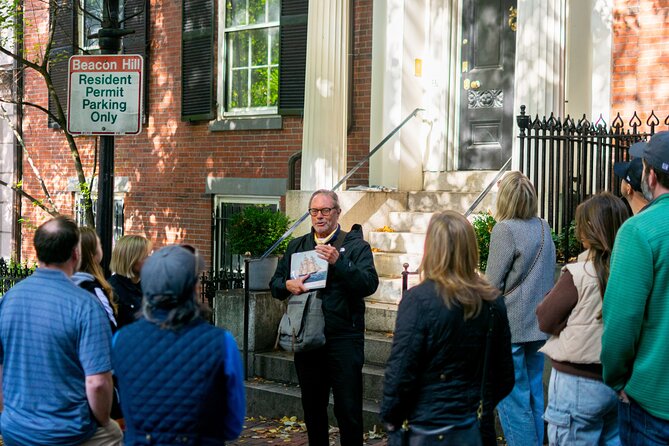
The tour begins in Boston Common, but its subject quickly reaches far beyond one neighborhood. You learn how Black Bostonians, white abolitionists, religious leaders, teachers, politicians, and formerly enslaved people challenged slavery and racial separation in the years before the Civil War.
That setting matters. Beacon Hill was home to wealthy white families often called Boston Brahmins, but it also held a strong African-American community. The same compact hill contains grand homes, modest residences, churches, schools, and meeting places linked to very different parts of Boston society.
I like the way the walk places those stories side by side. You may look at an elegant square and hear about the city’s elite, then turn onto a narrow street connected with abolitionists and people escaping slavery. The contrast helps you understand that Beacon Hill was never just a pretty historic district.
The guides also connect local events to national ones. You hear about the fight over school integration, the work of abolitionists, the treatment of Black residents, the Civil War, and the creation of the 54th Massachusetts Regiment. This is useful if you know Boston mainly through the Revolution, since the tour adds a major chapter that often gets less attention.
More Historic Tours in Boston
- Boston: Freedom Trail History Small Group Walking Tour
★ 5.0 · 6,450 reviews - Tour of Historic Fenway Park, America’s Most Beloved Ballpark
★ 4.5 · 3,013 reviews - Boston Food & History: Pizza, North End & Freedom Trail
★ 5.0 · 1,772 reviews
Starting at the Soldiers and Sailors Monument in Boston Common
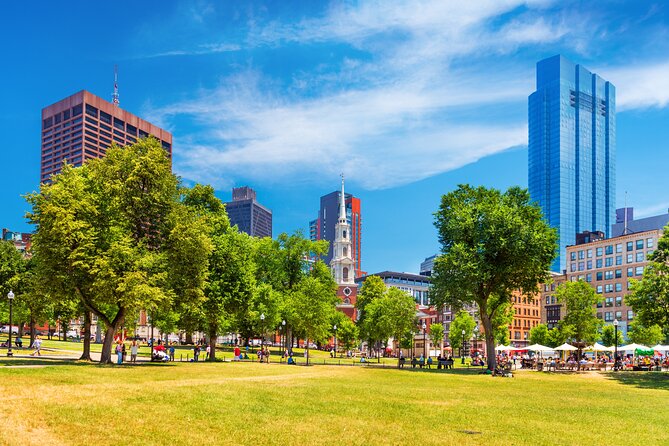
Meet at the white granite Soldiers and Sailors Monument in the middle of Boston Common, close to the Boston Common Visitors Center at 139 Tremont Street. Look for the tall column topped by a female figure holding a flag, with four bronze figures around its base.
The meeting point is easy to identify, and Boston Common gives the group room to gather before setting off. Your guide uses the park to explain its long civic role. The Common dates to 1634 and is described as the oldest public land in the Americas, as well as Boston’s former communal grazing pasture.
The first stop lasts about 10 minutes and costs nothing beyond the tour fee. This opening is brief, but it gives you a useful sense of place. Boston Common is not just a lawn between downtown streets. It has been a public gathering ground for centuries, which makes it a fitting starting point for a tour about civic action and demands for freedom.
Acorn Street and the world of Beacon Hill
From the Common, the walk enters Beacon Hill and reaches Acorn Street, one of the district’s narrow cobbled lanes. The alleyways and old buildings give you the classic Beacon Hill look, but the guide shifts your attention from appearance to residents and power.
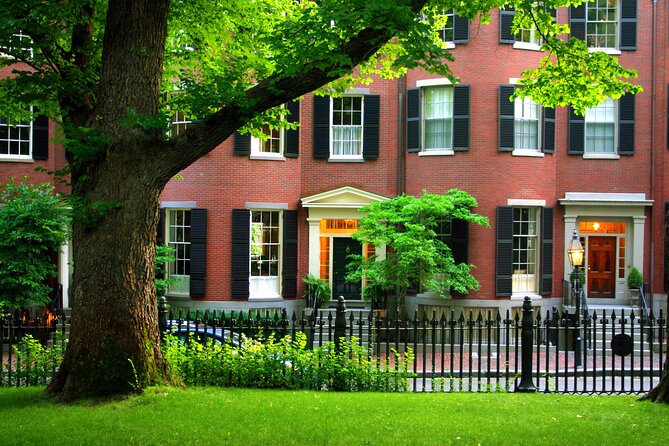
A nearby neighborhood square introduces the world of the 19th-century Boston Brahmins, the wealthy families who shaped local society and business. The tour does not treat architecture as decoration alone. It explains how money, status, and political influence formed one side of Beacon Hill’s story.
This is also where the walking conditions become clear. Cobbles, slopes, and narrow sidewalks are part of the charm, but they are not easy for everyone. You should be comfortable standing and walking for long stretches. One stop is about 10 minutes, but the route between stops is part of the experience too.
Phillips School and the fight over education
At Phillips School, you encounter a building that began as a whites-only school in 1824. By 1855, it was among the first schools in Boston to integrate.
This stop gives the tour a practical way to discuss segregation. Instead of keeping the story at the level of speeches and laws, the guide shows you how racial separation affected children and families in daily life. The school also helps explain why education became such an important battleground for Boston’s Black community.
The visit is an exterior stop, with about 10 minutes for explanation. There is no separate admission charge. You should expect the guide to tell the story from the street rather than lead you through a full museum display.
More Beacon Hill walks in Boston:
- Downtown Freedom Trail, Beacon Hill & Back Bay Walking Tour
★ 4.5 · 473 reviews - 2-Hour Beacon Hill True Crime Expert Guided Tour
★ 5.0 · 182 reviews - Beacon Hill Boston History + Photo Walking Tour (SMALL Group)
★ 5.0 · 163 reviews - Beacon Hill + Back Bay History + Photo Walking Tour(SMALL Group)
★ 5.0 · 60 reviews
John J. Smith’s home and Beacon Hill’s Black leadership
The John J. Smith House belonged to a leading abolitionist, state legislator, and former barber. It is one of the stops that makes clear how Black Bostonians took active roles in politics and reform.
A home like this can look quiet today, but its importance comes from the person who lived there and the work connected to him. The guide places Smith within Boston’s abolition movement and shows how Black residents organized, spoke out, and took part in public life.
The route then follows Charles Street, Beacon Hill’s main thoroughfare, lined with shops and restaurants. This is a useful break in the pattern of historic residences. You are still in the same old neighborhood, but now you are walking along a working commercial street, with present-day Boston moving around the history.
Charles Street Meeting House and arguments over integration
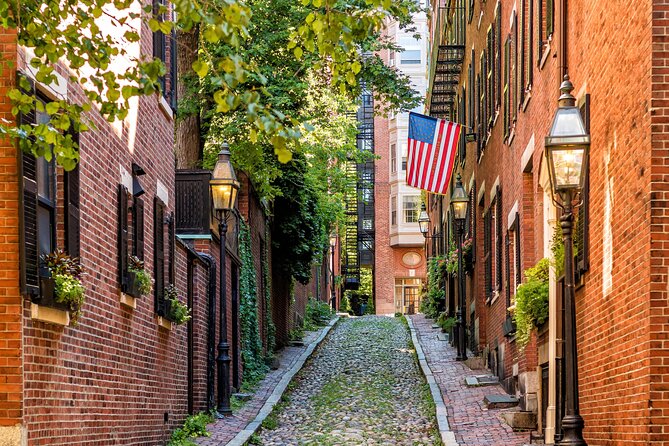
The Charles Street Meeting House dates to 1807 and was a site of heated debate over racial integration. The stop lasts about 15 minutes, giving the guide room to explain the religious and political arguments that shaped the meetinghouse and the wider community.
This is one of the tour’s more important themes: abolition was not a simple story of everyone in Boston pulling together. People disagreed sharply about race, equality, schooling, worship, and public policy. A good guide helps you see both the courage of reformers and the resistance they faced.
The tour also points out the home of an African-American community activist and abolitionist. These smaller stops matter because they show that the movement did not depend only on famous national figures. Local homes were places where organizing, planning, and mutual support took shape.
66 Phillips Street, the Haydens’ safe house
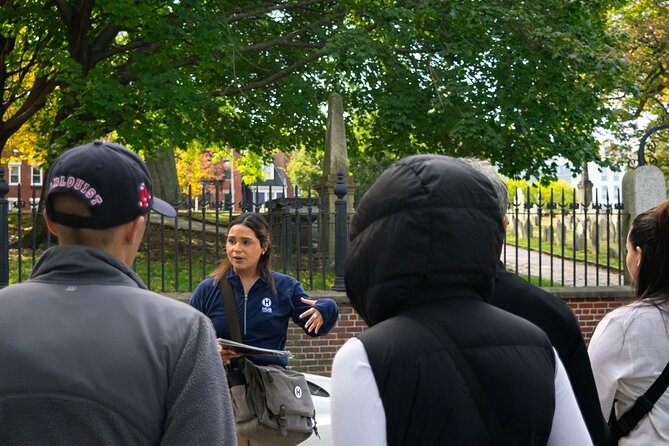
At 66 Phillips Street, the focus turns directly to the Underground Railroad. The house was owned by the Haydens, formerly enslaved people and committed abolitionists who provided a safe house for people seeking freedom.
This stop is central to the tour because it gives the Underground Railroad a real address. You are not hearing only about a broad network of routes. You are standing outside a home tied to people who had personal reasons to oppose slavery and who took serious risks to help others.
The stop lasts about 15 minutes. Some tours also discuss secret passages and lesser-known figures, including women whose work is often missing from historic plaques. The exact detail depends on your guide, but you can expect the house to anchor the wider story of escape, aid, and anti-slavery activism.
The subject is difficult. Stories of enslavement and escape should not be softened into adventure tales. The best part of this experience is the way the guides connect the danger and courage of these efforts to the people who lived them.
Otis House and the sharp contrasts of Beacon Hill
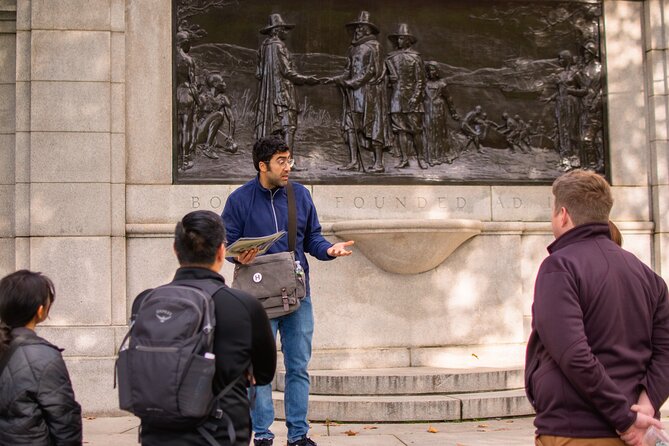
Otis House, built in 1796, was the home of Harrison Gray Otis, a Boston mayor and nephew of Revolutionary figure James Otis, Jr. This stop returns you to the upper-class side of Beacon Hill.
The contrast with the Haydens’ home is useful. The tour shows you how people with wealth and political standing lived close to Black abolitionists, workers, and community leaders, yet occupied very different positions in Boston society. Beacon Hill’s streets make those contrasts visible in a way a general city lecture cannot.
Along the route, the guide points out an 1806 church designed by architect Asher Benjamin, the home of an outspoken abolitionist and U.S. senator who was beaten unconscious in the Capitol in 1856 over the slavery question, and houses linked to several African-American abolitionists, including historian William Cooper Nell.
These brief stops build momentum. You may not spend long at every address, but together they show how many people and institutions were tied to the national crisis over slavery.
The African Meeting House, the tour’s indoor highlight
The African Meeting House is the longest stop, at about 25 minutes, and admission is included. Built in 1806, it served as a cultural center for Boston’s African-American community and is the oldest surviving Black church building in the United States.
This is the one point where you get an indoor historic site rather than only an exterior view. The building gives physical weight to the stories you have heard on the streets. It was a place of worship, community activity, education, and public discussion.
The tour also notes a school founded in 1835 for Boston’s African-American children. Together, the school and meetinghouse show how Black residents built institutions for themselves in a city where equal access was often denied.
If you care about museums, remember that admission inside other museums is not included. The African Meeting House is part of this tour, but the experience is still mainly a guided neighborhood walk, not a full museum visit.
5 Pinckney Street and the final approach
At 5 Pinckney Street, you see the oldest surviving house in Beacon Hill, dating to 1787. It was home to an African-American Revolutionary War veteran, another reminder that Black participation in American history began long before the Civil War.
This stop broadens the timeline. The tour is not only about the 1850s and 1860s. It connects the Revolutionary era, the growth of Boston, the abolition movement, and the war that finally ended slavery in the United States.
The route then brings you near the Massachusetts State House, built in 1798 and often called the Hub of the Solar System. The nickname is a bit of classic Boston self-confidence, but the location matters. You are now close to the center of state power, after hearing about people who pushed that power to change.
Ending at the 54th Regiment Memorial
The tour concludes at the Robert Gould Shaw and the 54th Regiment Memorial, opposite 24 Beacon Street and across from the Massachusetts State House. The final stop lasts about 15 minutes.
The memorial honors Colonel Robert Gould Shaw and the 54th Massachusetts Regiment, one of the best-known Black regiments in the Union Army. Ending here ties the local abolition movement to the Civil War and to the military service of Black men who fought for the Union.
The end point is convenient. It is within about 0.2 miles of the starting area, so you are not stranded across the city. You can continue around Beacon Hill, head toward the State House, or return to Boston Common with little trouble.
Is $35 a fair price for 2.5 hours?
At $35 per person, I consider this a good value if you want a serious history walk rather than a quick overview. You get about two and a half hours with a guide, a small group capped at 16, the full Black Heritage Trail route, Beacon Hill, and admission to the African Meeting House.
The value comes from interpretation. Many of these buildings are easy to pass without knowing why they matter. A guide such as Will, described as a history professor and research manager, or Dana, who has worked as a history teacher and National Parks ranger, can connect the addresses into one story.
You are not paying for period costumes or admission to a string of museums. Gratuity is optional, and other museum tickets are not included. If you prefer a short, self-guided stroll, $35 may feel high. If you want context, questions answered, and a clear route through a complicated subject, the price is reasonable.
Which guide might lead your walk?
Guide assignments can vary, but the experience has been led by Dana, Will, Meghan, Lin, Joe, Drew, and others. The strongest common feature is an emphasis on teaching and storytelling.
Dana is praised for engaging adults and children, while Will is known for extensive Civil War knowledge and a passionate presentation. Meghan brings experience from the National Park Service, and Lin is praised for making the history relatable while keeping a measured pace.
You should not book based on a promise of one specific guide unless the operator confirms that person for your date. Still, the guide is a major part of the tour’s value, and this is clearly an experience built around the person leading it.
Who should book this Beacon Hill walk?
I would choose this tour if you have at least a passing interest in American history from the Revolutionary era through the Civil War. It suits adults, history students, families with older children, and Boston residents who know the Freedom Trail but have not explored Black Beacon Hill history in detail.
Teenagers can do well on it, especially when the guide uses stories about figures such as Charles Sumner, John Brown, and the Haydens. Children around 10 or 12 may manage it, but the length and standing can test younger kids. The tour provider describes the activity as requiring moderate fitness and does not recommend it for people who have trouble standing for extended periods.
Wear supportive shoes. Bring water. Allow extra time if you tend to ask many questions, since one experience reportedly ran much longer than planned. Most guides keep a measured pace with frequent stops, but the subject offers enough material to tempt a historian into overtime.
The tour operates in English and uses a mobile ticket. Service animals are allowed, and the meeting point is near public transportation. It requires good weather and may be canceled if the minimum number of participants is not reached. You can cancel for a full refund up to 24 hours before the start time; late cancellations are not refunded.
Should you book the Underground Railroad History Tour?
Book it if you want Boston history with substance, human stories, and a strong connection between place and event. The African Meeting House, the Haydens’ safe house, Phillips School, and the 54th Regiment Memorial give the walk a clear shape, while the guide adds the detail you cannot get from a plaque.
Skip it if you want a relaxed, flat stroll or if you dislike long periods of standing. Beacon Hill’s slopes and cobbles are real. For everyone else, $35 buys a focused way to understand how Black Bostonians and their allies challenged slavery, segregation, and political silence in the heart of Boston.
FAQ
Where does the tour begin?
It begins at the Soldiers and Sailors Monument in the center of Boston Common, near the Boston Common Visitors Center at 139 Tremont Street, Boston, Massachusetts 02108.
Where does the tour end?
The tour ends at the Robert Gould Shaw and the 54th Regiment Memorial at 26 Beacon Street, across from the Massachusetts State House.
How long does the tour last?
The tour lasts approximately 2 hours and 30 minutes.
How much does the tour cost?
The listed price is $35 per person.
How many people can join the tour?
The tour has a maximum group size of 16 participants.
Is the tour offered in English?
Yes. The tour is offered in English.
Is admission to the African Meeting House included?
Yes. Admission to the African Meeting House is included. Admission inside other museums is not included.
Is the tour physically demanding?
You should have a moderate fitness level. The route includes hills, uneven surfaces, extended walking, and periods of standing, and it is not recommended for people who have difficulty standing for long periods.
What is the cancellation policy?
You can cancel at least 24 hours before the start time for a full refund. Cancellations or changes made less than 24 hours before the start time are not refunded or accepted. Poor weather or failure to reach the minimum group size may lead to a rescheduled tour or full refund.
More Historical Tours in Boston
- History and Hauntings of Salem Guided Walking Tour
★ 5.0 · 14,564 reviews - Boston: City Cruises Historical Sightseeing Cruise
★ 4.6 · 1,771 reviews - Boston: Freedom Trail History Small Group Walking Tour
★ 4.9 · 1,590 reviews - City Cruises Boston Historic Sightseeing Harbor Cruise
★ 4.5 · 1,388 reviews
Just added around Boston
- Day Trip from Boston: Explore Hammond Castle Museum★ 3.7 · 3 reviews
- Boston: WNDR Museum Entry Ticket★ 3.7 · 3 reviews
- The Boston Bash Scavenger Hunt★ 4.5 · 3 reviews
- Self-Guided Audio Tour of Boston North End★ 4.5 · 3 reviews
- Self Guided “The North End Pizza, Cannoli and Picnic” Solo Walking Tour★ 5.0 · 3 reviews
- Boston: Official Freedom Trail® Lantern Tour★ 4.7 · 3 reviews
- Boston: North End Walking Tour with Private Harbor Cruise★ 5.0 · 3 reviews
- Cambridge: Haunted Charles River Cruise★ 4.3 · 3 reviews
Historic Tours in Boston, compared.
Freedom Trail History Small Group Walking Tour
Read our review →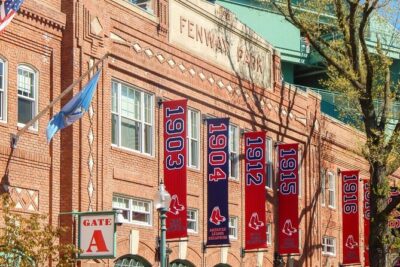
Tour of Historic Fenway Park, America’s Most Beloved Ballpark
Read our review →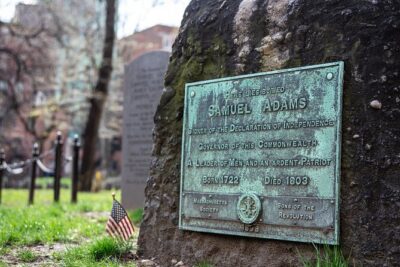
Boston Food & History: Pizza, North End & Freedom Trail
Read our review →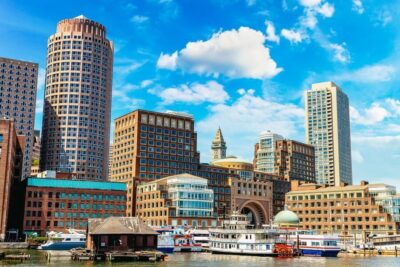
Freedom Trail History Small Group Walking Tour
Read our review →
City Cruises Boston Historic Sightseeing Harbor Cruise
Read our review →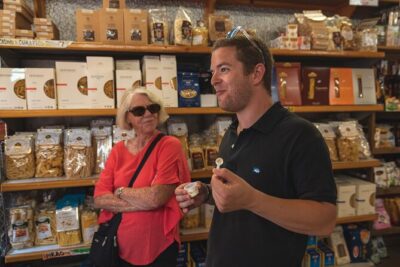
Boston’s North End Food Tour: Italian Flavors & Heritage Walk
Read our review →
Boston Pizza Lovers Food and History Walking Food Tour
Read our review →Browse the lists this tour appears in