
Reviewed · HISTORIC TOURS IN BOSTON
2 Hour Boston Historical and Heritage Walking Tour
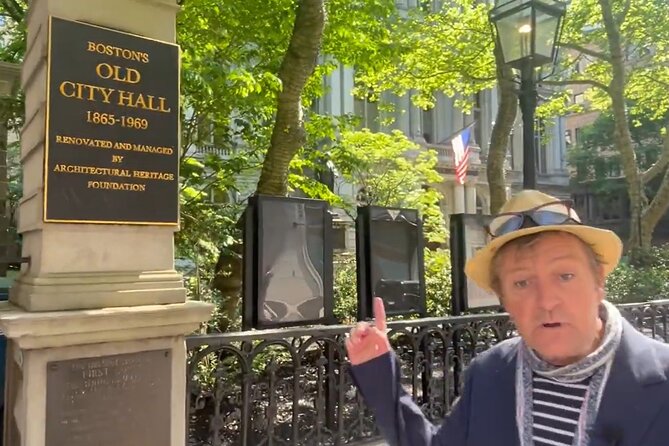
Boston’s past is packed into this compact walk. In about a mile, you move from cattle grazing on Boston Common to revolutionary protests, the Boston Massacre, Irish immigration, famous authors, and the political theater of City Hall. Stephen Uys leads with stories, side notes, and human detail rather than just pointing at statues.
I like the $5 price and the route’s range. You see major landmarks without paying admission, and you get more than a standard Revolution-only walk. The main caution is Stephen’s information-heavy style. He can speak quickly and occasionally run well past two hours, so this suits a history-minded listener more than someone seeking a quick stroll.
In This Review
- Key points before you book
- Boston Common sets the tone in ten minutes
- Park Street Church and the abolitionist story
- The 54th Massachusetts Memorial adds a necessary voice
- The golden dome and Massachusetts State House
- Boston Brahmins, books, and literary power
- Scollay Square and the city beneath City Hall
- The Old State House and the Boston Massacre Site
- The Tea Party story in a Puritan meeting place
- The Irish Famine Memorial remembers a changed city
- Old Corner Bookstore and Boston’s literary circle
- School Street connects education, hotels, and an unexpected donkey
- Faneuil Hall gives the walk its classic finale
- Boston City Hall and the Curley finish
- What Stephen Uys does best, and where to take care
- Price, group size, weather, and practical value
- Who should book this Boston walk?
- Should you book the 2 Hour Boston Historical and Heritage Walking Tour?
- FAQ
- Where does the Boston historical walking tour start?
- What time does the tour begin?
- Where does the tour end?
- How long is the walking tour?
- Is the tour offered in English?
- What happens if the weather is poor?
Key points before you book
- Boston Common begins the story: Learn how America’s oldest public park served cattle, soldiers, crowds, and protest movements.
- The route links famous names: See the 54th Massachusetts Memorial, the State House, the Old State House, Faneuil Hall, and City Hall.
- Stephen Uys brings the detail: His talks reach beyond dates to personalities, religious conflict, literature, immigration, and Boston politics.
- The walk is rich in stopping points: Most stops are free, but the tour is mainly an outdoor history lesson, not a series of interior visits.
- Expect an active two hours: The advertised time is about two hours, yet Stephen has sometimes continued closer to three.
- Weather matters: The tour requires good weather, and cold, wind, rain, and street noise can affect how easily you hear.
Boston Common sets the tone in ten minutes
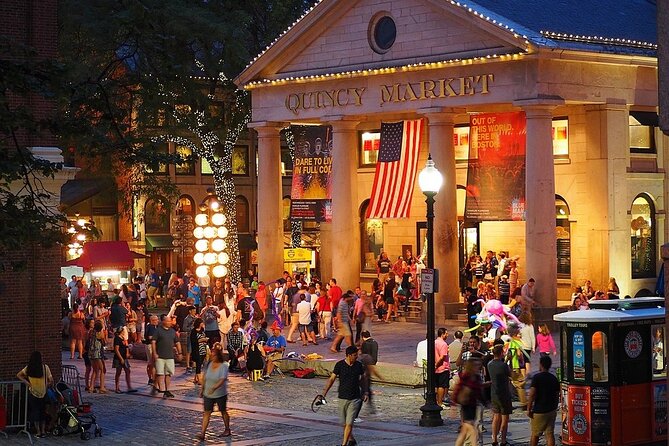
Meet at the Boston Common Tablet at 11:00 a.m. This is a sensible starting point because Boston Common gives you the city’s whole story in one broad sweep.
The forty-five-acre park began as common land where townspeople pastured cattle. It later hosted military drills, public hangings, duels, civic gatherings, and civil rights rallies. In calmer years, people strolled beneath its elms. Your guide uses those changes to show how Boston’s public spaces shifted with the city itself.
You get about ten minutes here, enough for an introduction and photographs. Do not expect a long walk through every corner of the park. Instead, think of this stop as the opening chapter, with the Common serving as a stage for colonial life, public power, and protest.
The Boston Common Tablet is a useful meeting point, but arrive early enough to locate it. The tour is conducted in English, and the group can include as many as 24 people. That is still manageable, though you should stay close if street noise or a busy sidewalk makes it hard to hear.
More Historic Tours in Boston
- Boston: Freedom Trail History Small Group Walking Tour
★ 5.0 · 6,450 reviews - Tour of Historic Fenway Park, America’s Most Beloved Ballpark
★ 4.5 · 3,013 reviews - Boston Food & History: Pizza, North End & Freedom Trail
★ 5.0 · 1,772 reviews
Park Street Church and the abolitionist story
The five-minute stop at Park Street Church shifts the focus from public land to public speech. The church played an important part in abolitionist activity and missionary work, and the guide connects the building with people who argued for freedom and justice.
You also hear about the first performance of My Country, ’Tis of Thee, later known as America, on July 4, 1831. That detail gives the stop a wider reach. It is not only a church story. It links Boston’s religious life, reform movements, national feeling, and public music.
This is a quick exterior explanation, not a church visit. If you want to enter the building, you would need to do so on your own time and should not count on the walk allowing it.
The 54th Massachusetts Memorial adds a necessary voice
At the Robert Gould Shaw and 54th Regiment Memorial, the tour turns to the Civil War and the Black soldiers who served in one of the first African American units in the conflict.
The monument honors Colonel Robert Gould Shaw and the men of the 54th Massachusetts Infantry. This is one of the route’s strongest stops because it broadens the familiar Boston story. You are not hearing only about founders, merchants, and revolutionary leaders. You are also hearing about Black military service, courage, and the struggle for recognition.
Allow ten minutes here. You will have time to look at the relief and take in the figures, but the value comes from the explanation around it. Stephen’s approach often includes the people behind the monument, not merely its date and sculptor.
The golden dome and Massachusetts State House
The Massachusetts State House takes only five minutes on the schedule, but it carries plenty of weight. Its golden dome is one of Boston’s clearest visual markers, and the building has housed the state legislature since 1798.
Outside, you pause near statues of General Joseph Hooker and Mary Dyer. Dyer was hanged for her Quaker beliefs, a stark reminder that Boston’s early religious culture was not tolerant by modern standards. That contrast matters. The city later became famous for liberty and reform, but its early leaders also enforced strict religious rules.
This is another exterior stop. You should have your camera ready before the group moves on, since the itinerary keeps a brisk pace. The guide’s wider discussion of Puritan beginnings and religious conflict is one reason this walk can feel more like a lecture with scenery than a casual sightseeing loop.
More Walking Tours in Boston
- Harvard University Campus Guided Walking Tour
★ 4.5 · 3,632 reviews - Boston Freedom Trail Walking Tour with Costumed Guide
★ 4.5 · 2,531 reviews - The Full Revolutionary Story Epic Small Group Boston Walking Tour
★ 5.0 · 2,356 reviews - Boston’s Freedom Trail: A Revolutionary Walking Tour
★ 4.9 · 1,748 reviews
Boston Brahmins, books, and literary power
A less obvious part of the route concerns the private library of Boston’s Brahmins, the city’s old upper class. The story introduces the intellectual and literary circles that helped shape American thought.
This section is especially useful if you already know the Revolution basics and want a fuller picture of Boston. The city’s influence did not come only from politics. Wealthy families, readers, publishers, churches, schools, and reformers also shaped its public life.
The material can be dense. Stephen has a habit of following connections between people and eras, which can be fascinating when you enjoy context but harder to track if you prefer a simple chronological script. I would listen actively and ask questions when a name or connection is unclear.
Scollay Square and the city beneath City Hall
The West End portion recalls Scollay Square, once known for theaters, vaudeville, nightlife, and unruly characters. The square disappeared during mid-20th-century redevelopment, so this part of the route asks you to picture a district that no longer looks as it once did.
You also hear about the Kennedy family’s Love Nest, an unexpected turn from civic history to personal and romantic lore. This mix is typical of the walk. It moves from public monuments to private lives, then back to the city’s political machinery.
Because the original square is gone, this stop depends heavily on the guide’s storytelling. You will not see a preserved entertainment district. You will hear how the area worked and how Boston changed it.
The Old State House and the Boston Massacre Site
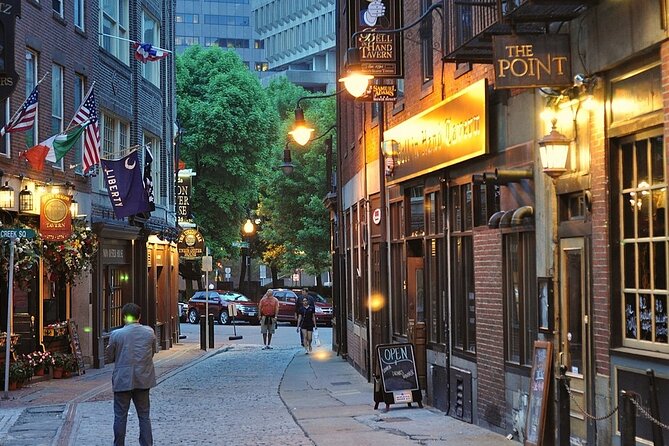
The Old State House brings you to one of Boston’s most important revolutionary buildings. A copy of the Declaration of Independence was read to Boston citizens here in 1776, turning the building into a powerful link between political ideas and public action.
The building also has a rescue story of its own. When Boston’s oldest public building fell into poor condition near the end of the 19th century, Chicago offered to buy it. Bostonians responded by saving and carefully restoring the site.
The Boston Massacre Site is nearby. Here, British soldiers fired on colonists in an incident that fueled anger across the colonies. The guide explains the confrontation and how its presentation helped stir resistance to British rule.
These two stops work well together. The Old State House gives you the setting for revolutionary speech, while the massacre site shows how an event could be turned into a political weapon. You should have about ten minutes at the massacre site, but the route does not include a museum admission or an interior tour of the Old State House.
The Tea Party story in a Puritan meeting place
Another stop recalls the gathering on December 16, 1773, when about 5,000 citizens met during the tea crisis. The group agreed to prevent the British tea ships’ cargo from landing, after which men disguised as Mohawk Indians went down Milk Street toward Griffin’s Wharf.
That story is often reduced to a familiar act of protest. Here, the emphasis is on the large public meeting that came first, and on the chain of decisions that led to the destruction of the tea. It helps you see the Boston Tea Party as organized political action, not a random outburst.
The location itself is plain and Puritan in style. That simplicity can make the story feel more immediate. There is no grand setting to distract you, only an urban place connected to a decision that helped push the colonies toward rebellion.
The Irish Famine Memorial remembers a changed city
The Boston Irish Famine Memorial gives the walk a human story of migration and survival. It honors Irish people who fled the Great Famine of 1845 to 1852 and came to Boston, where they formed the city’s largest ethnic group by 1850.
The memorial also honors immigrant communities more broadly. That wider purpose makes it more than a monument to one population. It helps explain why Boston’s identity cannot be reduced to colonial buildings and revolutionary heroes.
Five minutes is enough for the guide’s explanation, but you may want to return later for a closer look. The tour keeps moving, and this is one place where a personal pause can add something the group schedule cannot.
Old Corner Bookstore and Boston’s literary circle
The Old Corner Bookstore began as a residence and apothecary in 1718. It became a bookstore in 1828 and later housed Ticknor and Fields, a publishing firm linked with major American writers.
Names associated with the building include Henry Wadsworth Longfellow, Nathaniel Hawthorne, Oliver Wendell Holmes Sr., and Ralph Waldo Emerson. The site shows how bookstores and publishers served as meeting places where ideas moved from private discussion into print.
You get five minutes here, so do not expect a literary seminar. The useful part is the connection between a modest old building and the people who helped shape American writing. If you like books, this may be one of the most satisfying stops on the route.
School Street connects education, hotels, and an unexpected donkey
School Street takes you past Boston Latin School, founded as the first public school in the United States. The street also passes King’s Chapel, Old City Hall, and the Parker House, giving you several layers of Boston in a short stretch.
The school’s story adds an important civic theme. Boston’s leaders were building institutions for education and public life while also arguing over religion, class, and political power. The route does not treat history as a string of isolated monuments. It connects buildings to the city’s changing priorities.
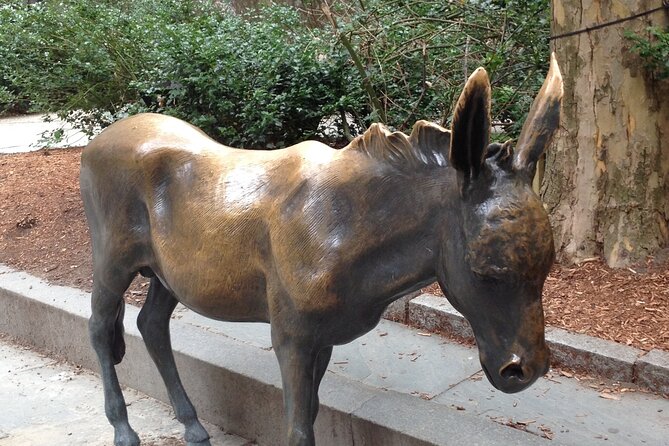
There is also Boston’s beloved donkey, waiting on School Street. It is a small, odd, memorable detail, and a welcome break from dates and political disputes. You have roughly ten minutes for this portion, though the walk itself continues along the street rather than stopping for lengthy visits inside the nearby buildings.
Faneuil Hall gives the walk its classic finale
Faneuil Hall is one of the route’s major stops and deserves your attention. Its grasshopper weathervane is linked to London’s Royal Exchange, and the building is often called the Cradle of Liberty because revolutionary leaders used it as a meeting place.
The hall was given to Boston by Peter Faneuil, a slave trader. That fact complicates the patriotic story in a useful way. The building became a symbol of American democracy, yet its donor’s wealth came from a system of human bondage. A good guide should allow both facts to remain visible, and Stephen’s wider approach makes room for those uncomfortable connections.
Faneuil Hall is also tied to the Ancient and Honorable Artillery Company of Massachusetts, whose charter dates to 1637. The supplied information gives 1837 in one place, but the company’s traditional founding date is 1637. Either way, the stop links military tradition, public meetings, commerce, and revolution.
The advertised endpoint is directly across from Faneuil Hall, which makes this a handy place to continue your day. You are near food, the North End, the waterfront, and several historic sites. The tour itself does not include meals or admission to the hall.
Boston City Hall and the Curley finish
The walk ends near Boston City Hall beside two statues of James Michael Curley. Curley served four times as Boston’s mayor, as governor of Massachusetts, and as a congressman. His long career made him a flamboyant force in city politics.
Calling him the rascal king gives you a quick sense of the character involved. This is not a polished civic ending. It is a look at machine politics, personality, loyalty, and the rough-and-tumble side of urban government.
A few steps away are the Union Oyster House, the Bell in Hand tavern, and Hanover Street, the gateway to the North End. The official end point is near Congress Street, North Street, and Faneuil Hall. That location is convenient, but remember that the route’s endpoint description focuses on the area around Faneuil Hall and City Hall rather than an admission visit to any of those businesses.
What Stephen Uys does best, and where to take care
Stephen Uys is the named guide associated with this experience, and his strongest quality is the breadth of his subject matter. He can move from Puritan religious disputes to Boston literature, the Kennedys, immigrant communities, architecture, Civil War history, and modern politics.
I like that he does not stick to a rigid, date-by-date script. His stories connect people and events across centuries, which can make the city feel less like a museum and more like a place shaped by arguments, accidents, ambition, and memory.
The tradeoff is pace. Stephen sometimes speaks quickly, and a few parts can become long before the group reaches the next landmark. One past walk ran close to three hours instead of the scheduled two, partly because of route changes, breaks, and extended storytelling. If you need a firm finish time, say so early and keep an eye on the clock.
Street noise is another real issue. Duck tour vehicles and city traffic can make hearing difficult. Stephen has used a voice amplifier to address this, but stay near him, especially at crowded corners. Non-native English speakers may find the speed challenging, and families with young children should consider the amount of spoken material.
Price, group size, weather, and practical value
At $5 per person, this is an unusually inexpensive way to get a guided introduction to central Boston. There are no admission fees at the listed stops, and the route covers major sights plus less obvious subjects such as Boston Brahmins, the Old Corner Bookstore, and James Curley.
The low price does not mean the experience is lightweight. You are paying mainly for the guide’s time and interpretation, not for museum entry or transport. If you want a polished sightseeing package with indoor access, this is not that. If you want context before exploring Boston on your own, the value is strong.
The walk starts at 11:00 a.m. and lasts about two hours, though it may run longer. It covers roughly one mile, but standing and walking continuously can still feel tiring in cold or wet weather. Wear shoes suited to city sidewalks and dress for the forecast.
The tour runs in English, accepts mobile tickets, permits service animals, and is near public transportation. Most people can participate. Free cancellation is available up to 24 hours before the start time, and poor weather may lead to a new date or a full refund.
Who should book this Boston walk?
I would choose this tour if you want Boston’s major revolutionary sites but also care about Black history, Irish immigration, literature, religion, and city politics. It is particularly well suited to adults, history fans, repeat visitors, and anyone who likes asking questions.
I would be more cautious if you want a relaxed photo walk, a strict two-hour schedule, or a short introduction for young children. You may have limited time to photograph each site, and the amount of spoken information can be heavy.
The best approach is to treat the walk as an orientation. Listen for places you want to revisit, then return after the tour to explore the Old State House, Faneuil Hall, the Common, or the North End at your own pace.
Should you book the 2 Hour Boston Historical and Heritage Walking Tour?
Book it if stories matter more to you than checklist sightseeing. For $5, Stephen Uys offers a broad look at Boston, with strong attention to the people and conflicts behind the monuments.
Skip it if you need a quiet guide, frequent breaks, or a guaranteed two-hour finish. For everyone else, this is a thoughtful, unusually affordable way to get your bearings and discover which parts of Boston’s past deserve a closer look.
FAQ
Where does the Boston historical walking tour start?
The tour starts at the Boston Common Tablet, 1634 Freedom Trail, Boston, Massachusetts 02108.
What time does the tour begin?
The scheduled start time is 11:00 a.m.
Where does the tour end?
It ends near the James Michael Curley statues at Congress Street and North Street, in the area directly across from Faneuil Hall.
How long is the walking tour?
The planned duration is about two hours, and the route covers roughly one mile. The guide may occasionally run longer.
Is the tour offered in English?
Yes. The experience includes an in-person English-speaking guide.
What happens if the weather is poor?
The experience requires good weather. If it is canceled because of poor weather, you can receive a different date or a full refund. You can also cancel for a full refund up to 24 hours before the start time.
More 2-Hour Experiences in Boston
- 2-Hour Beacon Hill True Crime Expert Guided Tour
★ 5.0 · 182 reviews - 2 Hour North End ‘Little Italy’ Walking Tour
★ 4.5 · 125 reviews - Boston: 2-Hour Historic Walking Tour
★ 4.7 · 88 reviews - 2 Hour Boston Segway Tour
★ 5.0 · 77 reviews
More Historical Tours in Boston
- History and Hauntings of Salem Guided Walking Tour
★ 5.0 · 14,564 reviews - Boston: City Cruises Historical Sightseeing Cruise
★ 4.6 · 1,771 reviews - Boston: Freedom Trail History Small Group Walking Tour
★ 4.9 · 1,590 reviews - City Cruises Boston Historic Sightseeing Harbor Cruise
★ 4.5 · 1,388 reviews
Just added around Boston
- Day Trip from Boston: Explore Hammond Castle Museum★ 3.7 · 3 reviews
- Boston: WNDR Museum Entry Ticket★ 3.7 · 3 reviews
- The Boston Bash Scavenger Hunt★ 4.5 · 3 reviews
- Self-Guided Audio Tour of Boston North End★ 4.5 · 3 reviews
- Boston: Official Freedom Trail® Lantern Tour★ 4.7 · 3 reviews
- Boston: North End Walking Tour with Private Harbor Cruise★ 5.0 · 3 reviews
- Self Guided “The North End Pizza, Cannoli and Picnic” Solo Walking Tour★ 5.0 · 3 reviews
- Cambridge: Haunted Charles River Cruise★ 4.3 · 3 reviews
Historic Tours in Boston, compared.
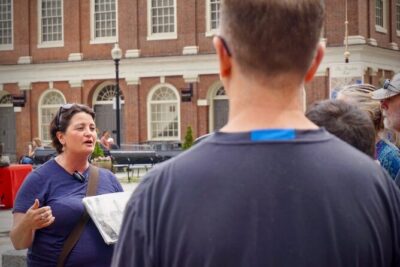
Freedom Trail History Small Group Walking Tour
Read our review →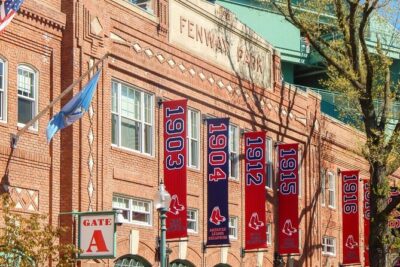
Tour of Historic Fenway Park, America’s Most Beloved Ballpark
Read our review →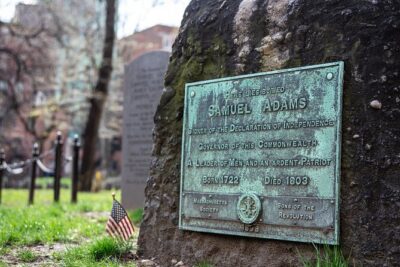
Boston Food & History: Pizza, North End & Freedom Trail
Read our review →
Freedom Trail History Small Group Walking Tour
Read our review →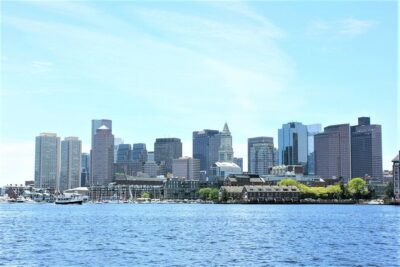
City Cruises Boston Historic Sightseeing Harbor Cruise
Read our review →
Boston’s North End Food Tour: Italian Flavors & Heritage Walk
Read our review →
Boston Pizza Lovers Food and History Walking Food Tour
Read our review →Browse the lists this tour appears in