
Reviewed · FREEDOM TRAIL TOURS
Private Walking tour of Boston’s Freedom Trail and more!
Boston’s Freedom Trail is much easier to understand on foot than from behind a bus window. This private walk links Boston Common, old burial grounds, revolutionary meeting halls, Faneuil Hall, and the North End, with room for side trips such as Pi Alley, the Holocaust Memorial, or the Spite House when your group is interested.
I like the private format, since your guide can slow down for children, answer questions, and adjust the route to your group. I also like the central start at Boston Common and the finish in the North End, where lunch is close at hand. The main drawback is pace: three hours is enough for a strong overview, but not enough time to explore every interior or linger at every stop.
In This Review
- Key points to know before you book
- Starting in Boston Common with Boston’s earliest public spaces
- Burial grounds, churches, and the people behind the names
- From the Old Corner Bookstore to the Cradle of Liberty
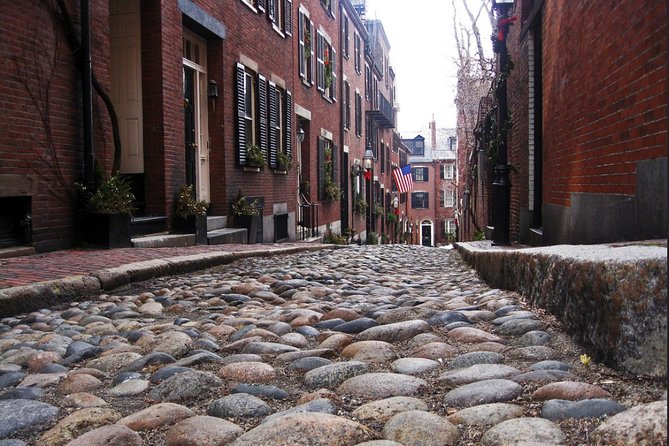
- Small clues in the downtown streets
- Paul Revere’s small house in the North End
- Two lanterns at Old North Church
- Copp’s Hill and the working North End
- How the private guide changes the experience
- Walking demands, timing, and admission costs
- Who will get the most from this Boston walk?
- Should you book this private Freedom Trail tour?
- FAQ
- How long is the private walking tour?
- Where does the tour begin?
- Where does the tour end?
- Are admission fees included?
- Is this a private activity?
- What happens if bad weather cancels the tour?
Key points to know before you book
- Boston’s oldest park begins the walk: Start in Boston Common, established in 1634, then follow the city’s story toward the North End.
- Your group controls the pace: Guides including Tracy, Manny, Cindy, Ernie, Ellen, and Neil have adjusted stops for families, slower walkers, and curious groups.
- The route goes beyond the painted trail: Depending on your interests, you might see Pi Alley, the Spite House, or the Holocaust Memorial.
- The most important interiors cost extra: Entry to the Paul Revere House and Old North Church is optional, with a special low rate offered through the provider.
- The private setting solves a common walking-tour problem: You do not need to strain to hear a guide in a large crowd.
- You finish in Boston’s North End: The end point is near 282 Hanover Street, surrounded by Italian restaurants and snack stops.
Starting in Boston Common with Boston’s earliest public spaces
Meet at 10:00 a.m. at 139 Tremont Street, beside Boston Common. This is a sensible place to begin because the Common is not just a pleasant patch of grass. Established in 1634, it is America’s oldest public park, created when Puritan colonists purchased rights to 44 acres from William Blackstone, the area’s first European settler.
You spend about 20 minutes here, learning how Boston’s civic center grew around this open ground. The Common also gives your guide a useful starting point for explaining Boston’s compact layout. From here, the route moves through Beacon Hill and the downtown core rather than wasting time on a bus.
The next stop is the Massachusetts State House, designed by Charles Bulfinch and opened in 1798. It remains the seat of Massachusetts government, housing both the legislative and executive branches. The exterior stop lasts about 10 minutes, and admission is not included, so you should not expect a formal interior visit as part of the standard walk.
More Walking Tours in Boston
- Boston: Freedom Trail History Small Group Walking Tour
★ 5.0 · 6,450 reviews - Harvard University Campus Guided Walking Tour
★ 4.5 · 3,632 reviews - Boston Freedom Trail Walking Tour with Costumed Guide
★ 4.5 · 2,531 reviews
Burial grounds, churches, and the people behind the names
Granary Burying Ground is one of the strongest early stops. Founded in 1660, it contains roughly 2,300 markers and the graves of important colonial figures and founding-era leaders. You have around 25 minutes here, enough time to see the crowded markers and hear why this cemetery was named for the 12,000-bushel grain store once located beside it.
The old burial grounds can be easy to rush past if you are walking alone. A guide gives the stones a human shape, tying names and dates to Boston’s political and religious life. The ground is also a reminder that the city’s oldest places are woven into its modern streets, not isolated behind a museum gate.
Park Street Church is another quick but useful pause. Founded in 1809 at the corner of Park and Tremont Streets, it was built over the former site of Boston’s town grain storage building. Its 217-foot steeple once served as the first landmark seen by people approaching the city, and its position helps explain why this corner became so important.
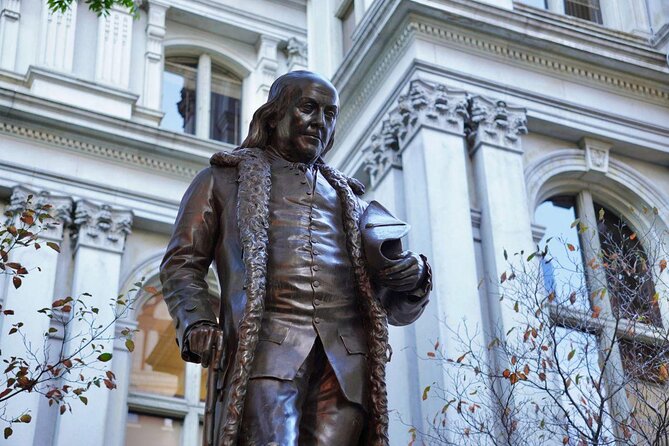
At the original site of Boston Latin School, a mosaic and statue of Benjamin Franklin mark the location of America’s oldest public school. Founded in 1635, the school offered free education to boys from wealthy and poor families. Girls at the time were educated privately at home, a detail that gives this five-minute stop more weight than its small size suggests.
From the Old Corner Bookstore to the Cradle of Liberty
The Old Corner Bookstore is downtown Boston’s oldest commercial building, dating to 1718. The building later housed the publishing firm Ticknor and Fields, connected with works such as Thoreau’s Walden, Hawthorne’s The Scarlet Letter, Longfellow’s Midnight Ride of Paul Revere, and the Atlantic Monthly.
You only spend about five minutes here, but the stop adds a literary side to a route often dominated by war and politics. The building was saved from demolition in 1960, and its leases now help fund preservation work in Boston neighborhoods. That practical afterlife is worth noting: old buildings survive here partly because they are made useful.
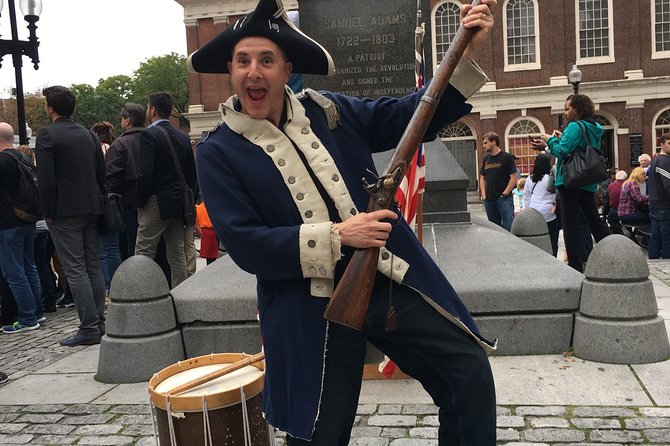
Faneuil Hall Marketplace gets about 25 minutes. Faneuil Hall itself became known as the Cradle of Liberty and the home of free speech, hosting Boston’s first Town Meeting and public arguments over taxes, politics, and the coming break with Britain. The adjacent marketplace adds shops and food counters, so this is also a natural place to note what you may want to return to later.
The name Boston Tea Party is closely tied to the meetings and speeches held in this area. Your guide can help separate the actual political setting from the simplified version often presented in popular retellings. That is one of the advantages of a private guide: you can stop to ask how a famous story became a national legend.
Small clues in the downtown streets
The Boston Stone is a brief five-minute stop with an odd little mystery. A round rock is set into the wall of an 18th-century building, and the guide explains why it is there. It is the sort of detail you might miss while hurrying from one famous landmark to the next.
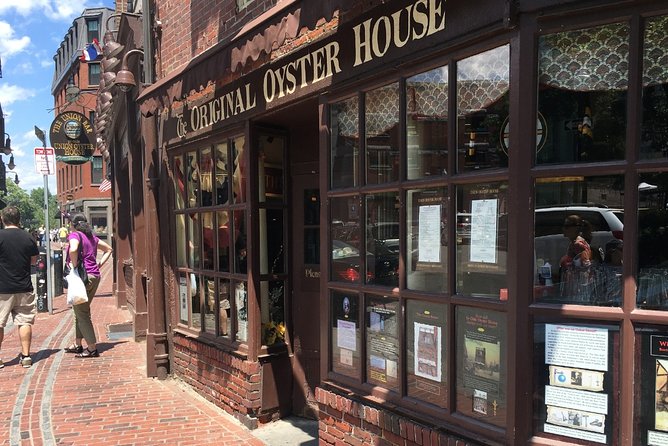
The route also passes the Union Oyster House and other sites along Marshall Street. The Union Oyster House is identified as the oldest continually operating restaurant in America. You do not need to eat there during the walk, but the location makes a useful dining reference for later, especially if you want to build lunch around the North End finish.
This portion of the walk shows why a private tour can be worth paying more for than a large group outing. The major landmarks are important, but the small street details often help you remember the city. Several guides have also taken groups to places outside the standard path, including Pi Alley, the Spite House, and the Holocaust Memorial.
More Freedom Trail walks in Boston:
- Boston Food & History: Pizza, North End & Freedom Trail
★ 5.0 · 1,772 reviews - Boston’s Freedom Trail: A Revolutionary Walking Tour
★ 4.9 · 1,748 reviews - Boston: Freedom Trail History Small Group Walking Tour
★ 4.9 · 1,590 reviews - Boston’s Freedom Trail: A Revolutionary Walking Tour
★ 5.0 · 1,343 reviews
Paul Revere’s small house in the North End
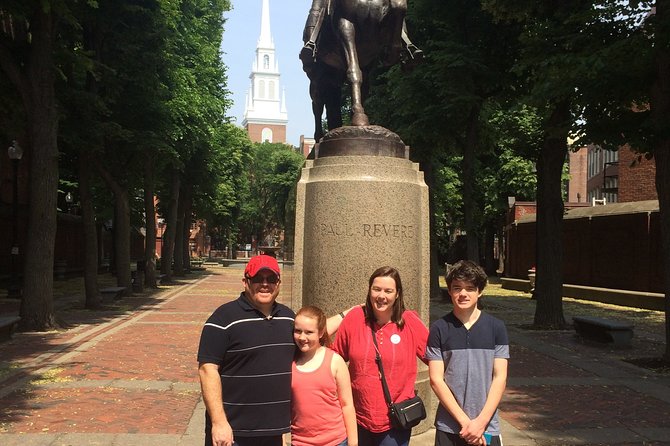
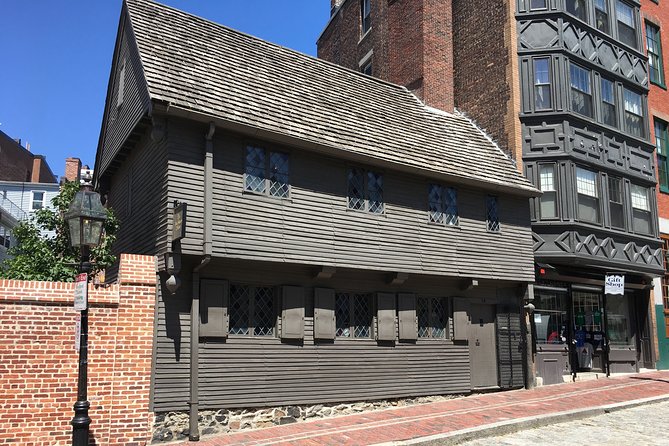
The walk continues into the North End, Boston’s Italian district, where the streets become narrower and the historic buildings feel more closely packed. Paul Revere’s House is the key stop here. Located at 19 North Square, it is the oldest building in downtown Boston and one of the few surviving 17th-century dwellings in a major American city.
Revere left this modest wooden home on the night of April 18, 1775, beginning the ride that made him famous. The house is not included in the tour admission, but entry is optional and offered at a special low rate through the provider. If you want to go inside, confirm the current admission arrangement when booking and allow enough time in your group’s schedule.
I would especially consider the interior if you care about early domestic life rather than only the larger military story. The house makes Revere seem like a real resident of a crowded old neighborhood, not simply a name attached to a midnight ride.
Two lanterns at Old North Church
Old North Church is the route’s most famous revolutionary stop. Built in 1723, Christ Church in the City of Boston is the city’s oldest surviving church building. Its best-known moment came on April 18, 1775, when sexton Robert Newman held two lanterns in the steeple to signal that British troops were moving toward Lexington and Concord by sea across the Charles River rather than by land.
That signal became one of the opening episodes of the American Revolution. You have about 25 minutes here, but entry is not included in the standard tour. The optional admission is worth considering if you want to see more than the exterior and have an interest in the building itself.
The guide can also explain how a church steeple functioned as a landmark and communication point in an era before modern communications. That context turns the familiar two-lantern story into something more practical and believable.
Copp’s Hill and the working North End
Copp’s Hill Burying Ground is the final scheduled stop, with about 20 minutes to explore. Named for shoemaker William Copp, it became the burial place of North End merchants, artisans, and craftspeople. Compared with Granary Burying Ground, it offers a stronger connection to the working people who lived and earned their living in this part of Boston.
This is a good place to end the historical portion of the walk because the route has moved from government and revolution to ordinary city life. You finish near 282 Hanover Street, in the North End Italian district, with plenty of restaurants and snack choices nearby.
The end point is useful in practical terms. You can continue exploring the neighborhood, stop for lunch, or pick up a pastry after three hours on your feet. The tour does not include food, so plan to pay separately for anything you eat.
How the private guide changes the experience
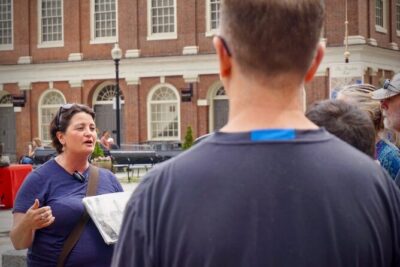
The largest difference from a standard group walk is control. Your guide works only with your party, so you can ask for more detail at the Old State House, move faster through a stop that does not interest you, or pause when someone in the group needs a break.
The route includes additional landmarks such as King’s Chapel and Burial Ground, Scollay Square and Government Center, Old City Hall, the Old State House, Quincy Market, the Rose Fitzgerald Kennedy Greenway, Haymarket, and other sites. Because the full list is long, the guide will need to manage time carefully. You should tell the guide at the beginning if your priorities are architecture, the Revolution, cemeteries, food, children’s stories, or unusual city details.
The private setting has proved useful for families. Manny kept four children aged 13 to 8 involved, while another guide, Neil, held the attention of a 12-year-old with engaging stories and even led a group to pastries afterward. Cindy has been praised for answering questions, correcting common historical misconceptions, and suggesting places to visit after the walk.
The one caution is guide style. Most of the named guides received strong praise for clear explanations, energy, and flexibility, but one group found its guide too quiet and not engaging enough for children. That means the private format does not guarantee a perfect personality match. If your party includes children, say so when booking and ask for a guide who is comfortable keeping younger listeners involved.
Walking demands, timing, and admission costs
This is a three-hour walking experience, not a casual stroll between two buildings. The itinerary includes several cemeteries, downtown sidewalks, the North End, and enough stops to require a moderate level of physical fitness. Wear comfortable shoes and expect to remain outside for much of the tour.
Public transportation is nearby, and the central meeting point is easy to reach. The mobile ticket is convenient, but confirmation is subject to availability and is sent within 48 hours of booking. Service animals are allowed.
The tour fee is not provided here, so I cannot judge it against a specific dollar amount. The value question is simple: a private guide costs more than a large group walk, but you are paying for a route built around your party, a guide you can hear clearly, and the ability to change the pace.
Admission to Paul Revere’s House and Old North Church is extra. Those costs may be modest because a special low rate is offered, but they still belong in your budget. If you only want an exterior overview, skip the interiors. If you want to understand how people lived and how the church operated, the extra entry can make the morning more satisfying.
The cancellation rule is strict. The experience is non-refundable and cannot be changed for personal reasons. Poor weather is treated differently: if the provider cancels, you can choose another date or receive a full refund. Check the forecast before booking, especially if your party includes older walkers or young children.
Who will get the most from this Boston walk?
I would choose this tour for a first visit to Boston when you want the main Freedom Trail sights without being placed in a large group. It also suits families, couples, and small groups with different interests. One person can ask about politics, another about architecture, and a child can request shorter explanations or more unusual stories.
It is a good fit for anyone who wants a guide to correct oversimplified versions of Boston’s past. The Old Corner Bookstore, Boston Stone, school site, and burial grounds give the route more range than a simple list of revolutionary landmarks.
I would hesitate if you dislike walking, want extensive interior visits, or prefer to explore at your own pace without a guide. Three hours goes quickly, and the guide must cover a great deal of ground. You may see many places from the outside, with only optional time inside Paul Revere’s House and Old North Church.
Should you book this private Freedom Trail tour?
Book it if you want a personal guide and flexible pace more than the lowest possible price. The route covers Boston Common, the State House, Granary Burying Ground, Faneuil Hall, the North End, Paul Revere’s House, Old North Church, and Copp’s Hill, while leaving room for lesser-known stops.
Before booking, tell the provider your group’s ages, walking needs, and top interests. Ask about the optional admissions if you want to enter both historic buildings. For families, request an engaging guide and make clear that children should be included in the conversation.
Skip it if your main goal is a long, slow visit inside each attraction. For a three-hour introduction to Boston’s old streets, revolutionary sites, and North End stories, though, this is a practical choice that ends exactly where a hungry sightseer wants to be.
FAQ
How long is the private walking tour?
The tour lasts approximately three hours.
Where does the tour begin?
The meeting point is 139 Tremont Street, Boston, Massachusetts 02111, at 10:00 a.m.
Where does the tour end?
The walk ends near 282 Hanover Street in Boston’s North End Italian district, close to restaurants and snack options.
Are admission fees included?
Admission to Paul Revere’s House and Old North Church is not included. Both are optional, and the provider offers a special low rate.
Is this a private activity?
Yes. Only your group participates, with a private tour guide.
What happens if bad weather cancels the tour?
If the experience is canceled because of poor weather, you can choose a different date or receive a full refund. Personal cancellations or changes are non-refundable.
Just added around Boston
- Day Trip from Boston: Explore Hammond Castle Museum★ 3.7 · 3 reviews
- Boston: WNDR Museum Entry Ticket★ 3.7 · 3 reviews
- The Boston Bash Scavenger Hunt★ 4.5 · 3 reviews
- Self-Guided Audio Tour of Boston North End★ 4.5 · 3 reviews
- Boston: Official Freedom Trail® Lantern Tour★ 4.7 · 3 reviews
- Boston: North End Walking Tour with Private Harbor Cruise★ 5.0 · 3 reviews
- Self Guided “The North End Pizza, Cannoli and Picnic” Solo Walking Tour★ 5.0 · 3 reviews
- Cambridge: Haunted Charles River Cruise★ 4.3 · 3 reviews
Freedom Trail Tours, compared.
Freedom Trail History Small Group Walking Tour
Read our review →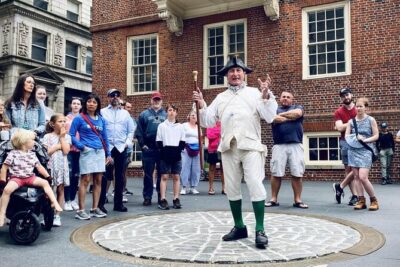
Boston Freedom Trail Walking Tour with Costumed Guide
Read our review →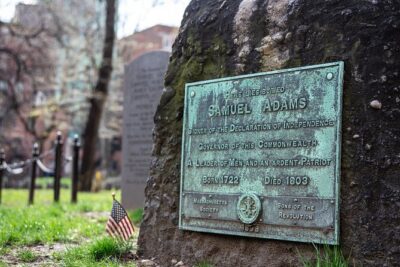
Boston Food & History: Pizza, North End & Freedom Trail
Read our review →
Boston’s Freedom Trail: A Revolutionary Walking Tour
Read our review →Freedom Trail History Small Group Walking Tour
Read our review →Boston’s Freedom Trail: A Revolutionary Walking Tour
Read our review →

Boston Freedom Trail History Pub Crawl Small-Group Tour
Read our review →Browse the lists this tour appears in