
Reviewed · FREEDOM TRAIL TOURS
Heart of the Freedom Trail – 60 Minute Private Walking Tour
Boston’s Revolution took shape in meeting halls, churches, marketplaces, and government chambers, and this private one-hour walk links four of those places in a compact route. You’ll hear how ordinary colonists, merchants, ministers, doctors, and political leaders helped push Boston toward independence.
I like two things right away: your group gets its own guide, and the price stays reasonable when shared among several people. I also like the human scale of the history, including Dr. Joseph Warren and the uncomfortable truth that liberty did not extend equally to African Americans and women.
The main limitation is time. Fifteen minutes at each stop gives you a sharp introduction, not a full museum visit or a leisurely stroll along the entire Freedom Trail. If you want long interior visits, this tour may feel rushed.
In This Review
- Key points to know before booking
- Why this short Boston walk works
- The Old State House and the balcony where power changed hands
- Faneuil Hall and the money behind the marketplace
- King’s Chapel and Boston’s religious divide
- Old South Meeting House and the argument over tea
- How much value do you get for $175?
- Who should book this one-hour experience?
- Booking details that matter
- Should you book the Heart of the Freedom Trail?
- FAQ
- How long is the Heart of the Freedom Trail tour?
- How many people can join the private tour?
- What sites does the tour visit?
- Where does the tour begin?
- Where does the tour end?
- Is transportation included?
- Are admission tickets included?
- Can I cancel for a full refund?
Key points to know before booking
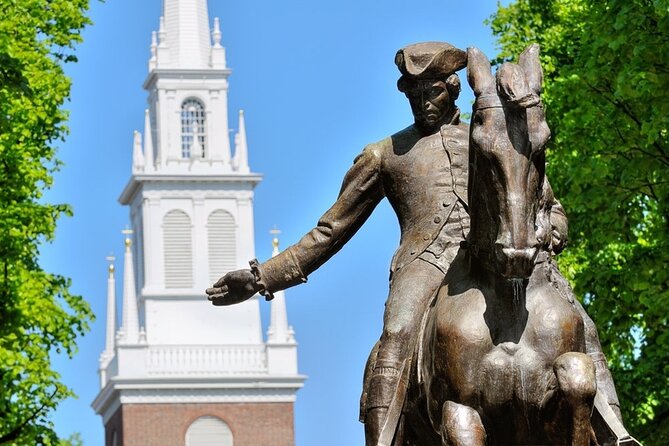
- Four major sites in 60 minutes: See the Old State House, Faneuil Hall Marketplace, King’s Chapel, and Old South Meeting House.
- Private format for up to 12 people: Your guide can focus on your group rather than a large public crowd.
- A strong opening history lesson: The tour begins at the Old State House, where royal proclamations gave way to the public reading of independence.
- Human stories beyond famous names: Hear about Peter Faneuil, Dr. Joseph Warren, and the people excluded from the era’s promises of liberty.
- Good value for a family or group: The $175 price is per group, not per person, and the listed admissions are free.
- A route with a useful finish: The walk ends near One Beacon Street, close to Boston Common and central downtown.
Why this short Boston walk works
The Freedom Trail can feel like a long chain of red-brick stops if you explore it without context. This tour solves that problem by concentrating on four locations tied to the political pressure that led to the American Revolution.
You begin at 1 Faneuil Hall Market Place and finish in the general area of One Beacon Street. The route is short enough to fit into a busy Boston day, yet it covers several different kinds of places: a government building, a market and meeting hall, a church, and a protest gathering place.
I like that mix. It shows that the Revolution was not made in one grand battlefield scene. It developed through speeches, commerce, religious tension, public meetings, and arguments over who had the right to make decisions.
The private setup is especially useful if you are visiting with children or several generations. One of the guides, Marcie, was praised for making history engaging and for working patiently with young children. Another guide, Kate, was praised for holding attention through stories rather than dry dates. Guide assignments can change, but those names give you a sense of the style to expect: personable, story-led, and accessible.
The tour is also a practical first look at Boston. You can use it to get your bearings in the historic center before deciding which sites deserve a longer return visit.
More Walking Tours in Boston
- Boston: Freedom Trail History Small Group Walking Tour
★ 5.0 · 6,450 reviews - Harvard University Campus Guided Walking Tour
★ 4.5 · 3,632 reviews - Boston Freedom Trail Walking Tour with Costumed Guide
★ 4.5 · 2,531 reviews
The Old State House and the balcony where power changed hands
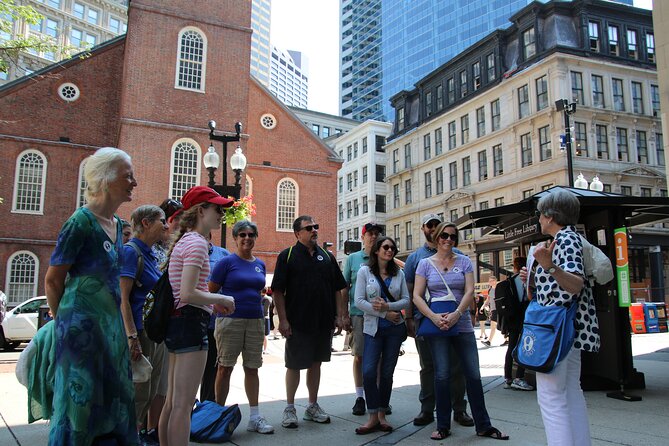
The Old State House is the natural place to begin a conversation about political change. Built in 1713, it is Boston’s oldest public building, and its height once gave it a commanding presence over the surrounding town.
Government business had taken place on this site since 1658. That long civic role matters because the building represents more than colonial architecture. It was a working seat of authority, first tied to royal government and later connected to the new American political order.
Your guide spends about 15 minutes here. The key story centers on the balcony. Royal governors once used it to proclaim the king’s orders. On July 18, 1776, the Declaration of Independence was read from that same balcony.
That contrast makes the stop memorable. One physical platform carried two very different messages: obedience to a distant monarch, then a public declaration of separation. I find that kind of detail far more useful than simply hearing that Boston was important to the Revolution.
The stop also gives your guide a chance to address the limits of colonial liberty. African Americans and women remained without a political voice, even as independence was presented as a promise of freedom. That distinction keeps the tour from turning into a simple parade of patriotic milestones.
A possible drawback is that 15 minutes goes quickly at a place with this much political meaning. If you want to study the building’s exhibits or architecture in detail, you will need to return on your own. The tour’s purpose here is to make the site intelligible, not to provide a full museum visit.
Faneuil Hall and the money behind the marketplace
The next stop is Faneuil Hall Marketplace, where the Revolution’s political story meets Boston’s commercial life. In 1742, Boston had about 14,000 residents, a safe harbor, active docks, and trade reaching Europe and the West Indies.
Peter Faneuil, a wealthy merchant, offered the town a central marketplace modeled on those in major European cities. The town did not accept the proposal immediately. Local merchants worried about how a new marketplace might affect their own businesses, and the offer passed by only a slim margin.
The building’s origin also carries a difficult fact that should not be softened. Faneuil’s wealth came from the transatlantic slave trade. That connection gives the site a more complete meaning. It was not simply a gift from a generous merchant. It was also a product of a colonial economy tied to human bondage.
Faneuil added a second floor at the last minute, creating the meeting space that helped make the building politically important. That upper room became a place where Bostonians could gather, argue, and respond to events affecting the colonies.
You spend about 15 minutes here. The value of the stop is not only the building itself, but the connection between trade and protest. Taxes, shipping, imported goods, and the interests of wealthy merchants all shaped the conflict with Britain.
This is also the liveliest part of the route in present-day terms, with the marketplace functioning as a busy downtown destination. That can make it less hushed than King’s Chapel or the Old State House, but it also helps you see that this has always been a place of public activity.
Because the starting point is here, arrive with enough time to locate 1 Faneuil Hall Market Place. The experience does not include private transportation, so plan to reach the meeting point on your own using Boston’s public transit or by walking from another central location.
King’s Chapel and Boston’s religious divide
King’s Chapel adds a different kind of tension to the walk. Established in 1686, it was Boston’s first Church of England congregation. Its purpose was closely tied to the newly appointed royal governor, who needed a place to worship.
Its location beside Boston’s oldest burying ground made the church a visible symbol of royal authority. For many colonists, that made it a reminder of the power they resented. The building’s religious role was therefore also political.
The story becomes more personal through Dr. Joseph Warren. By the beginning of the Revolution, King’s Chapel was where this Patriot leader would be eulogized. Warren had trained as a physician and treated both Patriots and Loyalists, an important detail in a period often presented as a clean split between two sides.
By age 34, Warren had become a politician, organizer, militia leader, and influential voice in Boston. His life shows how quickly the crisis pulled ordinary professional roles into political action. A doctor could become a public leader, and a church service could become part of the Revolution’s emotional story.
The stop lasts about 15 minutes, giving you enough time to understand the church’s role without turning the visit into a detailed architectural tour. If you value religious and social context, this may be the most revealing stop. It shows that the conflict was not only about taxes. It was also about authority, identity, and the presence of the British Crown in everyday life.
Keep your expectations practical. The tour description identifies the site and its history, but it does not promise extended interior access. The guide may focus on the exterior setting and the story connected to it, so anyone wanting a close look inside should set aside time for a separate visit.
More Freedom Trail walks in Boston:
- Boston Food & History: Pizza, North End & Freedom Trail
★ 5.0 · 1,772 reviews - Boston’s Freedom Trail: A Revolutionary Walking Tour
★ 4.9 · 1,748 reviews - Boston: Freedom Trail History Small Group Walking Tour
★ 4.9 · 1,590 reviews - Boston’s Freedom Trail: A Revolutionary Walking Tour
★ 5.0 · 1,343 reviews
Old South Meeting House and the argument over tea
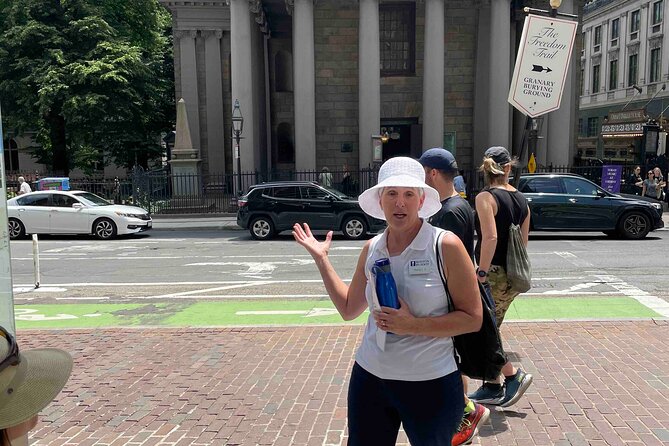
The final major stop is the Old South Meeting House, built in 1729. It was Boston’s largest meeting space, designed around the way Puritans worshiped and organized community life.
That size made the building useful for public gatherings as well as religious services. The most famous meeting took place on December 16, 1773, when colonists gathered to discuss the tea crisis.
The background was global and economic. The East India Company was one of the world’s largest businesses, but a weak European economy had pushed it toward failure. Parliament responded with the Tea Act of 1773, giving the company exclusive access to tea sales in the colonies.
That arrangement angered colonists for several reasons. It supported a major company, strengthened Parliament’s reach, and threatened colonial merchants. The meeting at Old South brought those concerns into one crowded public room.
Your guide has about 15 minutes to explain how a large religious meeting hall became a political pressure point. The stop works well because it connects an object people know, tea, to larger questions about corporate privilege, taxation, trade, and representation.
It also helps explain why the Boston Tea Party did not appear out of nowhere. Public debate had already taken place. People gathered, argued, and made decisions before the famous act of protest followed.
This is another location where a short visit has both an advantage and a cost. You get a clear story in a small block of time, which is ideal if you are building a first-day orientation. You do not get unlimited time to inspect the building or explore every part of its history.
How much value do you get for $175?
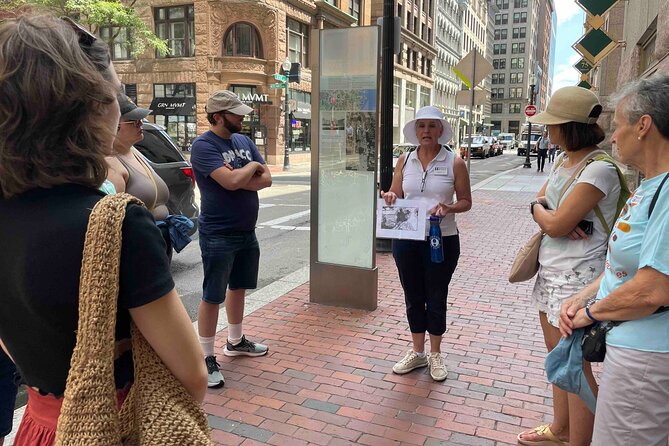
The listed price is $175 per group of up to 12 people. That works out to about $14.60 each if you fill the group, or $29.17 each for six people. For a couple, the cost is much higher per person, but you are paying for a private guide rather than joining a standard group.
That distinction matters. A private tour gives you the whole hour with one guide and your own companions. You can ask questions suited to your family or group, and children do not need to keep up with a large crowd. The format also removes the awkwardness of joining strangers for a short, tightly timed walk.
The value is strongest for families, small school groups, friends traveling together, or anyone who wants a focused introduction before exploring alone. If you have 8 to 12 people, the price is quite fair for a private history lesson in central Boston.
The value is weaker if you are traveling alone or as a couple and mainly want to follow the Freedom Trail at your own pace. The route includes no private transportation, and the four stops are free according to the tour details, so the main thing you are buying is the guide’s storytelling and organization.
That can still be worthwhile. Boston’s historic sites have layers of names, dates, and political arguments. A good guide helps you connect them before the details blur together.
Who should book this one-hour experience?
I would choose this tour if you want a compact introduction to Revolutionary Boston, especially on your first day in the city. It gives you a framework for understanding the Freedom Trail instead of asking you to memorize isolated facts.
It is a good fit for:
- Families with children who need a short activity
- Groups of friends who want a private experience
- History-minded visitors with only an hour
- People who prefer stories about real individuals and public debate
- Anyone staying near downtown Boston or using public transportation
The tour may be less satisfying if your main goal is a full-day Freedom Trail walk. You will not cover every major site, and 60 minutes leaves little room for long stops, museum time, or wandering.
It is also not the best choice if you dislike fixed pacing. Each location receives roughly 15 minutes, so the guide needs to keep the story moving.
Most people can participate, and service animals are allowed. The activity is near public transportation, but no specific route or transit instruction is provided, so you will need to plan your way to Faneuil Hall.
Booking details that matter
Confirmation is provided when you book. The tour is private, with only your group participating, and the maximum group size is 12 people.
The walk begins at 1 Faneuil Hall Market Place, Boston, Massachusetts 02109. It ends in the general area of One Beacon Street, Boston, Massachusetts 02108. That ending point puts you near the central historic district, making it easy to continue sightseeing after the hour.
The cancellation policy is simple but strict near departure. You can cancel at least 24 hours before the local start time for a full refund. Cancellations or changes made less than 24 hours before the start are not accepted for a refund.
Boston By Foot provides the guide. Names associated with this experience include Kate and Marcie, though the guide assigned to your booking may differ. The strongest qualities to look for are clear storytelling, patience with children, and an ability to explain the complicated parts of the period without flattening them.
Should you book the Heart of the Freedom Trail?
Book it if you want a private, story-led introduction to Boston’s Revolution and can accept a brisk pace. The four stops are well chosen: government at the Old State House, commerce at Faneuil Hall, religious authority at King’s Chapel, and protest at Old South Meeting House.
I especially like the attention to people who are often pushed to the edge of the story, including Peter Faneuil’s ties to slavery and the exclusion of African Americans and women from colonial political power. Those details make the hour more honest and useful.
Skip it if you want extensive interior access, a full Freedom Trail route, or plenty of time for photographs and independent wandering. For a group of several people, though, $175 buys a focused introduction that can make the rest of Boston’s historic center easier to understand.
FAQ
How long is the Heart of the Freedom Trail tour?
The tour lasts approximately one hour.
How many people can join the private tour?
The private group can include up to 12 people.
What sites does the tour visit?
The walk visits the Old State House, Faneuil Hall Marketplace, King’s Chapel, and the Old South Meeting House.
Where does the tour begin?
The meeting point is 1 Faneuil Hall Market Place, Boston, Massachusetts 02109.
Where does the tour end?
The tour ends in the general area of One Beacon Street, 1 Beacon Street, Boston, Massachusetts 02108.
Is transportation included?
No. Private transportation is not included. The experience is a walking tour and is near public transportation.
Are admission tickets included?
The listed stops have free admission tickets for this experience.
Can I cancel for a full refund?
Yes. You can cancel at least 24 hours before the experience start time for a full refund. Cancellations or changes made less than 24 hours before the start time are not refunded or accepted.
Just added around Boston
- Day Trip from Boston: Explore Hammond Castle Museum★ 3.7 · 3 reviews
- Boston: WNDR Museum Entry Ticket★ 3.7 · 3 reviews
- The Boston Bash Scavenger Hunt★ 4.5 · 3 reviews
- Self-Guided Audio Tour of Boston North End★ 4.5 · 3 reviews
- Boston: Official Freedom Trail® Lantern Tour★ 4.7 · 3 reviews
- Boston: North End Walking Tour with Private Harbor Cruise★ 5.0 · 3 reviews
- Self Guided “The North End Pizza, Cannoli and Picnic” Solo Walking Tour★ 5.0 · 3 reviews
- Cambridge: Haunted Charles River Cruise★ 4.3 · 3 reviews
Freedom Trail Tours, compared.
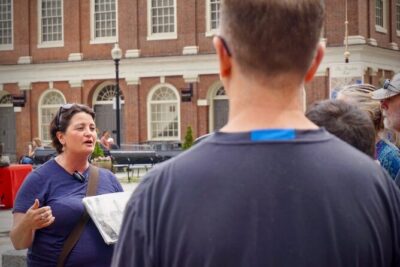
Freedom Trail History Small Group Walking Tour
Read our review →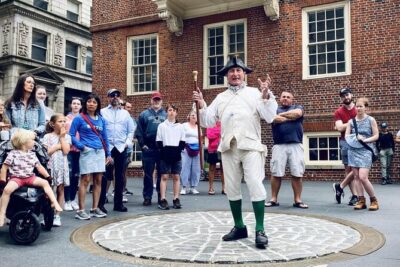
Boston Freedom Trail Walking Tour with Costumed Guide
Read our review →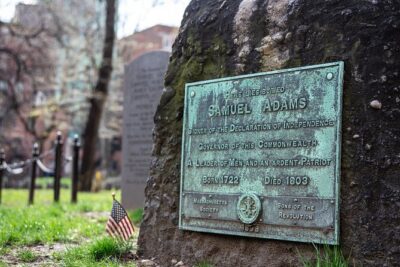
Boston Food & History: Pizza, North End & Freedom Trail
Read our review →
Boston’s Freedom Trail: A Revolutionary Walking Tour
Read our review →Freedom Trail History Small Group Walking Tour
Read our review →Boston’s Freedom Trail: A Revolutionary Walking Tour
Read our review →

Boston Freedom Trail History Pub Crawl Small-Group Tour
Read our review →Browse the lists this tour appears in