
Reviewed · FREEDOM TRAIL TOURS
Freedom Trail Walking Tour in Boston in French
Boston’s Freedom Trail works best when you understand the city around the bricks and plaques. This French-language walk connects Boston Common, the Old State House, Faneuil Hall, Paul Revere’s neighborhood, and Copp’s Hill into one clear story, with side notes on architecture, abolition, education, immigration, and modern Boston.
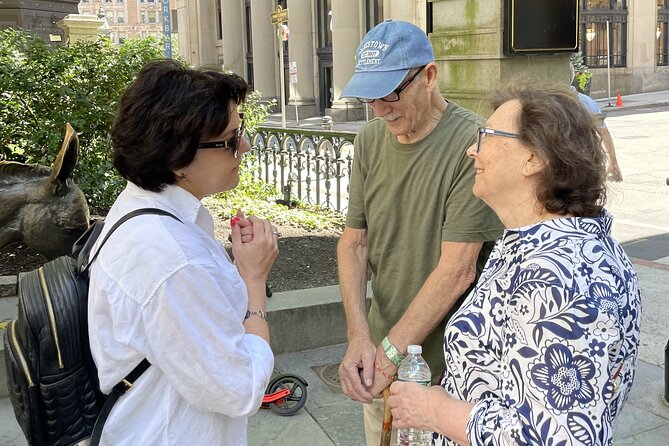
I like the small maximum of 12 people and the guide-led pace, which leaves room for questions. I also like that Maria brings a personal, animated style, mixing historical facts with unusual anecdotes and interactive discussion. The main drawback is simple: you walk for about two and a half hours, and museum admissions are not included.
In This Review
- Key points at a glance
- Why this French walk makes Boston easier to understand
- Boston Common and the city’s first public spaces
- Beacon Hill architecture and the French connection
- The revolutionary heart around Washington Street
- Faneuil Hall, Quincy Market, and old Boston commerce
- Union Oyster House and the small streets behind it
- Thirty minutes in Boston’s North End
- Old North Church and the view from Copp’s Hill
- What the $45 price delivers
- Practical details before you book
- Who will get the most from this walk
- Should you book the Freedom Trail Walking Tour in French?
- FAQ
- Is the tour conducted in French?
- How long does the walking tour last?
- Where does the tour begin?
- What time does the tour start?
- Where does the tour end?
- Are museum or church admissions included?
- How large is the group?
- Can I cancel for a full refund?
Key points at a glance
- French-language guiding with Maria: Expect history explained in French, with personal anecdotes, questions, and an engaging delivery.
- A 2.5-hour route through central Boston: Begin at Boston Common and finish at Copp’s Hill Terrace in the North End.
- The full revolutionary core: See the Old State House, Boston Massacre Site, Faneuil Hall, Paul Revere’s House, and Old North Church.
- More than colonial history: The tour also touches on abolition, American education, immigration, architecture, and life in present-day Boston.
- Small group, flexible pace: The maximum is 12 people, and the walk is described as adaptable to your wishes and speed.
- A useful finish in the North End: You end near the Old North Church, the Italian Quarter, and several Italian restaurants.
Why this French walk makes Boston easier to understand
Boston can feel confusing at first. The city’s old center is compact, but its story jumps from Puritan settlers to British rule, revolution, abolition, waves of immigration, and modern public art. A guide helps you connect those pieces instead of treating each plaque as a separate fact.
This tour begins at Boston Common and follows the central Freedom Trail toward the North End. You will see 16 iconic sites as part of the route, though the listed stops also include smaller historic streets, monuments, and viewpoints along the way.
The French language is the main reason to choose this experience over a standard English walk. If you understand history more easily in French, you can focus on the meaning of each place rather than translating in your head. Maria is presented as a passionate French-speaking guide, and her approach includes anecdotes, discussion, and a strong sense of Boston’s wider story.
The small-group limit matters, too. Twelve people is large enough to have some energy, but small enough that questions should be practical rather than lost in a crowd. The tour is also described as adaptable to your pace and interests. That does not mean every stop can become a long private lecture, but it should help the walk feel less rigid.
More Walking Tours in Boston
- Boston: Freedom Trail History Small Group Walking Tour
★ 5.0 · 6,450 reviews - Harvard University Campus Guided Walking Tour
★ 4.5 · 3,632 reviews - Boston Freedom Trail Walking Tour with Costumed Guide
★ 4.5 · 2,531 reviews
Boston Common and the city’s first public spaces
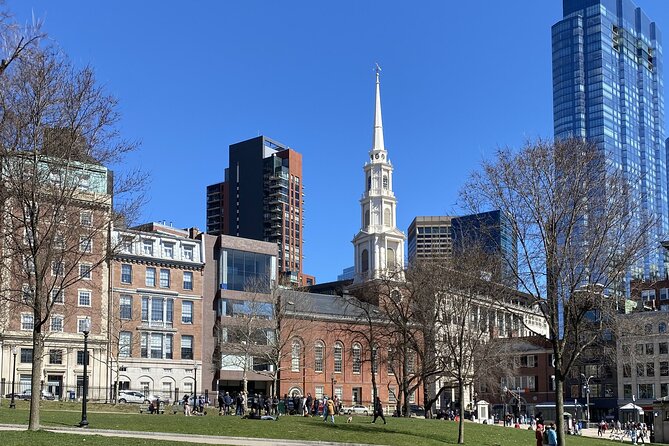
Meet at the Boston Common Visitor Center at 139 Tremont Street at 11 a.m. This is a sensible starting point because Boston Common is both easy to locate and the traditional beginning of the Freedom Trail.
The park dates to 1634 and is described as the oldest public park in the United States. Your 15-minute introduction covers unexpected facts about the Common, its role in major moments of American history, and the green network known as the Emerald Necklace. That ribbon of parks includes six parks, giving you a useful reminder that Boston’s public spaces were planned as part of the city’s identity.
The stop also includes Telegraph Hill, identified here as a historic hill linked with the city’s founding. You will see monuments connected with the Boston Massacre, the Great Elm Tree, and the Soldiers and Sailors Monument. The point is not simply to photograph a park. It is to see how Boston used open ground for public life, memory, and political action.
From the Common, the tour moves to the Robert Gould Shaw and 54th Regiment Memorial. Allow about five minutes here. The bronze relief by Augustus Saint-Gaudens honors the 54th Massachusetts Regiment, an important Black Civil War regiment. This is one of the most powerful works of public art on the route, and it broadens the story beyond the better-known revolutionary figures.
Beacon Hill architecture and the French connection
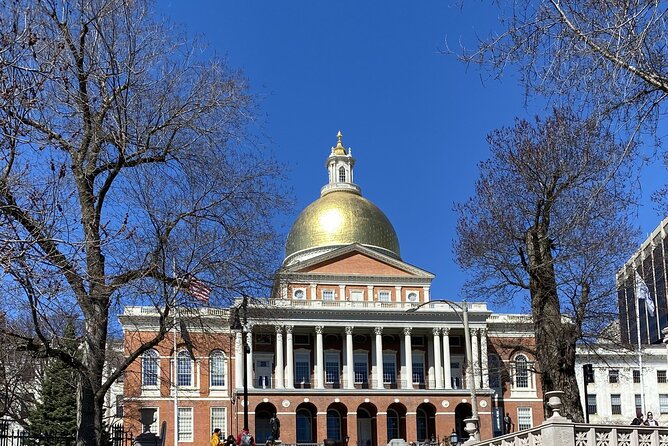
The Massachusetts State House comes next, with about 10 minutes devoted to its exterior and setting. Designed by American architect Charles Bulfinch at the end of the 18th century, the Federal-style building is known for its golden dome and its position above Beacon Hill.
The tour treats architecture as part of the story, not as decoration. The State House gives you a clear example of early American civic design, while the surrounding Beacon Hill area helps explain how Boston’s older neighborhoods developed around government and private homes.
At Old City Hall, you get a very different architectural lesson. Built in 1865, this building uses the French Second Empire style associated with Napoleon III and Paris’s Garnier Opera. Boston’s city council met here from 1865 to 1969. The five-minute stop is brief, but the comparison is useful if you enjoy noticing how American cities borrowed European design ideas.
The route then passes the Old Corner Bookstore, built in 1718. It is described as the oldest commercial building in downtown Boston and later housed a 19th-century publishing business responsible for several famous American classics. This stop shows how Boston’s political and literary life shared the same narrow streets.
The revolutionary heart around Washington Street
The Old South Meeting House dates from 1729 and began as a Puritan church. It served as a place of assembly for nearly three centuries. You will have about five minutes here, enough for an exterior explanation and historical context rather than a full visit.
The Old State House, built in 1713, is one of the route’s strongest visual moments. Modern buildings surround it, making the old structure appear almost cut off from its later surroundings. From its balcony, the Declaration of Independence was read publicly on July 18, 1776. That detail turns the building from an attractive old façade into a place tied directly to the birth of the United States.
The Boston Massacre Site is nearby. In 1770, British soldiers fired on a crowd and killed five Bostonians. The incident became known as the Boston Massacre and was used to fuel opposition to British rule. The stop lasts about five minutes, but the setting helps you see how close the major events were to one another.
This is where a guide’s storytelling can make a real difference. The buildings are relatively close together, but the political pressure behind them is not always obvious when you walk past alone. Maria’s style, as described for this tour, combines dates and events with anecdotes and questions, which should help you picture the arguments taking place in these spaces.
More Freedom Trail walks in Boston:
- Boston Food & History: Pizza, North End & Freedom Trail
★ 5.0 · 1,772 reviews - Boston’s Freedom Trail: A Revolutionary Walking Tour
★ 4.9 · 1,748 reviews - Boston: Freedom Trail History Small Group Walking Tour
★ 4.9 · 1,590 reviews - Boston’s Freedom Trail: A Revolutionary Walking Tour
★ 5.0 · 1,343 reviews
Faneuil Hall, Quincy Market, and old Boston commerce
Faneuil Hall follows at about the halfway point. Built in 1741, it is known as the Cradle of Liberty and has a golden grasshopper weather vane. The grasshopper became one of Boston’s earliest and best-known symbols.
The name can sound grand, but the useful thing to notice is the building’s practical role as a meeting place. Boston’s public arguments happened in rooms like this, close to markets, wharves, shops, and homes. That mix of commerce and politics is a recurring feature of the Freedom Trail.
Quincy Market, built in 1824, now functions as a food court with stalls and shops. You will spend about 10 minutes here. The market is an architectural highlight, but it is also one of the livelier parts of the walk, so you may need to share your attention between the guide and the food counters around you.
If you want to eat at Quincy Market, plan to return after the tour. Ten minutes is not enough for a relaxed meal, and the walk continues through several more historic sites. The food court is convenient, but the route’s final destination in the North End offers a better chance to turn the history outing into a full lunch.
Union Oyster House and the small streets behind it
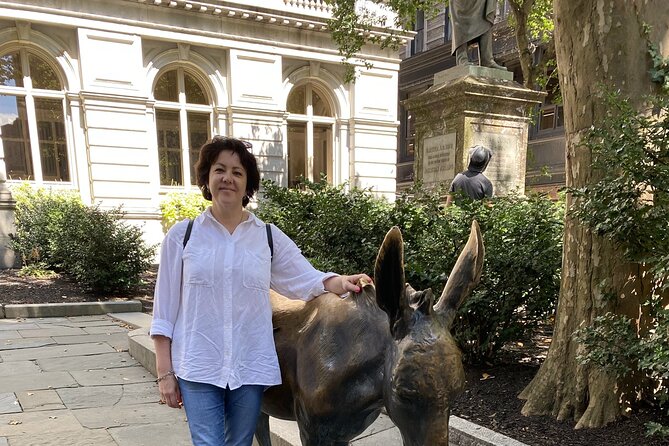
The Union Oyster House is identified as the oldest restaurant in the United States, dating to 1826 in a building from 1704. The future king of France, Louis-Philippe, lived in a modest second-floor apartment here.
You will stop for about five minutes, so this is an exterior history lesson rather than a planned restaurant visit. That distinction matters if you want to dine inside. A meal is not included, and the tour does not promise a reserved table.
Behind the Bostonian hotel, the route reaches several old pedestrian streets, including the Blackstone Block, which is on the National Register of Historic Places. This smaller stretch may be easy to miss if you only follow the painted trail. It gives the walk a more intimate feel, with older lanes and traces of the commercial city that grew around the formal landmarks.
Thirty minutes in Boston’s North End
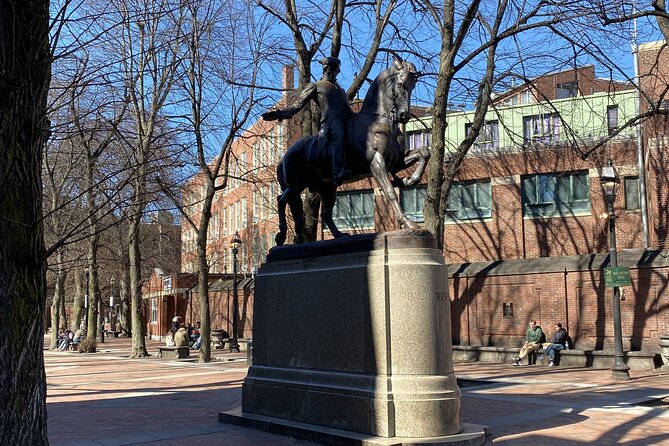
The longest section is the 30-minute visit to the North End. This is one of the tour’s best choices because the neighborhood ties together colonial Boston, the revolutionary era, immigration, food, and present-day daily life.
The North End is one of Boston’s oldest neighborhoods. It is also known for its Italian identity, which makes it a useful place to discuss immigration rather than treating Boston as a city frozen in the 18th century. You will see how layers of history occupy the same streets.
The Paul Revere House is a major stop. Built in 1676, it is one of the last remaining structures from Boston’s colonial period. Revere lived there from the 1780s into the 1800s. The tour does not include entry, so you will view the site from outside unless you return later and purchase admission separately.
The nearby Paul Revere Statue honors his famous Midnight Ride of 1775. The surrounding pedestrian space gives the guide room to explain the event and Revere’s place in the revolutionary story. This is a good example of why the walk is more useful than a quick photograph. Revere is often reduced to one ride, but the neighborhood gives you a broader setting for understanding him.
Old North Church and the view from Copp’s Hill
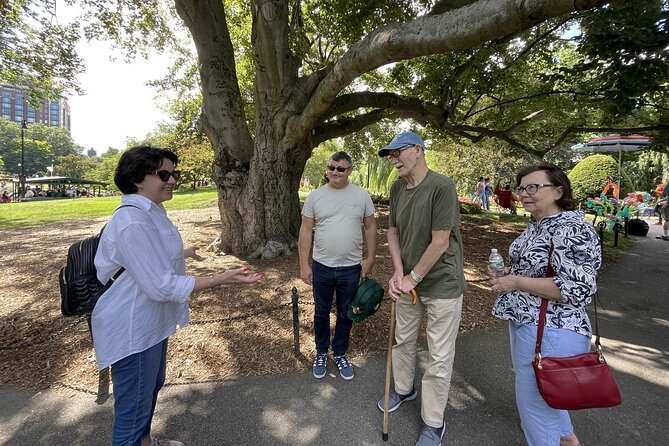
The Old North Church and Historic Site is the next major stop. The first church in the North End was built on this site in 1650, and during the colonial period it was described as the most influential church in the Northeast and a stronghold of Puritan belief.
The planned stop is about five minutes. Again, this is not a church interior visit. If entering the site is important to you, set aside additional time after the walk and check admission separately.
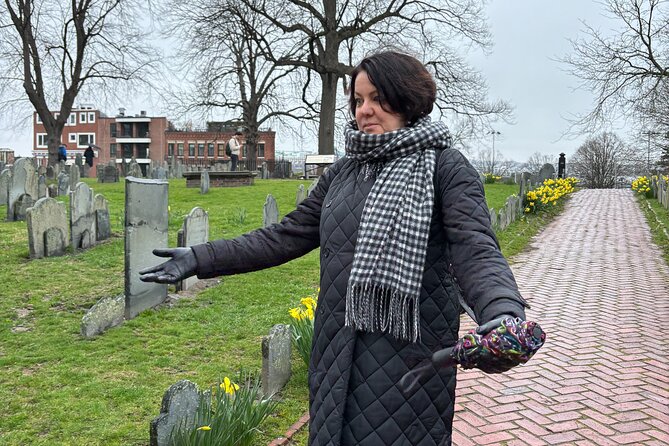
The final stop is Copp’s Hill Burying Ground, reached at Copp’s Hill Terrace. The hill was established in 1632 and is the highest point in Boston’s North End. The cemetery dates to 1659, giving you one last look at the city through its burial grounds and early settlement patterns.
The terrace provides a view toward the Charles River, the Bunker Hill Obelisk, and the USS Constitution on the opposite bank. This is a fitting end because the route shifts from close streets and historic façades to a wider view of Boston. The tour finishes here, only steps from the Old North Church and North End restaurants.
What the $45 price delivers
At $45 per person, the value depends mainly on how much you want from a guide. You are paying for about two and a half hours of local interpretation, not transportation, food, or museum entry.
The arithmetic is reasonable if you want one organized introduction to downtown Boston. The route covers the major Freedom Trail sites, adds architecture and public art, and includes subjects such as abolition, American education, immigration, and contemporary life. It also begins and ends in useful locations, so you can continue exploring on foot.
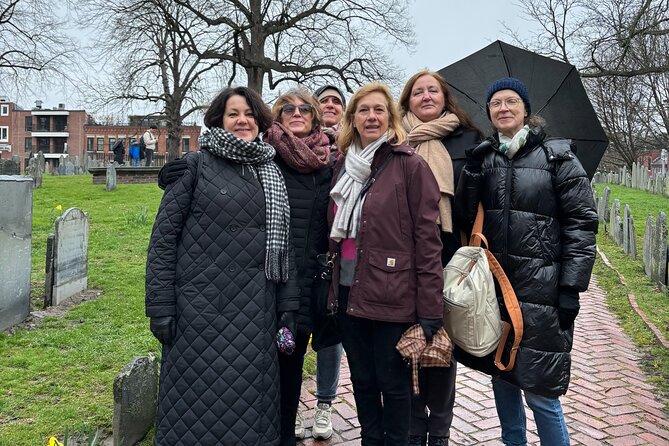
The price is less attractive if you already know Boston well or prefer reading plaques at your own speed. You should also budget for any interior visits and lunch in the North End. Since the tour is outdoors, weather can affect comfort. One account specifically describes enjoying the walk despite chilly conditions, so bring a layer rather than assuming the day will feel warm.
Practical details before you book
This is a walking tour, with no transportation provided. Wear comfortable shoes and expect to remain outside for most of the 2.5 hours. The start time is 11 a.m., and the end point is Copp’s Hill Terrace in Boston’s Italian Quarter.
A mobile ticket is accepted, and confirmation is provided at booking. The meeting point is the Boston Common Visitors Center, 139 Tremont Street. Public transportation is nearby, and service animals are allowed. The activity states that most people can participate, but no detailed information is provided about step-free access or route conditions, so contact the provider if you need specific accessibility guidance.
The group maximum is 12 people. The walk is offered by Gilded Age Tour, which provides French-language visits in Boston and the surrounding area. Maria is the guide name associated with the experience, and the available descriptions emphasize her friendly manner, strong command of Boston’s past, clear speaking style, and ability to keep the discussion lively for roughly three hours when the group’s interest calls for it.
You can cancel for a full refund up to 24 hours before the local start time. Cancellations or changes made inside that window are not refunded or accepted.
Who will get the most from this walk
I would choose this tour if you want Boston’s main sights explained in French and you prefer a human story to a self-guided route. It suits a first visit, a couple or family that wants a shared introduction, and anyone interested in seeing the Freedom Trail alongside subjects such as abolition and immigration.
It is also a good fit if you like questions and anecdotes. Maria’s approach appears especially useful for people who want more than a list of dates. The small group gives you a better chance to ask about architecture, public art, local customs, or the neighborhoods you pass through.
I would not book it expecting a museum tour, a food tour, or a leisurely restaurant stop. The schedule is full, and the route covers many places in a limited time. If you want to enter the Old State House, Old South Meeting House, Paul Revere House, or Old North Church, plan a separate visit.
Should you book the Freedom Trail Walking Tour in French?
Book it if French is your preferred language and you want a well-paced introduction to Boston’s central sights, with Maria’s anecdotes adding color to the familiar revolutionary story. The route is broad, the group is small, and the North End finish leaves you in one of the city’s most useful areas for lunch and further exploring.
Skip it if you want private interior access, transportation, or a slow food-focused outing. For $45, the strongest value is the guide’s interpretation and the way the stops fit together. If that is what you need, this is a practical first look at Boston.
FAQ
Is the tour conducted in French?
Yes. The experience is led by an experienced French-speaking guide, with Maria identified as the guide associated with the tour.
How long does the walking tour last?
The tour lasts approximately 2 hours and 30 minutes. Some available descriptions refer to a visit lasting close to three hours, so allow a little flexibility in your schedule.
Where does the tour begin?
The meeting point is the Boston Common Visitors Center at 139 Tremont Street, Boston, Massachusetts 02111.
What time does the tour start?
The scheduled start time is 11 a.m.
Where does the tour end?
The tour ends at Copp’s Hill Terrace in the North End, near the Old North Church and Italian restaurants.
Are museum or church admissions included?
No. Museum visits are not planned, and interior admission costs are not included.
How large is the group?
The activity has a maximum of 12 participants.
Can I cancel for a full refund?
Yes. You can cancel at least 24 hours before the experience start time for a full refund. Cancellations or changes made less than 24 hours before the start time are not refunded or accepted.
Just added around Boston
- Day Trip from Boston: Explore Hammond Castle Museum★ 3.7 · 3 reviews
- Boston: WNDR Museum Entry Ticket★ 3.7 · 3 reviews
- The Boston Bash Scavenger Hunt★ 4.5 · 3 reviews
- Self-Guided Audio Tour of Boston North End★ 4.5 · 3 reviews
- Boston: Official Freedom Trail® Lantern Tour★ 4.7 · 3 reviews
- Boston: North End Walking Tour with Private Harbor Cruise★ 5.0 · 3 reviews
- Self Guided “The North End Pizza, Cannoli and Picnic” Solo Walking Tour★ 5.0 · 3 reviews
- Self-Guided Boston Christmas Tour★ 5.0 · 3 reviews
Freedom Trail Tours, compared.
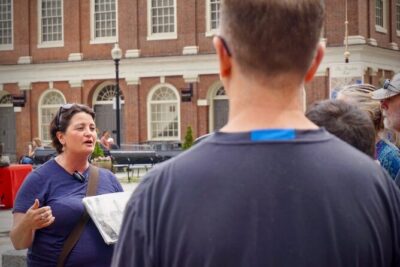
Freedom Trail History Small Group Walking Tour
Read our review →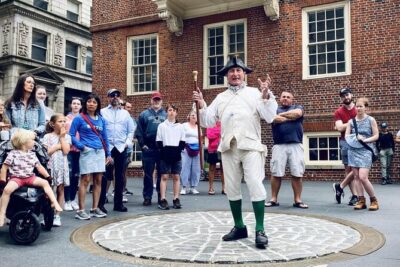
Boston Freedom Trail Walking Tour with Costumed Guide
Read our review →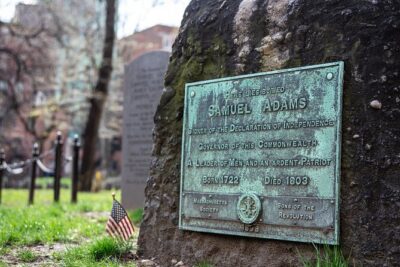
Boston Food & History: Pizza, North End & Freedom Trail
Read our review →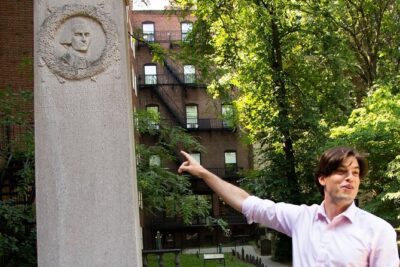
Boston’s Freedom Trail: A Revolutionary Walking Tour
Read our review →Freedom Trail History Small Group Walking Tour
Read our review →Boston’s Freedom Trail: A Revolutionary Walking Tour
Read our review →

Boston Freedom Trail History Pub Crawl Small-Group Tour
Read our review →Browse the lists this tour appears in