
Reviewed · FREEDOM TRAIL TOURS
Boston Walking Tour of The Freedom Trail, Small Group
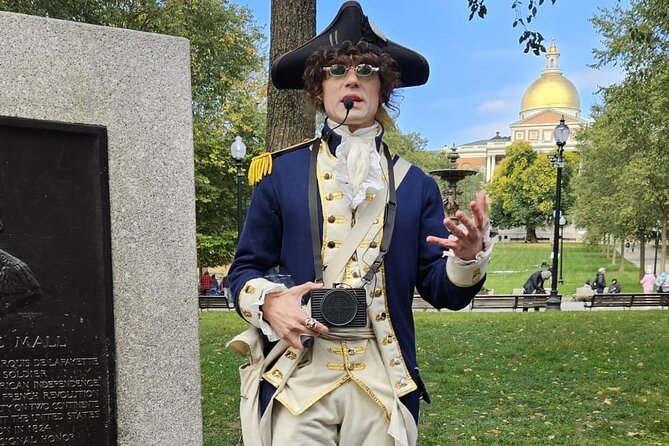
Boston’s Freedom Trail is easiest to understand on foot, where the route links parks, churches, graveyards, meeting houses, and government buildings in a compact downtown walk. This tour brings those pieces together with Captain Pickles, a lively guide known for storytelling, humor, and unusual details about Boston’s role in the American Revolution. I like the slow walking pace, which gives you time to look around, and the microphone system, a real help when the city gets noisy.
I also like the social feel of a small-group outing and the chance to finish at Faneuil Hall, close to food, bathrooms, souvenirs, and a free museum. The main caution is weather: this is an outdoor tour, and cold or wind can make 75 minutes feel longer. One rating also found the talk somewhat hard to follow, while another noted that Captain Pickles can speak quickly when his enthusiasm takes over.
In This Review
- Key points to know before you book
- Boston Common gives the story its proper beginning
- The State House and Park Street Church set the political tone
- Granary Burying Ground puts famous names in human scale
- Benjamin Franklin’s statue marks a vanished school
- Old South Meeting House recalls the Tea Party debate
- The Boston Massacre Site needs careful explanation
- The Old State House connects empire and independence
- Faneuil Hall is a practical and satisfying finish
- What the guide’s style means for your experience
- Is $32 good value for 75 minutes?
- Practical advice for making the walk comfortable
- Who should book this Freedom Trail walk?
- Should you book it?
- FAQ
- Where does the Boston Freedom Trail tour begin?
- What time does the tour start?
- Where does the tour end?
- How long does the experience last?
- What language is the tour offered in?
- How many people can join the tour?
- Are admission tickets included at the stops?
- Can I cancel for a full refund?
Key points to know before you book
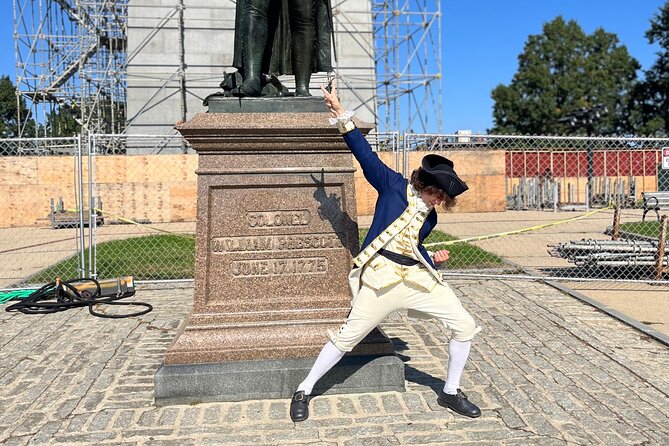
- A compact Revolutionary-era route: Walk from Boston Common to Faneuil Hall and see nine major sites in about 1 hour and 15 minutes.
- Captain Pickles leads with energy: His style combines facts, humor, personal insight, and lesser-known stories.
- The route is gentle: The tour moves at a slow pace, with stops ranging from five to 15 minutes.
- You stay outside: Admission is free at the listed stops, but the experience focuses on exterior sights and outdoor storytelling.
- A useful downtown finish: Faneuil Hall Marketplace provides food, bathrooms, souvenirs, and a free museum after the walk.
- Weather matters: You can cancel for a full refund up to 24 hours ahead, but no refund applies within 24 hours.
Boston Common gives the story its proper beginning
The tour meets at the Lafayette Mall Monument on Tremont Street, beside Boston Common, at 11:30 a.m. Give yourself time to find the exact monument. Boston Common is the oldest public park in the United States, and it makes a fitting opening chapter for a city where public space, protest, politics, and daily life have long overlapped.
You spend about 10 minutes here. That may sound brief, but a guide can use the park to set the scene before the route narrows into downtown streets. I like beginning here because you are not dropped straight into a cluster of old buildings without context. You get a sense of Boston as a historic city first, then follow the thread into the events that shaped the nation.
The starting point is near public transportation, which helps if you are staying outside downtown. The tour does not include a private vehicle, so plan to arrive on foot, by transit, or with enough time to deal with parking. One useful practical tip is to allow extra time for parking if you are driving.
More Walking Tours in Boston
- Boston: Freedom Trail History Small Group Walking Tour
★ 5.0 · 6,450 reviews - Harvard University Campus Guided Walking Tour
★ 4.5 · 3,632 reviews - Boston Freedom Trail Walking Tour with Costumed Guide
★ 4.5 · 2,531 reviews
The State House and Park Street Church set the political tone
From Boston Common, the group moves to the Massachusetts State House for roughly five minutes. The building occupies the site where John Hancock once lived and now serves as the Commonwealth’s capitol and seat of government.
This short stop works best as a visual lesson in continuity. The ground beneath you connects the revolutionary period with modern Massachusetts politics. You will not spend long here, so treat it as a narrated exterior visit rather than a tour of the building’s interior.
Next comes Park Street Church, founded in 1809. The church remains active and belongs to the evangelical Congregational tradition. Its five-minute stop adds a religious and civic layer to the walk. Boston’s old center was not divided into neat categories of politics, worship, business, and protest. Those forces often met within a few blocks of one another, and this route lets you see that physical closeness.
The guide uses a microphone system, an important feature in this part of downtown. Groups can spread out near sidewalks and busy streets, and a strong voice alone is not always enough. You should still stay close enough to see the guide and hear the story clearly.
Granary Burying Ground puts famous names in human scale
The longest stop is Granary Burying Ground, at about 15 minutes. Founded in 1630, it is the oldest graveyard in Boston and one of the most concentrated stops on this route.
The ground holds the final resting places of James Otis, Paul Revere, Samuel Adams, and others tied to the city’s early political life. A quick pass can turn these people into names on a school worksheet. A guide can make the stop more useful by connecting the names to the arguments, risks, and rivalries of their time.
I would give this stop your full attention. Look closely at the markers, listen for the lesser-known details, and expect the guide to add context beyond the best-known patriotic story. Several comments describe Captain Pickles as especially strong at bringing history to life and sharing facts not usually covered in school.
The drawback is that graveyards require a slower, more respectful pace, and the group may gather tightly around the guide. If you prefer to wander alone and read every marker, 15 minutes will not be enough. If you want an organized introduction to the site, the timing is sensible.
Benjamin Franklin’s statue marks a vanished school
The next stop is the statue of Benjamin Franklin, reached at the site of Boston Latin School and now near Old City Hall. You spend about seven minutes here.
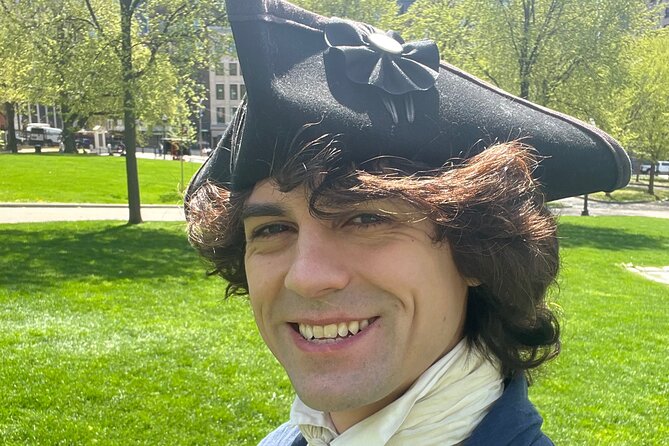
The important point is the contrast between what survives and what has disappeared. The statue helps mark the former school site, while the surrounding streets show how completely old Boston has been built over, rebuilt, and repurposed. This is a good place for a photo, and the guide is happy to pose for pictures as you explore.
The stop also gives Captain Pickles room to connect Franklin with Boston’s larger story. The route is not only about buildings that still look old. It is also about places remembered through statues, markers, and street plans.
More Freedom Trail walks in Boston:
- Boston Food & History: Pizza, North End & Freedom Trail
★ 5.0 · 1,772 reviews - Boston’s Freedom Trail: A Revolutionary Walking Tour
★ 4.9 · 1,748 reviews - Boston: Freedom Trail History Small Group Walking Tour
★ 4.9 · 1,590 reviews - Boston’s Freedom Trail: A Revolutionary Walking Tour
★ 5.0 · 1,343 reviews
Old South Meeting House recalls the Tea Party debate
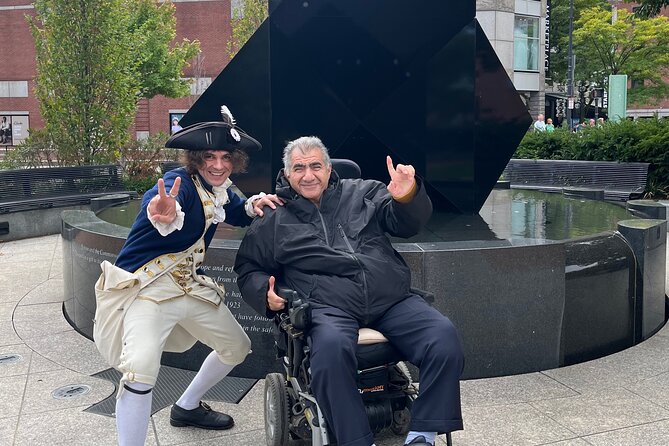
Old South Meeting House receives about seven minutes. Built in 1729, it became famous as the organizing point for the Boston Tea Party on December 16, 1773.
This is one of the most useful stops for understanding that the Tea Party did not appear from nowhere. Before the tea went into Boston Harbor, people gathered, argued, organized, and tried to decide what should happen. The meeting house represents the public debate behind the dramatic act.
The building also rewards a careful look at its role as a meeting place. You are seeing the setting for collective action, not simply a backdrop for a familiar event. The tour keeps the stop short, so the guide’s explanation matters more than an extended visit inside.
A separate note connected with this part of the route refers to a building built in 1718 as a residence and apothecary shop, which later became a bookstore in 1828. Since the walking sequence is tightly timed, listen for how the guide places that detail within the surrounding streets. It is a small reminder that Boston’s historic buildings often changed purpose many times.
The Boston Massacre Site needs careful explanation

The Boston Massacre Site sits outside the Old State House, and the tour spends about five minutes here. The physical marker is modest. The event it represents is not.
This is a stop where wording and viewpoint matter. The name itself reflects the political power of the incident, and the site helps show how a street confrontation could become fuel for colonial resistance. You will get more from the stop if you listen for how the guide explains the competing interpretations rather than treating the event as a simple slogan.
The five-minute window keeps the tour moving, but it can also make the explanation feel compressed. Captain Pickles is praised for presenting a different perspective and for explaining details that standard classroom accounts can miss. At the same time, one assessment found the presentation disjointed, so you may need to ask a question if a point moves too quickly.
The Old State House connects empire and independence
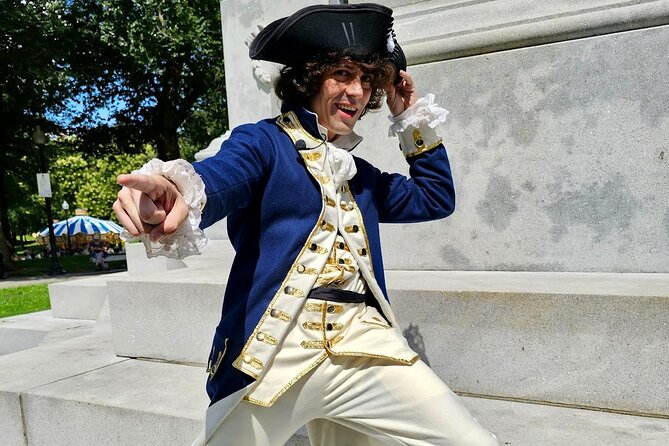
The Old State House, built in 1713, is one of the route’s most striking historic buildings. Also known as the Old Provincial State House, it once served as a center of colonial government.
Its location beside the Boston Massacre Site is the key. In only a few steps, you move from a public confrontation to the building associated with authority. That physical arrangement helps explain why this area became such a charged stage before independence.
The tour spends about five minutes here. You should expect an exterior-focused stop, not a full museum visit. The value comes from seeing the building in its setting and hearing how the guide links it to the arguments unfolding outside its walls.
This is also where the microphone earns its keep. Downtown Boston can be loud, and groups often gather around narrow historic sites. Clear audio helps you follow the story without pressing into the street or losing your place.
Faneuil Hall is a practical and satisfying finish
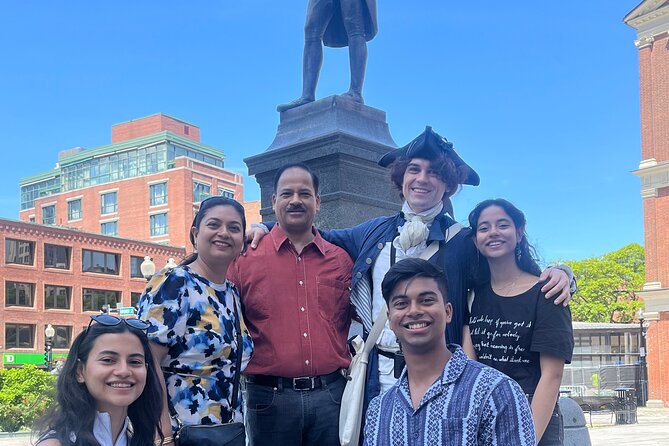
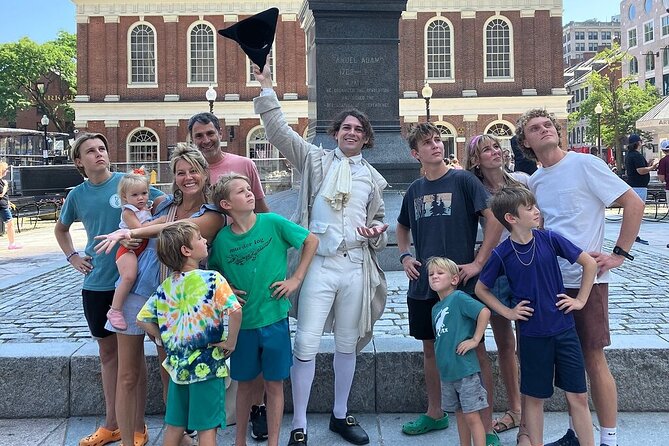
The walk ends at Faneuil Hall Marketplace, by the Samuel Adams statue, after about 10 minutes at the final stop. This is a smart place to conclude because you are not left in an isolated corner of the city with no easy next step.
You can find local food, bathrooms, souvenirs, and a free museum at or near the marketplace. That makes the tour easy to pair with lunch or further sightseeing. If your group includes children, the finish also gives everyone a chance to pause, eat, and warm up after the outdoor walk.
The Samuel Adams statue brings the route back to one of the political figures introduced earlier at Granary Burying Ground. The sequence feels tidy: public park, colonial government, churches, graves, protest, confrontation, and marketplace. You get a physical map of early Boston, not just a string of disconnected stops.
What the guide’s style means for your experience
Captain Pickles, also referred to as David in one comment, is the main reason to choose this tour over simply following the red line on your own. His approach is lively, animated, and full of facts. He uses humor and personal insights, and he appears comfortable adjusting to families, children, couples, and solo participants.
Parents may find the style particularly useful. A family group with six children described leaving more interested in its own history, and another family found that children aged 12 and 14 stayed engaged through the tour. That does not guarantee every child will love it, but the storytelling approach is better suited to young attention spans than a dry lecture.
There is a trade-off. Captain Pickles has so much to share that he may speak quickly when excited. You should stay near the front of the group and ask him to repeat a point if needed. The microphone helps with volume, but it cannot slow down a fast delivery.
The tour can hold up to 40 people. That is still limited compared with a large coach outing, but it may not feel intimate at the maximum size. The small-group format helps with socializing and questions, though the experience depends partly on how many people actually book that date.
Is $32 good value for 75 minutes?
At $32 per person, this is a reasonable price for a guided introduction to central Boston. You are paying for a live guide, a planned route, historical interpretation, and a microphone system. The listed stops do not charge admission, so the price is not buying entry tickets.
That distinction matters. If you want to go inside several historic buildings, this is not the complete experience. You may need separate admission and more time for sites such as the Old South Meeting House or the Old State House, depending on what you want to see after the walk.
For a first visit, I think the value is strongest when you want orientation and stories. In 75 minutes, you cover a useful stretch from Boston Common to Faneuil Hall without committing half a day. You can then return to the places that caught your interest.
The tour is booked an average of 10 days ahead, so do not assume you can always leave it until the last morning. The high 4.9 rating from 53 reviews and 98 percent recommendation figure suggest strong satisfaction, but the one less favorable assessment is worth remembering. A polished guide can still move quickly or organize a talk in a way that does not suit everyone.
Practical advice for making the walk comfortable
Wear comfortable clothing and shoes suited to an urban walk. The pace is described as easy and slow, but you will still be outside for the full experience.
Check the forecast before you go. Cold, wind, and poor weather have affected this tour in the past, and the activity requires good weather. Several enthusiastic comments came from very cold days, yet those conditions were still noticeable, especially for children. Layers, gloves, and weather-ready clothing can make the difference.
Arrive early at the Lafayette Mall Monument. The start is specific, and a central park can have more than one landmark that sounds like the right place. If you are driving, allow time for parking. If you use public transportation, the meeting area is near transit.
The tour is offered in English and uses a mobile ticket. Service animals are allowed, and most people can participate. Since the route is outdoors and moves through city streets, anyone who needs special assistance should confirm details before booking rather than relying only on the general participation note.
Free cancellation applies when you cancel at least 24 hours before the 11:30 a.m. start. Inside that window, the payment is not refunded, and changes are not accepted. If bad weather cancels the activity, you are offered another date or a full refund.
Who should book this Freedom Trail walk?
I would choose this tour if you want Boston’s major Revolutionary-era landmarks explained by a person who enjoys the subject. It suits first-time visitors, families, couples, solo visitors, and anyone who learns better from stories than from plaques.
It is also a good fit if you want a short activity before lunch or an afternoon at Faneuil Hall. The route ends in a useful part of downtown, so you can keep exploring without arranging another ride.
You may prefer a different format if you want extensive interior visits, a very quiet academic presentation, or lots of time at each site. The tour covers many places quickly, and the guide’s enthusiasm may feel fast for some people. For a self-guided walk, you gain freedom but lose the connections between the sites.
Should you book it?
Book this walk if you want a lively, efficient introduction to Boston’s early American story. Captain Pickles is praised for humor, passion, unusual facts, and the ability to hold children’s attention, which gives this short route more personality than a simple landmark checklist.
I would book it early, dress for the weather, arrive ahead of time, and stay close to the guide. At $32, it offers solid value for a guided 75-minute orientation, especially if you plan to explore the Old State House, Old South Meeting House, or nearby museums on your own afterward.
Skip it if your priority is interior access or a slow, highly structured lecture. Otherwise, this is a practical way to put Boston’s most important Freedom Trail sites in the right order and understand why the streets between them mattered.
FAQ
Where does the Boston Freedom Trail tour begin?
The tour begins at the Lafayette Mall Monument in Boston Common, on Tremont Street, Boston, Massachusetts 02110.
What time does the tour start?
The scheduled start time is 11:30 a.m.
Where does the tour end?
The walk ends at the Samuel Adams statue in Faneuil Hall Marketplace, Boston, Massachusetts 02109.
How long does the experience last?
The stated duration is approximately 1 hour and 15 minutes. Some comments describe tours lasting about 1.5 hours, so allow a little extra time.
What language is the tour offered in?
The tour is offered in English.
How many people can join the tour?
The maximum group size is 40 people.
Are admission tickets included at the stops?
The listed stops have free admission for this walking experience. The tour focuses on the outdoor route and does not state that interior entry tickets are included.
Can I cancel for a full refund?
Yes. Cancel at least 24 hours before the local start time for a full refund. Cancellations or changes made less than 24 hours ahead are not refunded or accepted. If poor weather cancels the tour, you can choose another date or receive a full refund.
Just added around Boston
- Day Trip from Boston: Explore Hammond Castle Museum★ 3.7 · 3 reviews
- Boston: WNDR Museum Entry Ticket★ 3.7 · 3 reviews
- The Boston Bash Scavenger Hunt★ 4.5 · 3 reviews
- Self-Guided Audio Tour of Boston North End★ 4.5 · 3 reviews
- Boston: Official Freedom Trail® Lantern Tour★ 4.7 · 3 reviews
- Boston: North End Walking Tour with Private Harbor Cruise★ 5.0 · 3 reviews
- Self Guided “The North End Pizza, Cannoli and Picnic” Solo Walking Tour★ 5.0 · 3 reviews
- Cambridge: Haunted Charles River Cruise★ 4.3 · 3 reviews
Freedom Trail Tours, compared.
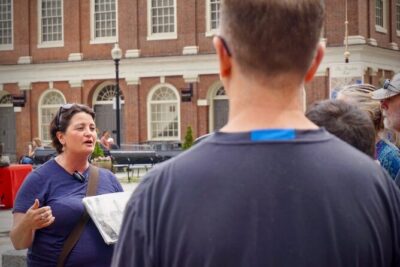
Freedom Trail History Small Group Walking Tour
Read our review →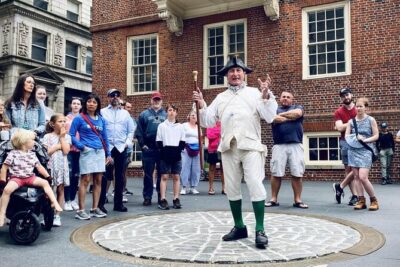
Boston Freedom Trail Walking Tour with Costumed Guide
Read our review →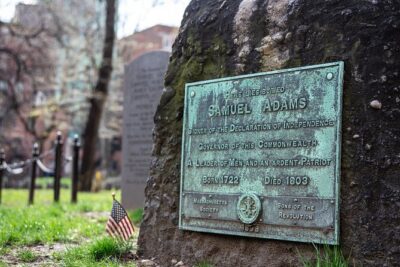
Boston Food & History: Pizza, North End & Freedom Trail
Read our review →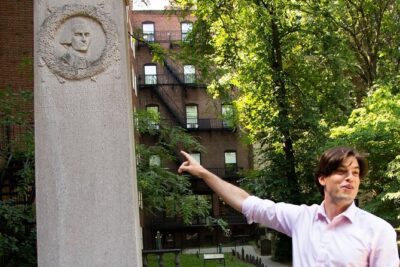
Boston’s Freedom Trail: A Revolutionary Walking Tour
Read our review →Freedom Trail History Small Group Walking Tour
Read our review →Boston’s Freedom Trail: A Revolutionary Walking Tour
Read our review →

Boston Freedom Trail History Pub Crawl Small-Group Tour
Read our review →Browse the lists this tour appears in