
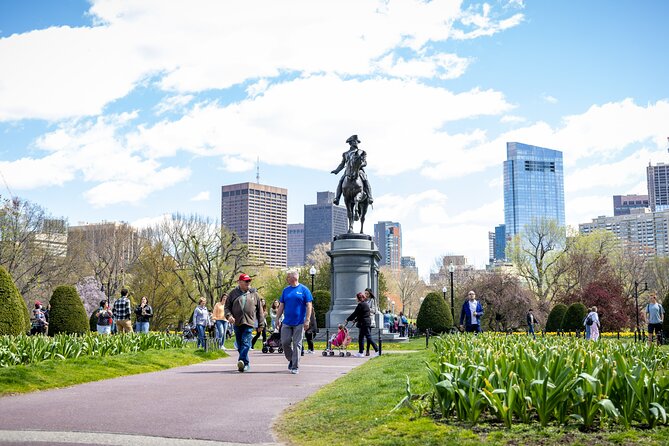
Reviewed · HISTORIC TOURS IN BOSTON
Boston History Tour: Scenic Walk Through Time & Landmarks
Boston’s past comes at you quickly on this 2-hour walking tour, from the harborfront Greenway to the leafy Public Garden. You’ll connect the Boston Tea Party, the Boston Massacre, Paul Revere, Boston Common, Beacon Hill, and today’s city life without spending half a day on a formal museum visit.
I like the small maximum group of 16, which gives you a fair chance to hear the guide and ask questions. I also like the local treat and practical tips on eating, relaxing, and exploring after the walk. The main drawback is the pace: 4 kilometers in two hours means some stops are brief, and parts of the route pass through busy commercial areas rather than historic rooms.
In This Review
- Key points to know
- From the Greenway Carousel to Boston’s Revolutionary center
- Faneuil Hall and the voices of rebellion
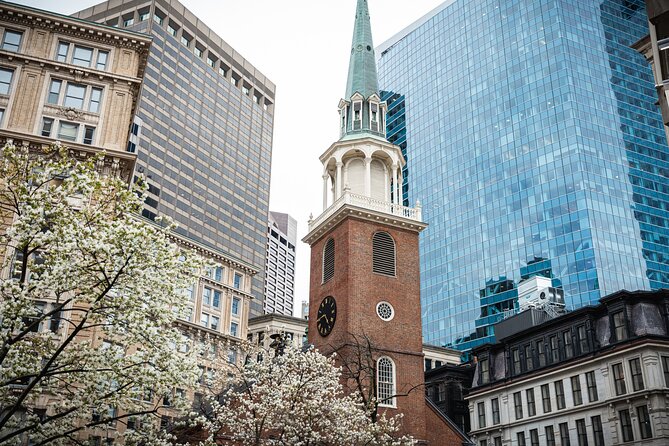
- Old South Meeting House and the road to the Tea Party
- Old City Hall and the architectural change in downtown
- Old State House and the Boston Massacre
- Boston Common and the edge of Beacon Hill
- The Massachusetts State House and Granary Burying Ground
- Ending in the Public Garden
- What the $39.80 price really buys
- Pace, weather, children, and practical planning
- Who should book this Boston walk
- My booking verdict
- FAQ
- How long does the Boston History Tour last?
- How far do you walk?
- Where does the tour begin?
- Where does the tour end?
- Is the tour offered in English?
- What is the maximum group size?
- Are children allowed?
- Is food included?
- Could alcohol be served?
- Does the tour run in bad weather?
- Can I cancel for a refund?
Key points to know
- Follow Boston’s story from the harbor to the Public Garden, with Revolutionary landmarks appearing one after another.
- Expect a local guide with personality, with past guides including Bob, Nabil, Lexie, Tim, Allison, Molly, Alex, and Alivia.
- Plan for 4 kilometers of walking, with no admission fees included because the tour mainly uses outdoor sites.
- Enjoy a surprise local treat, though alcohol may be served and proper identification is required.
- Choose a private upgrade if you want more control over questions, pace, and attention.
- Use this early in your visit to get a useful map of central Boston and ideas for the rest of your stay.
From the Greenway Carousel to Boston’s Revolutionary center
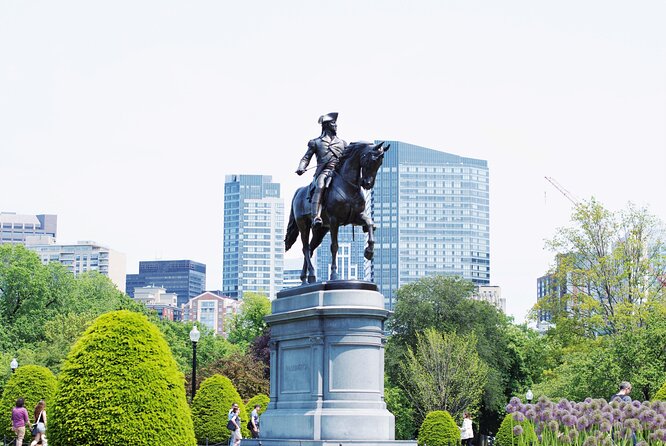
The meeting point is the Greenway Carousel at 191 Atlantic Avenue, near Boston Harbor and public transportation. This is a practical starting place. The Rose Kennedy Greenway gives you room to gather before the walk moves into the denser streets around Faneuil Hall.
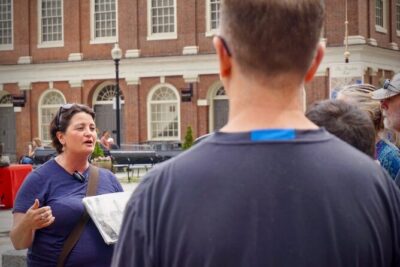
Your guide handles the introductions and sets the tone. The small-group format matters here. A Boston walk can become a noisy exercise in trying to hear over traffic and footfall, so a group capped at 16 is a real benefit. Past guides such as Bob, Nabil, Lexie, Tim, and Allison have been praised for humor, warmth, clear storytelling, and an ability to answer questions.
From the carousel, you’ll see or visit several important harbor-side sights, including Custom House Tower, Quincy Market, and Faneuil Hall Marketplace. The tour does not charge admission at these stops, but it is mainly a street-level experience. You are seeing the city through its buildings, squares, sidewalks, and memorials rather than entering a series of museums.
More Historic Tours in Boston
- Boston: Freedom Trail History Small Group Walking Tour
★ 5.0 · 6,450 reviews - Tour of Historic Fenway Park, America’s Most Beloved Ballpark
★ 4.5 · 3,013 reviews - Boston Food & History: Pizza, North End & Freedom Trail
★ 5.0 · 1,772 reviews
Faneuil Hall and the voices of rebellion
Faneuil Hall is the first major history stop. Your guide explains how revolutionaries used the hall to argue for independence from Great Britain. This is a useful introduction because Boston’s independence story did not happen in one dramatic instant. It grew through meetings, speeches, anger over taxes, and the steady pressure of local politics.
From Faneuil Hall, Custom House Tower provides an architectural marker. It was Boston’s first skyscraper and originally served as a storage point for incoming goods. That detail helps connect the city’s political unrest with its commercial life. Boston was not just a place of speeches and pamphlets. It was also a working port tied to trade rules imposed by Britain.
Quincy Market and Faneuil Hall Marketplace can be crowded. That adds energy, but it can also make listening harder. One of the few negative reactions to the experience focused on time spent inside packed retail areas, with a preference for more time at historic sites. If you dislike commercial districts, keep your expectations in check. The route uses these areas because they are part of modern Boston as well as its past.
Old South Meeting House and the road to the Tea Party
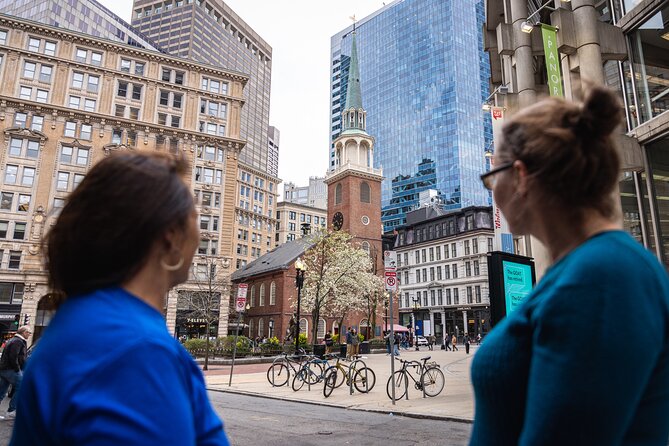
At Old South Meeting House, the guide turns to the Boston Tea Party. This former church was where Bostonians gathered in 1773 to plan their act of protest. The stop is short, listed at about five minutes, so expect a focused explanation rather than an extended visit indoors.
The value here is the setting. You are not hearing about the Tea Party in an abstract classroom. You are standing at the place where local debate helped lead to a famous act of rebellion. The guide also discusses the political cry of the period, including the demand for no taxation without representation.
The route then passes the site of Boston’s first bookstore. It was linked with publishers of major American works, including Walden, The Scarlet Letter, and Midnight’s Ride of Paul Revere. This is one of the tour’s better reminders that Boston’s identity was shaped by writers and printers as well as soldiers and politicians.
These short pass-by stops are easy to miss if you walk alone. A guide gives them context, but they will not feel like full attractions with long visits. You are gaining a chain of stories, not checking into each building for a detailed tour.
Old City Hall and the architectural change in downtown
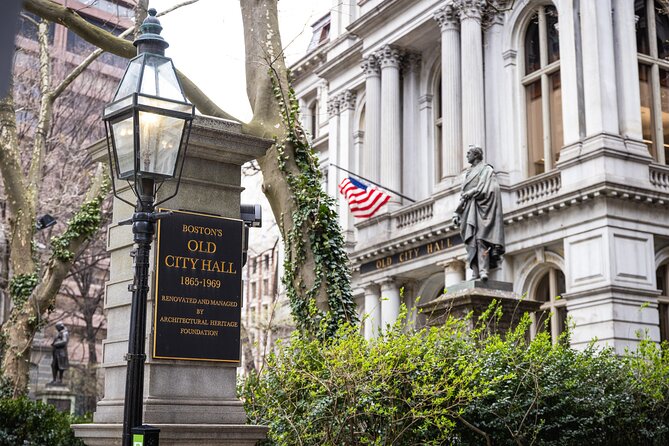
Old City Hall gives the tour a different kind of history. The French architecture is a sharp contrast to Boston’s brick meetinghouses and Colonial-era buildings. The site once housed the city council and America’s first public school, so it combines civic life, education, and design in one stop.
You’ll have time for a photograph with the Bronze Donkey. That small detail adds a lighter moment after several serious Revolutionary stories. Guides often use humor well on this tour, and the strongest experiences appear to depend partly on the person leading the walk. Names such as Tim, Allison, Nabil, and Lexie come up repeatedly in the supplied comments, each praised for a friendly manner and lively explanations.
The route continues through Downtown Crossing toward King’s Chapel. If timing allows, you might hear the organist playing the oldest church organ in the United States. The wording matters: this is a possibility, not a guaranteed performance, so do not book the tour solely for the organ.
Downtown Crossing also brings you back into present-day Boston. Shops, traffic, and office workers surround the old buildings. I like this contrast because it shows how the city’s past sits inside ordinary daily life. Still, it is also where the walk can feel less scenic than the Public Garden or Beacon Hill.
More Walking Tours in Boston
- Harvard University Campus Guided Walking Tour
★ 4.5 · 3,632 reviews - Boston Freedom Trail Walking Tour with Costumed Guide
★ 4.5 · 2,531 reviews - The Full Revolutionary Story Epic Small Group Boston Walking Tour
★ 5.0 · 2,356 reviews - Boston’s Freedom Trail: A Revolutionary Walking Tour
★ 4.9 · 1,748 reviews
Old State House and the Boston Massacre
The Old State House is one of the strongest history stops. In 1776, the Declaration of Independence was announced here. Your guide covers the excitement of that event along with the Boston Massacre, a tragic confrontation that helped turn public anger against British rule.
This is an ideal place for storytelling because one building connects several turning points. The stop lasts about 15 minutes, enough for a clear explanation and questions, but not enough for a full interior visit. If you want exhibits and detailed object displays, you’ll need to return on your own.
The guide’s role makes a difference here. A good explanation can show how Boston’s political conflict moved from speeches to street violence, then toward open rebellion. Past guides have been praised for making complicated events easy to follow without turning the walk into a lecture.
Boston Common and the edge of Beacon Hill
Boston Common is the oldest city park in the United States, dating in public use to 1634. You’ll walk past memorials, fountains, and recreation areas used by residents and visitors. After the tight streets of downtown, the open park gives the group a chance to spread out and breathe.
The guide explains how the Common was used during the Revolution and in later periods. It is also a good point to notice modern Boston life: people exercising, relaxing, crossing the park, and using it as part of the city’s daily routine.
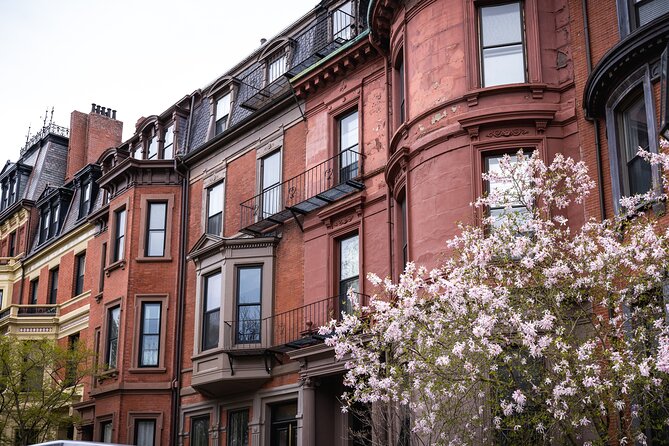
From here, the route moves toward Beacon Hill, one of Boston’s most recognizable neighborhoods. The cobbled streets and historic buildings make this section more scenic than the commercial blocks downtown. Your guide explains how the area declined at one point due to sailors and British soldiers before becoming the admired neighborhood you see today.
Beacon Hill is a place where you’ll want extra time for photographs. The tour keeps moving, however, and the schedule does not promise a long neighborhood wander. If narrow lanes, old houses, and street details are your main interest, consider returning later with more time.
The walk also reaches a lesser-known memorial to one of the first African American regiments in the Civil War and its colonel, Robert Gould Shaw. This adds needed breadth to the tour. Boston’s story is not only about the men associated with the Revolution. The memorial points toward the city’s role in the Civil War and the history of Black military service.
The Massachusetts State House and Granary Burying Ground
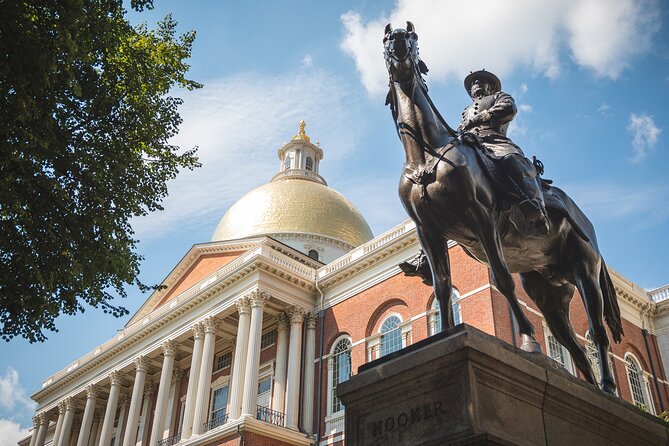
The gold-colored dome of the Massachusetts State House is easy to recognize. The guide discusses John Hancock, the original landowner, and Paul Revere, who presided over the 1795 cornerstone ceremony. You’ll also hear how the building remains an active center of state government.
This stop is useful because it links the Revolutionary period with the continuing political life of Massachusetts. The building is not merely an old shell for photographs. It still matters to the state’s government, which makes the history feel connected to the present.
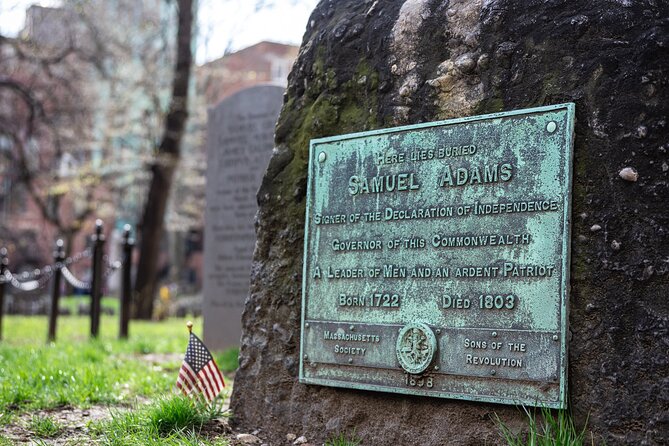
Granary Burying Ground follows. The cemetery dates to 1660 and was originally part of Boston Common. You’ll pass the graves of figures including John Hancock, Paul Revere, and Sam Adams.
The timing of this stop deserves attention. Historic cemeteries can have closing times, and a past tour group arrived after one cemetery had closed. The route or exact sites can change, so if seeing the grave markers is especially important to you, ask the guide about access early in the walk. Do not assume every stop will be open for entry.
Ending in the Public Garden
The tour ends at Boston Public Garden, near 4 Charles Street. This is a pleasant finish, with paths, plantings, fountains, and a calmer feel than the harborfront and downtown blocks. It was the first public park in America and remains a place for walks, exercise, and rest.
Your guide explains how the garden was used during the Revolution and afterward. The ending works well because you are left in a part of Boston suited to a relaxed continuation of the day. You can stay in the garden, walk toward Beacon Hill, or use the nearby streets to continue exploring.
The end point also helps with planning. The tour does not return you to the carousel, so think of it as a one-way introduction to central Boston. Wear shoes that can handle roughly 2.5 miles, and leave room in your schedule for a meal or additional sightseeing afterward.
What the $39.80 price really buys
At $39.80 per person, the tour is priced as an accessible introduction rather than a full-day historical program. You are paying for an English-speaking guide, local stories, group interaction, a surprise treat, and a carefully connected route through major central sights.
There are no extra admission fees during the listed walk. That keeps the basic cost clear, though food, additional drinks, and guide gratuity are not included. The surprise treat may contain alcohol, so bring proper identification if you are of legal drinking age and want to take part.
I think the value is strongest if you are new to Boston and want a useful first look. In two hours, you cover the harbor edge, Faneuil Hall, Downtown Crossing, Beacon Hill, Boston Common, the State House, Granary Burying Ground, and the Public Garden. Doing that alone would require planning and a fair amount of map checking.
The value is weaker if you want long interior visits or detailed museum interpretation. You may also find the price less appealing if you dislike walking through retail areas or prefer to explore at your own pace. A private upgrade can make sense for a family or group that wants more personal attention, but the standard small group should be enough for most people.
Pace, weather, children, and practical planning
This is described as suitable for all ages and fitness levels, but the 4-kilometer distance still matters. The walk is not presented as strenuous, yet you should be comfortable on city sidewalks and able to remain with the group for about two hours.
The tour runs in rain, snow, or sun. Dress for the forecast, and do not treat bad weather as an automatic cancellation. Comfortable shoes are the key item. A light rain layer, warm clothing in winter, or sun protection in hot weather will make the route easier.
Children under six can join free, but you must mention them when booking. Children aged six to 11 pay the adult rate, and their ages should also be included in the special requirements field.
The tour is offered in English and includes a mobile ticket. It is near public transportation, which helps at the beginning and end. Free cancellation is available up to 24 hours before the start time. Inside that window, refunds are not available and changes are not accepted.
Who should book this Boston walk
I would choose this tour for a first visit, especially if you want a quick orientation before planning the rest of your time. It suits solo visitors, couples, families, and small groups that enjoy history delivered through stories rather than long museum visits.
It also works for repeat visitors who have seen Boston before but want a better connection between familiar landmarks. One past participant had visited the city several times and still wished they had taken a walk like this earlier.
You should skip it if you want to spend most of your time inside buildings, avoid a fixed pace, or focus on just one subject such as architecture, the Tea Party, or African American history. The tour touches many subjects, but its strength is the broad route and the guide’s personal storytelling.
My booking verdict
Book this Boston walk if you want a friendly, efficient introduction to the city’s central historic district. The combination of major landmarks, lesser-noticed memorials, local tips, and a small group gives you a useful first map of Boston for a reasonable price.
Before booking, accept two limits: the route covers a lot of ground, and individual stops can be short. If that sounds right for your visit, choose an early day in Boston so you can return to the places that catch your interest. If you want a slower and more detailed experience, consider the private option or plan separate visits to the Old State House, Old South Meeting House, and Granary Burying Ground.
FAQ
How long does the Boston History Tour last?
The walk lasts about two hours.
How far do you walk?
The route covers about 4 kilometers, or 2.5 miles.
Where does the tour begin?
It begins at the Greenway Carousel, 191 Atlantic Avenue, Boston, Massachusetts 02111.
Where does the tour end?
It ends at Boston Public Garden, or nearby, at 4 Charles Street, Boston, Massachusetts 02116.
Is the tour offered in English?
Yes. The experience is offered in English with an English-speaking guide.
What is the maximum group size?
The group can include a maximum of 16 travelers.
Are children allowed?
Yes. Children under six may join for free if they are mentioned when booking. Children aged six to 11 join at the adult rate and should also be noted at booking.
Is food included?
A surprise local treat is included. Additional food and drinks are not included.
Could alcohol be served?
Yes. Alcohol may be part of the local treat, and proper identification is required.
Does the tour run in bad weather?
Yes. The experience operates in rain, shine, or snow, so you should dress for the conditions.
Can I cancel for a refund?
You can cancel up to 24 hours before the start time for a full refund. Cancellations or changes made less than 24 hours before the start time are not accepted and are not refunded.
More Historical Tours in Boston
- History and Hauntings of Salem Guided Walking Tour
★ 5.0 · 14,564 reviews - Boston: City Cruises Historical Sightseeing Cruise
★ 4.6 · 1,771 reviews - Boston: Freedom Trail History Small Group Walking Tour
★ 4.9 · 1,590 reviews - City Cruises Boston Historic Sightseeing Harbor Cruise
★ 4.5 · 1,388 reviews
Just added around Boston
- Day Trip from Boston: Explore Hammond Castle Museum★ 3.7 · 3 reviews
- Boston: WNDR Museum Entry Ticket★ 3.7 · 3 reviews
- The Boston Bash Scavenger Hunt★ 4.5 · 3 reviews
- Self-Guided Audio Tour of Boston North End★ 4.5 · 3 reviews
- Boston: Official Freedom Trail® Lantern Tour★ 4.7 · 3 reviews
- Boston: North End Walking Tour with Private Harbor Cruise★ 5.0 · 3 reviews
- Self Guided “The North End Pizza, Cannoli and Picnic” Solo Walking Tour★ 5.0 · 3 reviews
- Cambridge: Haunted Charles River Cruise★ 4.3 · 3 reviews
Historic Tours in Boston, compared.
Freedom Trail History Small Group Walking Tour
Read our review →
Tour of Historic Fenway Park, America’s Most Beloved Ballpark
Read our review →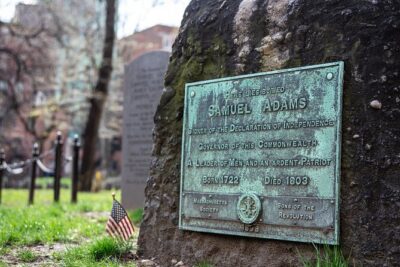
Boston Food & History: Pizza, North End & Freedom Trail
Read our review →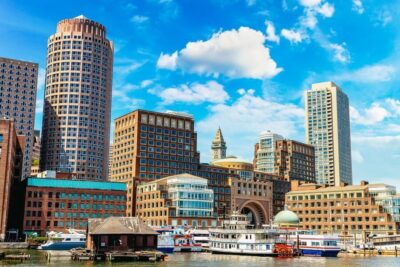
Freedom Trail History Small Group Walking Tour
Read our review →
City Cruises Boston Historic Sightseeing Harbor Cruise
Read our review →
Boston’s North End Food Tour: Italian Flavors & Heritage Walk
Read our review →
Boston Pizza Lovers Food and History Walking Food Tour
Read our review →Browse the lists this tour appears in