
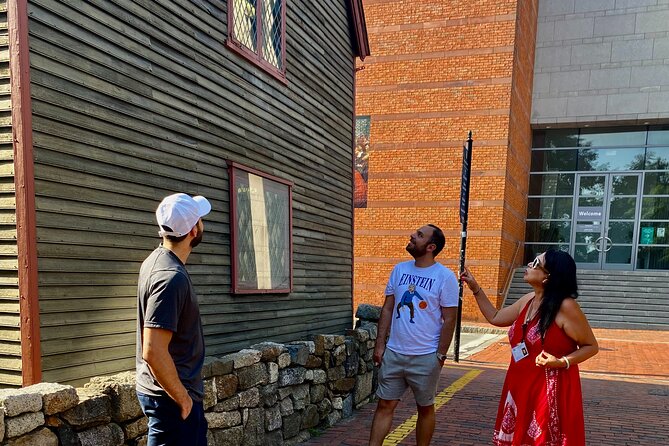
Reviewed · SALEM WITCH TRIALS TOURS
Salem Witch Tour
Salem’s witch trials come into sharper focus when you walk from the granite memorial to the home of Jonathan Corwin, one of the judges who condemned the accused. This small-group tour also adds Salem’s oldest cemetery, Bridget Bishop’s former property, and the site of the old jail, giving you more than a quick look at the city’s Halloween image.
I like the small group limit of 10, which should make it easier to hear the guide and ask questions. I also like the practical mix of serious history and lighter Salem landmarks, including the Bewitched statue and Old Town Hall. Cynthia is noted for being friendly, bilingual, informative, and willing to slow down for families with small children.
The main consideration is that this is an outdoor walking tour with several short stops, not a museum visit. Admission to the Witch House is not included, and the tour’s listed duration can stretch from one to two hours depending on the pace and access to attractions.
In This Review
- Key points to know before you book
- Why Salem’s witch trial story works best on foot
- At the Witch Trials Memorial, the story becomes personal
- Old Burying Point Cemetery adds names and dates
- Old Town Hall shows Salem beyond the trials
- The Bewitched statue brings a lighter pause
- The Witch House connects a surviving building to the court
- Bridget Bishop’s property and the old jail site
- Roger Conant and Salem’s earlier settlement
- What Cynthia adds to the experience
- Cost, extras, and what is not included
- Who will get the most from this Salem walk
- Should you book the Salem Witch Tour?
- FAQ
- Where does the Salem Witch Tour start?
- Where does the tour end?
- How long does the tour last?
- What language is the tour offered in?
- How many people can join the tour?
- Is admission to the Witch House included?
- Is the Salem Witch Trials Memorial free to visit during the tour?
- Are tarot or palm readings included?
- What is the cancellation policy?
Key points to know before you book
- The Witch Trials Memorial is the emotional center: Granite walls, victim names, execution dates, and carved protests of innocence make this the most meaningful stop.
- Cynthia receives special praise for clear explanations: She has guided families, bilingual groups, and people looking for extra tips on getting around Salem.
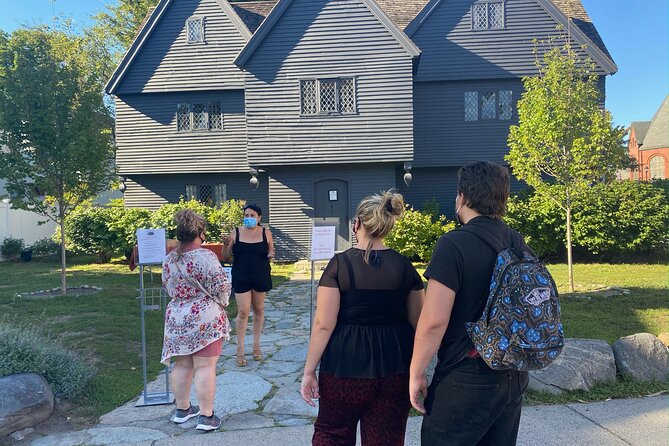
- You visit the only surviving building directly tied to the trials: The Witch House belonged to judge Jonathan Corwin, although interior admission costs extra.
- The route mixes serious history with pop culture: The Bewitched statue offers an easy photo stop after the more somber memorial and cemetery.
- The group is capped at 10 people: That is a useful size for a walking tour, especially if you want to ask questions.
- Tarot and palm readings are optional extras: They cost $40 for 15 minutes and are not included in the tour.
Why Salem’s witch trial story works best on foot
The Salem witch trials can feel scattered if you only visit museums or follow the city’s spooky signs. This walk connects places tied to the accused, the judges, the jail, the cemetery, and Salem’s later fascination with witches.
That connection matters. At the Witch Trials Memorial, you confront the names and dates of the 20 people executed. At the Witch House, you see where one of the judges lived. At the former site of Salem Jail, you are reminded that imprisonment came before execution for many accused people.
The tour begins at the Peabody Essex Museum, at 161 Essex Street, and returns there at the end. The supplied timing for the stops adds up to roughly an hour, but the advertised duration is about one to two hours. That difference likely gives the guide room to walk between sites, answer questions, and adjust the pace for children or people who want photographs.
You should expect a walking experience rather than a ride between attractions. Wear shoes you can manage on city streets and cemetery paths, and leave enough time afterward if you want to tour a museum or enter the Witch House.
More witch-trial history tours in Salem:
- The Salem Witch Walk
★ 4.5 · 1,301 reviews - Wicked Awesome Tours: Witch Trial History and Salem Haunts!
★ 5.0 · 1,032 reviews - Best Salem Witch Trials Historical Walking Tour
★ 4.0 · 743 reviews
At the Witch Trials Memorial, the story becomes personal
The Salem Witch Trials Memorial is the strongest part of the route. A handcrafted granite wall surrounds the memorial on three sides, creating a quiet space apart from the city streets.
As you enter, the stone threshold carries the victims’ protests of innocence. Inside, benches bear the names and execution dates of the 20 people who were put to death. Those details keep the site from feeling like a vague piece of folklore. You see individual names and dates, not just a general story about witches.
The stop is scheduled for about 15 minutes, which is enough for an introduction and a short period of reflection. If you want to read every inscription slowly, you may want to return on your own later.
Before entering the memorial, the guide stops at Pickman House, described as one of Salem’s oldest houses. This adds useful local context before the more solemn portion of the visit. The point is not simply to photograph a memorial, but to connect it with the old streets and buildings around it.
Old Burying Point Cemetery adds names and dates
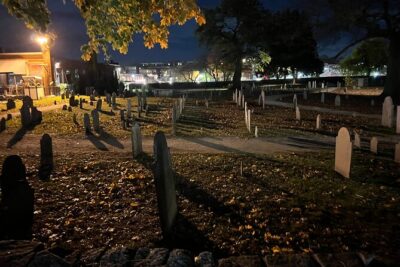
Old Burying Point Cemetery, also called Charter Street Cemetery, opened in 1637. It is Salem’s oldest maintained cemetery and one of the oldest in the United States.
The stop is brief, about five minutes, so you should not expect a full cemetery tour. Instead, the guide uses it as a compact way to place Salem’s witch trial story within the city’s early colonial setting. Several Salem notables are buried here, which makes the cemetery useful even if your main interest is the trials.
The short timing is both a benefit and a limitation. It keeps the tour moving, but it leaves little room for detailed grave-by-grave study. If old cemeteries interest you, note the location and return after the tour at your own pace.
Old Town Hall shows Salem beyond the trials
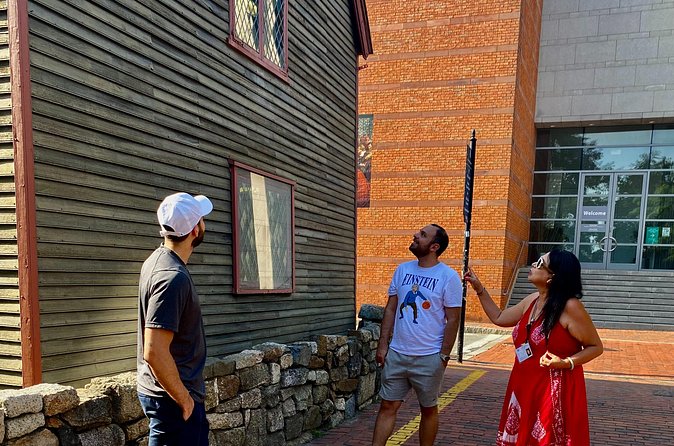
Salem’s Old Town Hall is a Federal-style brick building completed in 1816. It sits in the historic heart of downtown and has Palladian windows, carved wood details, antique chandeliers, decorative columns, and hardwood floors.
The building no longer serves as a municipal office. Instead, it functions as a cultural and rental space for the Salem community. The tour allows about five minutes here, so the stop is mainly an exterior look and a quick explanation of the building’s role.
This is a useful change of subject. Salem is more than the events of 1692, and Old Town Hall helps you see the city as a continuing community rather than a backdrop for one notorious episode.
Access inside may vary, since the building is used for events and rentals. Do not book this tour expecting a guaranteed interior visit at every stop. A direct comment from a family experience does note that Cynthia was able to bring the group inside a few attractions, but that should be treated as a welcome possibility rather than a promise.
Same city, a very different afternoon:
- History and Hauntings of Salem Guided Walking Tour
★ 5.0 · 14,564 reviews - Salem’s Best Ghost Tour
★ 4.5 · 4,186 reviews - Salem Voodoo, Vampires, and Ghosts Guided Walking Tour
★ 5.0 · 1,931 reviews - Bewitched Walking Tour of Salem
★ 5.0 · 1,895 reviews
The Bewitched statue brings a lighter pause
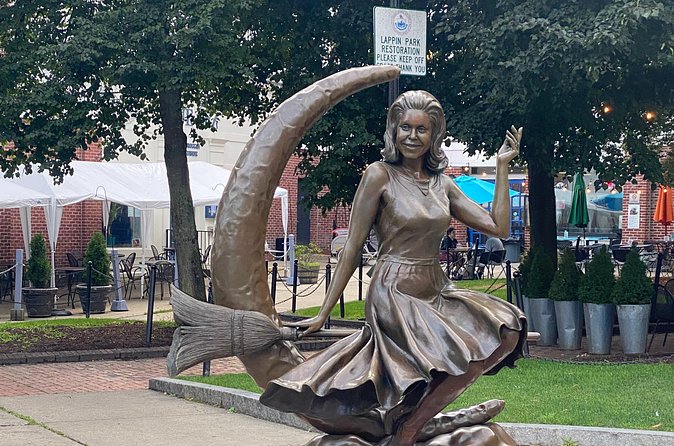
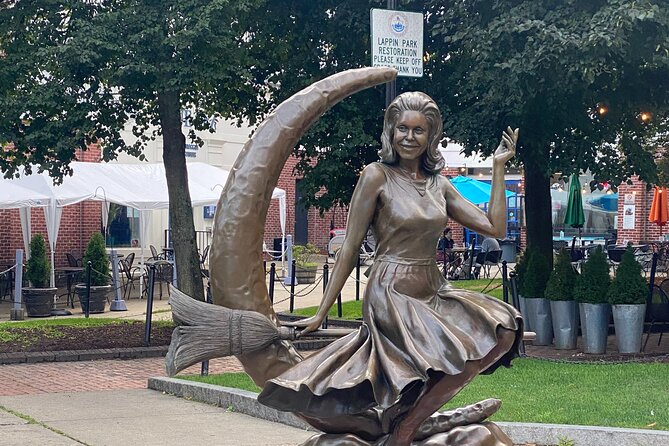
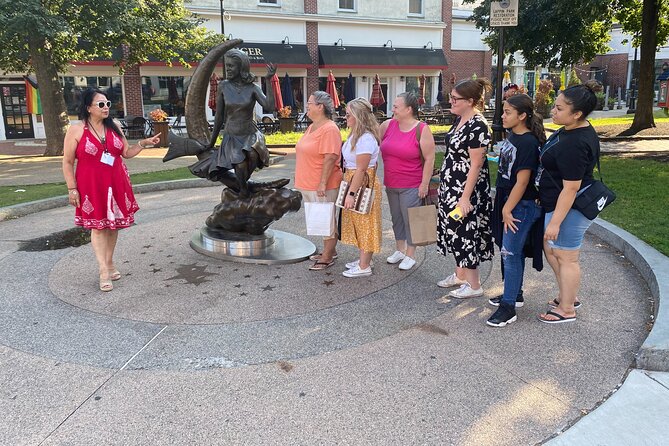
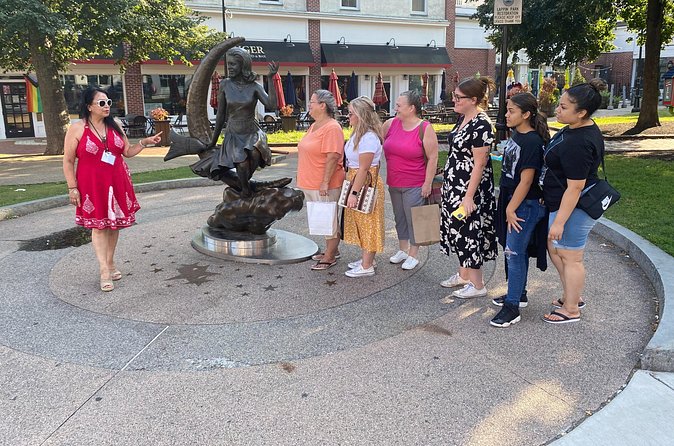
The six-foot bronze statue of Elizabeth Montgomery depicts Samantha Stephens, the character from the 1960s television show Bewitched. She sits sidesaddle on a broom beside a crescent moon.
Several episodes of the show were filmed in Salem in 1970, and the city has embraced that connection. This stop is not part of the 1692 story, but it explains why Salem’s modern image includes television witches as well as court records and memorials.
You get about 10 minutes for photographs. That is enough time for a few pictures without letting the pop culture stop take over the historical focus of the walk.
I like this contrast. The memorial and cemetery ask for quiet attention, while the statue gives families and casual sightseers a playful photo opportunity. If you want a tour focused only on documented trial sites, though, this portion may feel less important.
The Witch House connects a surviving building to the court
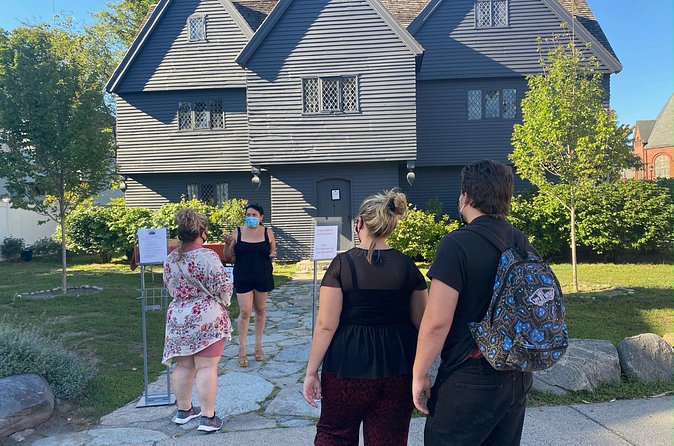
The Witch House was the home of Jonathan Corwin, who served on the Court of Oyer and Terminer that convicted people accused of witchcraft. He was also the uncle of High Sheriff George Corwin.
This is the only surviving building in Salem with direct ties to the witch trials. That fact gives the stop real weight. You are not simply looking at an old house from the same period. You are seeing the home of a man involved in the court process.
The building also has an unusual connection to Roger Williams, who lived there before founding Providence Plantation in Rhode Island. In the 1940s, the house was moved 11 meters to make room for road widening. That small detail helps explain why historic buildings are not always sitting on their original foundations.
The tour allows about 10 minutes here, but admission is not included. If you want to go inside, budget separately for the entrance fee. The walking tour can explain why the building matters, but an exterior stop cannot replace the interior visit.
This is one place where the tour’s value depends on your plans. If you already intend to enter the Witch House, the guide’s context can make the visit more meaningful. If you are trying to keep costs down, you can still see the exterior and continue with the group.
Bridget Bishop’s property and the old jail site
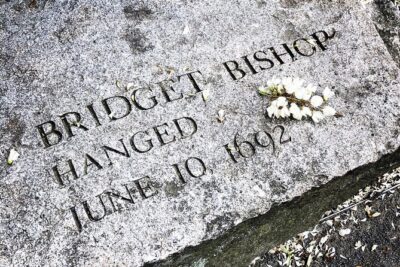
The route continues to Turner’s Seafood at Lyceum Hall, identified as the location of Bridget Bishop’s former property. Bishop was the first person executed for witchcraft during the Salem trials, on June 10, 1692.
The modern business at the site may seem far removed from the events of the 17th century. That is precisely why a guide is useful here. Without an explanation, you could easily walk past the address without knowing what happened there.
After this stop, the guide continues to the site of the infamous Salem Jail. People accused of witchcraft were arrested and imprisoned there before many were hanged. The listing gives about 15 minutes for this combined part of the route.
There is no jail museum entrance included, and the information provided describes a site rather than a preserved prison interior. Think of it as a location-based history lesson. You are using the present city to trace places connected to the legal machinery of the trials.
Roger Conant and Salem’s earlier settlement
The route includes a stop at the Roger Conant statue. The supplied description repeats information about Old Burying Point Cemetery rather than explaining the statue in detail, so you should not expect a long interpretive segment about Conant.
Still, his name points to Salem’s earlier colonial settlement and the city’s beginnings before the 1692 crisis. The stop is listed at about five minutes and helps widen the story beyond the witch trials themselves.
This is also a reminder to keep your expectations practical. The tour covers several places in a short period, so some stops receive a clear explanation while others function as brief landmarks. If you prefer one site explored at length, a museum visit will suit you better.
What Cynthia adds to the experience
The strongest personal detail attached to this tour is the guide, Cynthia, whose name also appears as Cintya in one translated comment. She is described as bilingual and able to explain Salem’s past in an engaging, easy-to-follow way.
A useful point for families: Cynthia was willing to stop often for small children. That flexibility can make a big difference on a walking route with several short site visits. You are not locked into a brisk adult pace.
She also gives practical advice about moving around Salem after the walk. That makes the tour more useful as an opening activity, especially if you are new to the city and want help choosing what to see next.
The tour is offered in English, Spanish, French, and Italian. The booking details also identify English as an available language, so confirm your preferred language when reserving. With a maximum of 10 people, the setting should be more personal than a large street group.
Cost, extras, and what is not included
The tour price is not provided in the information available here, so I cannot judge the exact dollar value. The best way to assess it is to compare what you want from the day.
The fee covers the guide’s walking commentary and the route through several significant Salem sites. It does not cover museum admission, including the Witch House, and it does not include coffee or tea. If you want a more complete historical visit, plan for a separate museum ticket.
Tarot or palm reading is available for $40 for 15 minutes. This is optional and separate from the history walk. If you enjoy fortune telling, it can add a playful Salem-style extra. If your goal is documented history, skip it and spend the time inside a museum or exploring the city.
The tour accepts mobile tickets and ends back at the Peabody Essex Museum meeting point. It is near public transportation, allows service animals, and calls for a moderate level of physical fitness. Free cancellation is available if you cancel at least 24 hours before the start time. Cancellations or changes within 24 hours are not refunded or accepted.
Who will get the most from this Salem walk
I would choose this tour if you want an introduction to Salem before deciding which buildings or museums deserve more of your time. The route covers the central ideas quickly and gives you useful addresses to revisit.
It suits families particularly well because Cynthia has shown flexibility with frequent stops. The Bewitched statue also gives children a lighter moment between the memorial, cemetery, and jail site.
It is a good fit for anyone who wants a guide in Spanish, French, or Italian, as well as English. A small group is helpful if you want to ask about the court, the victims, the buildings, or Salem’s modern identity.
You may want another option if you need a fully indoor program, detailed access to every building, or a long scholarly discussion at each site. The walk is short, and several stops last only five to ten minutes. It gives you a strong outline, not an exhaustive study.
Should you book the Salem Witch Tour?
Book it if you want a compact, human-paced introduction to Salem’s witch trial sites, especially if Cynthia is available for your language and date. The memorial, Corwin house, Bridget Bishop connection, and jail site provide a serious core, while Old Town Hall and the Bewitched statue keep the route varied.
Before booking, decide if you are comfortable paying separately for the Witch House or other museums. Also allow closer to two hours rather than one if you prefer frequent questions, photographs, or a slower pace.
For a first look at Salem, this is a sensible choice. For a full day of history, use it as your orientation walk, then return to the sites that most caught your attention.
FAQ
Where does the Salem Witch Tour start?
The tour starts at the Peabody Essex Museum, 161 Essex Street, Salem, Massachusetts 01970.
Where does the tour end?
The activity ends back at the Peabody Essex Museum meeting point.
How long does the tour last?
The tour lasts approximately one to two hours.
What language is the tour offered in?
The tour is available in English, Spanish, French, and Italian.
How many people can join the tour?
The maximum group size is 10 people.
Is admission to the Witch House included?
No. Entrance to a museum, including the Witch House, is not included.
Is the Salem Witch Trials Memorial free to visit during the tour?
Yes. The memorial is listed with free admission.
Are tarot or palm readings included?
No. Tarot or palm reading is an optional extra costing $40 for 15 minutes.
What is the cancellation policy?
You can cancel at least 24 hours before the start time for a full refund. Cancellations or changes made less than 24 hours before the start time are not accepted and are not refunded.
Just added around Salem
- Pirates and Privateers Walking Tour with Real Pirates Admission★ 4.5 · 3 reviews
- Private Walking Salem Legends Tour Professional Guide★ 5.0 · 3 reviews
- Salem: Spanish-Speaking Witch Trials Walking Tour★ 5.0 · 3 reviews
- Salem Village Witch Hunt Walking Tour★ 5.0 · 3 reviews
- Discover Salem’s History & Practice Authentic Witchcraft★ 4.1 · 4 reviews
- The Ghost Walk. Tortured Souls of Salem★ 5.0 · 4 reviews
- Cemetery and Witchcraft Trials Tour★ 5.0 · 4 reviews
- [ESP] History of Salem Witch Trials★ 4.0 · 5 reviews
Salem Witch Trials Tours, compared.
Wicked Awesome Tours: Witch Trial History and Salem Haunts!
Read our review →
Best Salem Witch Trials Historical Walking Tour
Read our review →

Browse the lists this tour appears in