
Reviewed · SALEM WITCH TRIALS TOURS
Salem Uncovered: The Salem Witch Trials Tour
The most useful thing about Salem Uncovered is its focus on where the 1692 events happened, not just on spooky tales. In 90 minutes, you walk from Old Town Hall through former civic, religious, legal, and prison sites before ending at the Salem Witch Trials Memorial.
I like the clear route and the chance to hear the story at the actual spots tied to it. I also like that the guides, including the frequently praised Jeffrey, bring humor and difficult historical questions into the talk. The main drawback is simple: you do not enter any buildings, and the quality of the experience depends heavily on how engaging your assigned guide is.
In This Review
- Key points to know before you book
- Salem’s witch trials are best understood on foot
- Old Town Hall gives the tour a fitting start
- The John Ward House and the machinery of accusation
- Rockafellas marks Salem’s religious and civic center
- 93 Washington Street reveals what has disappeared
- Turners Seafood and the land of Bridget Bishop
- The old jail site explains the waiting and suffering
- The Salem Witch Trials Memorial gives the walk a quiet ending
- What the $26 price really covers
- Timing, weather, and the practical side of the walk
- How the guides shape the experience
- Who should book this Salem walk
- My verdict: a solid first step, with realistic expectations
- FAQ
- How long is the Salem Uncovered tour?
- How much does the tour cost?
- Where does the tour begin?
- Where does the tour end?
- Does the tour include admission to historic buildings?
- Is the tour offered in English?
- How many people can join the tour?
- What happens if bad weather cancels the tour?
Key points to know before you book
- Seven outdoor stops connect Salem’s streets to the 1692 trials, including the courthouse, jail, and execution-era sites.
- The tour ends at the Salem Witch Trials Memorial, beside the Charter Street Burying Point.
- Jeffrey is especially good at mixing facts, humor, and darker historical subjects, though guide assignments can vary.
- The $26 price covers guiding only, not museum, restaurant, or building admission.
- Expect a real walking tour, with no indoor breaks built into the route.
- Book ahead in busy autumn periods, since this experience averages 17 days of advance booking.
Salem’s witch trials are best understood on foot
Salem’s 1692 crisis can feel like a collection of names and accusations if you only read about it in a museum. Walking between the former courthouse, jail, meeting house, and private homes gives the story a physical shape.
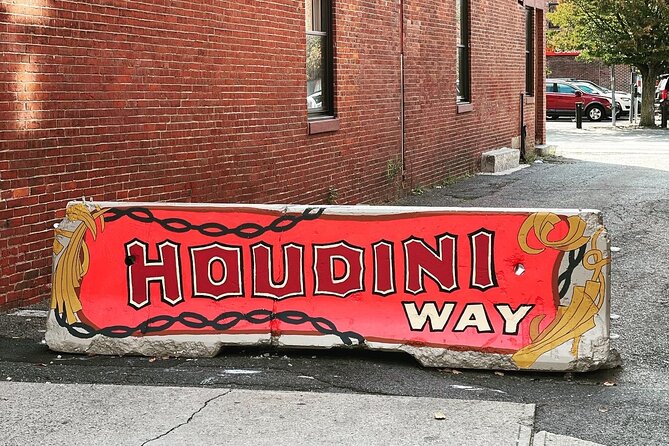
You begin at 1 Houdini Way, near Salem Old Town Hall. From there, the route moves through the historic center and finishes at 24 Liberty Street, beside the Charter Street Burying Point. The endpoint matters. The people executed during the trials were not given formal burials, so the memorial offers a quiet place to consider the human cost after the stories and theories are finished.
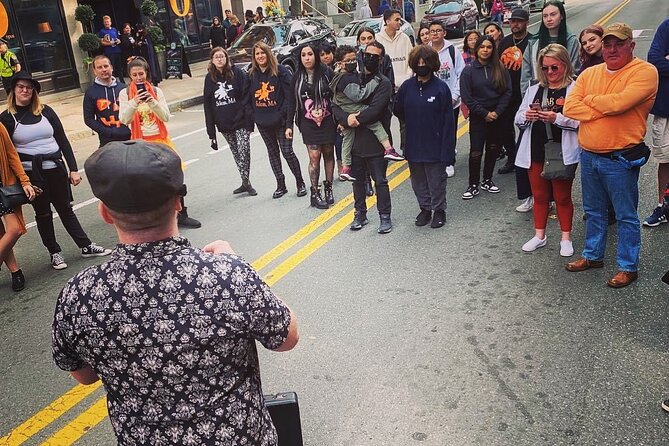
The tour is led in English by a professional storyteller licensed by the city of Salem. That license does not guarantee a particular style, but it does mean the guide is approved to lead tours in Salem. Some guides lean toward crisp facts. Others use more humor, discussion, and historical context.
Jeffrey receives especially strong praise for being funny, warm, and willing to discuss the grim parts of the story without turning them into cheap entertainment. If he is leading your group, you may get a lively presentation that connects the accusations to religious fear, social divisions, and the treatment of people with little power. Still, you should book for the route and subject, not for a guaranteed guide.
More witch-trial history tours in Salem:
- The Salem Witch Walk
★ 4.5 · 1,301 reviews - Wicked Awesome Tours: Witch Trial History and Salem Haunts!
★ 5.0 · 1,032 reviews - Best Salem Witch Trials Historical Walking Tour
★ 4.0 · 743 reviews
Old Town Hall gives the tour a fitting start
The first stop is Salem Old Town Hall, a historic building in its own right and a filming location for Hocus Pocus. For many people, that movie connection is an easy way into Salem’s modern image as a Halloween town.
The guide does not take you inside. You spend about 10 minutes outside, using the building as a starting point for the older story of Salem. This is a good opening because it places modern pop culture beside the real events that made the city famous.
I would treat the movie connection as a quick extra, not the reason to choose the tour. If you want a full look inside Salem’s historic buildings, this walk will not provide it. The value here is the setting and the explanation, not an interior visit.
The John Ward House and the machinery of accusation
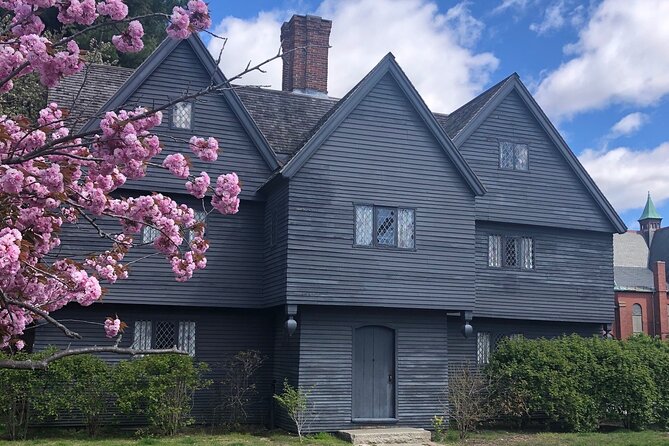
The next stop takes about 15 minutes at the John Ward House. Around 330 years ago, this was the site of Sheriff Corwin’s house. In the story of the trials, Corwin served as High Sheriff of Essex County and held several roles, including issuing warrants, interrogating the accused, and overseeing torture.
That makes this stop useful because it shifts the story away from the vague idea of witches and toward the machinery of law. Accusations became warrants. Warrants led to questioning and imprisonment. Officials and neighbors helped turn fear into formal proceedings.
Again, you remain outside. The lack of interior access may disappoint anyone expecting a house museum, but the outdoor location still lets the guide explain how authority worked in Salem. Listen for the difference between a private accusation and a legal process. That distinction helps explain why the crisis spread so quickly.
Rockafellas marks Salem’s religious and civic center
Rockafellas Restaurant occupies land that once held the First Church of Salem and the city meeting house in 1692. You stop here for about 15 minutes, but you do not enter the restaurant as part of the tour.
This is one of the more important context stops. The trials did not happen in isolation from Salem’s religious and civic life. The meeting house was a place where public concerns, religious beliefs, and community disputes could overlap. A guide who handles the subject well can show you how ideas about sin, the Devil, social order, and membership in the community shaped the way accusations were received.
The setting is also a reminder that old Salem is a living city. Restaurants and shops now sit on ground connected to the trials. That can feel jarring, but it is part of the city’s reality. You are not walking through a preserved stage set. You are walking through ordinary streets where difficult history has been absorbed into modern life.
Same city, a very different afternoon:
- History and Hauntings of Salem Guided Walking Tour
★ 5.0 · 14,564 reviews - Salem’s Best Ghost Tour
★ 4.5 · 4,186 reviews - Salem Voodoo, Vampires, and Ghosts Guided Walking Tour
★ 5.0 · 1,931 reviews - Bewitched Walking Tour of Salem
★ 5.0 · 1,895 reviews
93 Washington Street reveals what has disappeared
At 93 Washington Street, the tour stops near the road where the Salem Courthouse once stood. The courthouse itself is gone, and there is no building to enter or courtroom to inspect.
At first, this may seem like the least dramatic stop. In fact, it can be one of the most useful. A vanished building forces you to imagine how the legal process occupied the center of town. This is where the trials took place, but the physical setting has been erased.
I like stops like this because they guard against a common problem in historic cities: assuming that every important site has a plaque, a preserved room, and an obvious entrance. Here, the guide’s explanation does the work. If you prefer visible artifacts and indoor exhibits, this part may feel thin.
Turners Seafood and the land of Bridget Bishop
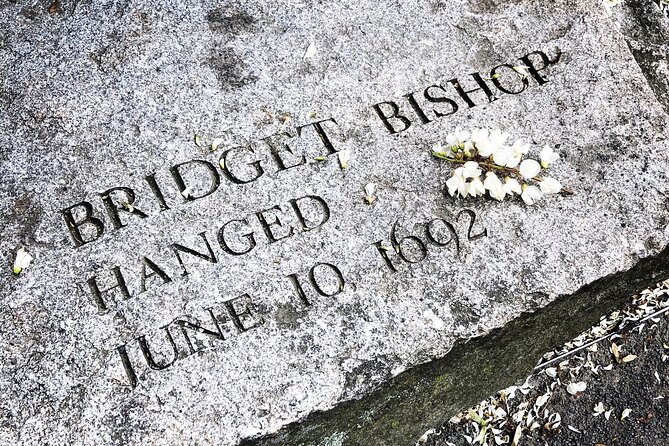
The stop at Turners Seafood at Lyceum Hall connects the modern restaurant to Bridget Bishop, the first person executed during the Salem witchcraft trials. The land was once owned by Bishop, giving the guide a chance to focus on one individual rather than only on the broader crisis.
This is a useful change of scale. Large historical labels such as the Salem witch trials can make the victims feel distant. A stop tied to Bridget Bishop helps put a person back into the story. It also shows how the city’s present-day businesses occupy places linked to people who suffered and died.
The tour does not include a meal or admission at Turners Seafood. You stop outside, so plan your lunch or dinner separately. If the restaurant interests you, you can return after the walk, but the tour itself is not a food experience.
The old jail site explains the waiting and suffering
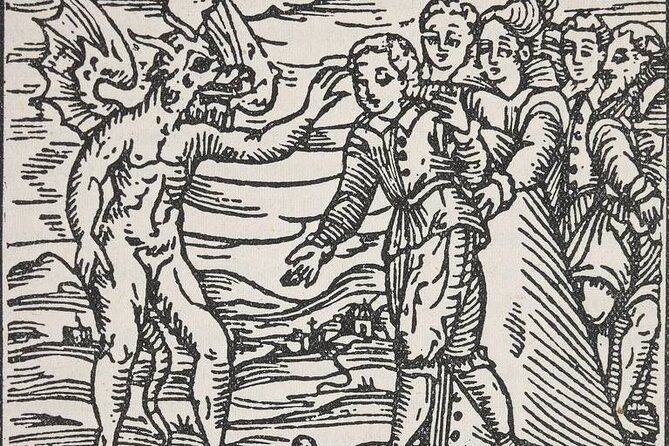
Near 10 Federal Street, you stop close to the site of the Old Salem Goal, or jail. The accused spent months waiting for trials in conditions described as radically inhumane.
This is where the pace and structure of the crisis become clearer. Arrest was not the end of the ordeal. People remained confined while the process moved slowly, often under harsh conditions and without the protections you might expect from a modern court.
The jail is no longer there, and you do not go inside a replacement building. What remains is the location and the guide’s account of what imprisonment meant. A strong guide can make this stop feel less like a generic address and more like a warning about how fear, authority, and delay can harm people before a verdict is reached.
You should also expect the subject matter to become darker as the tour progresses. This is not only a ghost-story walk. Some guides include stories of religious extremism, social exclusion, and the targeting of people who were already vulnerable. That serious approach is a strength if you want history rather than a light Halloween stroll.
The Salem Witch Trials Memorial gives the walk a quiet ending
The final stop is the Salem Witch Trials Memorial at 24 Liberty Street. It sits next to the Charter Street Burying Point, and the tour ends here after about 10 minutes.
The memorial is especially meaningful because the people executed in 1692 were not given formal burials. This is the closest thing the city now offers as a dedicated place to pay respects. The ending changes the mood from explanation to reflection.
You do not enter a building, and the time at the memorial is limited. One four-star assessment specifically wished for more time there, which is a fair point. If you want to read every memorial inscription or sit quietly for a while, plan to remain after the tour ends.
The route’s endpoint is convenient for continuing your day in Salem. You finish near the Charter Street Burying Point and within reach of other historic attractions, shops, and restaurants. Since the walk starts and ends in different places, take note of the finish before arranging transportation.
What the $26 price really covers
At $26 per person, this is a reasonably priced introduction to Salem’s trial sites. You are paying for about 90 minutes of guiding, route planning, and interpretation, not for entry to a museum or historic house.
That distinction matters. The Old Town Hall, John Ward House, Rockafellas, former courthouse site, Turners Seafood, old jail site, and memorial are outdoor stops. No admission is included, and the tour does not provide access to the interiors. If you want a ticketed attraction, you will need to add that separately.
The value is strongest when you want orientation and context. A guide can connect scattered addresses into a single story and help you understand why each place matters. It is less compelling if you already know Salem’s history well or only want to see preserved rooms and original objects.
I would also consider the group limit of 44 people. That is not an intimate private walk. In a full group, you may need to stay close to the guide to hear every detail, especially near busy streets. On the other hand, a larger group can make the experience feel social and lively when the guide asks questions or invites discussion.
Timing, weather, and the practical side of the walk
The advertised duration is approximately one hour and 30 minutes. The listed stop times add up to 95 minutes, so allow a little flexibility rather than planning a tight connection immediately afterward.
The tour is outdoors and requires good weather. If poor weather causes cancellation, you receive the choice of another date or a full refund. You can also cancel for a full refund up to 24 hours before the start time. Within 24 hours, changes and refunds are not accepted.
Wear shoes suitable for city walking and dress for the forecast. That is basic advice, but it matters here because there are no indoor admissions or built-in places to warm up. Salem can be especially busy around Halloween, and the city can feel crowded, with parking and restaurant lines adding extra time to your day.
The meeting point is near public transportation, and service animals are allowed. Most people can take part, but you should be ready to walk between seven outdoor locations and remain with the group for the full route.
How the guides shape the experience
The strongest part of this tour is the guide’s delivery. The subject includes law, religion, fear, imprisonment, community conflict, and execution. A flat recital of names and dates would make the walk drag. A thoughtful guide can make the same streets feel immediate without turning suffering into a joke.
Jeffrey is repeatedly singled out for humor, warmth, passion, and a willingness to answer questions. His approach appears to include both familiar facts and less obvious context, such as the treatment of marginalized people and the role of religious extremism. That can give you a fuller picture than a simple list of accused names.
Not every guide will have the same rhythm. One poor experience described a slow pace, off-topic discussion, and a lack of engagement. Another disliked strong opinions about the historic sites. That criticism is worth taking seriously, especially because a walking tour offers no indoor attraction to compensate for a dull presentation.
At the same time, opinions are not automatically a flaw. Explaining why enslaved, unhoused, or bedridden people could be especially vulnerable during the accusations is part of interpreting the history. The best version of this tour should distinguish clearly between documented facts, historical interpretation, and folklore.
Who should book this Salem walk
I would choose this tour if you want a short historical orientation before exploring Salem on your own. It works well for couples, families with older children, and friends who want a shared introduction without spending several hours inside museums.
It also suits you if you enjoy location-based storytelling. The former courthouse and jail sites are not grand attractions, but their importance becomes clearer when a guide connects them to the people and decisions involved.
You may want a different experience if your main goal is building access, original interiors, or a highly polished theatrical production. This tour is not a haunted house, not a museum ticket, and not a food tour. It is a guided walk through places that often survive only as addresses, modern buildings, or open public spaces.
If you already know the standard Salem story, book only if you want added context about Puritan beliefs, legal procedure, community power, and the people most at risk. Otherwise, you may feel that the guide is repeating familiar material.
My verdict: a solid first step, with realistic expectations
Salem Uncovered offers good value when you understand what you are buying. For $26, you get a 90-minute walk, a city-licensed guide, and a route that links seven meaningful sites to the 1692 trials.
I especially like the ending at the Salem Witch Trials Memorial and the effort to place the trials within Salem’s religious, civic, and legal life. I also like the mix of famous connections, such as Hocus Pocus, with less glamorous locations like the vanished courthouse and old jail.
Book it if you want history on the street, a manageable first look at Salem, and a guide who can make difficult material human. Skip it if you need indoor access, preserved buildings, or a guaranteed private feel. For the best chance at a lively experience, book early, allow extra time around Halloween, and remember that the guide’s style will shape your hour and a half.
FAQ
How long is the Salem Uncovered tour?
The walking tour lasts approximately 1 hour and 30 minutes.
How much does the tour cost?
The price is $26 per person.
Where does the tour begin?
The tour begins at 1 Houdini Way, Salem, Massachusetts 01970.
Where does the tour end?
It ends at the Salem Witch Trials Memorial at 24 Liberty Street, next to the Charter Street Burying Point.
Does the tour include admission to historic buildings?
No. This is an outdoor walking tour, and admission to buildings or attractions is not included.
Is the tour offered in English?
Yes. The tour is offered in English.
How many people can join the tour?
The maximum group size is 44 people.
What happens if bad weather cancels the tour?
If poor weather causes cancellation, you will be offered another date or a full refund. You can also cancel at least 24 hours before the start time for a full refund.
Just added around Salem
- Private Walking Salem Legends Tour Professional Guide★ 5.0 · 3 reviews
- Pirates and Privateers Walking Tour with Real Pirates Admission★ 4.5 · 3 reviews
- Salem: Spanish-Speaking Witch Trials Walking Tour★ 5.0 · 3 reviews
- Salem Village Witch Hunt Walking Tour★ 5.0 · 3 reviews
- Discover Salem’s History & Practice Authentic Witchcraft★ 4.1 · 4 reviews
- The Ghost Walk. Tortured Souls of Salem★ 5.0 · 4 reviews
- Cemetery and Witchcraft Trials Tour★ 5.0 · 4 reviews
- [ESP] History of Salem Witch Trials★ 4.0 · 5 reviews
Salem Witch Trials Tours, compared.
Wicked Awesome Tours: Witch Trial History and Salem Haunts!
Read our review →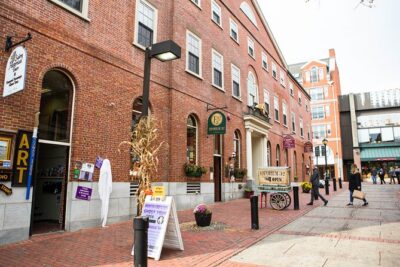
Best Salem Witch Trials Historical Walking Tour
Read our review →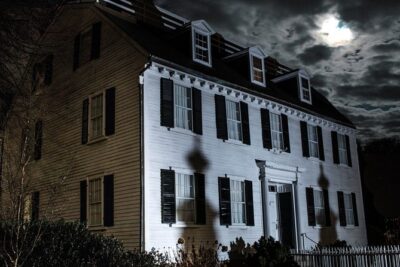
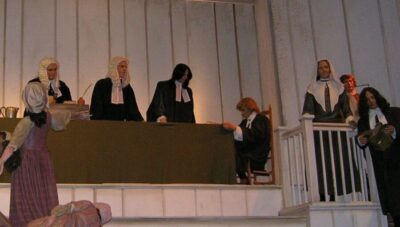


Witch Costume Photo Shoot – Olde Salem Village theatrical set
Read our review →Browse the lists this tour appears in