
Reviewed · SALEM WITCH TRIALS TOURS
Best Salem Witch Trials Historical Walking Tour
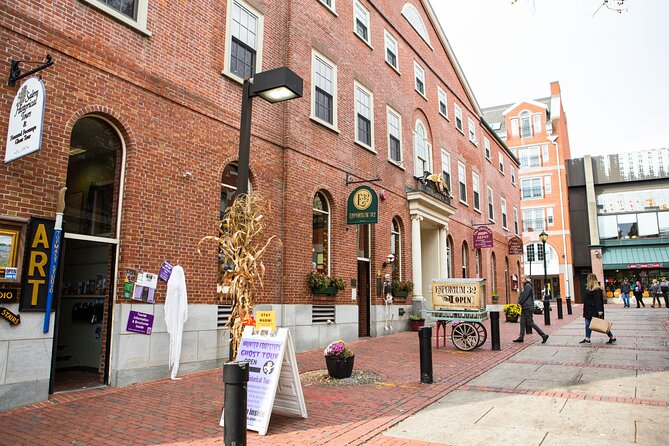
The most useful thing to understand about this Salem tour is that the witch-trial buildings are mostly gone. You are not walking through an intact colonial crime scene. You are moving through modern Salem while your guide points out the locations of the old court, jail, homes, and meeting places, then fills in the missing walls with stories.
I like two things here. First, the Salem Witch Trials Memorial gives the victims names, death dates, and a quiet place to consider the human cost. Second, the route ties specific people to specific addresses, from Judge Jonathan Corwin at the Witch House to Sheriff George Corwin’s former home. The personal stories make the 1692 panic easier to grasp.
The main drawback is also clear: some stops are simply modern buildings or sidewalks. If you expect a continuous parade of preserved historic sites, you may find the tour repetitive or lighter on sightseeing than expected. The guide’s skill matters a great deal, and the best versions of this tour put the facts into a clear timeline.
In This Review
- Key details before you book
- What this Salem walking tour is really like
- Starting with the Salem Witch Trials Memorial
- Rockafellas and the old First Church site
- The Joshua Ward House and Sheriff George Corwin
- The Witch House, Salem’s most direct connection
- Betty Parris and the Sewall Street connection
- Bridget Bishop at Lyceum Hall
- The Witch Dungeon Museum and the reality of jail
- A surprising pause with Samantha Stevens
- The court site on Washington Street
- The vanished jail at 50 St. Peter Street
- Value, timing, and the limits of the route
- Weather, crowds, and practical planning
- Who should book this Salem tour?
- FAQ
- How long is the Salem Witch Trials walking tour?
- Where does the tour begin?
- What time does the tour depart?
- Is admission to the Witch House included?
- Does the tour visit the actual hanging site?
- Is the tour accessible for people with mobility concerns?
Key details before you book
- A one-mile downtown walk: The 90-minute route includes frequent stops, but you will spend much of the time standing outdoors.
- The Witch House is the only surviving trial-era structure: It belonged to Judge Jonathan Corwin and dates to the 1660s.
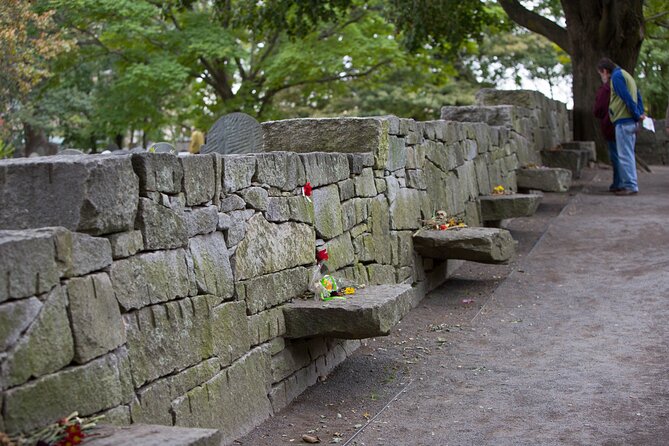
- The memorial tells individual stories: Its 20 stone benches honor the people who died in the 1692 trials.
- Bob is a guide worth requesting: His storytelling has been praised for bringing the people and events of the period to life.
- The route is not fully fixed: The guide may visit as many listed locations as time, weather, and group pace allow.
- Admissions are not included: The tour is mainly an outdoor orientation, not a package of museum entries.
What this Salem walking tour is really like
You meet at the Salem Historical Tours office at 8 Central Street. Look for a guide holding a recognizable sign, and arrive about 15 minutes early. Tours leave at 10 a.m., 1 p.m., and 4 p.m.
From there, the guide leads you into central Salem. The walk covers about one mile over roughly 90 minutes, with stops for explanation and questions. This is not a fast march. Still, you need to be comfortable walking and standing on narrow sidewalks, brick, cobblestones, and occasional stairs.
The group can reach as many as 40 people. That is a fairly large walking group, so your experience may depend on where you stand and how clearly the guide projects. A good guide keeps the pace together and checks that everyone can follow.
The subject is grim, but the tour is not presented as a haunted-house show. It focuses on the people accused, the officials who pursued them, the legal process, and the places tied to the panic. You will hear about accusers and victims, but also about money, property, local grudges, court decisions, and the larger conditions that allowed fear to spread.
More Historic Tours in Salem
- History and Hauntings of Salem Guided Walking Tour
★ 5.0 · 14,564 reviews - Wicked Awesome Tours: Witch Trial History and Salem Haunts!
★ 5.0 · 1,032 reviews - 2.5-Hour Salem History & Sightseeing Guided Walking Tour
★ 5.0 · 850 reviews
Starting with the Salem Witch Trials Memorial
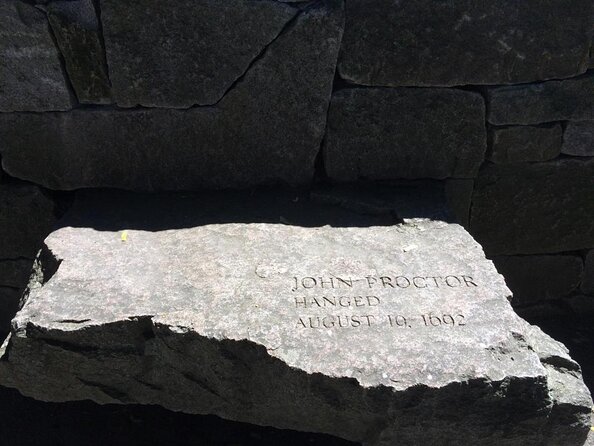
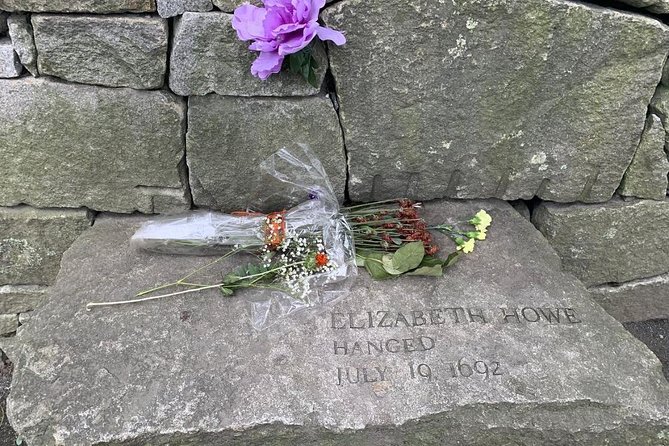
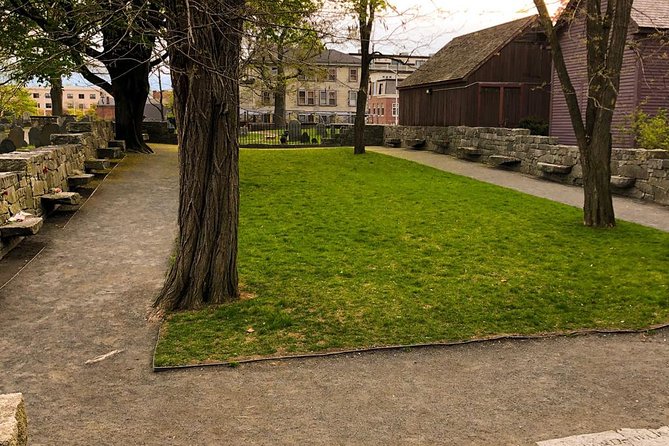
The memorial is one of the strongest parts of the route. Created in 1992, it honors the 20 people who died during the trials. Each stone bench carries a name, the way that person died, and the date.
The design is spare. The names and dates do much of the work. Your guide explains the symbolism and shares selected stories, giving you a human starting point before the tour moves into streets and buildings.
One practical note: the amount of time spent at the memorial can vary. If you want to study each bench, ask your guide questions early. The walk is timed, and some departures may treat the memorial as a brief stop rather than a long visit.
The memorial is also where the tour can either gain focus or lose it. A strong presentation explains how the first accusations began, how the court gained authority, and why the crisis widened. If the guide simply moves from one anecdote to another, you may leave with interesting fragments but no clear sequence of events.
Rockafellas and the old First Church site
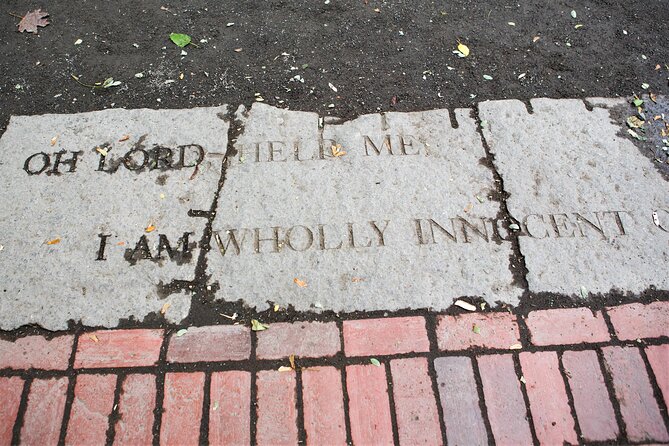
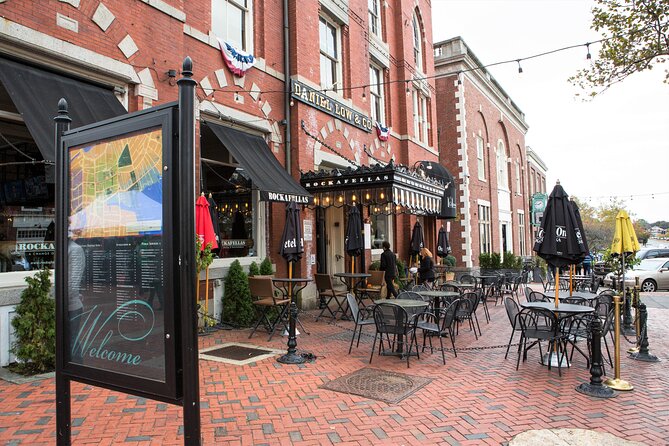
Rockafellas is now a restaurant in the Daniel Low and Co. building, in the center of historic Salem. During the trials, this area was the site of the First Church of Salem and the city meeting house.
You do not enter the restaurant as part of the tour, and no admission is included. The value is in understanding how Salem’s civic and religious life occupied this central space during the crisis.
This stop helps connect the trials to ordinary town business. Accusations were not happening in some distant, isolated setting. They touched the church, meeting places, courts, homes, and commercial life of the town.
If you want a meal here, plan it separately. The tour does not include food, and stopping for lunch would not fit comfortably into the 90-minute schedule.
The Joshua Ward House and Sheriff George Corwin
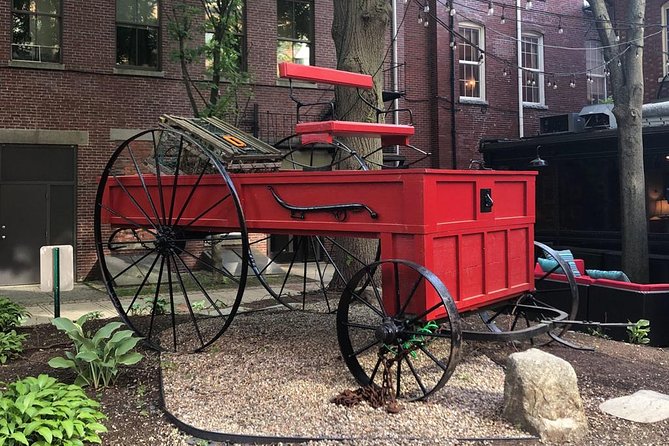
The Joshua Ward House now operates as the Merchant Hotel. It marks the site of George Corwin’s former home. Corwin served as High Sheriff of Essex County in 1692 and signed arrest and execution warrants.
His role gives the stop real weight. The trials were not only a wave of accusations. They required officials to arrest people, hold them, seize property, and carry out court orders. Your guide explains Corwin’s involvement, including accounts of torture in his home.
This is a good example of how the tour handles vanished history. You see a later building, but the address gives the story a physical anchor. Do not expect to enter a preserved sheriff’s house. You are learning what happened at the site, not touring the original structure.
The guide may use old images or explain what once stood there. That kind of visual aid can make a stop like this much more useful, especially for visitors who need help picturing Salem before the modern streetscape.
More Walking Tours in Salem
- Salem Voodoo, Vampires, and Ghosts Guided Walking Tour
★ 5.0 · 1,931 reviews - Bewitched Walking Tour of Salem
★ 5.0 · 1,895 reviews - Satanic Salem Walking Tour
★ 5.0 · 1,635 reviews - Mysteries and Murders of Salem Guided Night-Time Walking Tour
★ 5.0 · 1,488 reviews
The Witch House, Salem’s most direct connection
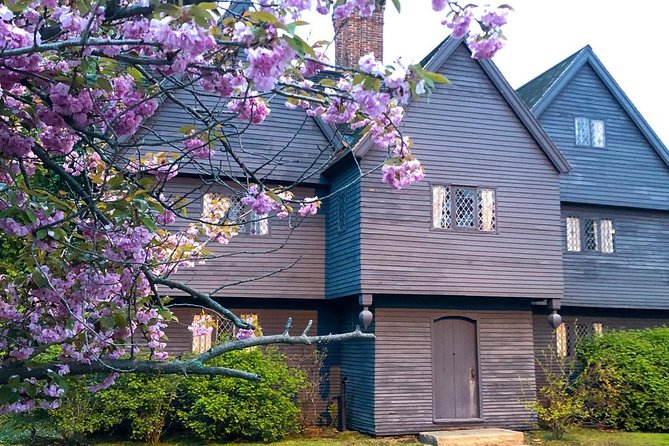
The Witch House is the key surviving structure on the walk. It was the home of Judge Jonathan Corwin and dates to the 1660s. Corwin met there with Judge John Hathorne to discuss accusations and decide who might be considered a witch.
The building is called the Witch House because of its connection to Corwin and the trials. It is not the home of a convicted witch, a distinction worth keeping straight.
The tour points out the house from the outside, and admission is not included. If you want to go inside, budget extra time and money for a separate visit. This is one place where the walking tour and a museum visit work well together: the guide supplies the broader story, while the house gives you a surviving period interior to explore.
Among the listed stops, this is the one most likely to satisfy visitors seeking an actual historic building. It is also the clearest reminder that Salem’s trial story is partly about the judges and officials, not only the accused.
Betty Parris and the Sewall Street connection
The Salem YMCA now occupies Sewall Street, named for Judge Stephen Sewall of the Witchcraft Court. The house connected with nine-year-old Betty Parris once stood in this area.
Betty was the daughter of Reverend Samuel Parris. Her behavior, along with that of her cousin, helped set the initial accusations in motion. The house is gone, so this stop depends on the guide’s explanation rather than what you can see.
I find this part useful because it brings the story back to children and family life. The crisis did not begin with a grand political plot. It grew through household fears, local tensions, religious beliefs, and the interpretation of disturbing behavior.
This is also where a clear chronology matters. You will get more from the stop if the guide explains what happened first, who made the accusations, how the adults responded, and how the machinery of the court took over.
Bridget Bishop at Lyceum Hall
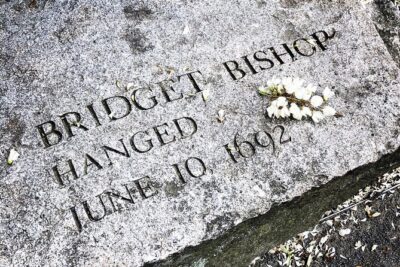
Turner’s Seafood now occupies Lyceum Hall, built on land once owned by Bridget Bishop and her husband, Edward. Bishop was the first woman executed during the 1692 trials.
Her story is especially useful for showing how quickly the process could move. The tour explains that her arrest, trial, and execution took only eight days. That speed is shocking, and it shows how little room an accused person had to defend herself once suspicion took hold.
Again, this is a location rather than a preserved trial building. You will be outside a modern restaurant and hearing about the earlier property. Admission to the restaurant is not part of the experience.
The stop also offers a chance to ask how much of the popular Salem story is grounded in records and how much has been shaped by later legends. The better guides separate documented events from claims that remain uncertain.
The Witch Dungeon Museum and the reality of jail
The Witch Dungeon Museum is not directly connected to the original 1692 trials in the same way as the Witch House. It is included because it helps explain how accused people were jailed.
Prisoners were held in tiny cells, described as being about the size of a phone booth or closet. They also had to pay for their own jail time. That detail makes the legal ordeal feel less like a formal process and more like a system designed with little concern for the people trapped inside it.
The stop may include stories about the jailing process and a chance to pose in the pillories, also called stocks. That photo opportunity adds a lighter moment, though some visitors may find the shift in tone awkward given the suffering being discussed.
Admission is not included. Treat the museum as an optional follow-up rather than part of the walking tour itself.
A surprising pause with Samantha Stevens
The Bewitched statue of Elizabeth Montgomery, who played Samantha Stevens, gives the route a sharp change of mood. You can take a photo with the television character and hear about episodes filmed in Salem.
The statue’s location is described as ironic because of whose land it occupies. Your guide explains that connection, making this more than a random pop-culture stop.
This part will appeal to fans of the television show, families, and anyone who appreciates Salem’s mix of serious history and modern witch imagery. If you want only courtroom history, it may feel like a detour. Still, it helps explain why Salem’s identity today blends documented events with entertainment and witch-themed tourism.
The court site on Washington Street
The Salem Masonic Building, home of Essex Lodge, marks the area where the Witchcraft Court, known as the Court of Oyer and Terminer, operated. Most of the trials took place at this location, with additional proceedings held there in January 1693.
There is no original courthouse to enter. The significance lies in standing near the place where judges, jurors, accusers, and the accused met.
Your guide discusses decisions made by the court, including a case in which a jury found an accused person innocent but the judges rejected that result. That detail reveals how unstable the legal process had become. A jury verdict did not always protect someone when the judges were determined to press ahead.
This is one of the stops where visitors expecting a visible landmark may feel let down. The story is important, but the modern building does not announce what happened there. Listen for the explanation, and use the location as a mental map point rather than a historic attraction in itself.
The vanished jail at 50 St. Peter Street
The witchcraft jail once stood near 50 St. Peter Street. The jail is gone, but the address is tied to prisoners such as Giles Corey.
Corey became one of the most notorious victims of the trials. He died under heavy stones during interrogation after refusing to enter a plea. Other prisoners died in jail, too.
This stop gives the tour a harsher ending than the statue or restaurant stops. It also makes clear why you should not judge the tour only by the number of old buildings you see. Much of Salem’s most important trial history survives as locations and records, not walls.
The executions themselves took place more than a mile away. The tour does not walk there, and the exact tree used for the first hangings is unknown. There is also disagreement about whether a tree was used first and a gallows built later. That uncertainty is worth hearing because it separates what can be located from what remains speculation.
Value, timing, and the limits of the route
At $30 per person, this is a reasonable price for a focused introduction to Salem, especially if you are new to the subject. You receive a 90-minute guided walk with a local professional guide, and the route covers several important addresses in the downtown area.
The value drops if you already know Salem well or plan to follow the city’s free yellow trail on your own. The walk does not include museum admissions, meals, parking, transportation, or access to the interiors of most buildings.
I would treat this as an orientation tour. Take it early in your Salem visit, then return to the Witch House, Witch Dungeon Museum, or other attractions that interest you. The end point returns you to the downtown area, and the guide can direct you toward your next stop.
The published rating is 4.1 from 743 reviews, which fits the experience’s mixed profile. Many departures earn high marks for friendly, engaging guides and vivid storytelling. Bob is especially worth requesting if he is available. Other departures have been criticized for repetition, weak chronology, too much standing, or not reaching every promised location.
That variation matters. The tour is not a fully scripted museum presentation. The guide may choose as many listed stops as possible, and not necessarily in the order described. Weather, crowding, group pace, and the realities of modern Salem can affect the route.
Weather, crowds, and practical planning
The tour operates in all weather, so dress for the forecast. Comfortable walking shoes are essential, and you should bring protection from rain, cold, or sun as needed.
October is the hardest month for parking and traffic, especially near Halloween. Give yourself more time than your navigation app suggests. Arriving 15 minutes early is not excessive in Salem during the fall season.
There are no public restrooms included with the tour. Use facilities before meeting the guide, since the route includes outdoor stops and does not guarantee easy restroom access.
Children must be accompanied by an adult. Most people can take part, and service animals are allowed, but the route can be difficult for anyone with mobility concerns. Narrow and uneven sidewalks, brick, cobblestones, stairs, and October crowds can make the one-mile walk harder than the distance suggests.
Free cancellation is available if you cancel at least 24 hours before the start time. Cancellations or changes made inside that window are not refunded or accepted.
Who should book this Salem tour?
I would recommend it to first-time Salem visitors, families with older children, history fans, and anyone who wants a guided introduction before exploring on their own. It is also useful if you want the stories of people such as Bridget Bishop, Betty Parris, Giles Corey, Jonathan Corwin, and George Corwin tied to real places.
You may want something else if you need a highly visual tour with many preserved interiors, a tightly ordered lecture, or a visit to the actual hanging site. You should also think twice if standing outdoors for 90 minutes is difficult or if you are already familiar with Salem’s main trial locations.
Book this tour if you understand its basic promise: a guided walk through the locations of a vanished past, not a sequence of intact historic buildings. Request Bob when possible, arrive early, wear sturdy shoes, and leave time afterward for the Witch House or another museum. With those expectations, the $30 fee buys a useful introduction and a clearer sense of how Salem’s most painful story unfolded.
FAQ
How long is the Salem Witch Trials walking tour?
The tour lasts about 90 minutes and covers approximately one mile.
Where does the tour begin?
It begins at the Salem Historical Tours office at 8 Central Street, Salem, Massachusetts. Arrive about 15 minutes before departure and look for the guide holding a recognizable sign.
What time does the tour depart?
Departures are scheduled for 10 a.m., 1 p.m., and 4 p.m.
Is admission to the Witch House included?
No. Admissions to the Witch House, Witch Dungeon Museum, and other paid locations are not included.
Does the tour visit the actual hanging site?
No. The hanging site is more than one mile from downtown, and the walking tour does not go there. The exact tree used for the first hangings is also unknown.
Is the tour accessible for people with mobility concerns?
The tour can be challenging because it involves one mile of walking and frequent standing on narrow or uneven sidewalks, brick, cobblestones, and stairs. October crowds can make navigation harder.
More Historical Tours in Salem
- Salem Night Tour: Haunt and History Guided Night Tour
★ 4.5 · 673 reviews - Salem, MA: History and Hauntings Guided Walking Tour
★ 4.8 · 651 reviews - Black Cat Historical Day Tour
★ 5.0 · 355 reviews - Salem: Secrets of Salem Hidden History Walking Tour
★ 4.5 · 198 reviews
More Witch Trial History Tours in Salem
- The Salem Witch Walk
★ 4.5 · 1,301 reviews - Salem Ghost Tour: Witches & Wicked Whispers
★ 4.5 · 571 reviews - Salem Uncovered: The Salem Witch Trials Tour
★ 4.5 · 471 reviews - Salem Ghost Tours: Witches & Wicked Whispers
★ 4.2 · 436 reviews
Just added around Salem
- Pirates and Privateers Walking Tour with Real Pirates Admission★ 4.5 · 3 reviews
- Private Walking Salem Legends Tour Professional Guide★ 5.0 · 3 reviews
- Salem Village Witch Hunt Walking Tour★ 5.0 · 3 reviews
- Salem: Spanish-Speaking Witch Trials Walking Tour★ 5.0 · 3 reviews
- Discover Salem’s History & Practice Authentic Witchcraft★ 4.1 · 4 reviews
- The Ghost Walk. Tortured Souls of Salem★ 5.0 · 4 reviews
- Cemetery and Witchcraft Trials Tour★ 5.0 · 4 reviews
- [ESP] History of Salem Witch Trials★ 4.0 · 5 reviews
Salem Witch Trials Tours, compared.
Wicked Awesome Tours: Witch Trial History and Salem Haunts!
Read our review →


Witch Costume Photo Shoot – Olde Salem Village theatrical set
Read our review →Browse the lists this tour appears in