Reviewed · BOSTON TOURS
Boston: Mapparium® globe + How Do You See the World?™
Boston’s Mapparium is a giant globe you can walk inside, with continents made from stained glass and a world map frozen in 1935. The date matters: you see borders and place names from before World War II, while the globe’s curved interior changes the way sound and space feel around you.
I like the mix of visual surprise and historical context, and I like that the same $6 ticket includes several free-to-enter exhibits outside the timed globe visit. The main drawback is the short 20-minute Mapparium presentation, so visitors expecting a large museum may find the experience compact.
In This Review
- Key points to know before you go
- Walking into Boston’s 1935 stained-glass globe
- What the 20-minute presentation gives you
- Our World: Mapping Progress after 1935
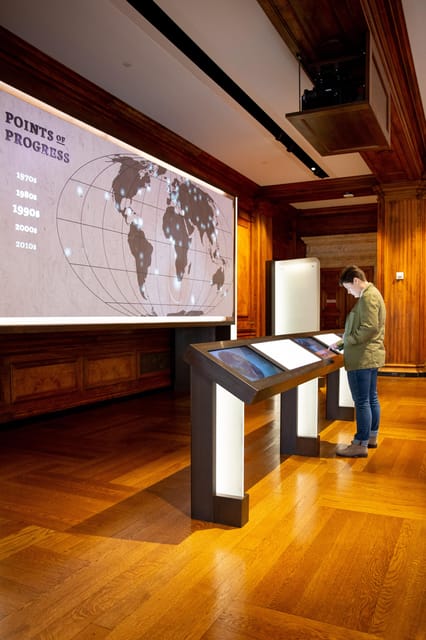
- Points of Progress and the postwar world
- Stories from The Christian Science Monitor
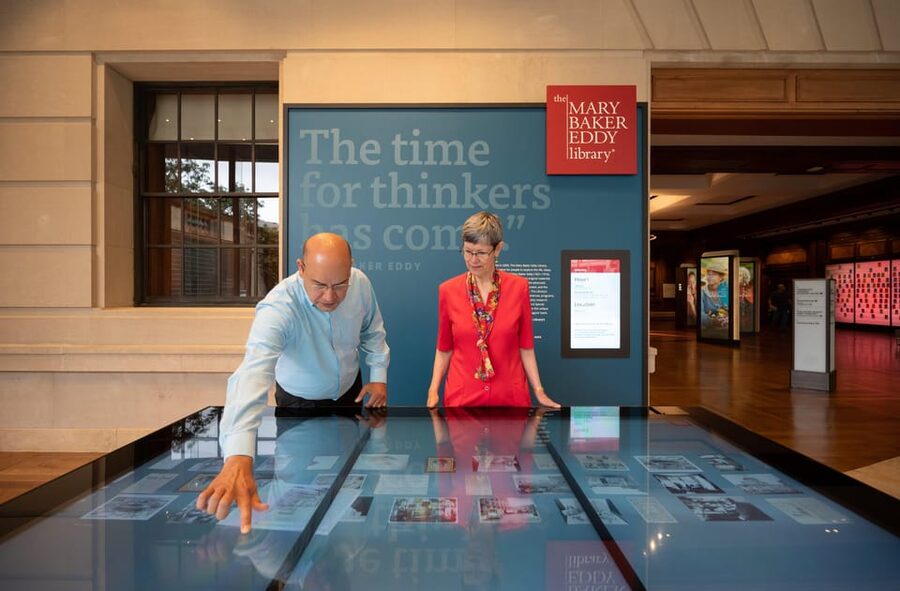
- Mary Baker Eddy and the Christian Science exhibits
- How the $6 price works for your Boston day
- Who will enjoy the Mapparium most
- Practical timing and booking advice
- Should you book this $6 Boston experience?
- FAQ
- How long does the Mapparium experience last?
- What does the $6 ticket include?
- Is the Mapparium a current world map?
- Do I need a timed ticket for all the exhibits?
- What language is the experience offered in?
- Where is the meeting point?
- Is the experience wheelchair accessible?
- Can I bring food or drinks inside?
Key points to know before you go
- A three-story globe you enter from the inside: Walk beneath stained-glass continents instead of viewing a map from a distance.
- The map is fixed in 1935: Borders and country names offer a snapshot of the world before World War II.
- The ticket costs $6 per person: That price covers the timed Mapparium visit and access to the How Do You See the World? experience.
- The extra exhibits are free: Our World: Mapping Progress, Points of Progress, and the Mary Baker Eddy displays do not require another ticket.
- The visit lasts about 20 minutes: You need a timed entry for the Mapparium, while the other exhibits can be visited without a timed appointment.
- English is the only listed language: The experience is wheelchair accessible, and food and drinks are not allowed.
Walking into Boston’s 1935 stained-glass globe
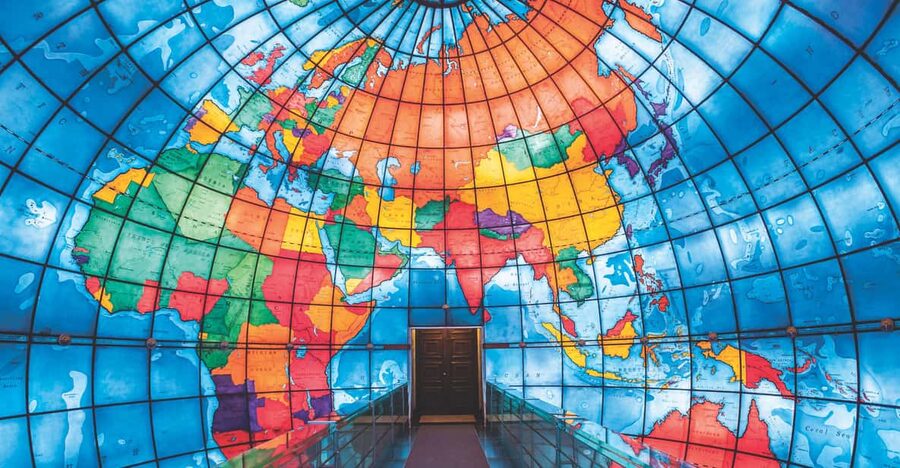
The Mapparium is the reason to book this experience. Instead of looking at a globe from across a room, you step inside a three-story sphere formed from thousands of stained-glass panels. The continents curve above and around you, giving the map a theatrical quality that an ordinary atlas cannot match.
The design also gives you a different sense of distance. You are not standing in front of a flat map with the world spread neatly from left to right. You are inside the map, surrounded by the outlines of countries and oceans. That simple change makes the Mapparium especially appealing if you enjoy geography, maps, architecture, or unusual Boston sights.
The globe is frozen in 1935. That makes it more than a large piece of artwork. It is also a time capsule, showing political borders and names from a period just before the modern world was reshaped by World War II. You will need to remember that this is not a current world map. Its value comes from seeing how the world looked at that particular moment.
The presentation takes place from within the globe and includes narration. The supplied details do not name an individual guide, so you should expect an English-hosted presentation rather than plan around a particular presenter. The timing is fixed, making this part feel more like a short scheduled show than a drop-in gallery.
Other Boston tours people pair with this one:
- History and Hauntings of Salem Guided Walking Tour
★ 5.0 · 14,564 reviews - Boston Duck Boat Sightseeing City Tour with Cruise Along Charles River
★ 4.5 · 9,378 reviews - Boston: Freedom Trail History Small Group Walking Tour
★ 5.0 · 6,450 reviews
What the 20-minute presentation gives you
The Mapparium visit is brief, but the setting does much of the work. The globe’s size creates the first impression, while the narration helps connect the object to history and geography. You may find yourself paying attention to details on the glass that would be easy to miss in a quick photograph.
At only 20 minutes, this is easy to fit between other Boston plans. You will not need to devote half a day to it, and the short length works well for a city itinerary packed with museums, historic sites, and walks. It also makes the experience manageable for families or for anyone who prefers a focused attraction rather than a long guided tour.
The short format has a limit. If you want an extended lecture on cartography, stained glass, or twentieth-century politics, the Mapparium alone will feel too quick. I would treat it as a sharp, memorable centerpiece, then allow time for the exhibits outside so the visit becomes more than a single photo opportunity.
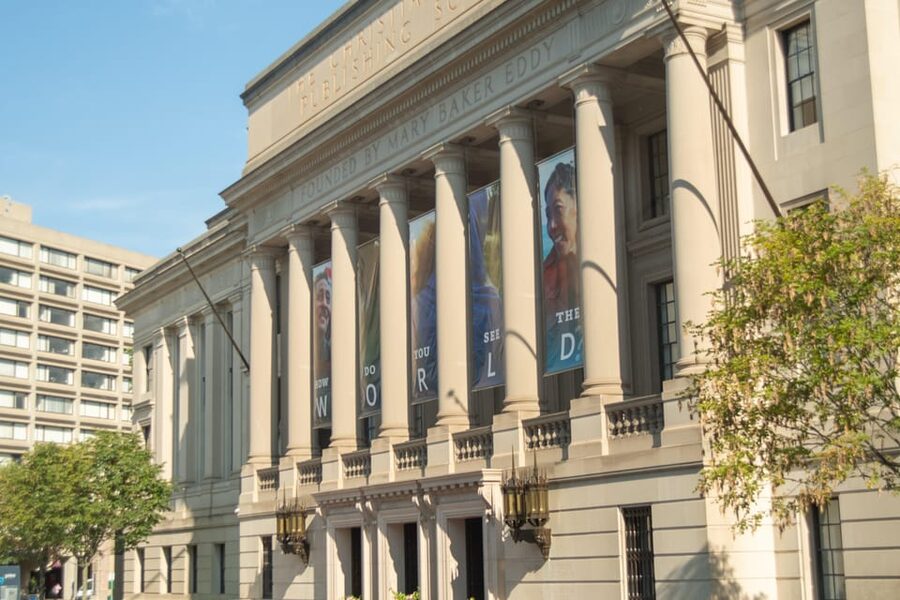
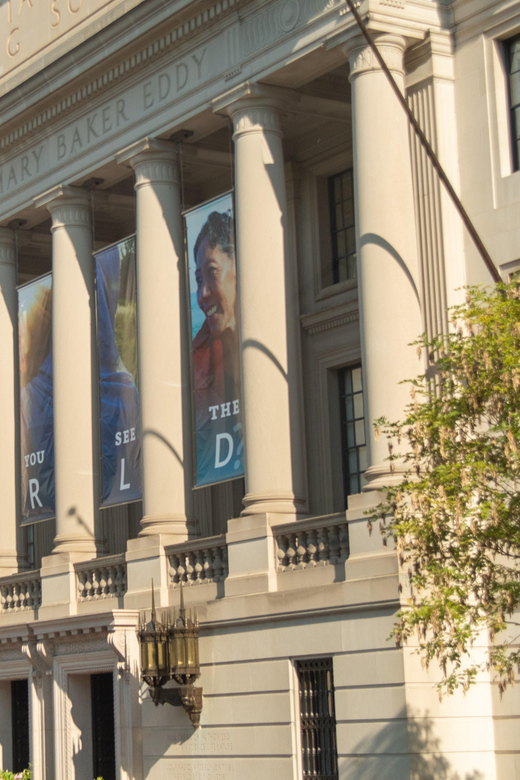
The globe is a timed, ticketed exhibit. Arrive at the building next to the church and look for the large banners marked How Do You See the World? Food and drinks are not allowed inside.
Our World: Mapping Progress after 1935
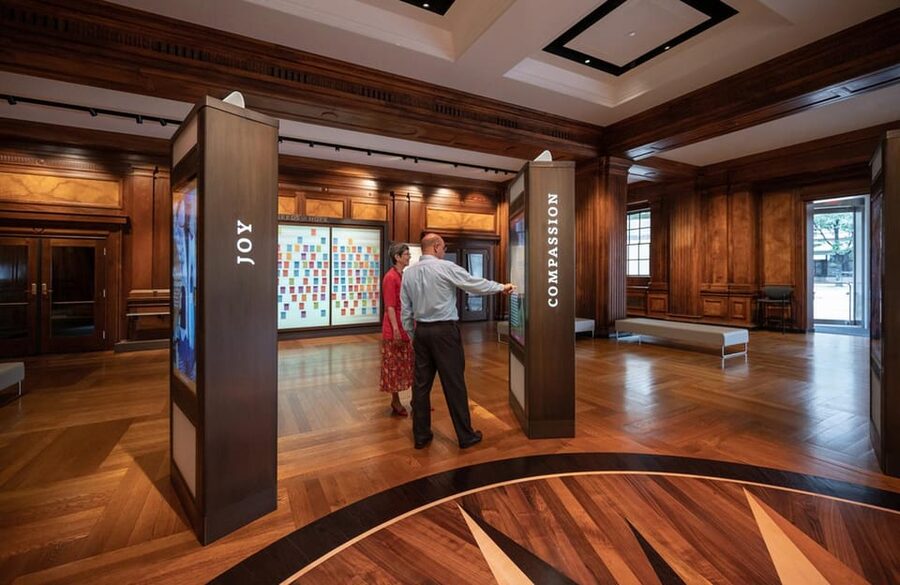
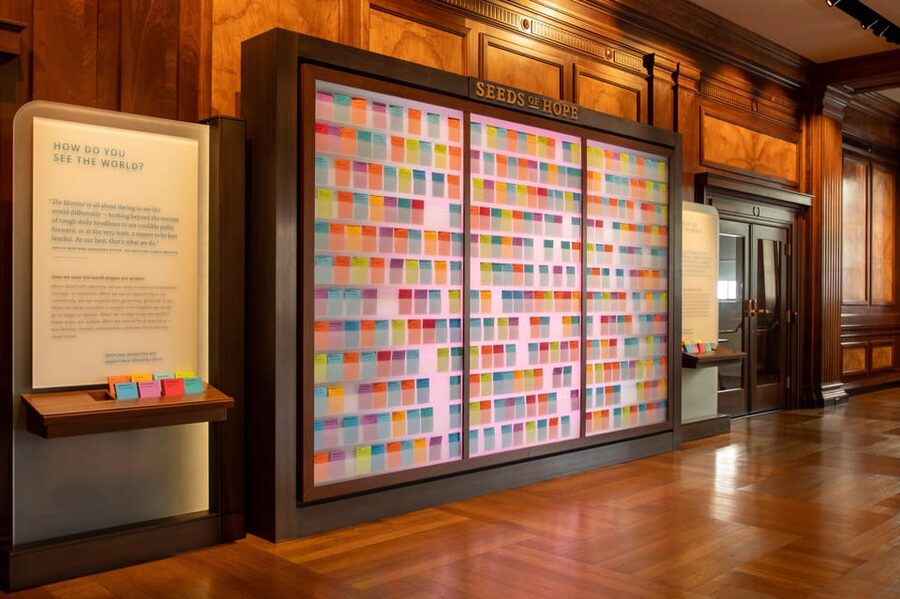
After the Mapparium presentation, the wider experience turns from a snapshot of 1935 to the changes that followed. Our World: Mapping Progress looks at humanity’s advancement since the globe was created and aims to leave you with a sense of hope about the future.
That contrast is the clever part of the visit. Inside the globe, you see a world before a major global conflict. Outside, the exhibits ask you to consider what has changed since then. The two sections work best together: first, you look backward at a fixed map; then, you move through stories about progress over time.
The description does not provide a full list of every display or its exact format, so I would not arrive expecting a conventional museum collection with dozens of labeled objects. Instead, plan for a multimedia experience built around ideas, images, and stories. The subject is broad, covering the advancement of humanity rather than one city or one narrow historical period.
This section is a good reason not to leave immediately after the timed globe visit. The Mapparium may be the visual hook, but Our World gives the visit a larger purpose. It asks you to think about the difference between a world represented on glass and a world changed by people, discoveries, rights movements, and communication.
Points of Progress and the postwar world
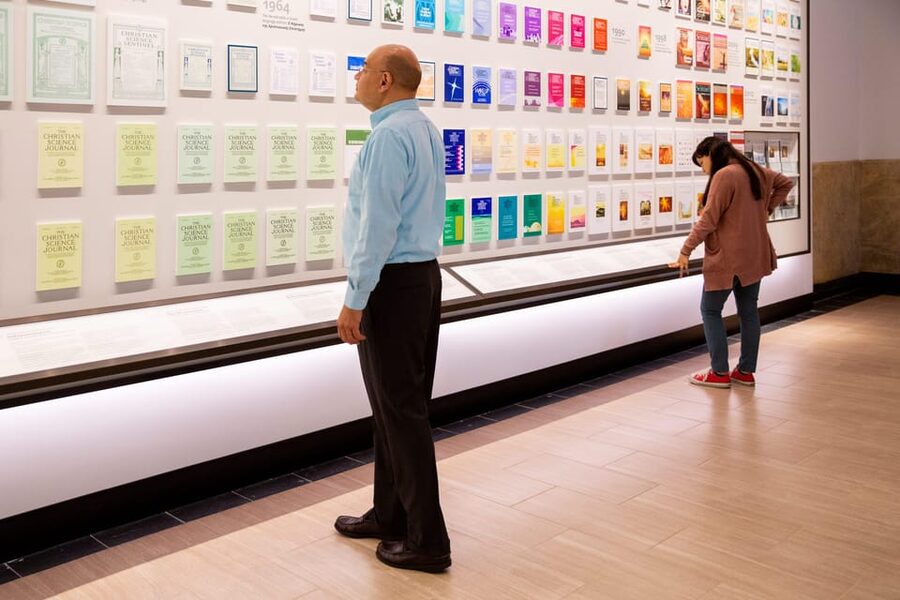
Points of Progress focuses on important developments after World War II. Its themes include human rights, scientific breakthroughs, exploration, and other major changes that affected life around the world.
I like this section because it gives the 1935 globe a useful follow-up. A map can show political boundaries, but it cannot by itself explain how societies changed. This exhibit shifts attention from where countries are located to what people have achieved, challenged, or discovered since the globe’s map was fixed.
The presentation is described as dynamic and multimedia-based. That suggests a more active display than a row of static panels, though the available information does not specify every interactive feature. You can expect the experience to move through selected moments and themes rather than offer a complete timeline of world events.
Keep your expectations measured. No single short attraction can cover human rights, science, exploration, and global progress in equal depth. The benefit is variety. You can move from one subject to another and find the topics that interest you most, while the Mapparium provides a clear visual anchor for the entire visit.
Same city, a very different afternoon:
- Boston Hop-On Hop-Off Trolley Tour with 13 Stops
★ 4.5 · 5,576 reviews - Boston: City Cruises Whale Watching Cruise
★ 4.5 · 4,710 reviews - Salem’s Best Ghost Tour
★ 4.5 · 4,186 reviews - Boston Duck Tour: The Original and World-Famous
★ 4.6 · 3,935 reviews
Stories from The Christian Science Monitor
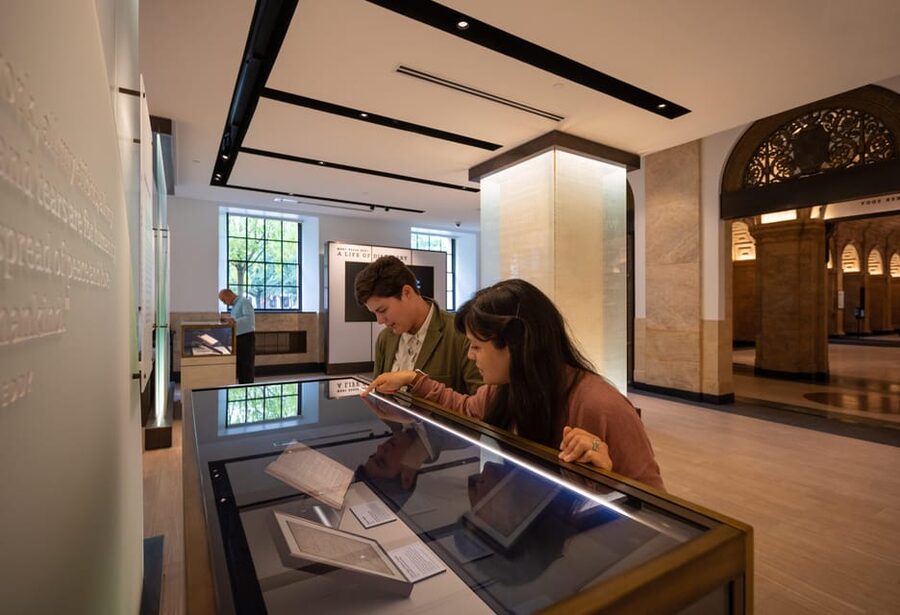
Another part of How Do You See the World? presents eight sets of interactive stories from The Christian Science Monitor. These focus on people shaping their communities around the world.
The stories add a human scale to the larger themes. Instead of viewing progress only through dates and inventions, you encounter individuals and communities working through real problems. That can make the subject easier to connect with, particularly if you prefer personal stories to broad historical summaries.
The Christian Science Monitor began in 1908, founded by Mary Baker Eddy. Its stated mission is to injure no man, but to bless all mankind, and the exhibits connect that idea with the publication’s reporting on resilience and progress.
You should know that this part carries a clear point of view. It presents journalism and human advancement through the values associated with the Monitor and the Christian Science tradition. That does not make it unsuitable for a general visitor, but it does mean you are entering a mission-driven cultural experience rather than a neutral survey of world events.
For me, that perspective is useful when understood in advance. You can appreciate the stories, note the publication’s purpose, and decide for yourself how its values shape the presentation. The interactive format also gives you a chance to spend more time with the subjects that catch your attention.
Mary Baker Eddy and the Christian Science exhibits
The ticket includes access to Christian Science and Mary Baker Eddy, along with The Mary Baker Eddy Library and Exhibit. These displays provide background on the founder of the Monitor and the Christian Science church.
Mary Baker Eddy’s life and ideas are central to the building’s wider story. The exhibits look at her love of the Bible, her ideas, and the way she connected biblical teachings to universal questions. This section gives you context for the institution behind the Mapparium, the newspaper, and the broader How Do You See the World? program.
If your main interest is architecture or geography, you may find this material less immediately engaging than the globe. If you want to understand why these exhibits exist together, though, it is worth allowing time for them. They show that the experience is not simply a Boston attraction built around a striking object. It also reflects a religious and publishing tradition.
The information provided does not specify how long you need for these displays. Since they are always free and do not require a timed ticket, you can approach them at your own pace. I would give them a look even if you only have a short window, then return later if your schedule allows.
How the $6 price works for your Boston day
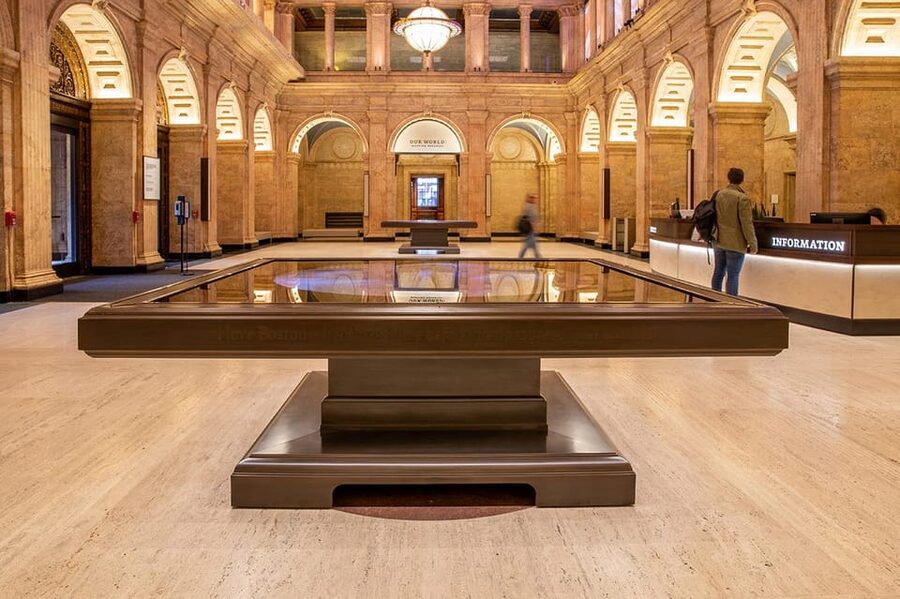
At $6 per person, the Mapparium is inexpensive by Boston attraction standards. The important value comes from the combination of the timed globe entry and the additional exhibits included with the experience.
The Mapparium itself lasts about 20 minutes, so the price would feel less appealing if that were the only thing you saw. But the ticket also opens How Do You See the World?, including Our World: Mapping Progress, Points of Progress, the Christian Science and Mary Baker Eddy exhibit, and The Mary Baker Eddy Library and Exhibit.
The extra displays do not require another timed ticket. That gives you flexibility, especially if you are building a day around nearby Boston sights. You can schedule the Mapparium at a set time, then visit the other areas before or after it without having to rush through each one.
I would not book this as your only major activity of the day. It is too short for that. I would add it to a downtown sightseeing plan, use the 20-minute globe visit as the fixed point, and treat the surrounding exhibits as a worthwhile bonus.
Who will enjoy the Mapparium most
I would recommend this experience to several types of visitors:
- Geography fans: The inside-out view of the globe is the main attraction, and the 1935 map invites close attention.
- History-minded visitors: You can compare the pre-World War II map with the later displays about human rights, science, and exploration.
- Museum visitors with limited time: The timed presentation lasts only 20 minutes, while the other exhibits give you more to see if your schedule is open.
- People curious about Boston institutions: The Mary Baker Eddy and Christian Science displays explain the setting behind the experience.
- Families and mixed-interest groups: The globe offers an immediate visual hook, while the exhibits cover religion, journalism, science, exploration, and human stories.
- Returning Boston residents: Even people who have lived in the city for years may not know the Mapparium is there, so it can make a good local discovery.
I would be more cautious if you want a long tour with a named guide, extensive historical detail, or a current political map. The listed host or greeter speaks English, but no guide’s name is provided, and the globe itself is intentionally dated to 1935.
The attraction is wheelchair accessible, which makes it easier to include in a city day for visitors who need step-free access. The available details do not specify the exact route or seating arrangements, so you may want to confirm any special needs before booking.
Practical timing and booking advice
The Mapparium requires a timed entry, so check the available starting times before you settle your Boston schedule. The other exhibits are free and do not require timed tickets, but your visit should be planned around the globe appointment.
For flexibility, the booking terms allow cancellation up to 24 hours in advance for a full refund. You can also reserve now and pay later, which is useful if you are still arranging the rest of your trip.
Look for the large How Do You See the World? banners on the building next to the church. That detail matters because the meeting point is described by the building and signage, not by a separate street landmark.
English is the listed language for the experience. Food and drinks are not allowed, so finish snacks before entering and plan any refreshment stop around the visit.
The overall rating is 4.8 from 32 reviews, with especially strong praise for the unusual globe, the quality of the guides, and the sense of discovery. One local visitor said the attraction was unknown to them even after 15 years in Boston, while another described it as well worth the 20-minute investment. Those details fit the experience’s real appeal: it is short, distinctive, and easy to overlook.
One visitor from Italy also happened to join a church tour and hear its large organ on a Friday. That church tour and organ experience are not listed as guaranteed parts of this activity, so do not book the Mapparium expecting them. If additional access happens to be available, consider it a bonus rather than part of your plan.
Should you book this $6 Boston experience?
Yes, if you like unusual buildings, maps, history, or compact museum visits. The Mapparium is genuinely different, and the low price becomes stronger because it includes the surrounding exhibitions on progress, journalism, Mary Baker Eddy, and Christian Science.
Book it as a short stop within a larger Boston day, not as a full afternoon attraction. Give yourself enough time to see the free exhibits, especially Points of Progress and the Mary Baker Eddy displays, then let the timed globe visit provide the highlight.
If you only want a current map or a long guided tour, choose another Boston activity. But if you want a memorable look at a 1935 world and a thoughtful set of exhibits about what came after it, the Mapparium offers good value for 20 minutes and $6.
FAQ
How long does the Mapparium experience last?
The listed duration is 20 minutes. The additional exhibits can extend your visit, but no set duration is provided for them.
What does the $6 ticket include?
It includes timed entry to the Mapparium Globe and entry to the How Do You See the World? experience, including the Christian Science and Mary Baker Eddy Exhibit and The Mary Baker Eddy Library and Exhibit.
Is the Mapparium a current world map?
No. The globe is frozen in 1935, so it shows the world before World War II rather than current borders and place names.
Do I need a timed ticket for all the exhibits?
No. The Mapparium is timed and ticketed. The other exhibits are free and do not require a timed ticket.
What language is the experience offered in?
The listed language is English, and the host or greeter is English-speaking.
Where is the meeting point?
Look for the large banners reading How Do You See the World? on the building next to the church.
Is the experience wheelchair accessible?
Yes, the experience is listed as wheelchair accessible.
Can I bring food or drinks inside?
No. Food and drinks are not allowed.
Just added around Boston
- Day Trip from Boston: Explore Hammond Castle Museum★ 3.7 · 3 reviews
- Boston: WNDR Museum Entry Ticket★ 3.7 · 3 reviews
- The Boston Bash Scavenger Hunt★ 4.5 · 3 reviews
- Self-Guided Audio Tour of Boston North End★ 4.5 · 3 reviews
- Boston: Official Freedom Trail® Lantern Tour★ 4.7 · 3 reviews
- Boston: North End Walking Tour with Private Harbor Cruise★ 5.0 · 3 reviews
- Self Guided “The North End Pizza, Cannoli and Picnic” Solo Walking Tour★ 5.0 · 3 reviews
- Cambridge: Haunted Charles River Cruise★ 4.3 · 3 reviews
Boston Tours, compared.

Boston Duck Boat Sightseeing City Tour with Cruise Along Charles River
Read our review →
Freedom Trail History Small Group Walking Tour
Read our review →
Boston Hop-On Hop-Off Trolley Tour with 13 Stops
Read our review →

Boston Duck Tour: The Original and World-Famous
Read our review →
Harvard University Campus Guided Walking Tour
Read our review →
Boston Fenway Park: Guided Ballpark Tour with Options
Read our review →