Reviewed · TOURS
Boch Center Wang Theatre Tour & Folk Americana Roots Hall of Fame
Boston’s Boch Center Wang Theatre is more than a pretty auditorium. This 1925 movie palace still has the scale of a grand public hall, but the tour also shows you the working side of a performing-arts venue, from backstage spaces to the stage itself and the practical systems that keep the building running.
I like two things here: standing on the huge stage gives the visit a real sense of place, and the Folk Americana Roots Hall of Fame adds a second layer for anyone interested in American music. The main consideration is that backstage access depends on theatre operations, so a performance may close off some areas.
- Walk behind the scenes at one of Boston’s best-known historic theatres.
- Stand on the Wang Theatre stage, subject to current access.
- See autograph walls near the dressing rooms.
- Explore the Folk Americana Roots Hall of Fame and its music exhibits.
- Learn about the theatre’s unusual cooling system and daily operation.
- Join a small group of no more than 10 people for a more personal tour.
In This Review
- Why the Wang Theatre feels different from a normal theatre visit
- Entering the 1925 Wang Theatre
- Seeing the stage, dressing rooms, and backstage areas
- The building’s practical side, including its cooling system
- Folk Americana Roots Hall of Fame and Boston’s music story
- What makes the guided format worthwhile
- Architecture worth studying before you leave
- Is $25 a good value?
- Who should book this theatre tour?
- My call on the Boch Center Wang Theatre visit
- FAQ
- Where does the Boch Center Wang Theatre tour begin?
- Where does the tour end?
- How long does the tour last?
- How much does the tour cost?
- Is a mobile ticket available?
- Does the tour include backstage access?
- Can a performance affect the tour route?
- Does the tour include the Folk Americana Roots Hall of Fame?
- Is transportation or parking included?
- What is the cancellation policy?
Why the Wang Theatre feels different from a normal theatre visit
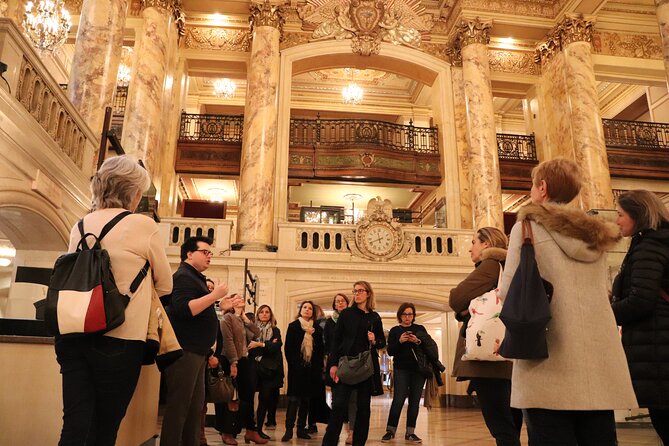
Most theatre visits begin and end in the audience. This one takes you beyond the polished seats and ornate room, giving you a look at the building as a working arts center.
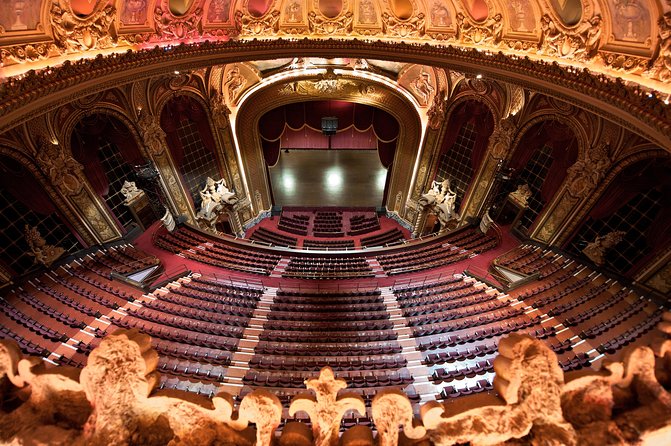
The Wang Theatre opened in 1925, when large movie houses were designed almost like cathedrals. The goal was not simply to screen a film. It was to make the act of going to the movies feel grand. That design still comes through in the architecture, ceiling decoration, sculpted details, and broad stage.
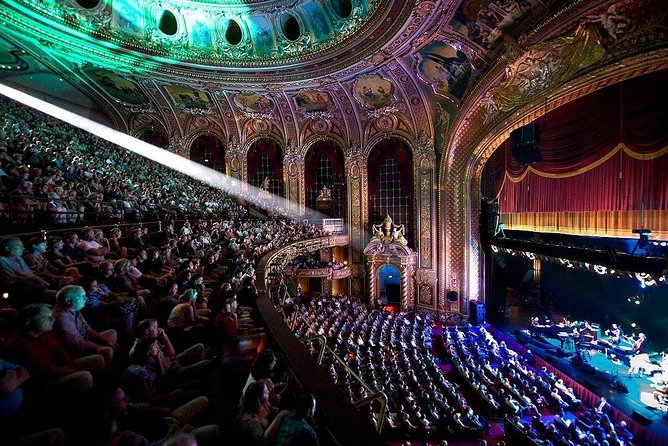
Your guide explains how the theatre moved from its early role as a movie house to its current life as a venue for major music and performing-arts events. That shift gives the building a useful human story. You are not only looking at old decoration. You are seeing how one large Boston venue has adapted to changing audiences and changing entertainment.
The tour lasts about one hour, though the overall activity is listed at roughly one hour and 15 minutes. That extra time can matter if the guide pauses for questions or if the group needs to move between public and backstage areas.
Entering the 1925 Wang Theatre
The tour begins at the Boch Center Wang Theatre, 270 Tremont Street, in Boston. It ends at the same place, so you do not need to arrange a separate pickup or find your way across the city afterward.
The building is near public transportation, which is the sensible way to reach it. Parking is not available at the theatre, so do not plan on pulling up and leaving your car there during the tour. A mobile ticket makes entry simple, but one practical point is worth knowing: the building entrance may be locked when you arrive. If that happens, check the contact number on your ticket instead of assuming that the tour has been canceled or that you are at the wrong address.
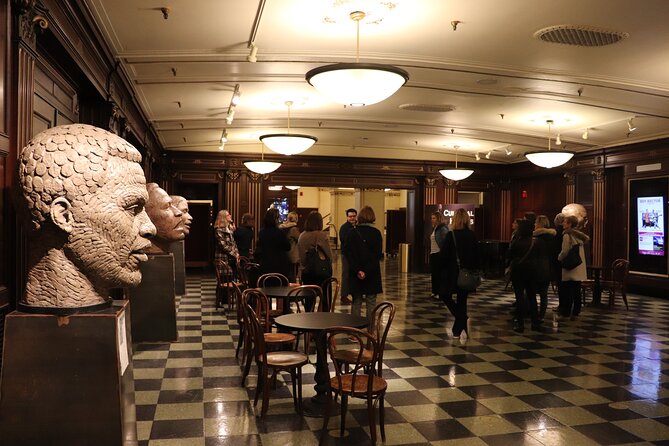
Once inside, you can take in the theatre at a slower pace than you usually can before a concert. During a performance, crowds and time pressure make it hard to look up, study the decoration, or notice how the room is arranged. A quiet tour gives you room to appreciate the architecture without the usual event rush.
More theatre and live shows in Boston:
- Blue Man Group Boston Admission at the Charles Playhouse
★ 4.5 · 54 reviews - Boston: Boch Center Wang Theater Behind the Scenes Tour
★ 4.8 · 31 reviews - Private Boch Center Wang Theatre & Folk Americana Roots Hall of Fame Tour
★ 5.0 · 15 reviews
Seeing the stage, dressing rooms, and backstage areas
The backstage portion is the strongest reason to book this experience. You may see parts of the theatre that are normally closed during a public performance, including areas connected to the stage and dressing rooms.
Standing on the stage helps you understand the room from the performer’s point of view. From there, the auditorium takes on a different shape. The scale that feels impressive from a seat becomes even more obvious when you look out from the performance area.
The dressing-room corridor has autograph walls connected with performers who have appeared at the theatre. This is a small detail, but it gives the backstage visit a personal touch. Instead of seeing only empty corridors and equipment, you get a sense of the many artists who have passed through the building.
Access is not guaranteed to every backstage area. The theatre continues to operate as a performing-arts venue, and an event in progress may limit where the tour can go. The tour provider also notes that some areas may not be available to every participant. If reaching the stage or a particular backstage room is essential to you, keep that limitation in mind before booking.
One visitor felt that the tour did not reach the backstage areas expected. The response explained that performance schedules can restrict access and offered a return visit when more areas are open. That is a fair warning: the tour can offer a behind-the-scenes look, but the exact route is not fixed every day.
The building’s practical side, including its cooling system
The Wang Theatre is easy to admire from an artistic point of view, but the tour also touches on the less glamorous machinery that keeps a large old building usable.
One unusual point raised during the visit is the theatre’s cooling system. You might not expect climate control to be a memorable part of a theatre tour, but in a huge historic room, keeping the space comfortable is a serious operating task.
This practical detail helps connect the old architecture with present-day use. The building is not preserved as a frozen museum. It needs daily care, maintenance, staff, performers, and technical systems to function as a modern venue.
The guide also explains day-to-day operations at a performing-arts center. The exact amount of operational detail may depend on the guide and what areas are open, but this part should appeal to you if you like learning how public buildings work behind the scenes.
Folk Americana Roots Hall of Fame and Boston’s music story
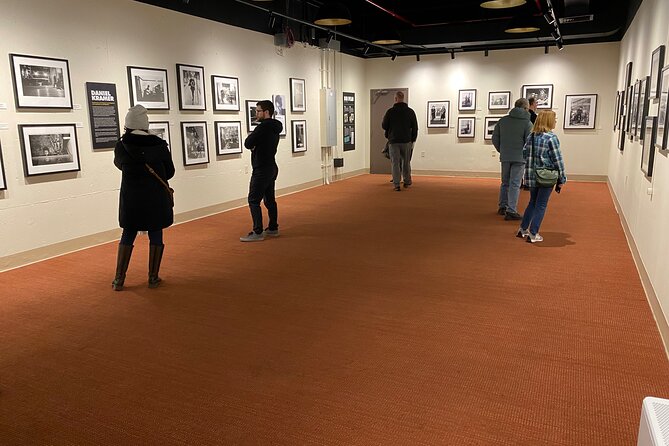
The tour includes access to the Folk Americana Roots Hall of Fame, presented inside the theatre. The exhibits celebrate American music and help place Boston within that wider musical story.
This part is especially useful if you want more than architecture. The Wang Theatre supplies the setting, while the hall of fame adds music memorabilia and displays. Together, they connect the building to performers, songs, and the traditions that shaped American popular music.
The music collection is still developing, with part of the experience described as an upcoming Folk Americana Roots Hall of Fame. That means the displays may change over time. You could find exhibits celebrating music history and the people linked with the hall, but you should not expect a large, finished music museum on the scale of a full-day institution.
The collection works best as a companion to the theatre tour. If you care mainly about ornate architecture, you may spend more time looking at the auditorium. If you enjoy folk, roots, or Americana music, the exhibits give the visit extra value and a clearer reason to stay after the backstage portion.
Same city, a very different afternoon:
- History and Hauntings of Salem Guided Walking Tour
★ 5.0 · 14,564 reviews - Boston Duck Boat Sightseeing City Tour with Cruise Along Charles River
★ 4.5 · 9,378 reviews - Boston: Freedom Trail History Small Group Walking Tour
★ 5.0 · 6,450 reviews - Boston Hop-On Hop-Off Trolley Tour with 13 Stops
★ 4.5 · 5,576 reviews
What makes the guided format worthwhile
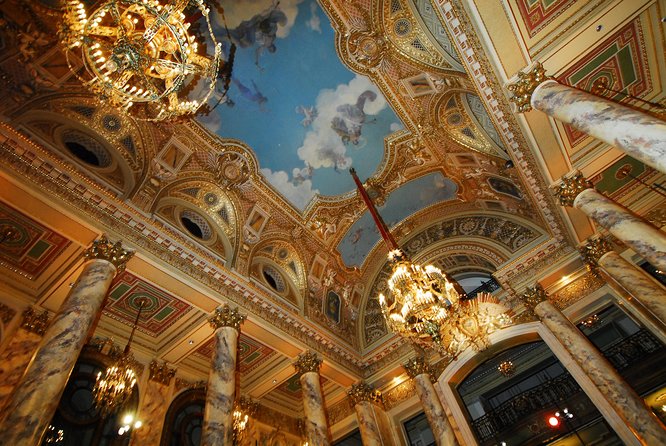
A guide is important here because many of the building’s best details are easy to miss. You can admire the ceiling and sculpted decoration on your own, but a guide supplies the context about the theatre’s movie-palace years, present use, and operating systems.
The strongest guiding style for this tour is clearly enthusiastic and informed. One guide was praised for being passionate and for explaining the theatre well. Another visit was described as a very informative walking tour. The exact guide is not named in the available information, so you should not book expecting a specific person.
The maximum group size is 10 people. That is a useful limit for a backstage tour. In a small group, you have a better chance of hearing the explanation, asking a question, and moving through narrow areas without a large crowd.
The tour is not designed as a private architectural consultation, and the amount of time at each stop will vary. Still, the small-group format gives it a more personal feel than a large pre-show walk-through.
Architecture worth studying before you leave
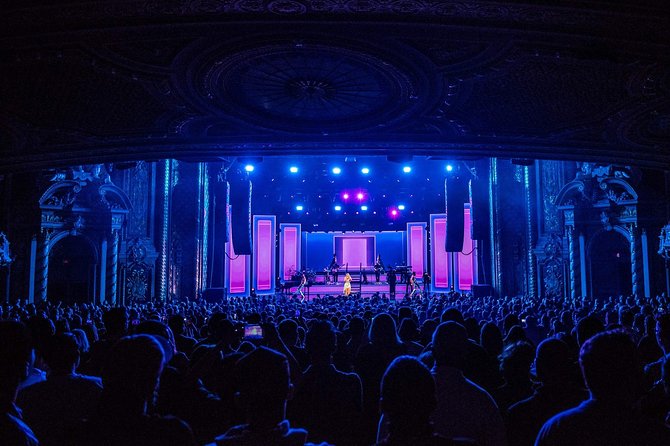
The auditorium is the visual centerpiece. Look up at the ceiling, where decorative sculpture and artwork sit high above the audience. Some details are difficult to see clearly from the floor, and one person found that the high placement made the art hard to appreciate.
That limitation is worth accepting before you arrive. The room is large, and not every decorative feature is easy to inspect at close range. If architectural detail is your main goal, bring your patience and take time to let your eyes adjust. The guide may point out features you would otherwise overlook.
The restored interior is best appreciated without the crowds of a concert night. You can study the room, notice the proportions, and compare the public areas with the backstage spaces. The result is a visit that combines visual beauty with the slightly rougher, more practical character of a working theatre.
Is $25 a good value?
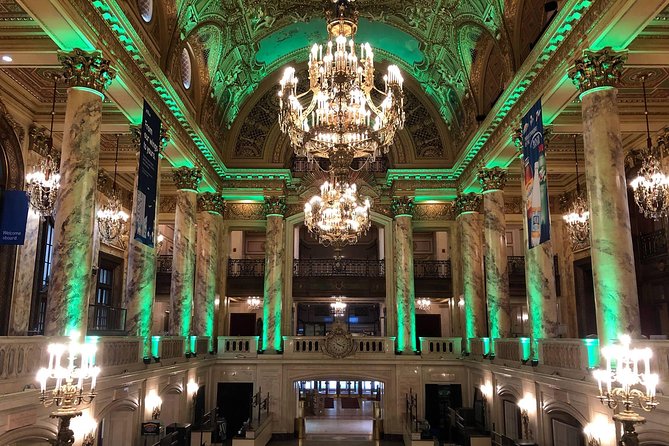
At $25 per person, this is a fair price for a guided visit lasting about an hour to an hour and 15 minutes, especially because it combines three elements: the grand auditorium, backstage access, and the Folk Americana Roots Hall of Fame.
The value is strongest if you would not otherwise attend a performance at the Wang Theatre. A concert ticket can cost far more, and a performance does not normally let you examine the theatre at your own pace or visit backstage areas.
The price is less compelling if you want a large museum with hours of exhibits. The hall of fame is part of the tour rather than a separate full-day attraction, and the theatre may restrict access to certain areas when a performance is being prepared or presented.
I would see this as a focused Boston culture stop. It fits neatly into a day around the Theatre District, Chinatown, Boston Common, or nearby downtown sights. Because the tour is short, you can pair it with another activity rather than giving it an entire day.
The experience is often booked about eight days in advance. That is not a rule, but it suggests that planning ahead is wise if your Boston schedule is tight. Free cancellation is available up to 24 hours before the start time. Inside that window, refunds are not offered and changes are not accepted.
Who should book this theatre tour?
I would recommend it to you if you like historic buildings, live music, theatre operations, or American music culture. It also works well for visitors who want a quieter look at a Boston landmark without buying a ticket to a performance.
Families and general sightseers can take part, since most people can participate and service animals are allowed. The tour is near public transportation, but some spaces may not be accessible to all participants. If you have specific mobility needs, contact the provider before booking rather than assuming every backstage route will be open.
Music fans will probably get the most from the combination of stage access, performer-related displays, and the Folk Americana Roots Hall of Fame. Architecture fans will enjoy the restored interior, though they should know that some ceiling artwork sits high above and may be hard to study.
This is less suitable if you need guaranteed access to every backstage room, want a long museum visit, or dislike tours shaped by venue schedules. A performance can change the route, and that is part of visiting a working theatre rather than a static museum.
My call on the Boch Center Wang Theatre visit
Book this tour if you want a compact, reasonably priced look at one of Boston’s grandest theatre interiors, with the added bonus of backstage access and music exhibits.
I especially like the chance to stand on the stage, see the autograph walls, and learn how the building functions day to day. Just keep your expectations flexible about the route. The theatre remains active, so not every area will always be open.
For $25, this is a good pick for a first Boston visit, a rainy afternoon, or a music-focused itinerary. If the ornate auditorium alone is enough to interest you, the tour should satisfy. If you need a guaranteed backstage route, confirm current access before you commit.
FAQ
Where does the Boch Center Wang Theatre tour begin?
The tour begins at the Boch Center Wang Theatre, 270 Tremont Street, Boston, Massachusetts 02116.
Where does the tour end?
The activity ends back at the theatre meeting point.
How long does the tour last?
The guided tour lasts about one hour, while the overall experience is listed at approximately one hour and 15 minutes.
How much does the tour cost?
The price is $25 per person.
Is a mobile ticket available?
Yes. The experience includes a mobile ticket.
Does the tour include backstage access?
Yes. It includes a guided backstage tour, but all theatre areas are subject to availability.
Can a performance affect the tour route?
Yes. Areas may be closed when a performance is taking place, so access to some backstage spaces is not guaranteed.
Does the tour include the Folk Americana Roots Hall of Fame?
Yes. Admission to the Folk Americana Roots Hall of Fame is included.
Is transportation or parking included?
No transportation is included, and parking is not available at the theatre. The venue is near public transportation.
What is the cancellation policy?
You can cancel at least 24 hours before the start time for a full refund. Cancellations or changes made within 24 hours are not accepted and are not refunded.
Just added around Boston
- Day Trip from Boston: Explore Hammond Castle Museum★ 3.7 · 3 reviews
- Self-Guided Audio Tour of Boston North End★ 4.5 · 3 reviews
- Boston: WNDR Museum Entry Ticket★ 3.7 · 3 reviews
- The Boston Bash Scavenger Hunt★ 4.5 · 3 reviews
- Boston: Official Freedom Trail® Lantern Tour★ 4.7 · 3 reviews
- Boston: North End Walking Tour with Private Harbor Cruise★ 5.0 · 3 reviews
- Self Guided “The North End Pizza, Cannoli and Picnic” Solo Walking Tour★ 5.0 · 3 reviews
- Cambridge: Haunted Charles River Cruise★ 4.3 · 3 reviews
Tours, compared.
History and Hauntings of Salem Guided Walking Tour
Read our review →
Boston Duck Boat Sightseeing City Tour with Cruise Along Charles River
Read our review →
Freedom Trail History Small Group Walking Tour
Read our review →
Boston Hop-On Hop-Off Trolley Tour with 13 Stops
Read our review →
Boston Duck Tour: The Original and World-Famous
Read our review →
Harvard University Student-Guided Walking Tour
Read our review →