
Reviewed · WALKING TOURS IN SALEM
Salem: 1692 Witchcraft Trials Walk
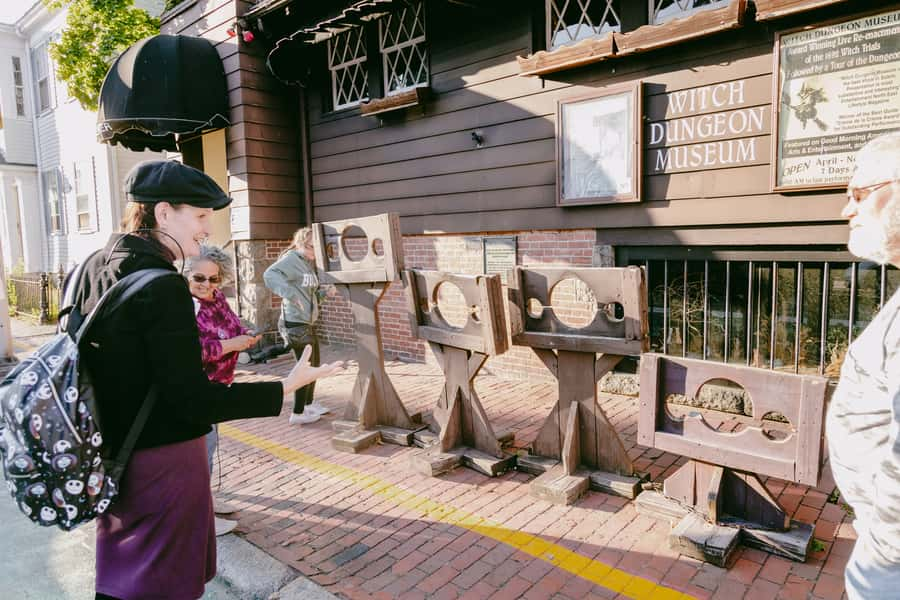
The most useful thing about this Salem walk is that it puts the witch trials into the streets where the crisis unfolded. Over 90 minutes, you follow the chain from two girls having fits to a frantic hunt for the Devil, with stops tied to the jails, courthouse, judges, and people accused of witchcraft. It is less a spooky stroll than a lesson in how fear can take over a small town.
I like the personal stories at the heart of the tour. Names and dates matter, but the human details make the story easier to grasp. I also like the route itself: eight to ten stops over a little more than a mile, with a fairly flat path and an English-speaking guide who can use an amplifier for a large group.
The main consideration is that you are walking through modern Salem, not entering preserved 1692 buildings at every stop. Some locations are connected to the events by history rather than presented as a complete colonial-era scene. Tours run rain or shine, so comfortable shoes and weather-ready clothing are essential.
In This Review
- Key points at a glance
- Why this walk is a better starting point than a haunted attraction
- Meeting at Central Street
- Stop one: how the accusations began
- Stops tied to the accused
- The jails and the cost of accusation
- The courthouse and the machinery of fear
- Homes of the judges and the accused
- Guides, humor, and the way the story is told
- Pace, access, and weather
- Is $25 a fair price?
- Who should book this Salem walk?
- Booking and cancellation details
- Should you book the 1692 Witchcraft Trials Walk?
- FAQ
- How long is the Salem Witchcraft Trials Walk?
- How far do I walk?
- Where does the tour start?
- Where does the tour end?
- Is the route wheelchair accessible?
- What language is the tour offered in?
- What should I bring?
Key points at a glance
- Two girls and a town in crisis: Learn how the first accusations grew into a wider campaign against supposed witchcraft.
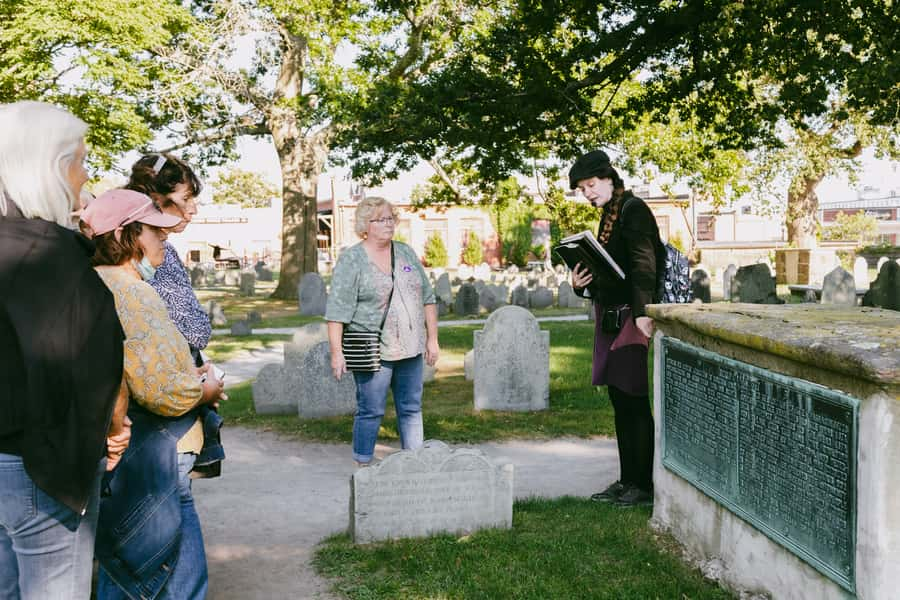
- Eight to ten Salem stops: See places linked to jails, the courthouse, judges, and accused residents.
- A little over one mile on foot: The route takes 1.5 hours and is fairly flat.
- People, not just legends: Hear about family rivalries, political pressure, fear, and the lives behind the accusations.
- Guides with different styles: Christine, Bob, Mark, James, and Stache have all led tours, with guides praised for humor, energy, and strong local knowledge.
- Flexible booking: The $25 price includes the guide and tour, with free cancellation up to 24 hours before the start.
Why this walk is a better starting point than a haunted attraction
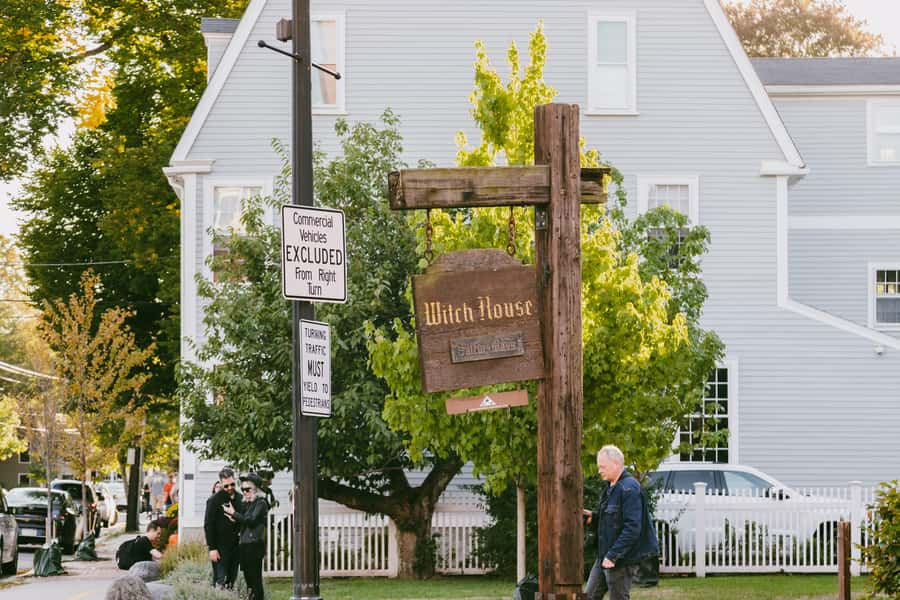
Salem has no shortage of witch-themed attractions. Some lean hard into costumes, ghosts, and Halloween atmosphere. This walk takes a more useful route by asking how the 1692 crisis happened in the first place.
You hear about fear, political turmoil, and family rivalries rather than getting only a parade of eerie tales. That distinction matters. The witch trials were not a single strange incident. They grew through testimony, suspicion, local conflict, and a court system willing to accept claims that would not meet modern standards of evidence.
I like beginning a Salem visit with this kind of walk because it gives you a framework for the rest of the city. Once you understand who was accused, who held power, and where suspected witches were confined, other museums and historical sites make more sense.
The walk also keeps the subject human. Twenty people were executed for witchcraft in 1692, and five more died in jail. Those numbers can become abstract quickly, but the tour connects them to homes, families, and neighbors. That makes the tragedy harder to dismiss as a bit of old folklore.
More Walking Tours in Salem
- History and Hauntings of Salem Guided Walking Tour
★ 5.0 · 14,564 reviews - Salem Voodoo, Vampires, and Ghosts Guided Walking Tour
★ 5.0 · 1,931 reviews - Bewitched Walking Tour of Salem
★ 5.0 · 1,895 reviews
Meeting at Central Street
The tour starts at 8 Central Street. Look for the large brick building at the corner of Essex and Central Streets, marked by purple signs. This is a simple meeting point, but give yourself a few minutes to find the right building, especially if you are arriving during a busy day in Salem.
The tour ends back at the same place. That is practical if you want to continue exploring from a known point, though one person wished the route had finished somewhere closer to the middle of town. You should think of the walk as a loop from the meeting point rather than a one-way transfer to another attraction.
Starting times vary, so check availability before building the rest of your day around it. A 90-minute tour fits neatly into a morning or afternoon, and it can work well as the first activity of a Salem visit. Several people found that the walk gave them a useful introduction to the city before tackling other sights.
Stop one: how the accusations began
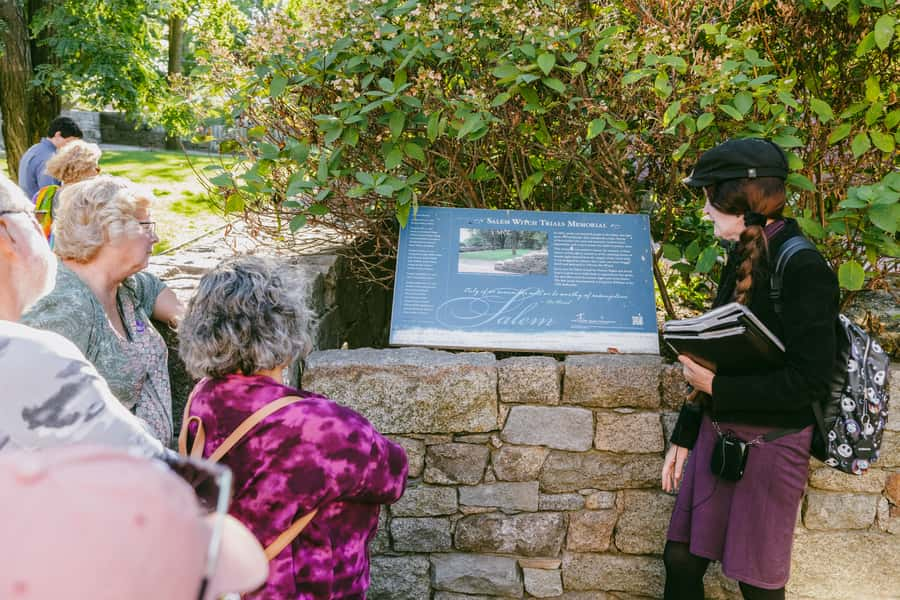
The story starts with the strange fits of two girls. From there, the guide explains how a local concern became a public emergency. The important point is not simply that accusations began, but that they gained force as adults, officials, and families accepted increasingly alarming claims.
Expect the guide to connect the early events with the mood of the community. Fear did not move through Salem in isolation. It mixed with religious concern, political tension, disputes between families, and old arguments between neighbors.
This opening section gives you the basic question for the entire walk: why did so many people believe that ordinary residents were working with the Devil? The answer is not reduced to one cause. That layered explanation is one of the strongest parts of the experience.
The guide also helps you track the spread of suspicion. Neighbor testified against neighbor, and family members could find themselves on opposite sides of the accusations. You get a clearer idea of how quickly a claim could become a charge, and how a charge could become a death sentence.
Stops tied to the accused
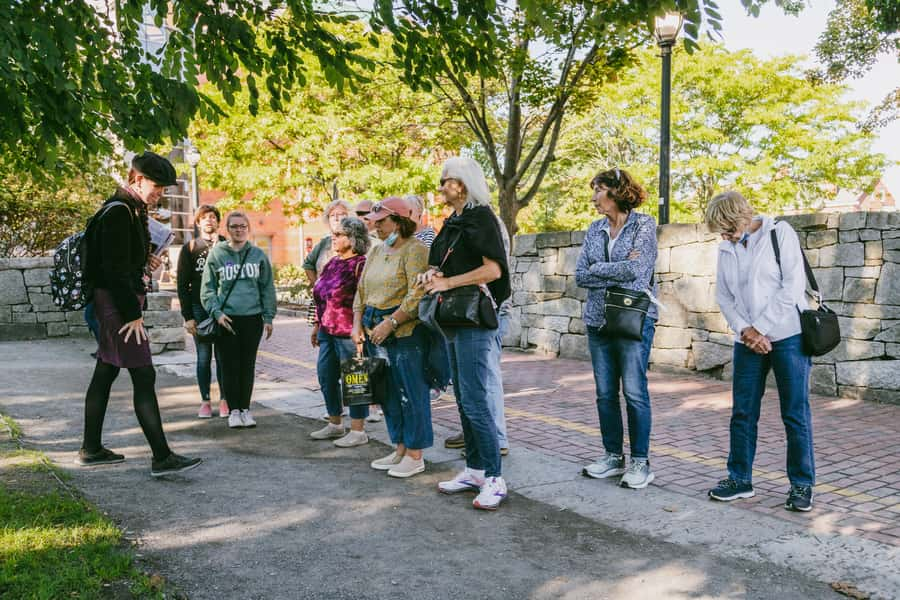
The walk brings the accused people into view through the places associated with their lives. Homes and nearby streets help you picture the accused as residents of a small community, not as distant names in a textbook.
This is where the tour’s personal stories carry the most weight. You learn about people caught in a system driven by panic, public pressure, and weak evidence. The guide may also explain how accusations affected families and how testimony could turn private tensions into public danger.
Do not expect every home connected with the trials to survive as a perfectly preserved building. The value comes from standing in the area and hearing what happened there. You are using the modern street as a reference point for an older community.
That can be a drawback if you want a museum-style presentation with extensive artifacts. It can also be an advantage. Walking between sites keeps the story tied to place and shows how close together many parts of Salem were.
Same city, a very different afternoon:
- Salem’s Best Ghost Tour
★ 4.5 · 4,186 reviews - Satanic Salem Walking Tour
★ 5.0 · 1,635 reviews - Mysteries and Murders of Salem Guided Night-Time Walking Tour
★ 5.0 · 1,488 reviews - The Salem Witch Walk
★ 4.5 · 1,301 reviews
The jails and the cost of accusation
The jail stops bring the consequences of the accusations into focus. Suspected witches were held in harsh conditions, and five people died in jail. That detail changes the shape of the story: imprisonment itself could be fatal, even before a trial ended in execution.
The guide explains where suspected witches were confined and how the jail fit into the larger process. You should listen for the distinction between accusation, imprisonment, examination, and execution. These were connected steps, but they were not the same thing.
A walking tour cannot recreate the physical conditions of a 1692 jail, and the modern sites may not offer a full interior visit. Still, this part of the route is valuable because it moves the story beyond courtroom drama. The accusations had real effects on bodies, families, and daily life.
I also appreciate the walk’s restraint here. The subject is grim enough without turning suffering into a cheap scare. The better guides keep the focus on the people and the choices that led to the tragedy.
The courthouse and the machinery of fear
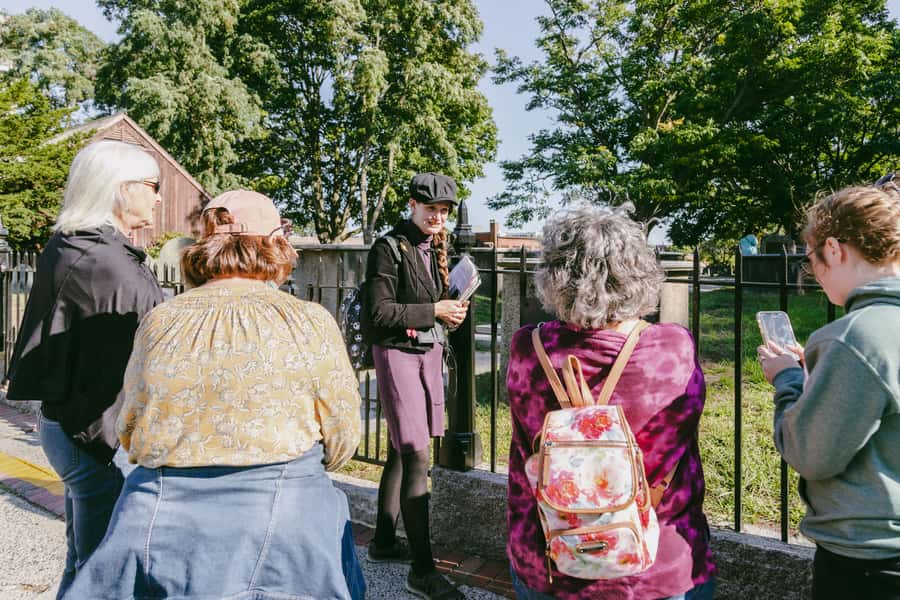
The courthouse stop lets you consider the official side of the crisis. The accusations did not remain private rumors. They entered a legal process, with judges and testimony giving the panic a formal setting.
You learn about the judges connected with the trials and see places associated with the court. The guide explains how the proceedings helped turn community fear into official action. This is an important part of the tour because it shows that the disaster was not caused only by frightened neighbors. Authority played a central role.
At this point, the walk becomes a lesson in power. A claim can be damaging, but an institution gives that claim reach. Once officials accept a story, the accused person faces far more than gossip. They face confinement, questioning, public suspicion, and the possibility of death.
The courthouse stop also gives you a chance to think about what evidence means. The tour focuses on the 1692 setting, but the lesson feels current without needing a forced modern comparison. Panic grows faster when people stop asking careful questions.
Homes of the judges and the accused
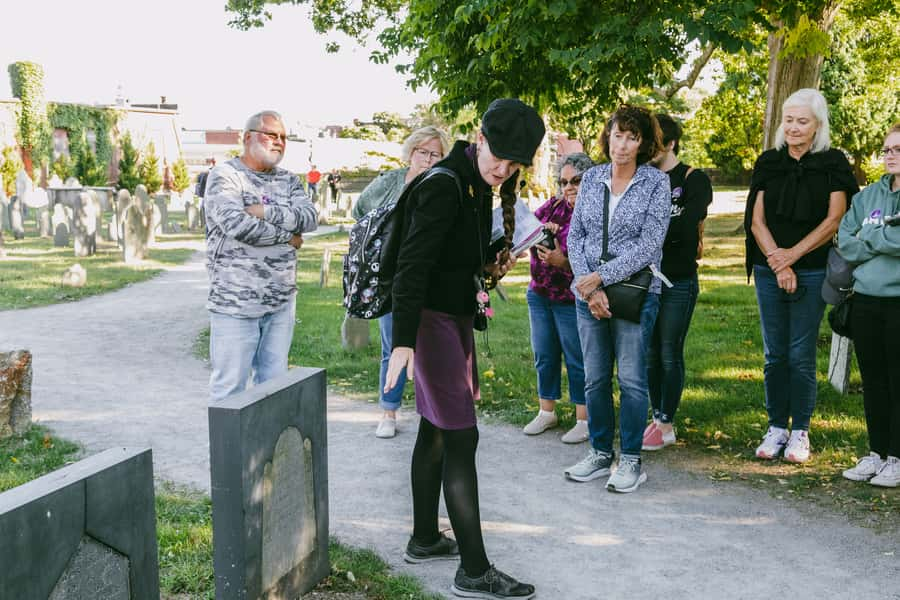
Seeing locations linked to both judges and accused people creates a useful contrast. The walk does not keep power in one district and suffering in another. Instead, it shows how the crisis ran through the same community.
The judges’ homes help you understand who held influence during the trials. The accused people’s homes bring the story back to ordinary lives. Moving between the two makes the imbalance clear: one side had authority and the other had to answer accusations that could be almost impossible to disprove.
The homes also help explain family rivalries. The tour treats local disputes as part of the story without claiming that every accusation came from one simple feud. Some conflicts may have involved land, status, religion, or longstanding resentment. The larger point is that old tensions found a dangerous outlet during the witchcraft panic.
Because the tour includes eight to ten stops, you get several smaller stories instead of one long speech at a single landmark. The pace is steady, and the walking distance is manageable for most people who are comfortable on their feet.
Guides, humor, and the way the story is told
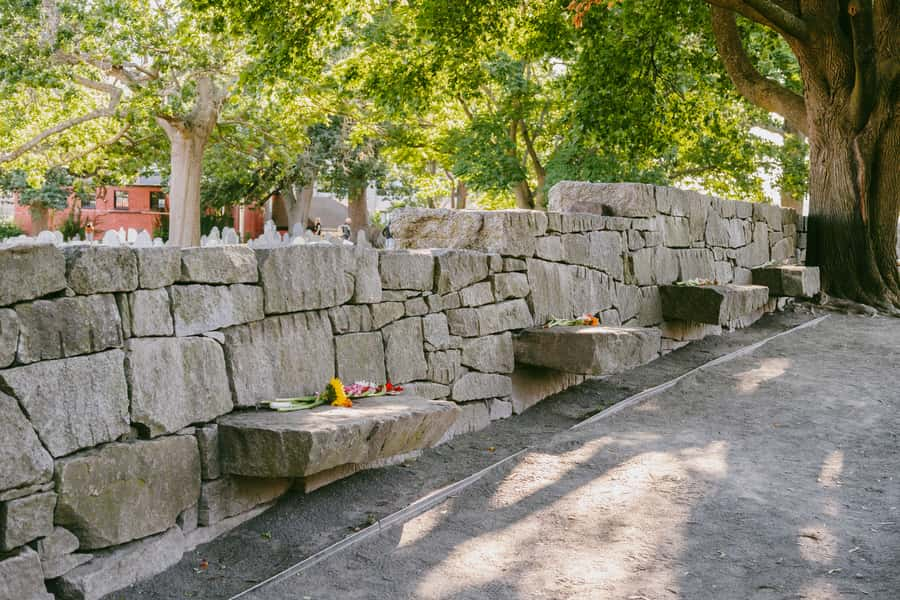
The guide makes a major difference. The strongest reports point to guides who are warm, lively, and able to keep a group involved. Christine is singled out for making the tour interactive and fun, while Bob, Mark, James, and Stache are also named for clear storytelling, local ties, courtesy, or energy.
Guide assignments can change, so you should not book on the assumption that one particular person will lead your departure. Still, the range of comments suggests that the company has several guides who can handle the material well.
Humor appears in the tour, but it works best when it gives you a breath between difficult subjects. This is not a light comedy walk. A good guide can keep the mood open without making the executions and jail deaths feel like entertainment.
The use of an amplifier helps with larger groups. In a small group, you may find the experience more conversational, and one person especially appreciated being able to ask questions. If you have a school project or a strong interest in the subject, bring questions with you. The guides are prepared to explain details and, in at least one case, offered to help with follow-up questions after the tour.
Pace, access, and weather
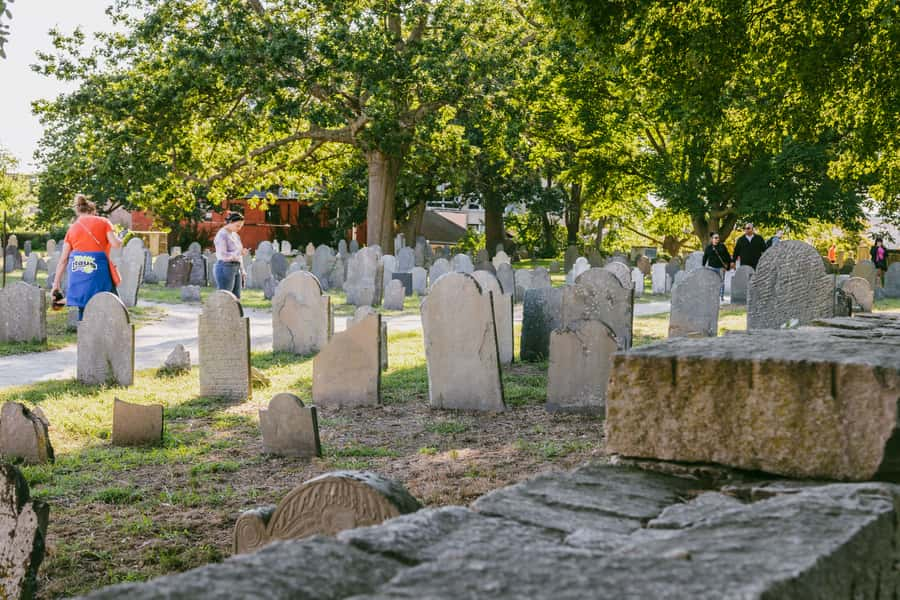
The route covers a little over a mile and includes eight to ten stops. At 1.5 hours, that gives you time to walk, gather around each location, and hear the story without racing from one point to the next.
The path is fairly flat and the tour is wheelchair accessible. That makes it one of the easier ways to see several Salem history sites without arranging transport. You should still wear comfortable shoes because the total distance is more than a casual stroll around a single building.
Tours operate rain or shine. Bring weather-appropriate clothing, and do not treat the forecast as a minor detail. Rain can make any outdoor history walk less comfortable, while cold or heat may affect how well you listen at each stop.
Smoking, video recording, and audio recording are not allowed. Plan to listen and take mental notes rather than trying to capture the full talk on your phone.
Is $25 a fair price?
At $25 per person, this is a reasonable price for a 90-minute guided walk in a historic city. You are paying for a live guide, a planned route, local context, and the chance to ask questions. Compared with visiting several separate attractions, the cost is modest.
The value depends on what you want from Salem. If you want a polished indoor exhibit with objects, theatrical effects, or a long time inside preserved buildings, this walk will not replace those experiences. If you want the basic story explained clearly while you see relevant parts of the city, the price makes good sense.
The tour also saves you from trying to connect the sites on your own. Salem’s witch trial history can become confusing because names, accusations, judges, and locations overlap. A guide gives you an order to the story and points out why each stop matters.
Discount categories are available at the same ticket price for students, seniors, and military, while veterans, police, firefighters, teachers, EMTs, nurses, and Salem residents can receive discounts with identification. Check the details when booking if you qualify.
Who should book this Salem walk?
I would choose this tour if you want history explained in plain language and tied to real streets. It suits first-time visitors, families with older children, school projects, couples, and anyone who wants more than a haunted-house version of Salem.
It is also a good fit if you prefer a moderate amount of walking. The route is short enough to pair with other activities, and the flat path makes it less demanding than a full-day walking tour.
You may want something else if you dislike outdoor tours in bad weather, need a fully indoor activity, or want extensive access to original buildings. The tour passes places connected to the events, but the experience is primarily guided storytelling from the street.
Booking and cancellation details
The tour is offered in English and includes the guide and 1.5-hour walk. You can reserve now and pay later, which helps if your Salem schedule is still shifting.
Free cancellation is available up to 24 hours in advance for a full refund. That is useful in a city where weather and seasonal crowds can affect your plans, but you still need to check the cancellation deadline attached to your booking.
Should you book the 1692 Witchcraft Trials Walk?
Book it if you want Salem’s most famous story explained through fear, family conflict, and official power, not just spooky atmosphere. The route is manageable, the price is fair, and the best guides bring humor and energy without losing sight of the tragedy.
Skip it if you need a fully indoor museum experience or expect every historic building to be open and preserved exactly as it was. For most people, though, this is a smart first look at Salem. It gives you the names, places, and context you need before exploring the city on your own.
FAQ
How long is the Salem Witchcraft Trials Walk?
The tour lasts 1.5 hours.
How far do I walk?
The total walking distance is a little over one mile.
Where does the tour start?
Meet at 8 Central Street, at the large brick building on the corner of Essex and Central Streets with purple signs.
Where does the tour end?
The tour ends back at the meeting point.
Is the route wheelchair accessible?
Yes. The tour is wheelchair accessible, and the route is fairly flat.
What language is the tour offered in?
The live guided tour is offered in English.
What should I bring?
Bring comfortable shoes and clothing suited to the weather. Tours operate rain or shine.
Just added around Salem
- Pirates and Privateers Walking Tour with Real Pirates Admission★ 4.5 · 3 reviews
- Private Walking Salem Legends Tour Professional Guide★ 5.0 · 3 reviews
- Salem: Spanish-Speaking Witch Trials Walking Tour★ 5.0 · 3 reviews
- Salem Village Witch Hunt Walking Tour★ 5.0 · 3 reviews
- Discover Salem’s History & Practice Authentic Witchcraft★ 4.1 · 4 reviews
- The Ghost Walk. Tortured Souls of Salem★ 5.0 · 4 reviews
- Cemetery and Witchcraft Trials Tour★ 5.0 · 4 reviews
- [ESP] History of Salem Witch Trials★ 4.0 · 5 reviews
Walking Tours in Salem, compared.
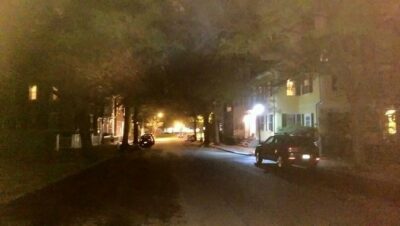
History and Hauntings of Salem Guided Walking Tour
Read our review →
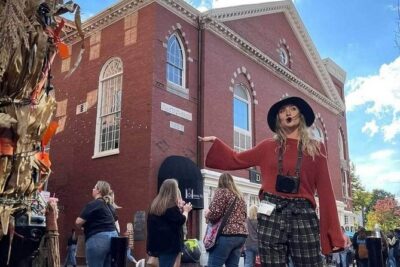

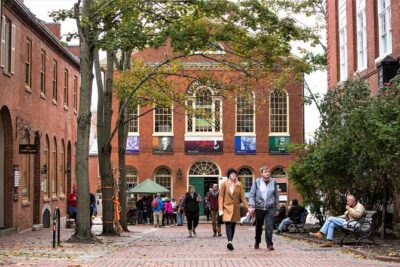
Mysteries and Murders of Salem Guided Night-Time Walking Tour
Read our review →
2.5-Hour Salem History & Sightseeing Guided Walking Tour
Read our review →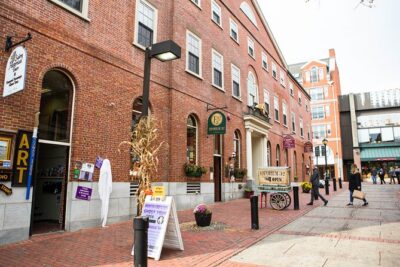
Best Salem Witch Trials Historical Walking Tour
Read our review →Browse the lists this tour appears in