
Reviewed · BOSTON SCAVENGER HUNTS
Mysteries on the Move: Scavenger Hunt in Boston
The most unusual thing about this Boston walk is its plot: silent-film director Rex King has been murdered while filming in Boston in 1926, and you must solve the case by moving from landmark to landmark. Your phone delivers the clues, while free historical markers provide the passcodes needed to continue.
I like the private format, since one purchase covers your whole group, and I like the 1.3-mile route, which gives you a compact way to see several central Boston sights without committing to a full-day tour. The main caution is that this is a self-guided game, not a guided history walk. Clear instructions matter, and the mixed 3 out of 5 rating suggests the phone setup can be frustrating for some players.
- A 1926 murder mystery gives the walk a playful reason to explore Boston.
- Ten historic stops fit into a roughly 1.3-mile course.
- Boston Common, Granary Burying Ground, and the Old State House are among the named locations.
- One purchase covers your private group, making the format useful for families and friends.
- Free historical markers supply the passcodes, so you do not need paid entry to the stops.
- A smartphone and web browser are required, and you should read the start instructions before arriving.
In This Review
- Solving Rex King’s Murder on Foot
- Starting at 139 Tremont Street
- Boston Common and the First Clues
- Granary Burying Ground and Old Boston
- The Old State House and Ten Historic Stops
- How the Smartphone Game Works
- What You Will Learn, and What You Will Not
- Pace, Fitness, and Group Size
- Value for Families, Friends, and Boston Locals
- The Main Strengths and Weak Spots
- Practical Details Before You Book
- Should You Book This Boston Mystery Walk?
- FAQ
- How long does the Boston scavenger hunt take?
- How far do you walk?
- Where does the activity start and end?
- What landmarks are included?
- What do I need to play?
- Is this a private activity?
Solving Rex King’s Murder on Foot

This experience turns central Boston into a game board. Rex King, a silent movie director visiting the city during a 1926 filming project, is dead. Your group receives the next clue by finding a passcode at each stop, then enters it on a smartphone to keep the case moving.
That setup changes how you look at familiar sights. Instead of simply walking past a burying ground or government building, you search for the historical information that helps open the next stage. I like this active approach for families, friends, and anyone who finds ordinary sightseeing a little too passive.
The story is fictional, and the historical material supports the game rather than replacing a formal tour. You will learn a few things along the route, but the activity does not promise detailed commentary about Boston, Rex King, or the film industry. If your main goal is a lecture from a local guide, this is not the right choice.
The game runs at your own pace. The advertised duration is about three hours, but the route itself is only 1.3 miles, or about 2 kilometers. That leaves time for reading markers, discussing suspects, entering answers, taking breaks, and dealing with the city around you.
Starting at 139 Tremont Street

The meeting point is 139 Tremont Street, Boston, MA 02111. This places you near Boston Common and several major downtown sights, with public transportation nearby. The location is practical because you can pair the activity with other plans in the center of Boston rather than traveling across the city just to begin.
The activity runs every day from noon to midnight according to the listed operating hours. Since this is an outdoor game, your timing can make a real difference. A daytime start should make the markers easier to read, while a late start may suit you if you prefer a quieter walk. The information does not promise special lighting or staffed assistance, so do not treat the midnight closing time as proof that every clue will be equally easy to find late at night.
Before you reach Boston Common, read the start instructions carefully. This is the most useful practical tip for the whole experience. The game depends on your phone and browser, and two of the four ratings were very positive while two were very negative. The successful approach is simple: know how to open the game, understand how to submit a passcode, and make sure the person who booked can access the instructions before the group gathers.
More scavenger hunts around Boston:
- Boston Freedom Trail Scavenger Hunt Adventure
★ 4.0 · 7 reviews - Astounding Scavenger Hunt: Boston The Story of America
★ 3.5 · 5 reviews - Boston Record Breakers: Self-Guided Scavenger Hunt
★ 4.5 · 4 reviews
Boston Common and the First Clues
Boston Common is the natural opening area for a downtown walk, and it gives the mystery a broad public setting. You will begin by getting oriented, reading the directions, and looking for the information needed to open the first set of clues.
The value here is not just the park itself. The game asks you to slow down and inspect your surroundings instead of rushing toward the next attraction. You may find that the first stage takes more patience than later stages, since everyone is learning how the phone system works.
This is also the point where group roles can help. One person can handle the browser, another can read the historical marker, and others can keep track of the plot and possible answers. With children or a larger family group, giving everyone a job helps prevent the activity from becoming one person staring at a screen while everyone else waits.
The instructions should tell you where to look, but the game’s basic method is consistent: find the passcode at the stop, enter it, and receive the next clue. The marker information is described as readily accessible and free. You do not need to buy admission to the named sites simply to play the game.
Granary Burying Ground and Old Boston

Granary Burying Ground is one of the named stops, and it gives the route a more serious tone. The site is connected with Boston’s early civic life, so it works well for a game that asks you to read, notice, and connect facts.
You should expect to spend time identifying the correct information rather than receiving a spoken explanation. That distinction matters. A guide can point out what deserves attention and explain why it matters. Here, you and your group must find the useful detail yourselves, then decide how it fits into the case.
The route also includes Old City Hall, listed as the second itinerary stop. Its architecture and location help show how close together many of Boston’s central historic places are. Since the activity covers only 1.3 miles, the walk is more about connecting a string of sites than crossing a large part of the city.
Granary Burying Ground and Old City Hall also show the limits of the format. The supplied details do not provide a full stop-by-stop explanation for all ten locations, so you should not expect a detailed description of every building or memorial before you arrive. The game gives you a task at each place, not a printed guidebook.
The Old State House and Ten Historic Stops
The Old State House is another named location, and it is one of the stops that gives the mystery a strong Boston setting. The game uses historical markers around the city as part of its mechanics. You read the available information, find the passcode, and enter it to receive what comes next.
This is a smart way to keep the cost of the activity focused on the game rather than admissions. You are walking through public areas and using information that is free to access. Still, the tradeoff is clear: the historical content is functional. It helps you solve the mystery, but it may not satisfy you if you want a long explanation of Boston’s politics, architecture, or burial customs.
The full course has ten stops of historical significance. Only some are named in the available details, so I would think of the route as a guided sequence rather than a complete preview of every sight. You will know the main anchors, but not every turn or clue location in advance.
At the end, you assemble the clues, submit your response, and find out the solution. That final step gives the walk a clear finish, unlike a casual sightseeing route that simply ends when you get tired. It also gives your group a reason to compare notes along the way.
Same city, a very different afternoon:
- History and Hauntings of Salem Guided Walking Tour
★ 5.0 · 14,564 reviews - Boston Duck Boat Sightseeing City Tour with Cruise Along Charles River
★ 4.5 · 9,378 reviews - Boston: Freedom Trail History Small Group Walking Tour
★ 5.0 · 6,450 reviews - Boston Hop-On Hop-Off Trolley Tour with 13 Stops
★ 4.5 · 5,576 reviews
How the Smartphone Game Works
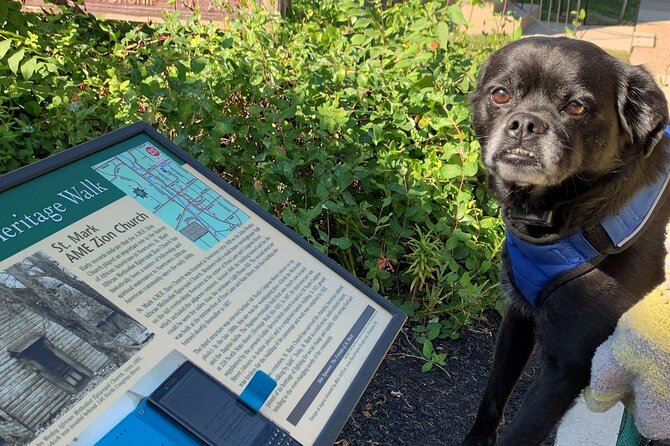
You need a smartphone and a working knowledge of your web browser. The game is played outdoors and on the move, so your phone is not just a backup tool. It is the control panel for the entire experience.
The central process is straightforward:
- Reach a designated historical stop.
- Read the free marker or other accessible information.
- Find the passcode.
- Enter the passcode in your browser.
- Receive the next clues.
- Gather all the evidence and submit your final answer.
In practice, simple systems can still cause trouble if the opening instructions are unclear. One poor experience came from not being able to use the game on the needed date and not understanding how to start it at the required time. Another player found the directions easy to follow after reading them before beginning in Boston Common.
That gives you a useful rule: do not wait until you are standing at the first stop to learn the system. Open the instructions ahead of time, check which browser you will use, and make sure your phone is ready. The supplied information does not mention a downloadable application as a requirement, so treat this as a browser-based game rather than assuming you need a special app.
Keep your phone charged, too. That is practical advice for any phone-led outdoor activity, though the experience details do not state how much battery the game uses. If your group has more than one phone, decide in advance who will operate the game and who will keep the group’s notes.
What You Will Learn, and What You Will Not
The activity combines local sightseeing with historical questions. One player found that much of the game involved Boston history questions, with the Rex King murder story becoming more important near the final question. That is useful to know before booking.
The murder plot provides the frame, but this is not necessarily a detailed character study of Rex King or a full investigation into his life. You should expect clues connected to the places you visit, followed by a final solution. You should not expect a guide to explain the fictional director’s biography at length.
I see that as either a benefit or a drawback, depending on your group. If your priority is to walk, laugh, compare theories, and pick up a few facts, the format works well. If you want the story to carry every minute of the activity, the historical questions may feel like a detour.
The activity can also help you notice details you might otherwise miss. Since the clues are tied to markers, you have a reason to read them instead of treating them as background scenery. That is a modest but real advantage for anyone trying to get to know Boston on foot.
Pace, Fitness, and Group Size
The distance is modest, but you should still expect a moderate level of physical fitness. You will be outdoors, walking between ten stops, standing while reading information, and moving through central Boston. The experience does not describe long climbs or strenuous exercise.
Three hours is a generous window for 1.3 miles. You can pause to discuss the evidence, take photographs, deal with traffic and pedestrians, or stop briefly along the way. At the same time, a group that spends too long debating every clue may find the pace slow.
The private format is one of the strongest features. Only your group participates, so you do not need to match the speed of strangers or announce your theory to people you have just met. One purchase covers the whole group, which can improve the value when shared among several friends or family members.
The group size itself is not specified, so I would avoid assuming that a very large party will work smoothly. For a small group, the private structure should make it easy to share the phone and talk through the clues. With more people, you may need someone to keep the group together and prevent the game from becoming scattered.
Service animals are allowed, and the starting point is near public transportation. No other accessibility details are provided, so contact the operator if you need specific information about surfaces, seating, restrooms, or the precise route.
Value for Families, Friends, and Boston Locals
The price is not included in the supplied details, so I cannot judge the exact dollar value. I can explain what you are paying for: a private, self-guided murder mystery that uses a central Boston walking route and a smartphone system. Since one purchase covers the group, the value improves as more people join.
For a family, the game can make historic sites easier to approach. Children who might tune out during a standard explanation have a concrete job: find the clue, enter the passcode, and help solve the case. Adults still get a walk through important downtown locations, though the historical commentary remains fairly light.
For friends, the main value is the shared puzzle. You can split up the tasks, argue about the suspect, and compare answers at the end. The activity is especially suited to people who enjoy escape rooms, trivia, or city walks with a purpose.
For Boston residents, the game offers a fresh reason to revisit central sights. You do not need to be on vacation to use it. The route may also help you notice markers and buildings you normally pass without stopping.
I would be more cautious about booking it for someone who wants a polished, guide-led introduction to Boston. There is no in-depth historical commentary included, and the experience depends on your group taking responsibility for the clues and the technology.
The Main Strengths and Weak Spots
The strongest feature is the blend of movement and problem-solving. You are not sitting in one room waiting for a host to hand over the next clue. You are walking through Boston, using the city itself as part of the game.
The second strength is control over the pace. A private group can stop when needed and discuss the evidence without holding up another party. The compact distance keeps the activity manageable, especially if you have other plans nearby.
The weak spot is the setup. If the instructions are not clear to you, the experience can begin with confusion before the fun starts. The difference between an enjoyable game and a disappointing one may come down to reading the directions in advance.
The other limitation is the balance between fiction and history. The game may ask more Boston history questions than you expect from the murder premise, with the fictional case becoming most important at the end. That does not make it a bad activity, but it does make it a better choice for a playful city walk than for a full murder drama.
Practical Details Before You Book
You receive confirmation at booking, and the activity uses a mobile ticket. The listed start point is 139 Tremont Street, and the experience ends back at that meeting point. Plan around the fact that you are beginning and finishing downtown rather than ending at a different attraction.
The activity is listed daily from 12:00 AM to 11:30 PM for the stated operating period, which runs through December 25, 2026. Because the game uses outdoor markers, I would choose a start time that gives you comfortable visibility and enough time to think through the clues.
The activity is non-refundable and cannot be changed for any reason. That makes advance planning important. Confirm your date, group, phone access, and start instructions before you commit.
There is no guide name to note because this is not presented as a guided tour with a named host. The provider is Without A Cue Productions, and the format is designed for your group to run the game independently.
Should You Book This Boston Mystery Walk?
Book it if you want a private, playful way to walk through central Boston, especially with friends or family who enjoy puzzles. The 1.3-mile course, ten historic stops, free markers, and flexible pace make it easy to fit into a day of sightseeing.
Think twice if you want detailed historical teaching, a rich character-driven murder plot, or hands-on help with the technology. Read the start instructions before arriving, and make sure your group is comfortable using a smartphone browser.
My call: this is best treated as a self-guided city game with historical stops, not as a traditional Boston tour. If that sounds like the right kind of afternoon, the format has plenty of promise. If the mystery itself is the main reason you are booking, keep your expectations measured, since the story may play a smaller role than the Boston questions.
FAQ
How long does the Boston scavenger hunt take?
The experience lasts approximately three hours.
How far do you walk?
The course covers about 1.3 miles, or 2 kilometers.
Where does the activity start and end?
It starts at 139 Tremont Street in Boston and ends back at the meeting point.
What landmarks are included?
Named stops include Boston Common, Granary Burying Ground, the Old State House, and Old City Hall. The full hunt includes ten historic stops.
What do I need to play?
You need a smartphone and knowledge of how to use your web browser. The game uses your phone to provide clues and accept passcodes.
Is this a private activity?
Yes. Only your group participates, and one purchase covers the whole group.
Just added around Boston
- Day Trip from Boston: Explore Hammond Castle Museum★ 3.7 · 3 reviews
- Boston: WNDR Museum Entry Ticket★ 3.7 · 3 reviews
- The Boston Bash Scavenger Hunt★ 4.5 · 3 reviews
- Self-Guided Audio Tour of Boston North End★ 4.5 · 3 reviews
- Boston: Official Freedom Trail® Lantern Tour★ 4.7 · 3 reviews
- Boston: North End Walking Tour with Private Harbor Cruise★ 5.0 · 3 reviews
- Self Guided “The North End Pizza, Cannoli and Picnic” Solo Walking Tour★ 5.0 · 3 reviews
- Cambridge: Haunted Charles River Cruise★ 4.3 · 3 reviews
Boston Scavenger Hunts, compared.


Astounding Scavenger Hunt: Boston The Story of America
Read our review →
Boston Record Breakers: Self-Guided Scavenger Hunt
Read our review →
Browse the lists this tour appears in