

Reviewed · BOSTON REVOLUTIONARY WAR TOURS
Boston: Full Revolution Story Epic Small Group Walking Tour
Boston’s Revolution story makes far more sense when you follow it in the order events happened. This 210-minute small-group walk links Boston’s original neighborhoods, famous landmarks, burial grounds, and harbor views into one continuous story instead of treating the Freedom Trail as a string of unrelated stops.
I like the guides’ use of maps, photographs, Lego figures, and name tags to show how people and places fit together. I also like the small group, usually about 16 people, which makes it easier to hear and ask questions. The tradeoff is simple: this is a long, information-packed walk, and the quick pace may be hard on older legs or anyone who prefers a gentle stroll.
In This Review
- Key points to know before you book
- Why this Boston history walk takes a different route
- Starting at City Hall Plaza and entering old Boston
- King’s Chapel Burying Ground
- Granary Burying Ground
- Park Street Church, Old City Hall, and Boston Latin School
- The Old State House and the Boston Massacre
- Old South Meeting House, Faneuil Hall, and Quincy Market
- Paul Revere’s neighborhood and the North End
- Copps Hill, the harbor, and the move toward Charlestown
- Bunker Hill, the Harborwalk, and Lewis Wharf
- How the guides teach the story
- Is $57 a fair price for three and a half hours?
- Practical advice for making the walk easier
- Who should book the Revolution Story tour?
- Should you book it?
- FAQ
- How long is the Boston Revolution walking tour?
- How many people are usually in the group?
- Where does the tour begin?
- Where does the tour finish?
- Is the tour only on the Freedom Trail?
- Is entrance to Faneuil Hall included?
- Is the USS Constitution visited inside?
- Is the tour suitable for people with mobility impairments?
Key points to know before you book

- Chronological storytelling: Events unfold in historical order, making the Revolution easier to understand.
- About 2.5 miles of walking: Plan on roughly three and a half hours, with one hill and stairs near the end.
- More than the Freedom Trail: The route reaches the North End, Charlestown, the harbor, and less-visited city corners.
- Serious history with humor: Guides such as Mike and Tyler explain causes, motives, and political tensions, not just dates.
- Small, interactive groups: Some participants may receive historical roles to help connect names with events.
- North End finish: The tour ends near Lewis Wharf, with local food suggestions for Little Italy.
Why this Boston history walk takes a different route

Most Boston history walks use the Freedom Trail as their backbone and move from one marked site to the next. That approach is easy to follow on a map, but the trail itself does not present events in the order they unfolded.
This tour takes a story-first approach. You begin with Boston’s early civic life, move through growing tension between Britain and the colonies, and then reach the Boston Massacre, Boston Tea Party, Lexington and Concord, and Bunker Hill as parts of one connected chain.
That structure matters. You learn not only what happened, but why one dispute fed the next. The guides explain personalities such as Benjamin Franklin, Paul Revere, Samuel Adams, John Hancock, and John Adams in relation to one another, rather than dropping their names at separate monuments.
I especially appreciate that the tour does not depend on costumes or staged scenes. The presentation is lively, but it remains a serious history lesson. Maps and visual aids help make complicated movements and battle plans easier to picture, while humor keeps the three-plus hours from feeling like a lecture.
The tone is aimed mainly at adults and older teens. Children can follow along, especially with the props and participation, but a young child who wants constant action may lose interest.
More Walking Tours in Boston
- Boston: Freedom Trail History Small Group Walking Tour
★ 5.0 · 6,450 reviews - Harvard University Campus Guided Walking Tour
★ 4.5 · 3,632 reviews - Boston Freedom Trail Walking Tour with Costumed Guide
★ 4.5 · 2,531 reviews
Starting at City Hall Plaza and entering old Boston
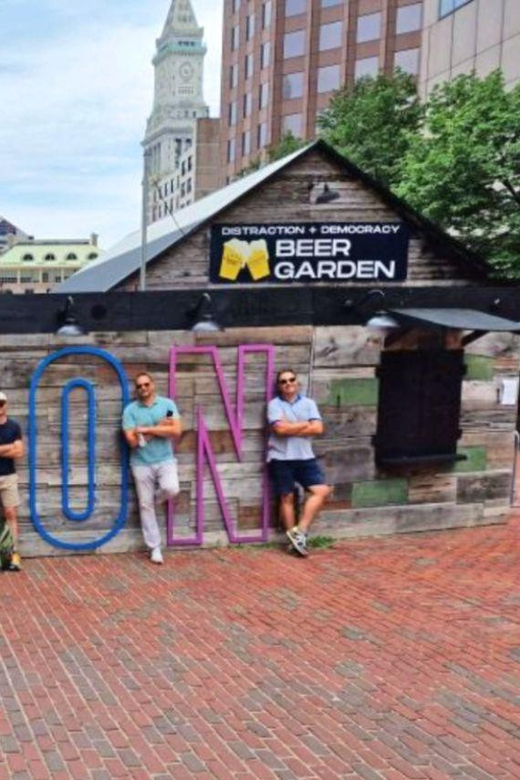
The meeting point is City Hall Plaza, in front of Five Iron Golf, between Staples Connect and City Hall. Look for the Bill Russell statue near the seasonal beer garden. The plaza is directly across from Faneuil Hall, though you need to cross the street and go up a flight of stairs to reach it.
The Green Line uses Government Center station. The Orange and Blue Lines use State Street. Arrive ready to walk, since this is not a hotel pickup tour and the group begins moving through the city soon after meeting.
The first portion introduces Boston’s old center and the general shape of the Freedom Trail. You pass through streets where the city’s colonial government, churches, meetinghouses, businesses, and burial grounds once crowded together.
King’s Chapel Burying Ground
King’s Chapel Burying Ground is one of the oldest burial grounds on the route. Here, your guide can shift the story from grand political figures to the people and institutions that shaped early Boston.
The stop is useful because it establishes the city’s religious and social order before the Revolution. Keep in mind that the tour does not treat every location as a long interior visit. Several stops are exterior explanations, with the guide using the street itself as the classroom.
Granary Burying Ground
Granary Burying Ground brings several familiar names into view, including figures connected with Boston’s revolutionary leadership. The important point is not simply seeing graves. Your guide uses the site to explain how public memory formed around the Revolution and how Boston honored its political actors.
You spend about 15 minutes here, enough time for a focused explanation without turning the stop into a long cemetery visit. Comfortable shoes matter from the start. The walk is mostly flat, but the number of stops and the steady pace add up.
More Revolutionary War tours around Boston:
- 90-Min Narrated Trolley Tour of Lexington and Concord, MA
★ 4.5 · 358 reviews - Boston History & Highlights Tour: From Revolution to Today
★ 4.8 · 178 reviews - From Boston: Full-Day Historical Lexington & Concord Tour
★ 4.8 · 111 reviews - Lexington & Concord 250th Birthday Tour with Concord Museum Entry
★ 4.5 · 83 reviews
Park Street Church, Old City Hall, and Boston Latin School
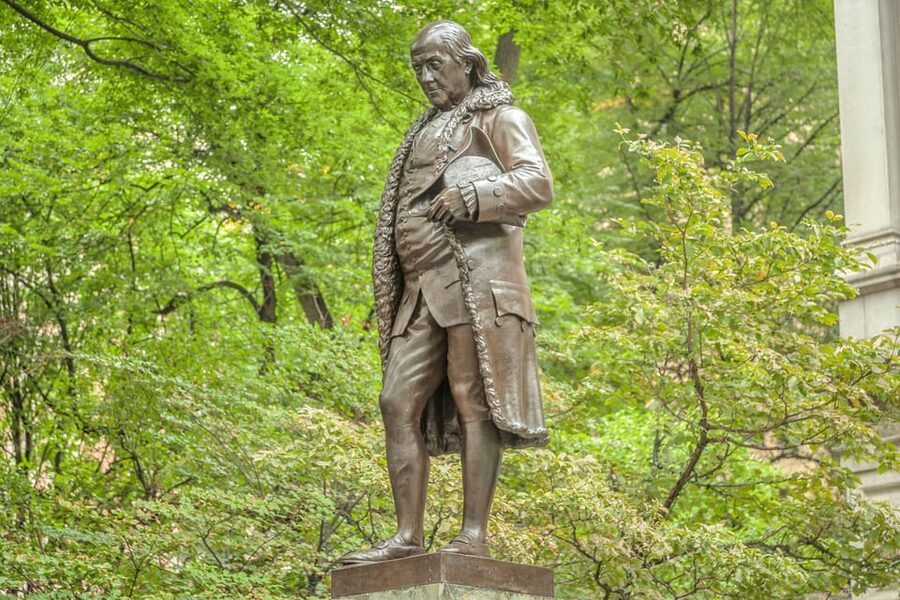
The route passes Park Street Church and continues to Old City Hall, where the city’s later civic identity enters the story. At Boston Latin School and the Benjamin Franklin statue, the guide can connect education, public life, and the people who helped shape the new nation.
These stops are valuable because they widen the subject beyond battles and famous speeches. You see how institutions helped produce political ideas and public leaders. The tour is at its best in these smaller transitions, where a building or statue becomes a reason to explain a larger force at work.
The Old State House and the Boston Massacre
The Old State House is one of the strongest parts of the walk. It represents British authority in the colonial city and gives the guide a natural place to explain the growing conflict between local residents and imperial officials.
Nearby, the Boston Massacre site anchors one of the Revolution’s most important flashpoints. The guide explains the event within the broader strain already building in Boston, rather than presenting it as an isolated incident.
This is where the tour’s emphasis on motives becomes especially useful. You hear about pressure from British troops, colonial resentment, political messaging, and the way an event could be used to move public opinion. The goal is not to reduce the episode to a simple good side and bad side.
You also pass the Old Corner Book Store, one of the city’s oldest commercial buildings. It is a brief stop, but it helps show how Boston’s streets once worked as places of trade, publishing, debate, and rumor.
Old South Meeting House, Faneuil Hall, and Quincy Market
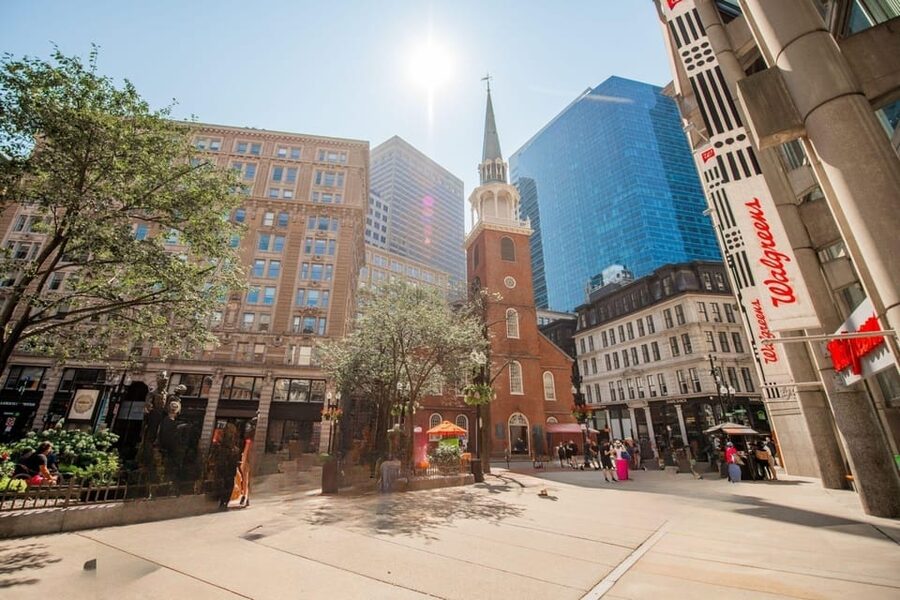
At Old South Meeting House, the story reaches the Boston Tea Party. This is a key setting because the building served as a gathering place for a large crowd. The guide explains the choices facing Bostonians and the political stakes behind the tea dispute.
The stop works better in chronological order than it would as a random landmark. By this point, you have already heard about earlier tensions, so the tea protest feels like a consequence of mounting resistance.
The route continues through Post Office Square and Liberty Square before reaching Faneuil Hall. At Faneuil Hall, you learn about the building’s role in civic debate and public speech. Entrance is included when the hall is open, but you should not assume every departure will include the same interior access if the building is closed.
Quincy Market provides a 15-minute restroom and refreshment break. This is a practical pause rather than a full meal stop. You can use it to regroup, grab a quick bite, or simply rest your feet before the longer stretch toward the North End and Charlestown.
The market is also a useful dividing point in the tour. The first half focuses heavily on Boston’s political center. After the break, the route shifts toward neighborhoods, waterfront connections, military sites, and the geography of the fighting.
Paul Revere’s neighborhood and the North End

The walk continues along the Rose Kennedy Greenway before entering the North End. This change of scenery is one of the tour’s strengths. You move away from formal civic buildings and into a neighborhood with narrower streets and a stronger sense of everyday colonial Boston.
The Paul Revere House is a natural focal point. Your guide places Revere within the larger network of printers, merchants, messengers, activists, and family connections that helped spread information.
The North End portion also gives you a feel for modern Boston. The neighborhood is famous for Italian restaurants and bakeries, and the tour finishes nearby with food recommendations. I would save those suggestions in your phone. They can help you choose where to eat after the walk without wasting time scanning menus while tired.
At Paul Revere Mall, you get a photo stop and another chance to connect the individual with the larger story. The route then reaches Old North Church, where the famous lantern signal becomes part of the unfolding narrative.
The value here is geographic. You are not just hearing about Paul Revere’s ride in the abstract. You are walking through the part of Boston associated with Revere and seeing how the North End connects to the harbor and the route toward Charlestown.
Copps Hill, the harbor, and the move toward Charlestown
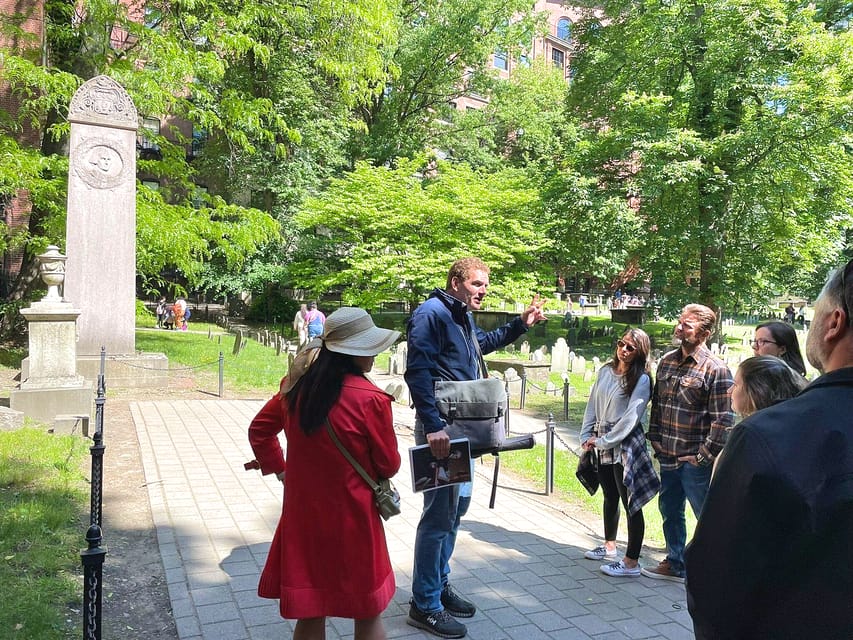
Copps Hill provides a scenic break and another historical viewpoint. The cemetery and elevated position help your guide explain Boston’s physical setting and the military importance of the surrounding waterfront.
After that, the route passes the USS Constitution. This is a brief, two-minute pass-by rather than a ship visit. If touring the Constitution is high on your list, plan a separate visit at another time.
The walk continues toward Bunker Hill Monument. The guide discusses the battle and the difficult transition from protest and unrest to open armed conflict. The monument is an important endpoint for the Revolution narrative, but the tour does not list an interior climb or museum visit as part of the experience.
One review noted that a guide moved quickly between stops, and that is worth taking seriously. The group is small and the guides check that people are together, but you still need to keep up. If you walk slowly, tell the guide early rather than falling behind at intersections.
Bunker Hill, the Harborwalk, and Lewis Wharf
The approach to Bunker Hill includes one uphill section. Near the end, you also encounter a flight of stairs going down. The activity information describes the physical demand as moderate, but the total distance, uneven city surfaces, hill, stairs, and steady movement make it unsuitable for people with mobility impairments.
From Bunker Hill, the route continues through Charter Street Park and along the Harborwalk. Pilot House Park provides scenic views before the walk finishes at Lewis Wharf.
Ending at Lewis Wharf gives the tour a satisfying physical shape. You begin in Boston’s government center, cross through the old town, move into the North End, reach Charlestown and Bunker Hill, and finish by the water.
The final location is not a hotel, subway station, or major attraction with a formal closing area. You should be ready to make your own way onward. The nearby North End is useful for food, but you may want to check your route before the tour starts if you have an evening reservation.
How the guides teach the story
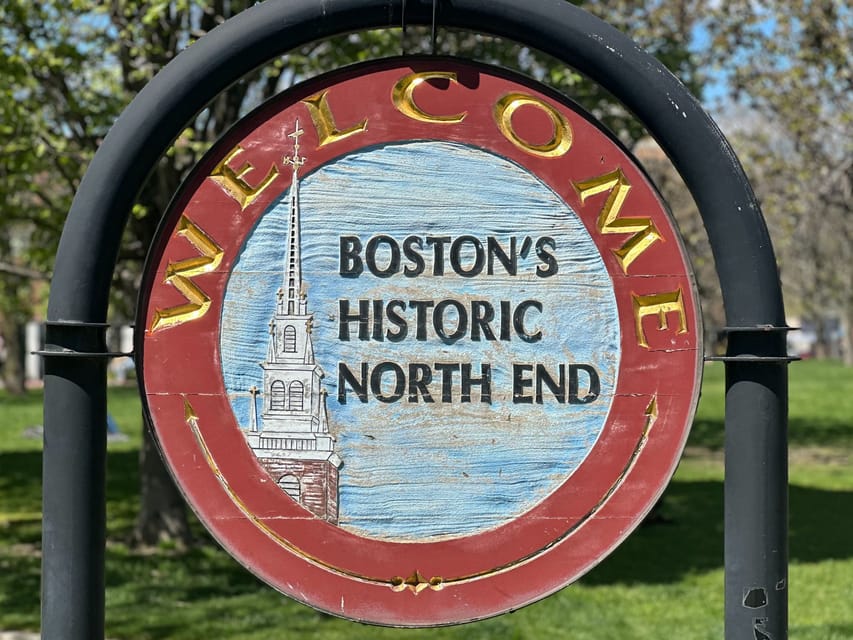
The strongest part of this experience is the teaching method. Guides including Mike, Tyler, Rob, Chris, and Tom are described as energetic, clear, and deeply invested in Boston’s past. The exact guide depends on the departure date, but you can expect an English-speaking historian-guide rather than a costumed performer.
Participants may receive clip-on name tags or temporary roles connected to historical figures. This is not formal reenactment. It is a simple way to keep track of who did what, especially when several Adamses, merchants, politicians, and military leaders enter the story.
Visual aids are another major help. Maps clarify troop movements and neighborhood layouts. Photographs connect past and present streets. Small figures and even Lego pieces can make a complicated battle easier to picture.
I like that the guides explain political motives and social pressures instead of reciting dates. One particularly useful feature is the attention to people who receive less attention in basic schoolbook versions of the Revolution.
The format also works well for international visitors who speak English comfortably. The story is organized clearly enough that you do not need to have grown up with American history. Still, the amount of information is substantial, so anyone only casually interested in the subject may prefer a shorter tour.
Is $57 a fair price for three and a half hours?
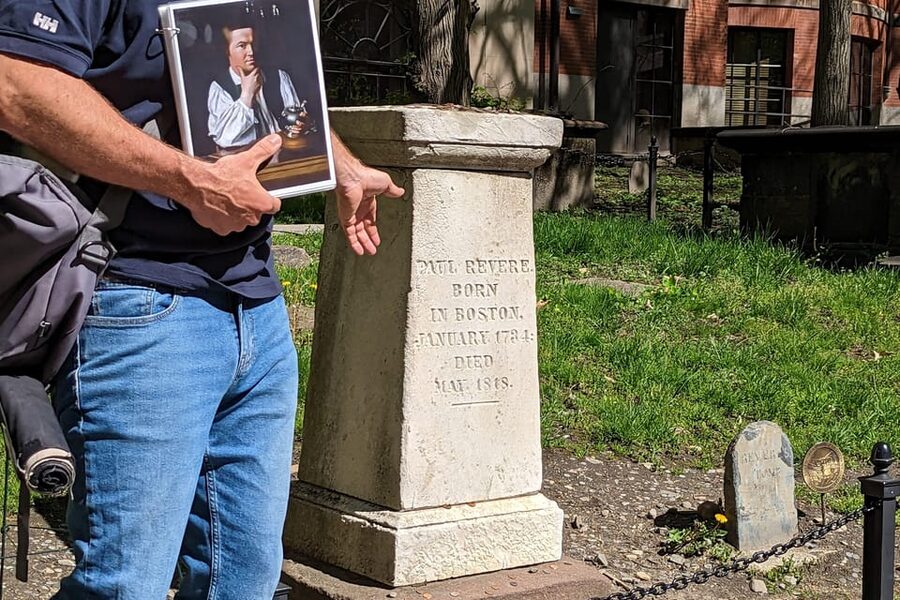
At $57 per person, this is not the cheapest way to see the Freedom Trail. It is also not a quick highlights walk. You are paying for a small group, a long route, a trained guide, visual teaching tools, and a connected explanation that covers far more than a simple path from Boston Common to the North End.
The value improves if you would otherwise book several separate activities to understand the city’s revolutionary sites. You see King’s Chapel Burying Ground, Granary Burying Ground, the Old State House, Boston Massacre site, Old South Meeting House, Faneuil Hall, Paul Revere House, Old North Church, Bunker Hill, and multiple waterfront areas in one outing.
The limitation is access. Many locations are viewed from outside, and the USS Constitution is passed rather than toured. If your priority is entering museums and historic interiors, use this walk as an overview and schedule separate admissions.
For history-focused visitors, the chronological structure makes the price easier to justify. You finish with a better sense of how Boston fits together, not just a collection of photographs.
Practical advice for making the walk easier
Wear supportive shoes. The route lasts 210 minutes, and several people have found the distance tiring even when they enjoyed the content.
Bring water and dress for the weather. Boston’s streets, plazas, cemeteries, and waterfront can feel different from one another, and the tour spends most of its time outside.
Use the Quincy Market break wisely. It is only 15 minutes, so it is best for a restroom visit or quick snack, not a relaxed meal.
Book this early in your stay if you have never been to Boston. The route introduces many districts and gives you a useful map of places you may want to revisit. Guides also provide suggestions for restaurants, additional things to do, and ways to get around town.
The activity offers free cancellation up to 24 hours before the start time, and you can reserve now and pay later. Those policies are helpful if your schedule is still shifting, but the main booking decision is your stamina and interest level.
Who should book the Revolution Story tour?
I would choose this tour if you want to understand the causes and consequences of the American Revolution, not simply photograph its most famous markers. It is particularly well suited to adults, older teens, history fans, first-time Boston visitors, and people who enjoy a strong narrator-led walk.
It also works for repeat visitors who already know the Freedom Trail and want more context. The route reaches beyond the usual central stops, and the guides add local suggestions that can shape the rest of your visit.
I would hesitate if you have limited stamina, dislike group walking, want extensive interior access, or prefer a short introduction. The route is long, the pace can be brisk, and the information keeps coming.
Should you book it?
Book this Boston Revolution walking tour if you want the city’s famous events arranged into a clear, human story. The small group, strong guides, maps, props, North End finish, and route beyond the standard Freedom Trail give you more substance than a basic landmark walk.
Skip it only if three and a half hours of history sounds like hard work. For everyone else, schedule it near the start of your Boston visit, wear good shoes, and leave room afterward for dinner in the North End.
FAQ
How long is the Boston Revolution walking tour?
The tour lasts 210 minutes, or three and a half hours.
How many people are usually in the group?
The group is small, with about 16 participants.
Where does the tour begin?
It begins at City Hall Plaza, in front of Five Iron Golf between Staples Connect and City Hall. Look for the Bill Russell statue near the seasonal beer garden.
Where does the tour finish?
The walk finishes at Lewis Wharf.
Is the tour only on the Freedom Trail?
No. It includes many Freedom Trail landmarks but also visits the North End, Charlestown, Bunker Hill, the Harborwalk, and other parts of Boston.
Is entrance to Faneuil Hall included?
Entrance to Faneuil Hall is included when the building is open.
Is the USS Constitution visited inside?
No. The route passes the USS Constitution for about two minutes. An interior visit is not included.
Is the tour suitable for people with mobility impairments?
No. The walk requires moderate physical activity, includes one uphill section and a flight of stairs near the end, and is not suitable for people with mobility impairments.
Just added around Boston
- Day Trip from Boston: Explore Hammond Castle Museum★ 3.7 · 3 reviews
- Boston: WNDR Museum Entry Ticket★ 3.7 · 3 reviews
- The Boston Bash Scavenger Hunt★ 4.5 · 3 reviews
- Self-Guided Audio Tour of Boston North End★ 4.5 · 3 reviews
- Boston: Official Freedom Trail® Lantern Tour★ 4.7 · 3 reviews
- Boston: North End Walking Tour with Private Harbor Cruise★ 5.0 · 3 reviews
- Self Guided “The North End Pizza, Cannoli and Picnic” Solo Walking Tour★ 5.0 · 3 reviews
- Cambridge: Haunted Charles River Cruise★ 4.3 · 3 reviews
Boston Revolutionary War Tours, compared.

90-Min Narrated Trolley Tour of Lexington and Concord, MA
Read our review →
Boston History & Highlights Tour: From Revolution to Today
Read our review →
Lexington & Concord 250th Birthday Tour with Concord Museum Entry
Read our review →
Lexington & Concord Self-Guided Driving & Walking Audio Tour
Read our review →
Lexington, MA Battle Green Walking Tour with Costumed Guide
Read our review →

Private Day Trip to Lexington and Concord from Boston
Read our review →Browse the lists this tour appears in